
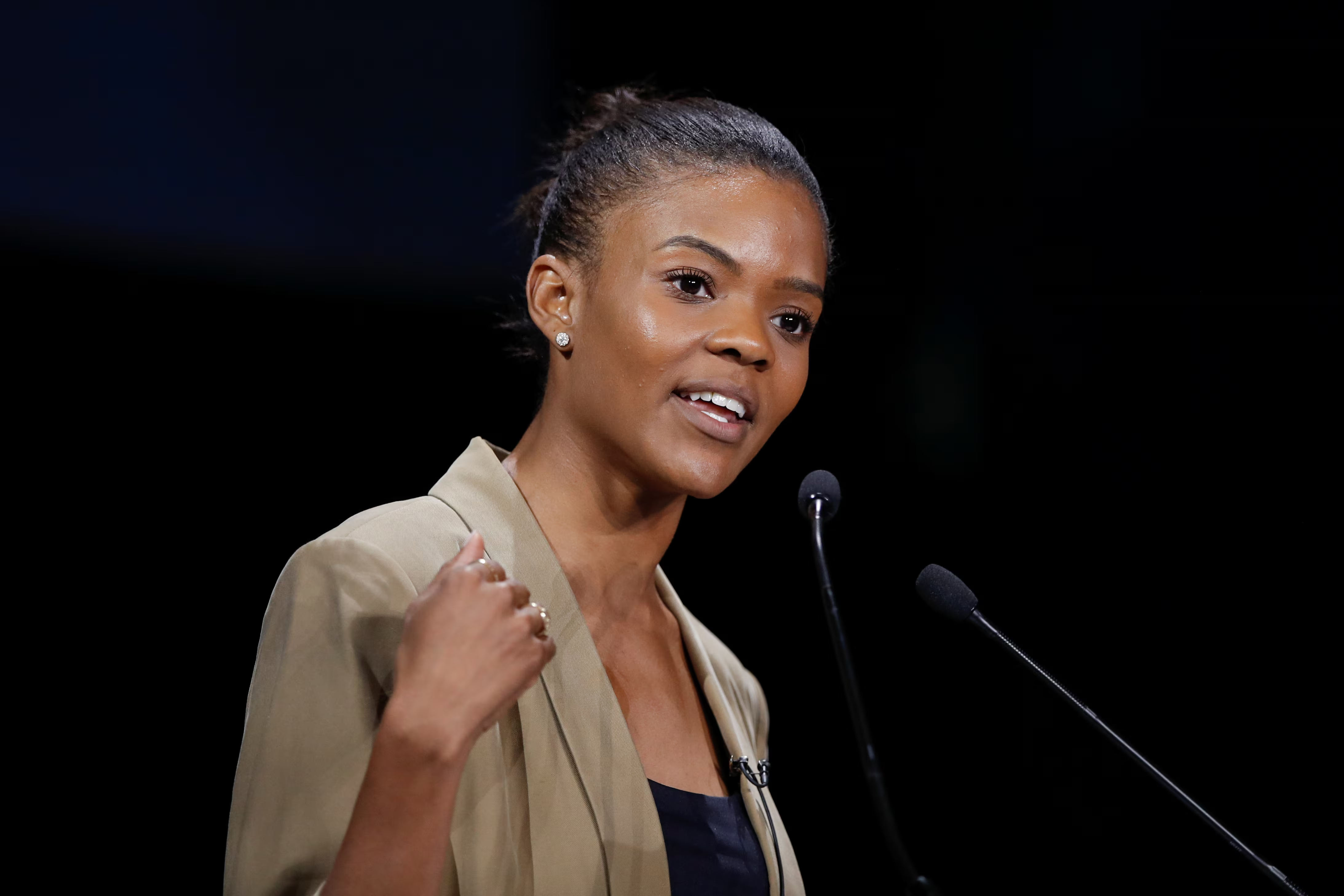
Hampton University officials removed members of BLEXIT, a conservative organization founded by commentator Candace Owens, after the group attempted to host an unauthorized event during the school’s Homecoming weekend. The university said the decision was based on safety and compliance—not censorship. The situation has since sparked debate over free speech, politics, and the role of outside organizations on HBCU campuses, similar to FAMU.
Hampton University Says Safety Came First
According to an official statement, Hampton University cited that BLEXIT failed to complete the proper vendor application and payment required for participation in Homecoming activities. Of the 36 vendor applications received, only 18 were approved—and BLEXIT was not one of them, the university confirmed. Administrators said that enforcing the rules was about fairness and ensuring the safety of thousands of students, alumni, and guests attending the celebration.
“This was not a matter of suppression; it was a matter of safety, procedure, and fairness,” the university said in its statement.
The removal, which occurred during one of Hampton’s busiest weekends of the year, drew attention because of Owens’ involvement. The Hampton University BLEXIT removal quickly made headlines across social media, with students sharing clips and commentary on the incident.
BLEXIT Calls It Political
BLEXIT, which describes itself as a movement to “educate and empower” Black Americans toward conservative values and economic independence, has been touring several HBCUs under its “Educate to Liberate” campaign. The group accused Hampton of political bias, claiming the university’s actions were motivated by opposition to its message.
“Instead of celebrating open discussion, the university shut it down—claiming we ‘didn’t go through the proper channels,’” one BLEXIT member said on Instagram. “Let’s be honest: this wasn’t about paperwork. It was about politics.”
Divided Reactions Among Students and Alumni
Reactions across the HBCU community were split. Some applauded Hampton for maintaining its standards and prioritizing student safety, while others argued that the university could have used the moment to model civil discourse. Many pointed out that HBCU homecomings are deeply cultural celebrations focused on unity, not political campaigning.
The controversy follows Owens’ recent HBCU tour, which has included stops and cancellations at other campuses. Earlier this fall, Owens was also removed from the lineup for the Black Conservative Tour’s FAMU appearance, after student backlash and questions about university authorization.
The Larger Conversation on Free Speech and Policy
The Hampton University BLEXIT removal highlights a growing tension between institutional policy and free expression at historically Black colleges. As more outside organizations—both political and corporate—seek to engage HBCU audiences, administrators must balance open dialogue with maintaining safety and campus values.
This incident raises important questions:
- How should private HBCUs manage external events that haven’t gone through proper channels?
- Where is the line between political engagement and disruption of campus culture?
- And how can schools ensure transparency and consistency in enforcing access policies?
For many, Hampton’s swift response serves as a reminder that HBCU traditions, especially Homecoming, are sacred spaces meant to preserve community, joy, and safety.