

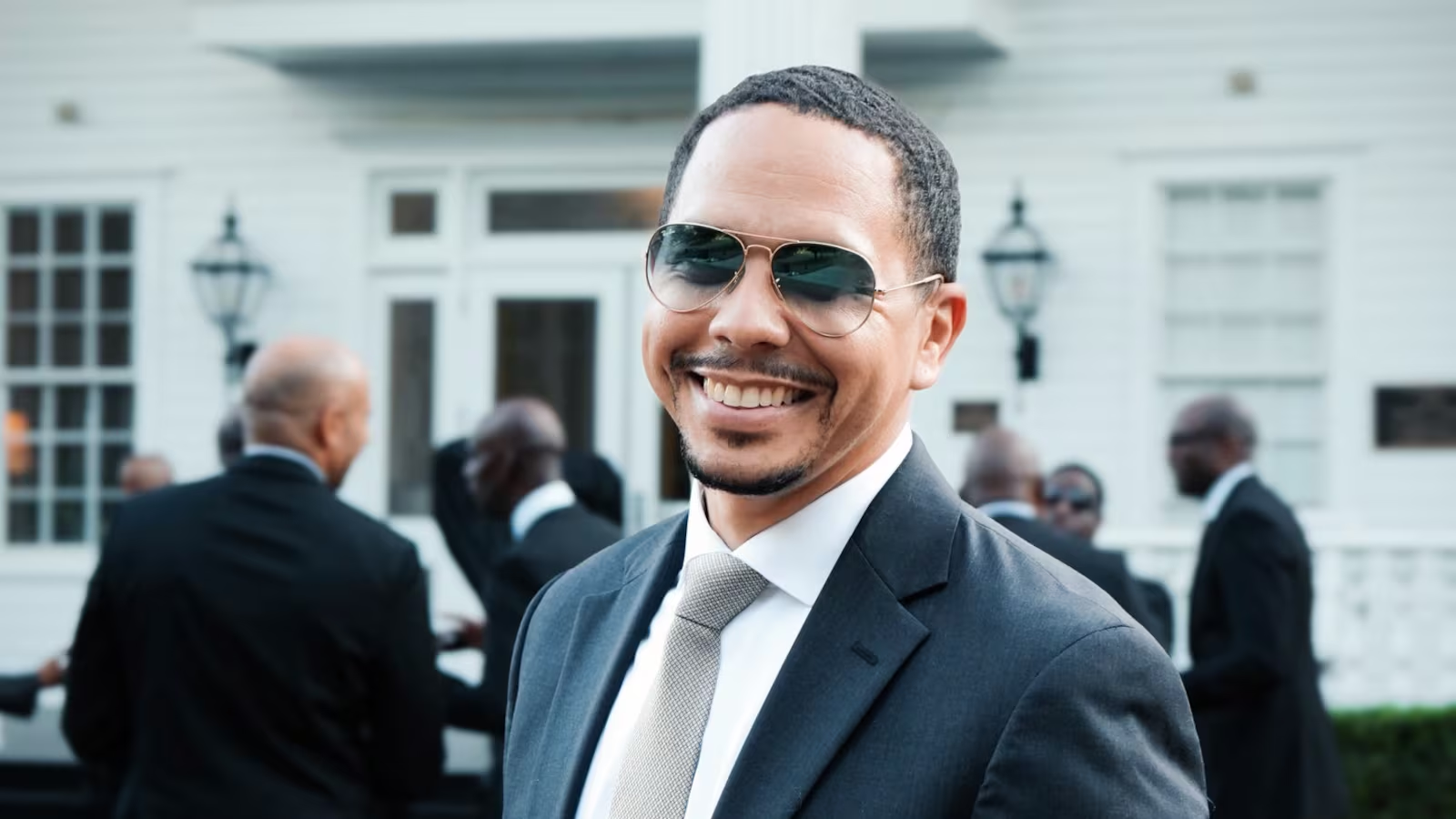
Howard alum Jaha Howard has officially been sworn in as the new Georgia State Senator for District 35, adding another major chapter to Howard University’s legacy of producing public-service leaders across the country. According to coverage from WSB Radio, Howard took the oath of office at the Georgia State Capitol, stepping into the role after winning a closely watched special election to fill the vacant seat.
Howard’s moment at the Gold Dome is bigger than a local political win—it’s another reminder that HBCU alumni continue to shape policy, represent communities, and bring lived experience into leadership spaces where decisions are made. For readers who’ve been following HBCU Buzz’s coverage of Howard University and its alumni pipeline, this is the latest example of “The Mecca” producing leaders who move with purpose.
In addition to his academic and professional accomplishments, Howard is also a proud member of Alpha Phi Alpha Fraternity, Inc., the nation’s first intercollegiate Greek-letter fraternity founded by African American men. His affiliation with Alpha Phi Alpha reflects a long-standing commitment to leadership, service, and advocacy—principles that align closely with his approach to public office. Throughout his career in education, healthcare, and now state government, Howard has embodied the fraternity’s mission of developing leaders who uplift their communities and advance social justice.
Howard Alum Jaha Howard Brings Education and Community Roots to District 35
Howard’s path to the state senate is rooted in public-facing service. He previously served on the Cobb County School Board, where he built a reputation as a community-first leader focused on students, families, and equity-driven outcomes. In the WSB Radio report, Howard is described as a 44-year-old who spent four years on the school board before stepping into this statewide role, with District 35 covering parts of Fulton and Cobb counties. Those roots matter in a district where residents are juggling education access, cost-of-living pressures, and healthcare uncertainty—issues that require leaders who understand the human side of policy.
The swearing-in also came with a clear signal about priorities. In remarks reported by WSB Radio, Howard pointed to healthcare concerns, specifically referencing the risk of Georgians losing coverage tied to expiring Affordable Care Act subsidy provisions—an issue that has become increasingly urgent for working families. His quote during the ceremony underscored momentum and conviction, framing this moment as a beginning rather than an endpoint. WSB Radio’s report captures that tone and the significance of the transition.
Election Win Followed a High-Stakes Special Runoff
Howard’s swearing-in follows his victory in the District 35 special election runoff, where he defeated Roger Bruce in a tight race. Official tracking of the contest shows Howard won the December 16, 2025 runoff with 51.9% of the vote, according to Ballotpedia’s election results. Multiple local and regional outlets covered the outcome, including reporting that framed the win as a notable upset and highlighted Howard’s background as both a dentist and former education leader, including Georgia Recorder’s recap and CBS News Atlanta’s coverage.
The vacancy Howard filled was created after former senator Jason Esteves resigned, clearing the way for a special election to determine the district’s next voice in the state senate. WSB Radio notes that Esteves left the seat to pursue a run for governor, setting the stage for a competitive contest and heightened attention around who would take over representation for District 35. Ballotpedia’s District 35 overview provides additional context on the seat and its recent representation.
What This Means for Howard University’s Leadership Legacy
For Howard alumni, this moment fits into a long-running narrative: Howard University graduates don’t just participate in civic life—they lead it. Howard’s elevation to the Georgia Senate adds to a visible pipeline of HBCU-trained leaders bringing culturally grounded leadership into policy spaces, particularly in the South where historically Black political power and Black institutions remain closely intertwined.
And while the work ahead will be measured by votes, bills, and district outcomes, Howard’s story also matters on a symbolic level. A Howard alum stepping into state senate leadership is a reminder to current students and young alumni that the path from campus to the capitol is real, active, and still expanding. It is also the kind of milestone that reinforces why HBCU representation matters—not as a headline, but as a long-term investment in community-centered governance.


