


The news that Jesse Jackson dies marks the passing of a defining figure in American civil rights, electoral politics, and Black institutional advocacy. Rev. Jesse Jackson spent more than five decades shaping national conversations around race, economics, and access to opportunity. As the country reflects on his impact, the HBCU community is mourning not just a political leader, but a consistent champion of Black colleges.
Reports confirm that Jackson passed away at 84 after years of health challenges, including a public battle with Parkinson’s disease that he disclosed in 2017, as previously reported by The New York Times. Though his public appearances became less frequent in recent years, his influence remained embedded in institutions, movements, and policies across the country.
For HBCUs, his passing signals the loss of a generational bridge between the Civil Rights Movement and modern Black political engagement.
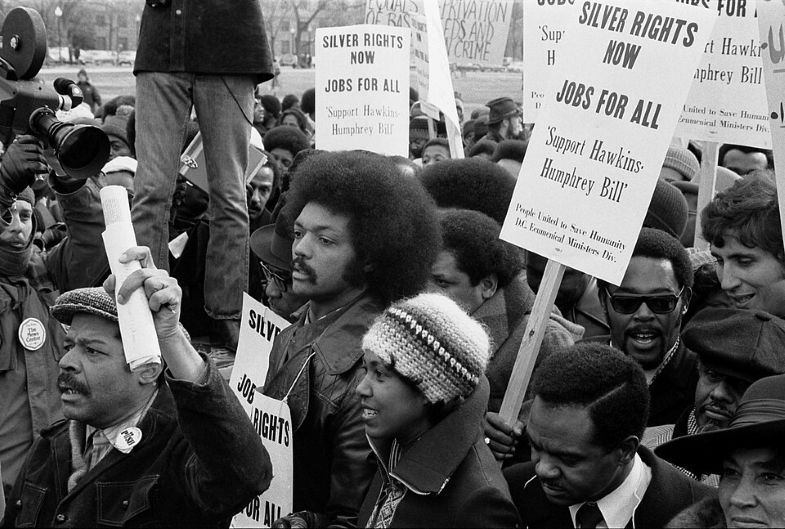
A Civil Rights Leader Who Never Left Black Campuses
Jackson first rose to prominence as a close associate of Dr. Martin Luther King Jr. before founding Operation PUSH in 1971 and later the Rainbow PUSH Coalition. His presidential campaigns in 1984 and 1988 mobilized millions of voters and reshaped the Democratic electorate, as detailed in his historical profile on Britannica.
Yet even as his national profile expanded, Jackson remained deeply connected to Historically Black Colleges and Universities. He regularly delivered commencement addresses, participated in campus forums, and encouraged students to see their education as both empowerment and obligation.
He frequently spoke about the historic role HBCUs played in producing civil rights leaders, attorneys, educators, clergy, and lawmakers. In his view, Black colleges were not simply academic institutions. They were training grounds for freedom.
Jesse Jackson Dies: A Special Connection to NCA&T
Among the institutions with which Jackson shared a meaningful connection was North Carolina A&T State University. The Greensboro campus holds an iconic place in civil rights history as the home of the A&T Four, whose 1960 Woolworth’s sit-in ignited a nationwide student movement.
Jackson often referenced student activism as a catalyst for systemic change, and NC A&T represented that spirit. Over the years, he appeared on the campus for speeches and events, reinforcing the university’s legacy as a site of political awakening and civic responsibility. Coverage across the North Carolina A&T State University reflects the institution’s ongoing prominence in national conversations about leadership and activism.
For Aggies, the reality that Jesse Jackson dies is layered with historical resonance. His life mirrored the type of leadership NC A&T has consistently cultivated. Bold. Strategic. Unapologetic.
Jackson often emphasized that student movements create political pressure that reshapes policy. NC A&T’s legacy of organized protest and Jackson’s lifelong commitment to voter mobilization operated within the same ideological framework.

Political Power and HBCU Organizing
During his 1988 presidential campaign, HBCU campuses became organizing hubs. Students volunteered, canvassed neighborhoods, registered voters, and hosted campaign forums. Many future leaders trace their first civic engagement experiences to Jackson’s mobilization efforts.
His Rainbow Coalition philosophy centered on multiracial and cross class alliances. He built relationships among Black communities, Latino communities, labor unions, farmers, and working class voters. That coalition building approach resonated deeply within HBCU culture, where collective advancement is foundational.
When Jesse Jackson dies, it closes a chapter that directly connected HBCU student energy to presidential politics at scale.
Education as Economic and Political Access
Jackson consistently linked education to economic empowerment. Through Operation PUSH and Rainbow PUSH, he pressed corporations to diversify hiring pipelines and invest in minority owned businesses. He advocated for equitable funding for Black colleges and frequently highlighted the need for public and private investment in HBCUs.
These priorities align closely with ongoing conversations around institutional equity and federal funding reflected throughout the broader HBCU funding discussion.
He argued that access to education without access to opportunity was incomplete. HBCUs, in his view, were engines of leadership and wealth creation.
The Legacy HBCUs Now Carry Forward
As tributes continue nationwide, the reality that Jesse Jackson dies is prompting reflection within the HBCU community about continuity and responsibility. He represented a living bridge between the 1960s Civil Rights Movement and modern debates around voting rights, criminal justice reform, and economic equity.
His speeches often centered on dignity, discipline, and determination. Those principles remain embedded within HBCU culture.
Jackson’s physical presence on campuses may now be absent, but the framework he championed remains active. Civic engagement. Coalition building. Institutional pride. Economic accountability.
When Jesse Jackson dies, his legacy does not end. It transfers.
And across campuses like North Carolina A&T and beyond, the next generation of leaders will decide how boldly they carry it forward.