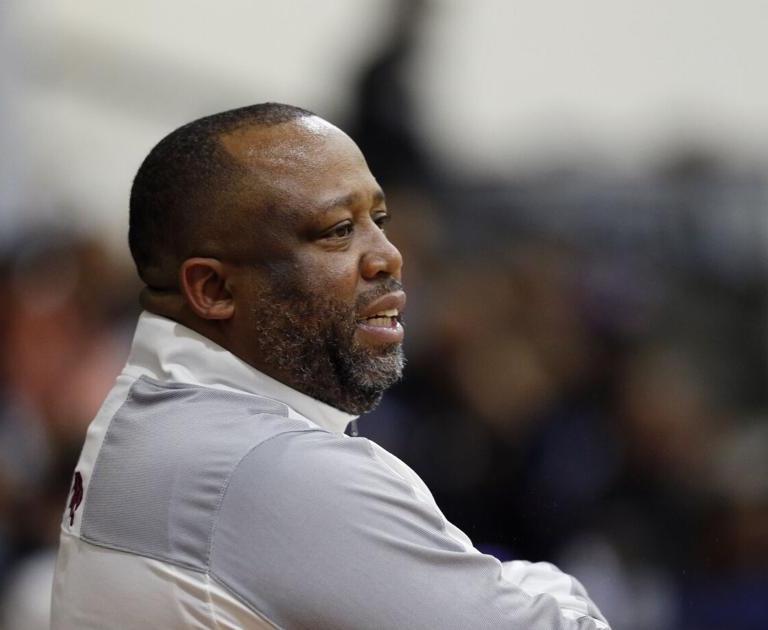

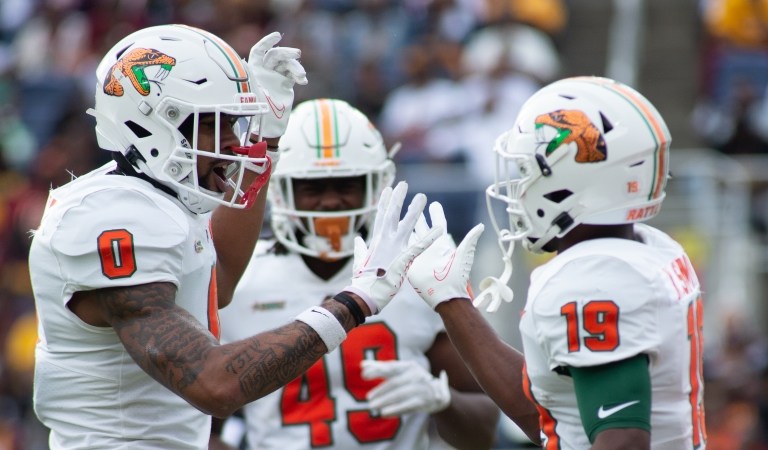
FAMU football postseason ban is the kind of headline that instantly changes the emotional shape of a season before it even starts. Florida A&M announced on April 10 that its football program has received Level Two Academic Progress Rate penalties from the NCAA for the 2026 season, making the Rattlers ineligible for postseason competition while also subjecting the program to practice restrictions. For a program trying to reset under first-year head coach Quinn Gray Sr., this is not just a technical compliance story. It changes what 2026 means for the team, for the fan base, and for a Florida A&M program that was supposed to be turning the page into a new era.
FAMU football postseason ban is about more than one bad headline
The university says the penalties were triggered because FAMU’s multi-year APR score fell below the NCAA’s 930 benchmark, the threshold teams must meet over a rolling four-year period to remain eligible for championships. The APR measures academic eligibility and retention term by term for scholarship student-athletes, so this is not a one-semester issue or a single roster problem. It is the result of a larger academic performance trend that accumulated across multiple years. That is why this story lands with so much force. It is not about a bad week. It is about a system failing slowly enough to become visible only when the consequence finally arrives.
FAMU’s own statement made that point directly, and that is what separates this story from a simple punishment narrative. President Marva B. Johnson said the penalties reflect a failure of institutional infrastructure rather than a failure by the student-athletes themselves. Athletic director John F. Davis similarly acknowledged the outcome and said the school has already begun implementing an enhanced academic action plan. In other words, the administration is not trying to pin this on the locker room. It is saying the support system around the players was not strong enough, and now the players are living with the consequences of that breakdown.
Why the APR issue hits so hard at Florida A&M
That distinction matters because APR stories can easily get flattened into lazy assumptions about discipline or effort. FAMU is clearly trying to frame this more honestly. The university said the four-year window that produced the score included academic years that predated the current president, the current athletics administration, and the current coaching staff. It also revealed that the school had received a conditional waiver for the 2025 season and hoped that waiver would provide relief, but the required conditions were not met, which led to the 2026 postseason ban taking effect. That context does not erase the penalty, but it does explain why this feels like inherited damage landing on a new regime.
It also makes the timing especially brutal. Quinn Gray was officially hired in December 2025 as FAMU’s 20th head coach, returning to Tallahassee as a former Rattlers quarterback to lead what was supposed to be a fresh chapter for the program. The team is coming off a 5-7 season in 2025, and the 2026 schedule already carried the feel of a measuring-stick year with games against Albany State, South Carolina State in the Orange Blossom Classic, Miami, Tennessee State, and the usual pressure of SWAC play. Instead of spending the offseason selling fans on a climb back to championship contention, FAMU now has to sell discipline, accountability, and long-range rebuilding in a season where the traditional reward at the end is off the table.
What the penalties mean on the field and behind the scenes
The postseason ban is the headline, but the practice restrictions matter too. The NCAA’s APR framework explains that teams below the benchmark face a progression of penalties designed to shift time away from athletics and toward academics, and Level Two penalties generally layer additional activity reductions on top of the initial practice limits. FAMU’s public statement did not spell out every operational detail of the restriction package in its announcement, but it did confirm that practice restrictions are part of the 2026 penalty. That means the cost here is not only symbolic. It can shape development time, routine, and how a first-year coaching staff builds culture over the course of the season.
That is why this story should not be reduced to whether FAMU can still “have a good year.” Of course the Rattlers can still win games. They can still ruin somebody else’s season. They can still build momentum and establish a stronger identity under Gray. But the psychology of a year changes when a team knows it cannot play its way into the postseason. FAMU’s own statement underscored that reality by laying out the full 2026 regular-season schedule and noting that the team will conclude with Bethune-Cookman in the Florida Blue Florida Classic on Nov. 21. The implication is plain: unless the program regains standing in future reporting cycles, that rivalry game becomes the endpoint.
FAMU says the fix has already started
To its credit, the university did not stop at apology language. FAMU said it is expanding compliance and academic monitoring, including real-time tracking of student-athlete academic engagement and early intervention protocols for athletes who show signs of academic risk. The school also said newly appointed Faculty Athletics Representative Dr. Gail Randolph has been more formally integrated into the support structure to connect athletics academic services with faculty advising networks across campus. Those are not flashy fixes, but they are the kind of infrastructure moves that actually matter if a school is serious about changing outcomes instead of just changing messaging.
There is another layer here that longtime Rattler supporters will recognize immediately. FAMU has dealt with NCAA-related headlines before, but this case is different from the school’s 2019 infractions matter, which involved broader eligibility and compliance failures across multiple sports and was explicitly not tied to APR. That distinction is important because this current moment is not about an enforcement scandal in the usual sense. It is about academic performance metrics, retention, and whether the institution built a structure capable of keeping athletes on the right path to eligibility and graduation. Different problem, same public embarrassment, and that may be part of why this news hits such a nerve.
What this means for HBCU football moving forward
For the wider HBCU football conversation, this is another reminder that the margin for error off the field can be just as decisive as anything that happens on it. HBCU programs often have to do more with less, and the NCAA itself has said it offers academic support resources and grants for limited-resource institutions trying to stay above the APR benchmark. But resource constraints do not make the standard disappear, and once a score drops below 930 long enough, the penalty arrives whether the coaching staff is new or not. That is the hard lesson inside this story. Winning culture is not just about recruiting, schemes, and game-day energy. It also has to show up in advising, tracking, intervention, and institutional follow-through.
In the end, FAMU football postseason ban is not just a setback. It is a stress test. It will test whether the administration’s new support promises are real, whether Quinn Gray can keep a team locked in without a postseason prize at the end, and whether the Rattlers can turn a season defined by limitation into one that still builds belief. FAMU can still make Saturdays loud. It can still make the Orange Blossom Classic matter. It can still make the Florida Classic count. But now the deeper question is whether this program can finally build the kind of academic and athletic foundation that keeps a talented team from being boxed out of its own future.