
Southern University STEM complex progress hit a major milestone this month as Southern University and A&M College celebrated the placement of the final structural beam on its new $68 million STEM building. The moment signals that the structure is fully framed and the project is moving into its next phase, bringing a long awaited upgrade in labs, classrooms, and research capacity closer to reality for students on the Bluff. The Southern University STEM complex is being funded through Louisiana’s Capital Outlay Act, a state backed investment that campus leaders say will help expand opportunity and innovation for current and future Jaguars.
Details on the milestone were highlighted in a recent report on the topping off ceremony, while the university has also shared project specifics and the vision for what the building will deliver once it opens. Together, those updates reinforce the scale of the Southern University STEM complex and why it matters for workforce development, research competitiveness, and student outcomes in high demand fields. You can read more through this recent report and the university’s project overview.
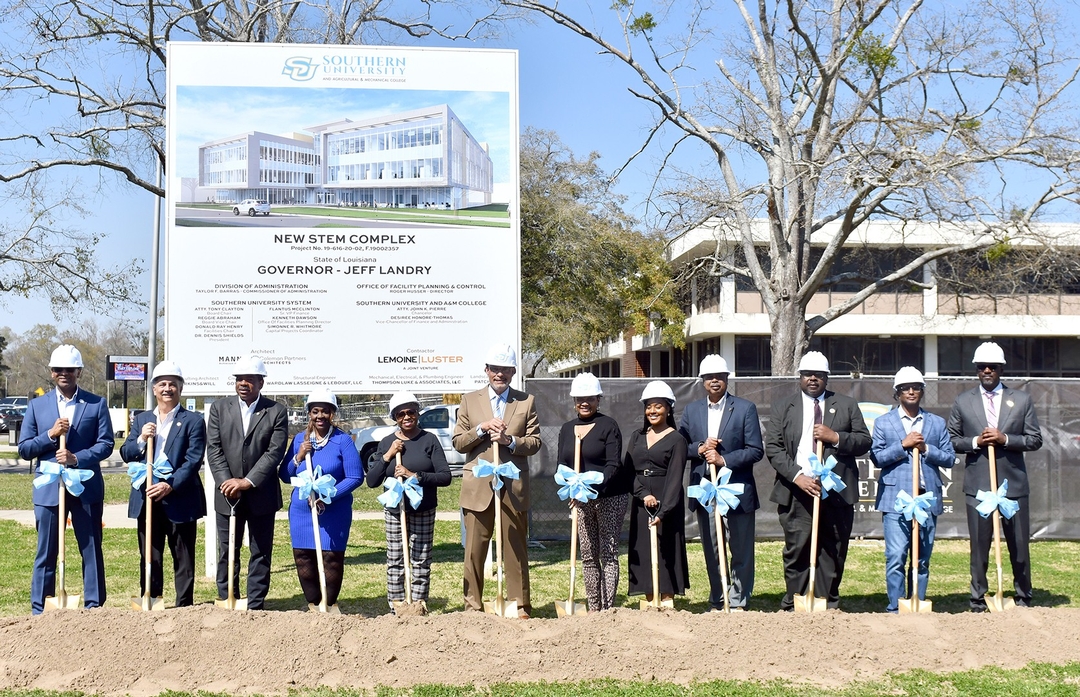
Southern University STEM Complex Will Add 21 Labs and 16 Classrooms
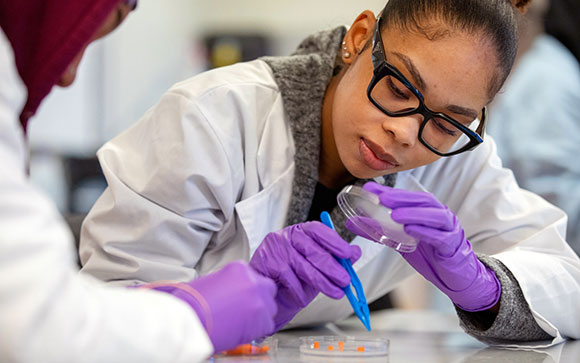
The Southern University STEM complex is designed to modernize how STEM is taught, practiced, and scaled on campus. According to the university, the facility will include 21 student laboratory spaces supporting physics, chemistry, biology, and mathematics, along with 16 classroom spaces built for instruction that matches today’s learning formats and lab based expectations. The building plan also includes a student common area intended to support collaboration, tutoring, project work, and peer learning, plus support spaces for faculty, staff, and administrators to strengthen day to day operations. Those details were shared in the university’s construction announcement.
For students, the biggest impact is simple: modern space supports modern training. In STEM, learning outcomes are deeply tied to access to equipment, updated labs, and room for hands on experimentation. The Southern University STEM complex aims to close gaps that often appear when students have the talent and ambition but lack the physical environment to match the pace of the industries they want to enter.
Why the $68 Million Investment Matters for Baton Rouge and Beyond
A $68 million STEM facility is not just a campus improvement, it is a statement about the role Southern University intends to play in the regional and national STEM pipeline. HBCUs continue to produce a meaningful share of Black STEM talent, and infrastructure upgrades like the Southern University STEM complex are one of the most direct ways to increase research capacity, expand enrollment in technical majors, and strengthen readiness for graduate school and industry roles.
The Southern University STEM complex also connects to workforce needs across Louisiana and the Gulf South, where demand continues to rise for professionals in engineering, biotech, data science, cybersecurity, advanced manufacturing, and environmental science. A modern building creates more room for faculty led research, student projects, partnerships with private industry, and grant funded work that can bring new resources onto campus. Local reporting on the project has also emphasized the building’s role as a hub for collaboration with industry partners and confirmed the $68 million cost and Capital Outlay funding structure in coverage of the initiative here.
What Comes Next and When Students May See the Impact
With the topping off milestone complete, the project moves deeper into interior build out, lab planning, and technology integration. The Southern University STEM complex is expected to be completed in 2027, giving the university time to finalize equipment decisions, faculty space needs, and programming that maximizes the building’s potential from day one.
Broader coverage of the milestone has also noted the expected 2027 completion window and placed the total investment in the $68 million range, with some reporting referencing $70 million depending on how totals are described in public updates.