
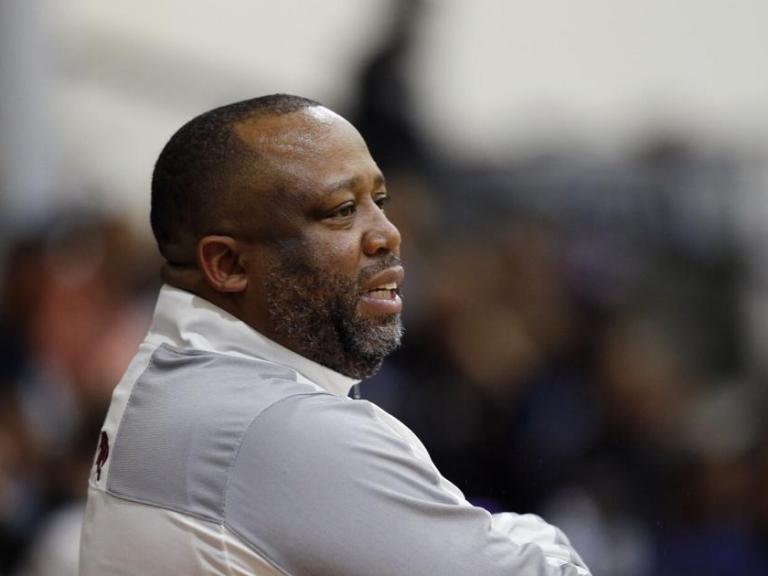
Jay Butler Winston-Salem State is the kind of move that tells you a program is not interested in easing into a rebuild. Winston-Salem State officially named Lester “Jay” Butler its new head men’s basketball coach on April 9, pulling one of the CIAA’s most proven winners from conference rival Virginia Union to lead a Rams program that badly needed a jolt. The hire comes after a rough 2025–26 season in which Winston-Salem State finished 7–19 overall, went 2–14 in CIAA play, and closed the year on a 13-game losing streak. That kind of slide demanded more than a routine replacement. It demanded a coach whose résumé already carries weight in the same league, in the same region, and in the same Division II world Winston-Salem State is trying to climb back through.
Jay Butler Winston-Salem State is a statement hire, not a safe hire
Winston-Salem State’s own announcement makes clear this was not a placeholder move. The university said Butler emerged from a national search and was chosen to lead the Rams into their “next era of excellence.” That language matters because schools do not talk like that when they are just trying to stabilize. They talk like that when they believe they have landed someone who can change the trajectory of the program. Butler brings more than 20 years of collegiate coaching experience, including 20 years as a head coach at the NCAA Division II level. According to WSSU, he owns a 372–239 career record, has posted nine 20-win seasons, and has taken teams to eight NCAA Division II tournaments. That profile does not read like a gamble. It reads like a school deciding it no longer has the patience for a slow climb.
The timing of the hire makes that even clearer. Winston-Salem State did not come into this offseason from a place of calm. In February, the school moved on from Corey Thompson just hours before a regular-season home game, with assistant Tony Jones stepping in on an interim basis. Thompson had only been in his second season leading his alma mater, which made the decision feel especially abrupt. But the broader message was obvious: the standard at Winston-Salem State remained higher than what the men’s program had put on the floor this year. That is the context Butler is walking into. He is not being asked to maintain momentum. He is being asked to restore belief.
Why Winston-Salem State targeted Butler now
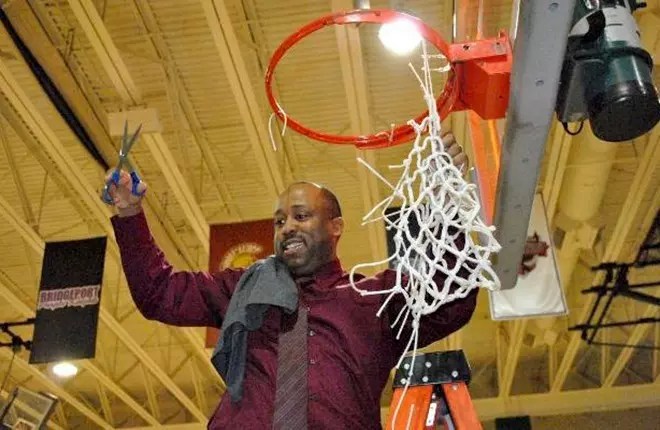
What makes this hire sharp is that Butler does not need a long introduction to the CIAA. He has spent the last 11 seasons at Virginia Union, where he built one of the conference’s most consistently respected programs. In 2025–26 alone, Virginia Union went 25–6, earned another NCAA Division II tournament berth, and Butler picked up CIAA Coach of the Year honors for the third time in his career. His team also earned the CIAA Team High Academic Award, which adds another layer to why he appealed to Winston-Salem State. This is not just a coach with wins. This is a coach whose recent work checks the boxes schools love to emphasize now: competitiveness, player development, and academic structure.
That last piece matters more than people sometimes admit. A coach can win and still leave a program uneven. Winston-Salem State’s announcement repeatedly stressed student-athlete success on and off the court, and interim athletics director Eric Burns said the school wanted a leader who could elevate the program competitively while developing young men “in competition and in life.” That wording sounds standard on the surface, but paired with Butler’s recent academic recognition at Virginia Union, it shows what kind of culture WSSU believes it is buying. The Rams were not just shopping for a tactician. They were looking for someone who could rebuild the shape of the program.
This hire matters because Winston-Salem State is not an ordinary job
That is especially important at Winston-Salem State because this is not just any CIAA job. This is one of the most historically significant basketball programs in Black college sports. The 1967 Rams became the first Black college team ever to win an NCAA national title, a breakthrough achieved under the legendary Clarence “Big House” Gaines. That team, led by future NBA star Earl “The Pearl” Monroe, remains one of the foundational stories in HBCU basketball history. So when Butler said he is “deeply aware of the legacy” built at Winston-Salem State, that was not ceremonial language. It was an acknowledgment that this job comes with history attached to it in a way many programs simply do not.
That history is also why seven wins felt so jarring. At plenty of schools, a 7–19 year is disappointing. At Winston-Salem State, it feels out of alignment with the brand of the program. This is a school where basketball has long been tied to pride, identity, and memory. Fans do not only measure the team against last season. They measure it against banners, against Big House Gaines, against Earl Monroe, against the expectation that Winston-Salem State should matter in the CIAA every year. Butler is stepping into that pressure, but that is also exactly why the move feels logical. If you are trying to honor a heavyweight program, you probably do not hand it to someone still learning the room. You give it to a coach who already knows how to win in it.
Pulling from a CIAA rival adds another layer
There is also something quietly ruthless about where WSSU went to make this hire. Butler was not plucked from outside the conference or from some distant assistant role. He was taken directly from Virginia Union, another respected CIAA program with recent success. That matters because it means Winston-Salem State did not just identify a good coach. It identified a coach who has already been solving the exact problems WSSU needs solved: recruiting in the CIAA footprint, preparing for the conference schedule, understanding the league’s style of play, and building a program that can compete for March relevance. Intra-conference hires always send a message, and this one says WSSU wants proven league fluency right now, not a long experimental ramp-up.
And Butler arrives with enough credibility that players, alumni, and recruits are likely to feel the impact quickly. Even before any roster decisions come into focus, the hire alone changes the temperature around the program. It gives Winston-Salem State a coach with recent winning momentum, recognizable conference stature, and the kind of résumé that can help reopen conversations on the recruiting trail. When a program has just come off a 2–14 league season, perception matters. Butler gives the Rams a stronger one immediately.
What success should look like next
The smartest way to view this move is not to assume Winston-Salem State will instantly flip into a title contender next season. Rebuilds rarely work that neatly, even with the right coach. But the hire clearly raises the expectation floor. The Rams should look more organized. They should recruit with more clarity. They should carry more credibility into the CIAA season. And they should begin acting like a program with a plan again. That may be the most important part of all. Winston-Salem State does not need empty hype. It needs visible direction. Butler’s background suggests that is exactly what the school believes it has secured.
In the end, Jay Butler Winston-Salem State is not just another coaching change headline. It is a signal that one of the CIAA’s proudest basketball brands believes it has drifted too far from what it is supposed to be. By hiring a three-time CIAA Coach of the Year with a recent 25-win season and deep Division II experience, the Rams are making it plain that this is about more than filling a vacancy. It is about restoring a standard. For Winston-Salem State, that is the real story.