
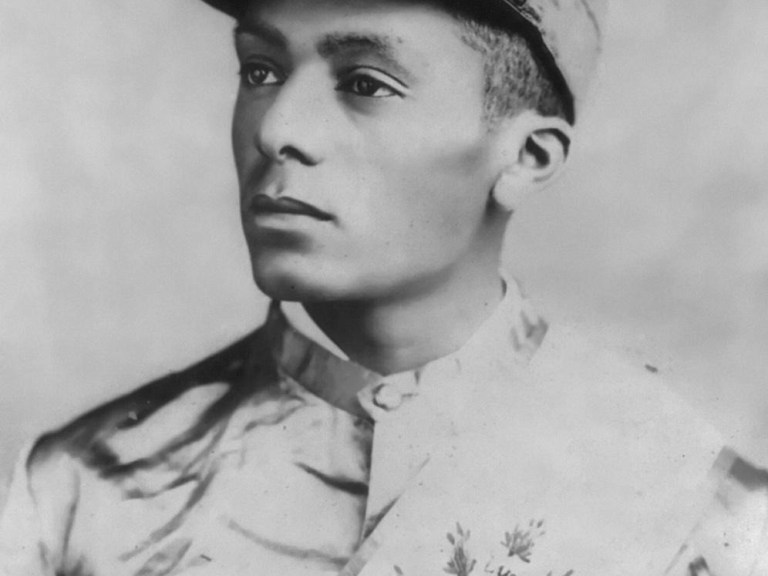
Maybe you’ve heard the name Isaac Burns Murphy, who lived from 1861 to 1896, and is widely regarded as one of the most accomplished jockeys in the history of American racing. Some go so far as to say he’s one of the most dominant athletes of all time.
Born, perhaps unsurprisingly, near Louisville, Kentucky, he wound up winning the Kentucky Derby three times. While record-keeping was a little dicey back then, estimates put his win rate at close to 50%, which is an absurd level of dominance never seen before or since in the world of horse racing.
He was known for strategy, precision, and discipline. He was also African American.
The history of black jockeys in the United States is both sad and complicated. Men like Isaac Murphy are at the heart of it. In this article, we take a look at his legacy and provide a general overview of the history of horse racing as it relates to African Americans.
Overview: Horse Racing’s Golden Age
Horse racing had a massive cultural moment in the 19th century, particularly after the Civil War. During this time, the popularity of the sport absolutely exploded, with people demonstrating a higher level of interest than ever before.
Most jockeys at the time, particularly in the South, were black. The reason for this was tied to slavery. Enslaved people were typically responsible for maintaining horses on plantations and, therefore, were often best qualified to handle them in races.
At the inaugural Kentucky Derby, 13 of 15 jockeys were black. For the next 30 years, black jockeys would win 50% of the ensuing Derbies. Isaac Murphy claimed three of them.
It was a genuinely revolutionary period for the sport. Oliver Lewis, Willie Simms, and Isaac Murphy were generational talents, defining what is now known as the golden age of black dominance in American horse racing.
Not only was this period pivotal for racing itself, but it also marked one of the last moments for many years in which black athletes were given a platform at the highest level of the sport.
Unfortunately, as horse racing became more associated with money and power, segregation began to set in. Nearing the 20th century, jockey positions were becoming genuinely well-paid jobs.
As betting systems expanded and purses increased, Jim Crow–era laws began to reinforce racial segregation in a way that reshaped American society from the top to the bottom. In this environment, black jockeys were gradually pushed out of the sport.
Isaac Murphy was one of the lucky ones
Isaac Murphy was one of the lucky African American jockeys in that he was not forced out of the sport. At the time of his death, he was still one of the most accomplished racers in the game and was paid considerably better than most black men, or, for that matter, white men at the time.
It’s not necessarily a happy story. He died at the age of 35 of heart disease. But it remains the case that it would be decades before anyone else matched his level of accomplishment, or before the black community was given anything close to the opportunities he had.
The slow return of black jockeys
Slowly, in the 20th and 21st centuries, black jockeys have begun to return to the sport. The levels of inclusion are very low compared to their historical prominence, but there are people adding diversity to the game.
Deshawn Parker is the most noted modern figure in the sport. Aged 55 now, he’s won more than 5,000 races throughout the course of his long and storied career.
While his success is encouraging, it remains tragic what happened to African Americans in the world of horse racing.
A tragic but important lesson
Currently, there are approximately 80 active black jockeys in the sport of horse racing. For context, there are about 1,500 licensed jockeys in the guild right now. Black racers make up only a small fraction of the general population within the sport.
When you look at horse racing content or betting markets on major platforms, it is easy to assume that most of the jockeys operating the horses you’re wagering on are Caucasian.
There’s a lesson to this. Immense amounts of societal damage can take place in a short period of time. Black jockeys spent three decades building an important legacy in the 19th century. Twentieth-century discrimination laws tore that legacy to shreds rapidly.
Even 100-plus years later, we haven’t come close to approaching the level of diversity and representation that the sport once knew. It’s more important than ever to ensure that horse racing, as with any sport, remains as fair and equitable as possible.
The horse player’s equivalent
Handicapping races is, from a structural standpoint, similar to counting cards. Instead of looking at playing cards, though, you’re evaluating performance indicators.
For example: pace pressure, early speed, class level, track surface, post position bias, recent performance data, trainer and jockey patterns, and so on.
Race reading is all about recognizing shifting circumstances as they emerge and adjusting behavior accordingly. It’s from these factors that ostensibly unimpressive horses can be heavily advantaged.
Handicappers are not responsible for choosing winners, but merely recognizing probability, particularly as it relates to line pricing.
You can find more information about horse racing in modern times here: twinspires.com/edge/racing/wagering/best-bets/
The shared element is a mindset built around edges, not outcomes. In neither case can a system guarantee a result in a specific moment. Handicappers and card counters alike are instead seeking favorable outcomes over long-term processes.
No handicapper can predict the exact outcome of a race. No card counter can tell you exactly what the next card will be. However, through good systems, they can experience higher-than-typical results over a long period of time.