

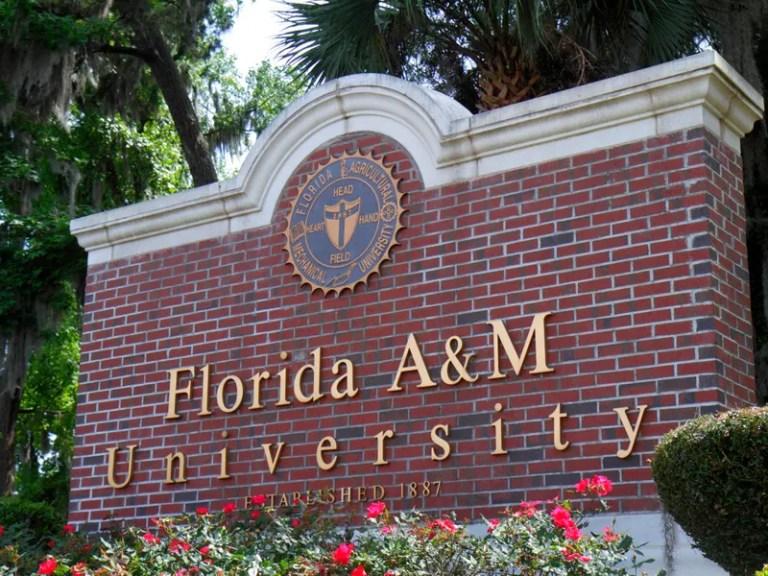
The FAMU underfunding lawsuit is moving forward after a federal appeals court revived claims alleging that the State of Florida has underfunded Florida A&M University by nearly $2 billion over several decades.
In a major legal victory for current FAMU students, the U.S. Court of Appeals for the Eleventh Circuit ruled that a lower court acted too soon when it dismissed the case. The appeals court did not decide whether Florida discriminated against FAMU or whether the state is legally responsible for the alleged funding gap. Instead, the court ruled that the students’ claims were strong enough to survive dismissal and continue through the legal process.
That distinction matters. The case is not over, but FAMU students now have another opportunity to present evidence and push forward a lawsuit that could have national implications for public HBCUs.
The lawsuit, filed by current FAMU students, argues that Florida has failed to fully eliminate the effects of segregation in its public higher education system. The students claim the state has chronically underfunded FAMU when compared to historically white institutions such as the University of Florida and Florida State University.
What The Court Ruled In The FAMU Underfunding Lawsuit
The Eleventh Circuit’s June 9 decision revived claims brought by several FAMU students against the State of Florida, the Florida Board of Governors, and higher education officials. The students brought claims under Title VI of the Civil Rights Act of 1964, the Equal Protection Clause of the Fourteenth Amendment, and the U.S. Supreme Court’s landmark higher education desegregation case, United States v. Fordice.
The court ruled that the students had standing to bring the case and that their claims should not have been dismissed at the motion-to-dismiss stage. In plain English, the appeals court said the students deserved the chance to keep litigating.
The court specifically said the district court credited the state’s version of the facts too early instead of accepting the students’ well-pled allegations as true, which courts are generally required to do at that early stage of a lawsuit.
“Nothing in this opinion reflects any view on the underlying merits of the students’ claims,” the court wrote in its decision. Still, the panel concluded that the students’ claims “should’ve survived” the dismissal stage.
The case now returns to the lower court for further proceedings.
Students Say Florida Has Underfunded FAMU For Decades
At the heart of the FAMU underfunding lawsuit is a long-running argument about whether Florida has treated its only public HBCU fairly.
The students allege that Florida has underfunded and under-resourced FAMU in multiple ways. Their claims include general underfunding, lower per-student allocations, lower faculty salaries, fewer resources for campus facilities and infrastructure, and less support for academic research and student services.
The lawsuit also challenges Florida’s handling of land-grant funding. FAMU and the University of Florida are both land-grant institutions, but the students argue that Florida has not supported FAMU at the same level as UF.
That issue has been part of a much larger national conversation around HBCU funding and the historic underinvestment in 1890 land-grant institutions. A federal analysis previously found that FAMU faced a funding gap of roughly $1.9 billion when compared to the University of Florida over a 30-year period.
For FAMU students, those numbers are not abstract. They connect directly to classrooms, labs, housing, campus facilities, faculty recruitment, technology, research opportunities, and the overall student experience.
Why The Case Matters For FAMU And Public HBCUs
This ruling is bigger than one lawsuit. It speaks to a question HBCU advocates have raised for generations: have states truly repaired the damage caused by decades of legally segregated higher education?
FAMU was founded in 1887 and remains one of the most important public HBCUs in the country. The university has produced generations of leaders, professionals, educators, scientists, journalists, business owners, public servants, and cultural figures. But like many public HBCUs, FAMU has long had to compete while carrying the weight of historic underinvestment.
That is why this case matters to the broader HBCU news community. Funding determines more than budgets. It shapes opportunity. It affects whether a university can build modern facilities, attract top faculty, expand academic programs, support student research, and compete for major grants.
The students’ lawsuit also points to academic program decisions. They argue that Florida has allowed unnecessary duplication of FAMU programs at nearby historically white institutions while limiting FAMU’s ability to offer more unique, high-demand programs.
Those claims go directly to the legacy of segregation in higher education. When public HBCUs are underfunded, under-resourced, or boxed out of high-demand academic programs, students can be left with fewer opportunities than their peers at better-funded institutions.
Florida Has Denied The Underfunding Claims
The State of Florida and higher education officials have pushed back against the allegations. The state has argued that its funding decisions are lawful and that the students have not proven the alleged disparities are tied to Florida’s former system of de jure segregation.
A lower court previously dismissed the lawsuit, finding that the students had not done enough to show that modern funding disparities could be traced to legally enforced segregation. The Eleventh Circuit disagreed with that dismissal, at least at this stage of the case.
That does not mean the students have won the entire lawsuit. It means they have won the right to keep going.
The state will still have opportunities to defend its funding decisions, and the students will still have to prove their claims as the case moves forward.
A Major Moment In The Fight For HBCU Equity
The revival of the FAMU underfunding lawsuit is a significant moment for students, alumni, and HBCU advocates who have argued that public HBCUs are still dealing with the financial consequences of segregation.
For decades, HBCUs have been asked to do more with less. They have educated Black students through exclusion, discrimination, economic barriers, and systemic inequity. They have produced excellence even when the resources did not match the mission.
This lawsuit brings that history into a federal courtroom.
If the students are successful, the case could force Florida to confront how decades of funding decisions have affected FAMU and its students. It could also add momentum to similar conversations across the country, where land-grant HBCUs have pushed states to address long-standing funding disparities.
For now, the victory is procedural but powerful. The students’ claims are alive. The lawsuit is moving forward. And the fight over whether Florida has failed to fully support its only public HBCU is far from over.