Duncan Powell domestic violence charges came to a close this week, ending a legal battle that threatened to overshadow one of the most significant HBCU basketball journeys of the modern recruiting era.
On June 17, a Rhode Island judge found the former Providence forward not guilty on two misdemeanor domestic violence charges following a three-day bench trial. The verdict closes a case that began in March, when Powell was arrested after an incident involving his ex-girlfriend.
How the Case Unfolded
Providence police charged Powell with domestic violence-simple assault and domestic violence-disorderly conduct after a March 28 incident. According to the allegations, a woman claimed she suffered a knee injury after Powell threw a water bottle during an argument at his Providence apartment.
The situation expanded hours later into a second police investigation in nearby Cranston. Reports indicated the woman alleged Powell tracked her to another residence and made threats involving a firearm. That charge was dismissed in May, well before the trial on the remaining Providence counts.
Powell pleaded not guilty from the outset and maintained his innocence throughout the legal process. Following this week’s trial, he was acquitted of the remaining charges as well, closing the case entirely.
From Groundbreaking HBCU Recruit to Power Conference Contributor
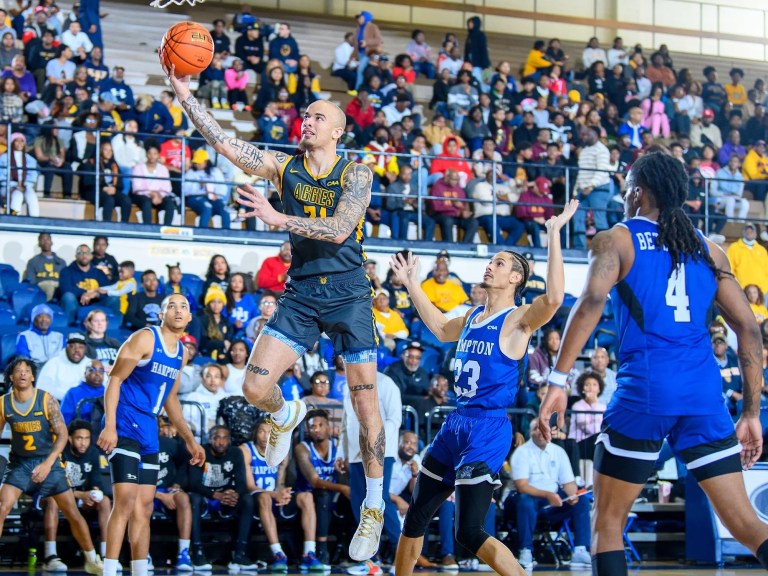
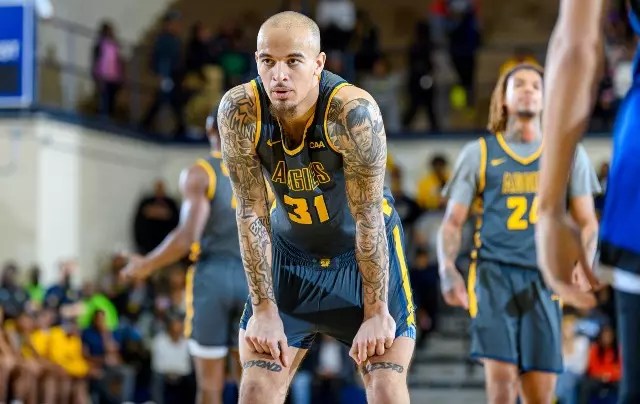
Powell’s path to this trial began with one of the more notable commitments in recent HBCU basketball history. When he signed with North Carolina A&T in 2021, the four-star prospect from DeSoto, Texas, arrived in Greensboro as the highest-ranked American-born basketball recruit ever to commit to an HBCU program. At the time, Powell said he wanted to build on the legacy of his cousin, Adrian Powell, a member of the Aggies’ 2013 MEAC championship team. “Just carrying on his legacy. Filling up his shoes, times two,” Powell said. “I’m just ready to get there and dominate.”
A knee injury forced Powell to redshirt his first season at NC A&T, but he emerged as one of the Colonial Athletic Association’s top young forwards in 2022-23, averaging 8.0 points and 5.7 rebounds and earning CAA All-Rookie Team honors.
From there, Powell became one of the more recognizable names moving through the transfer portal. He led Sacramento State in scoring and rebounding during the 2023-24 season, then moved to Georgia Tech, where he developed into one of the ACC’s most productive sixth men, averaging 12.2 points and 5.4 rebounds while shooting nearly 36% from three-point range. He transferred to Providence for his final collegiate season while simultaneously exploring NBA Draft opportunities. That’s when the legal proceedings began, shifting much of the public conversation away from his game.
The Reality of Public Allegations and Legal Outcomes
Athletes facing criminal accusations often discover that public attention moves faster than the legal system does. Even when charges are dismissed or a defendant is acquitted, the reputational impact can linger well past the verdict. Powell’s case played out publicly during a critical stretch of his basketball career, when nearly every game and interview carried added scrutiny.
History offers several comparable cases. Former Baylor defensive end Shawn Oakman saw his draft stock collapse after sexual assault allegations surfaced ahead of the 2016 NFL Draft; a Texas jury found him not guilty in 2019, but the years lost during litigation altered his career path. Former Ohio State defensive backs Amir Riep and Jahsen Wint were dismissed from their program in 2020 after rape and kidnapping allegations, then later acquitted once trial evidence contradicted key claims. Brian Banks remains perhaps the most cited example: his football career was effectively ended by a plea deal tied to allegations later proven false, and he didn’t receive exoneration until after serving prison time.
An acquittal does not retroactively prove every allegation was fabricated. It means prosecutors did not meet the legal burden required for a conviction. For athletes whose careers hinge on timing, though, the consequences of public allegations frequently arrive long before any legal resolution does.
Unverified Claims Around NIL Add a New Wrinkle
After the verdict, Powell’s father, D.J. Powell, made additional claims in an interview with GoLocalProv. He alleged that Providence College wanted the charges to result in a conviction because a conviction would have voided portions of his son’s NIL agreement. “It was Providence College that wanted the case to stick,” D.J. Powell said. “Because if the charges stuck, Duncan would be in violation of his NIL agreement.” He further claimed the school remains obligated to fulfill the rest of Powell’s NIL compensation following the acquittal.
It’s important to note these are unverified allegations from Powell’s father, not confirmed facts. Providence did not publicly respond to the claims. Duncan Powell himself later distanced from his father’s remarks on social media, writing: “He is not my spokesperson for me or my family. I have not spoken to him about this matter.” That statement leaves the NIL claims unresolved while signaling that Powell intends to control his own public narrative going forward.
What Comes Next
With the legal proceedings concluded, attention shifts back to where it stood before March: Powell’s NBA Draft prospects. His college career included stops at NC A&T, Sacramento State, Georgia Tech, and Providence, a journey that took him from a groundbreaking HBCU signing to a Power 4 contributor with legitimate professional aspirations.
Whether NBA teams treat the case as fully closed remains to be seen. What’s certain is that one of the most significant HBCU basketball recruits of the modern recruiting era now gets the chance to have his future decided on the court rather than in a courtroom.