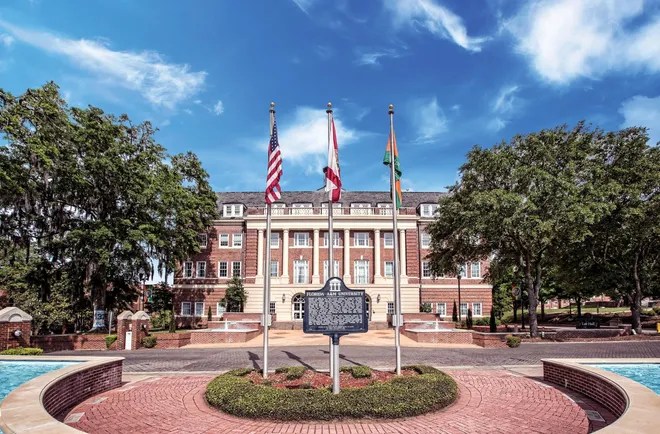

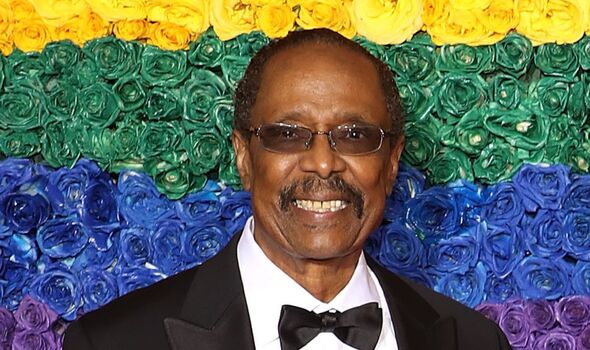
Harold Wheeler spent more than five decades shaping the sound of American entertainment — and it all started on Howard University’s campus.
Howard University alumnus Harold Wheeler, the Tony-winning Broadway orchestrator, composer, and longtime musical director of “Dancing With the Stars,” died June 24, 2026, at his home in Los Angeles following a lengthy illness. He was 82. His death was announced by longtime family friend and Broadway producer Lamar Richardson. Harold Wheeler’s Howard University roots shaped not only his career but his entire life. He met his future wife on that campus, alongside future legends who would go on to change American music forever.
The Yard That Changed Everything
Wheeler arrived at Howard in the early 1960s after graduating from Sumner High School in St. Louis. He had been playing piano since age five, performing for Sunday school at Antioch Baptist Church, where congregants once included Chuck Berry and Ike and Tina Turner. That early gift carried him all the way to Washington, D.C.
At Howard, Wheeler crossed paths with some of the most important musical talents of his generation. He met fellow students Roberta Flack and Donny Hathaway, both of whom would go on to become defining voices in American soul music. He also met actress Hattie Winston, a fellow student who would later become his wife. The two married in 1978 and remained together until his death, raising daughters Marian and Samantha together.
Wheeler earned his B.A. from Howard in 1964 before heading to the Manhattan School of Music for his master’s degree. The foundation Howard gave him in those formative years carried directly into a career that would touch nearly every corner of American entertainment.
After finishing his education, Wheeler worked as an assistant program director for CBS-FM Radio in New York from 1968 to 1971. He left that role to pursue composing and coaching performers full-time — a decision that changed the trajectory of his life almost immediately.
That same year, legendary songwriter Burt Bacharach hired Wheeler to conduct his new musical “Promises, Promises.” At just 25 years old, Wheeler became the youngest conductor in Broadway history. The role also made him one of the first African Americans to serve as musical director for a major pop artist. It was the beginning of a Broadway career that would span more than three decades and 31 productions.
Wheeler went on to orchestrate some of the most celebrated musicals in Broadway history, including “The Wiz,” “Dreamgirls,” “Hairspray,” “The Full Monty,” “Dirty Rotten Scoundrels,” and “Ain’t Too Proud: The Life and Times of the Temptations.” He earned Tony nominations for his orchestrations on “The Life,” “Little Me,” “Swing!,” “The Full Monty,” “Hairspray,” and “Dirty Rotten Scoundrels.” In 2003, he won the Drama Desk Award for Outstanding Orchestrations for “Hairspray.” In 2019, the Broadway community honored his lifetime of work with a Special Tony Award for Lifetime Achievement in the Theater.
A Career That Reached Every Stage
Wheeler’s influence extended far beyond Broadway. He arranged and produced music for a staggering list of legends, including Aretha Franklin, Whitney Houston, Nina Simone, Diana Ross, Stevie Wonder, Ray Charles, and B.B. King. He played piano on Bruce Springsteen’s “Blinded by the Light” from the 1973 album “Greetings From Asbury Park, N.J.”
He conducted the opening and closing ceremonies of the 1996 Summer Olympics alongside fellow composers John Williams and Paul Shaffer. In 2004, Wheeler became only the second African American conductor in Academy Awards history when he served as music conductor for the 76th Academy Awards. He returned three years later as music arranger for the 79th Oscars.
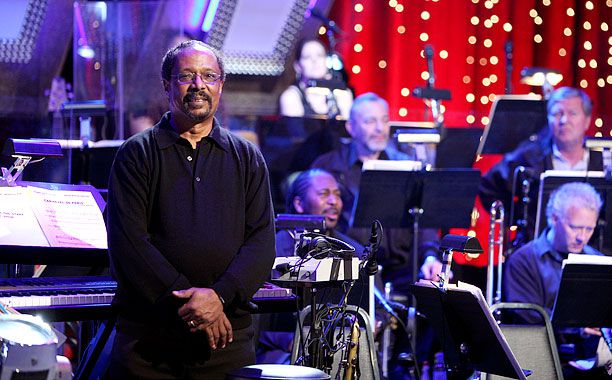
From 2006 to 2013, millions of television viewers knew Wheeler as the musical director for ABC’s “Dancing With the Stars.” His 28-piece live orchestra and vocal ensemble became a defining part of the show’s identity for 17 seasons, until producers shifted toward recorded music and Ray Chew took over the role.
A Legacy Rooted in Howard
Wheeler’s NAACP Theatre Awards Lifetime Achievement Award in 2008 and his Special Tony Award in 2019 cemented his place among the most accomplished musical directors of his generation. But for the HBCU community, his story carries an even deeper resonance. He is proof of what Howard University has produced for generations: artists who walk onto that campus as students and walk off it as architects of American culture.
Wheeler is survived by his wife, Hattie Winston, the daughters they raised together, and his grandchildren. His music touched Broadway stages, Olympic ceremonies, Academy Award broadcasts, and millions of television screens every week for years. It all traces back to a young man from St. Louis who found his people, his purpose, and his future wife on Howard’s campus more than 60 years ago.