
Shaw University just made history — and the Shaw University EdD in AI is unlike anything the HBCU world has ever seen.
On June 24, 2026, Shaw University announced that the Southern Association of Colleges and Schools Commission on Colleges approved the university to offer doctoral-level degrees for the first time in its 160-year history. That approval cleared the way for Shaw University Divinity School to launch the Doctor of Education in Artificial Intelligence and Moral Agency — the first program of its kind at any HBCU in the country. The first cohort of 12 students will begin in Spring 2027. Applications open this summer.
A Historic First for Shaw and for HBCUs
This milestone is significant on two levels. First, it marks the first time Shaw has ever been authorized to confer doctoral degrees. Second, it positions the Shaw University Divinity School as a national leader at the intersection of theological ethics and emerging technology.
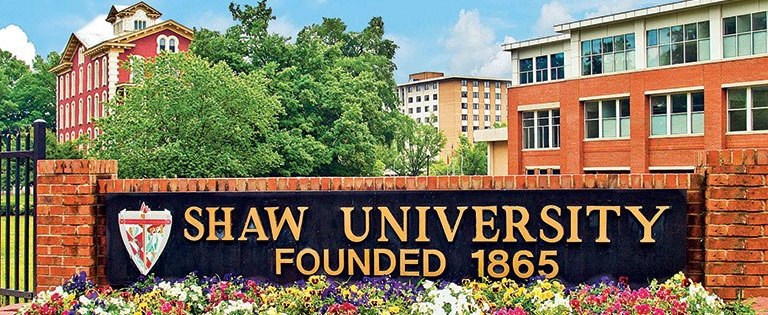
Shaw University was founded in 1865. Moreover, it holds the distinction of being the first HBCU established in the South. For 160 years, the university has prepared graduates in ministry, education, and public service. Now, it is stepping into one of the most consequential conversations of the 21st century — and doing it from a uniquely HBCU perspective.
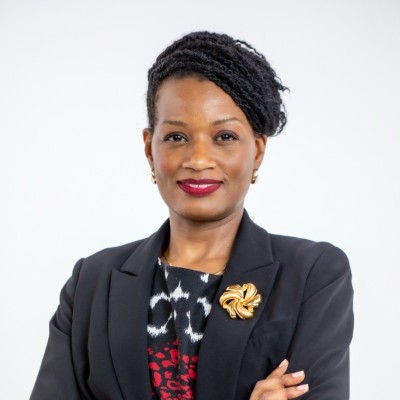
“This is a historic moment for Shaw University and for theological education,” said Dr. Paulette R. Dillard, President of Shaw University. “Furthermore, it reflects our commitment to preparing leaders who are not only academically excellent but morally grounded and ready to serve.”
What the Shaw University EdD in AI Actually Covers
The Shaw University EdD in AI is an interdisciplinary, practice-oriented doctorate. Therefore, it is designed for leaders who are already working — not traditional graduate students entering directly from undergraduate programs.
Specifically, the program targets bi-vocational and pastoral leaders with at least five years of leadership experience and an accredited graduate theological degree. A Master of Divinity or Master of Arts in Theology and Ministry qualifies as the required foundation. New cohorts will enroll each fall and spring after the inaugural class begins in 2027.
The curriculum combines AI literacy, AI application, moral reasoning, social justice, and applied ethics. As a result, graduates will leave equipped to critically assess AI technologies and shape ethical norms in their fields. The goal is not simply to understand how AI works. Instead, it is to ensure that the people making decisions about AI are guided by accountability, human dignity, and equity.
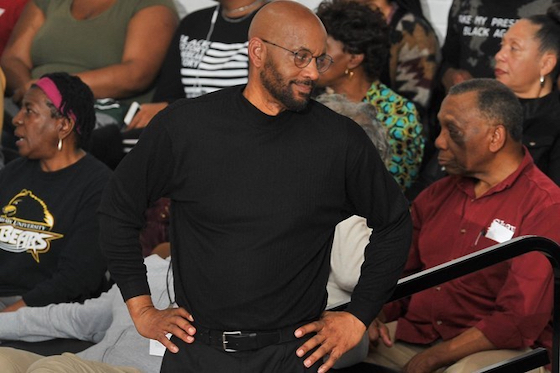
“Artificial intelligence is already shaping decisions in healthcare, criminal justice, hiring, and public policy,” said Dr. Mark Harden, Dean of Shaw Divinity School. “Those decisions raise questions of fairness and accountability that technical fields alone cannot resolve. Therefore, Shaw is uniquely positioned to train leaders who can bridge that gap.”
Why This Program Matters Right Now
AI is not a future concern. Rather, it is already embedded in how institutions make decisions about people’s lives. Hiring algorithms screen job applications. Predictive tools influence criminal sentencing. Healthcare systems use AI to allocate resources. Public policy increasingly relies on automated data analysis.
In each of those spaces, the question of who is accountable — and whose values are built into the system — is often left unanswered. Moreover, Black and brown communities have consistently borne the cost of AI systems that were not designed with their dignity in mind. Furthermore, the people with theological and ethical training to address those failures have rarely had a formal academic home to do that work from.
Shaw University is creating that home. Consequently, the HBCU community now has a doctoral pipeline specifically designed to produce leaders who can hold AI accountable.
Building on Shaw’s Existing Divinity Pipeline
The new doctoral program does not exist in isolation. Instead, it grows directly out of Shaw Divinity School’s existing graduate programs. The school’s Master of Divinity program and its recently approved Master of Arts in Theology and Ministry together form a direct pipeline into the new doctorate.
Shaw Divinity School graduates currently serve across more than 35 professional fields — from pulpits to hospitals to nonprofits to public service organizations. As a result, the school already has a well-established network of bi-vocational leaders who are exactly the kind of students this program is designed to serve.
That pipeline matters. Additionally, it means the Shaw University EdD in AI is not starting from scratch. It is building on decades of graduate theological education and channeling it toward one of the most urgent ethical challenges of our time.
What Comes Next
Applications for the inaugural Spring 2027 cohort are now open. Prospective students can contact Shaw University Divinity School directly for more information. New cohorts will enroll each fall and spring going forward, giving the program a steady and growing pipeline of ethical AI leaders coming out of an HBCU institution.
Shaw University has been training leaders for 160 years. Consequently, it is now preparing to train the leaders the AI era actually needs — and it is doing it first.