

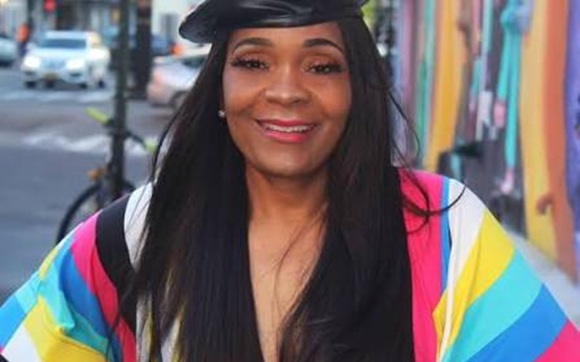
MC SHA-ROCK teaches at Bowie State University — and her students are learning hip-hop history from someone who actually built it.
Sharon Jackson, known worldwide as hip-hop’s legendary first female MC, serves as an adjunct professor in the Visual Communication & Digital Media Arts program within Bowie State University’s Department of Fine & Performing Arts. She is not a guest lecturer trading on old fame. Rather, she is a working architect of the university’s Hip-Hop Studies & Visual Culture minor — the first program of its kind at any HBCU in the nation. This fall, that work is being recognized on a national stage: Jackson will be inducted into the North Carolina Music Hall of Fame’s class of 2026.
From Wilmington to Hip-Hop History
Long before she became MC SHA-ROCK, Sharon Jackson was a kid from Wilmington, North Carolina, experiencing the birth of a culture in real time. She did not know then that she was making history. She simply loved the microphone.
As a founding member of Funky 4 + 1, Jackson helped define the elements that became hip-hop’s DNA — microphone technique, lyrical delivery, and the art of commanding a room with nothing but rhythm and voice. In 1981, her group made history as the first hip-hop act to perform on national television, appearing on Saturday Night Live and introducing an underground culture to living rooms across America. That performance changed the trajectory of American music forever. Now, that same history walks into a Bowie State classroom every week.
What MC SHA-ROCK Actually Teaches at Bowie State
Bowie State launched its Hip-Hop Studies & Visual Culture minor in 2016. Since then, the university has grown its hip-hop scholarship across multiple disciplines, cementing its role as a national leader in treating hip-hop not simply as entertainment, but as a legitimate field of academic inquiry, artistic expression, and social change.
Jackson is central to that mission. As the department’s resident MC, hip-hop pioneer, and historian, she gives students something no textbook can replicate — direct access to someone who lived the culture’s founding moments. Consequently, her classroom becomes a living archive as much as an academic course.
Tewodross Williams, professor and program coordinator of the VCDMA program, described her impact directly. “As a pioneer, educator and mentor, she has been instrumental in shaping our Hip-Hop Studies & Visual Culture program and inspiring the next generation of artists and scholars,” Williams said. “We are honored to have her as part of the Bowie State family.”
A National Honor That Validates the Work
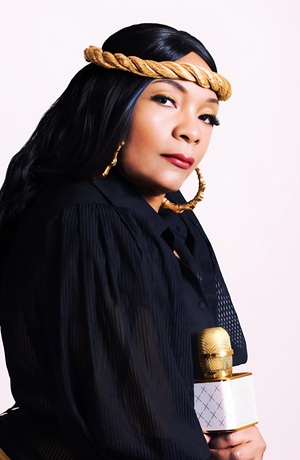
This fall’s North Carolina Music Hall of Fame induction places Jackson alongside an extraordinary class of honorees — go-go pioneer Sugar Bear, jazz composer Billy Strayhorn, and Lifetime Achievement recipient George Clinton. Moreover, it reflects recognition that extends well beyond a single performer’s career.
“My induction into the North Carolina Music Hall of Fame is more than a personal honor,” Jackson said. “It is recognition of a history that helped shape a culture heard and felt around the world. As the first female MC of hip-hop culture, I have dedicated my life to preserving the truth about our beginnings and ensuring that the pioneers who built this movement are never forgotten.”
That mission — preserving the truth and protecting the record — is exactly what she brings into every Bowie State classroom.
Her Influence Extends Beyond the Classroom
Jackson’s teaching is only one part of how she keeps hip-hop’s history alive. She hosts a daily hip-hop show, “That’s the Joint,” on LL Cool J’s Rock the Bells Radio channel on SiriusXM, alongside fellow pioneer Grandmaster Caz.
Additionally, Jackson has used her platform to advance conversations about entrepreneurship and economic empowerment in Black communities. She participated as a distinguished panelist during the 2023 HBCU + Entrepreneurship Conference, contributing to a session on building generational wealth through hip-hop’s fifty-year legacy. There, she shared insights on ownership, intellectual property, and sustainable wealth-building — themes she brings directly back into her Bowie State teaching.
Why Her Presence at an HBCU Matters
For all her accolades, Jackson consistently redirects credit away from herself. “Hip-hop has become a global language, yet its roots remain grounded in the communities, voices and innovators who dared to create something the world had never seen before,” she said. “This recognition honors not only my journey, but the countless women and pioneers whose contributions shaped the foundation of this culture.”
That humility shapes how she teaches. Rather than centering her own legacy, she uses her classroom to ensure hip-hop’s origin story — and the women who built it — never gets erased.
What Bowie State Students Are Really Getting
Students in Jackson’s classroom are not learning hip-hop history from a textbook. Instead, they are learning it from someone who lived it, shaped it, and has now dedicated her next chapter to making sure they carry it forward.
“It reminds us that history is something we must protect, document and pass forward,” Jackson said, “and that true innovation belongs to those willing to challenge expectations and move the culture forward.”
That is the lesson Bowie State students get — not from a lecture slide, but from the woman who was there when hip-hop began.