
A proud Howard moment meets a public reaction
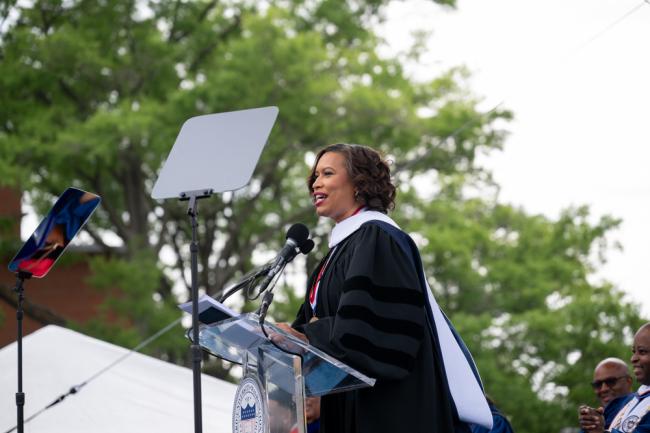
Howard University commencement became one of the most talked-about HBCU moments of the week after Washington, D.C. Mayor Muriel Bowser received a mixed reaction during her keynote address at the university’s 158th Commencement Convocation.
The ceremony took place Saturday, May 9, on The Yard, where Howard University celebrated the Class of 2026 and conferred more than 3,100 degrees during Mother’s Day weekend. The day included Howard’s historic Long Walk, proud families, university leaders, and a graduating class stepping into the next phase of its journey.
But the national conversation quickly shifted after parts of the crowd booed Bowser and some students chanted “Free D.C.” during her remarks. Bowser, who also received an honorary Doctor of Humanities degree from Howard, delivered the commencement address as she prepares to leave office after deciding not to seek a fourth term as mayor.
The reaction on The Yard
The Howard University commencement reaction spread quickly across social media and HBCU news spaces because it captured more than a tense moment at a graduation. It reflected the complicated relationship between students, local politics, and the city that Howard calls home.
According to HBCU Gameday, Bowser’s speech leaned heavily on the theme of transition. She compared her own exit from office to the graduates’ next chapter, telling the crowd that she, too, was “graduating.” That framing did not land the same way with everyone in attendance. Some students responded with boos, while others used the moment to chant “Free D.C.”
The response made the commencement feel like both a celebration and a civic statement. Howard students have long been part of Washington’s political and cultural fabric. When they speak in public spaces, especially on The Yard, the message often reaches far beyond campus.
Howard’s official celebration remained historic
Even with the reaction to Bowser drawing headlines, Howard’s official commencement was still centered on the Class of 2026. The university described the ceremony as a major milestone for graduates and their families, noting that the class included students from many different paths, backgrounds, and life experiences.
Interim President and President Emeritus Dr. Wayne A.I. Frederick addressed the graduates and reflected on their growth from their first walk onto campus to their final Long Walk across The Yard. Howard also highlighted the symbolism of the ceremony, with graduates moving from preparation to purpose as they entered life after graduation.
That part of the story matters. The Howard University commencement was not only about one speaker or one reaction. It was about thousands of students completing degrees at one of the nation’s most important HBCUs.
Why the Bowser moment became bigger than the speech
The reaction to Bowser did not happen in a vacuum. Howard sits in the heart of Washington, D.C., and its students experience the city as residents, neighbors, commuters, workers, organizers, and voters. For many, local politics are not abstract. They show up in housing, public safety, transportation, policing, affordability, and the larger fight over D.C. self-determination.
That is why the “Free D.C.” chants stood out. The phrase points to the long-running push for greater local control and statehood for Washington, D.C. It also shows how quickly a commencement stage can become a platform for public accountability.
NewsOne argued that the student response should not be dismissed as simple disrespect, framing it instead as a reaction from young people who live in the city and understand its political tensions firsthand. That perspective helped shape the broader conversation after clips from the ceremony began circulating online.
HBCU commencements are never just ceremonies
HBCU commencements have always carried a deeper meaning. They are family reunions, cultural celebrations, academic milestones, and public statements all at once. They bring together students, elders, elected officials, alumni, and community leaders in spaces where history is always present.
At Howard, that meaning is even more visible. The university has produced generations of leaders in law, medicine, politics, media, education, business, activism, and the arts. Its commencement stage is not just ceremonial. It is symbolic.
That symbolism is part of why the Bowser reaction gained so much attention. Students were not simply sitting in an audience. They were participating in a Howard tradition that has always existed at the intersection of scholarship, Black leadership, and public truth-telling.
Bowser’s connection to Howard and D.C.
During her address, Bowser spoke about the connection between Howard and Washington, D.C. Howard’s official recap noted that she emphasized the university’s role in the city and its impact on the world. She also referenced Howard alumni who served as D.C. mayors, including Sharon Pratt and Adrian Fenty.
That connection is real. Howard’s presence in Washington has shaped the city for more than a century. Its students, alumni, faculty, hospital, research, and cultural influence have helped define what Black excellence looks like in the nation’s capital.
Still, the mixed reaction showed that institutional connection does not erase public criticism. Bowser may have come to celebrate Howard graduates and mark her own transition, but students made it clear that the moment belonged to them, too.
A story about celebration and accountability
The Howard University commencement story is powerful because it holds two truths at once. Howard celebrated more than 3,100 graduates in a historic ceremony filled with pride, family, tradition, and achievement. At the same time, students used a public moment to voice frustration with a political leader whose decisions have shaped the city around them.
Both parts matter.
The Class of 2026 deserved its celebration. Families deserved to cheer. Howard deserved to honor the years of work, sacrifice, and resilience that brought students to The Yard. But the student response also belongs in the story because HBCU students have never been passive observers of history.
They have always challenged it, shaped it, and pushed it forward.
Howard graduates step into the world
For Howard’s newest alumni, the headlines around Bowser may fade, but the meaning of commencement will last. The Class of 2026 walked across The Yard carrying the weight of Howard’s legacy and the promise of what comes next.
That is the bigger story.
The boos and chants became national news, but the heart of the day remained the graduates. They completed the work. They crossed the stage. They joined a global Bison alumni network rooted in excellence, truth, and service.
Howard’s commencement showed the country what HBCU spaces often show best: celebration can exist with critique, joy can exist with conviction, and young Black voices can honor tradition while still demanding more from the world around them.