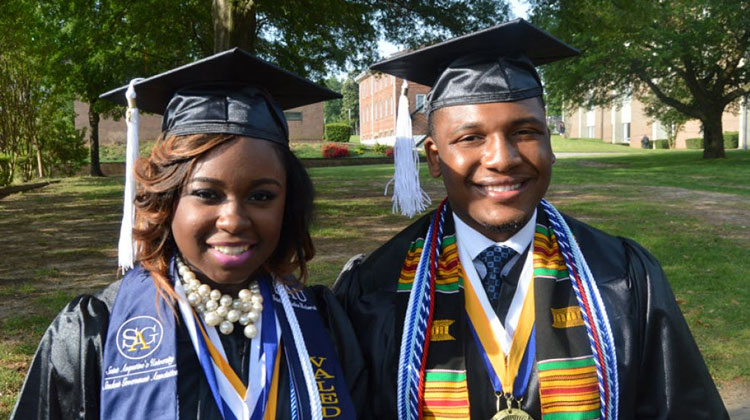

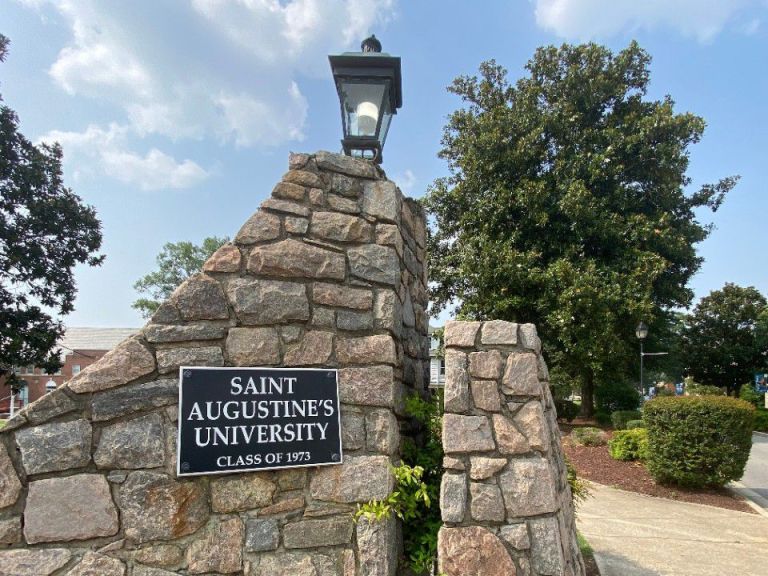
Saint Augustine’s University has given so much to Black excellence — now it is time to give something back.
The 159-year-old Raleigh, North Carolina HBCU is facing one of the most difficult chapters in its history. Saint Augustine’s University filed for Chapter 11 bankruptcy in late April, ended its legal fight to restore accreditation, and saw its interim president step down — all in the same week. The road ahead is steep. But this institution has meant too much to too many people to be written off, and the Saint Augustine’s University bankruptcy story is not over yet.
159 Years of Legacy on the Line
Saint Augustine’s was founded in 1867 by Episcopalians in the Diocese of North Carolina — just two years after the end of the Civil War. It was built to educate freed Black men and women at a time when the rest of the country was determined to keep them from learning. That founding mission carried through generations of students, faculty, and alumni who went on to shape their communities, their professions, and the world around them.
For decades, the school was also home to one of the greatest athletic dynasties in American sports history. Coach George Williams spent 44 years building a track and field program that captured 39 NCAA Division II national championships. He coached the U.S. Olympic Track and Field team in 2004. He ranks third all-time in championship titles among all coaches in NCAA history — across every division and every sport. Saint Augustine’s produced Olympians, world-class competitors, and hundreds of individual national champions. That is the kind of legacy that does not just belong to one school. It belongs to all of us.
Where Things Stand Today
The financial challenges at Saint Augustine’s built over many years. Enrollment that was close to 1,000 students in 2017 had fallen to an estimated 150 by the start of the 2025-26 school year. The school lost its accreditation from the Southern Association of Colleges and Schools Commission on Colleges in late 2023 following years of financial and governance concerns, and fought hard in court to get it back.
The Chapter 11 bankruptcy filing is not a death sentence — it is a legal tool designed to give institutions a structured path to reorganize and move forward. The Board of Trustees called it “a comprehensive path to address our financial challenges and move forward with a stronger foundation.” The university says it is not closing and plans to continue offering technology and nursing certification programs during the process.
Interim Provost Verjanis Peoples has stepped into the role of interim president and is working to keep the institution moving. The fight is not over.
It Has Been Done Before
History shows that HBCUs can come back from moments like this — and Saint Augustine’s can too.
Morris Brown College in Atlanta lost its accreditation in 2002 and filed for bankruptcy in 2012. Alumni rallied. Donors showed up. New leadership took hold. Morris Brown regained its accreditation in 2020 and rebuilt enrollment from fewer than 20 students to over 400. That comeback did not happen because people gave up — it happened because the HBCU community refused to let it die.
Saint Augustine’s deserves that same energy. It deserves alumni giving what they can. It deserves donors and organizations looking at how they can help stabilize the institution. It deserves the kind of loud, visible support that reminds decision-makers, creditors, and the broader public that this school has a community behind it.
What the HBCU Community Can Do
The most important thing right now is awareness and action. Sharing this story matters. Conversations about what went wrong — and what systemic underfunding of HBCUs looks like in practice — matter. Alumni connecting with the university directly matters.
For the broader HBCU community, Saint Augustine’s is also a call to action beyond just one school. Too many HBCUs operate without the financial safety nets that comparable predominantly white institutions take for granted. The gap in federal funding, philanthropic investment, and institutional support is real — and Saint Augustine’s is what happens when that gap goes unaddressed for too long.
This is bigger than one bankruptcy filing. It is a conversation the entire community needs to keep having.
The Story Is Not Over
Saint Augustine’s University is still standing. Alumni are still praying over it. People inside the institution are still working to find a path forward. The 159 years of history, sacrifice, and achievement that define this school do not disappear because of a difficult financial moment.
The HBCU world has always shown up for its own. Saint Augustine’s needs that same love right now — and it needs it loudly.