
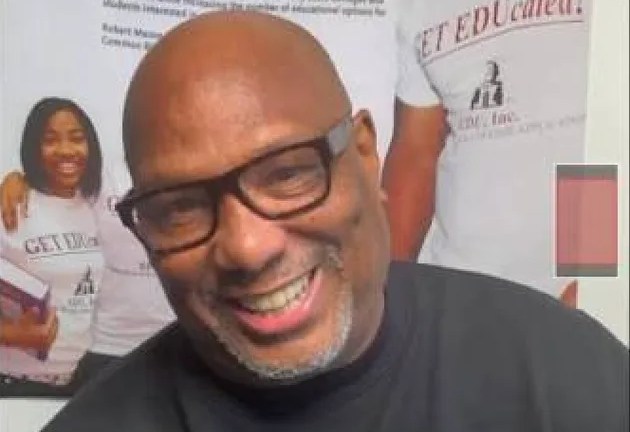
The Common Black College Application founder Robert Mason, the man who made it possible for hundreds of thousands of students to apply to dozens of Historically Black Colleges and Universities with a single form, has died at 66. His brother, Todd Mason, confirmed the death to HuffPost. A cause has not yet been released.
For nearly three decades, Mason’s name has been inseparable from the Common Black College Application, the portal he built in 1998 to let prospective students apply to more than 60 HBCUs — including Morehouse College, Claflin University, and Tennessee State University — for one affordable fee. What started as a modest idea grew into one of the most consequential tools in HBCU recruitment history.
A Rough Start Became a Lifelong Mission
Mason’s own path to college wasn’t smooth. A native of Roanoke, Virginia, he graduated high school with a 1.9 GPA, ranked 454th out of 457 students in his class. Still, Virginia State University took a chance on him in 1978. He credited his mother, Ernestine Mason, with instilling in him a love of books and a belief that he belonged in a classroom despite his record.
That chance shaped everything that followed. Mason went on to earn a sociology degree from Virginia State, then a master’s in public administration from Clark Atlanta University. Rather than move on from the schools that had invested in him, he built his career around making sure other students got the same shot he did.
Building the CBCA From the Ground Up
When the Common Black College Application launched in 1998, just 80 students used it in its first year. By the time of Mason’s death, more than 500,000 students had gone through the system, according to CBCA’s own figures. Today the application connects prospective students to over 60 member institutions and, through the Common Scholarship Application, funnels them toward scholarship opportunities many wouldn’t have found otherwise.
Colleagues describe the mission as deliberately two-sided. Mason wanted students to discover HBCUs they might never have considered, and he wanted smaller HBCUs to gain a recruitment pipeline they couldn’t build alone. “He has broken a cycle of poverty in the lives of hundreds of thousands of students worldwide,” said Tanya Mitchell, a school counselor who worked alongside him for years.
That framing matters more now than it did a decade ago. Since the Supreme Court’s 2023 decision effectively ending race-conscious admissions nationwide, more students have turned toward HBCUs, and the CBCA has become one of the clearest on-ramps into that system. “It exposed students to the different types of HBCUs,” said Tekora Scruggs, founder of the college access nonprofit Rooted to Rise. “There are private HBCUs and small HBCUs; there are HBCUs in Alabama, Florida, Virginia.”
A Statement From the Team He Built
In a statement following his death, Mason’s CBCA team framed his work as rooted in something simple: access. “He believed that every Black student deserved the opportunity to pursue higher education without financial barriers,” the statement read. “Through the Common Scholarship Application, he worked tirelessly to connect students with scholarship opportunities that would help them achieve their educational goals and realize their full potential.”
The team added that his approach to educational equity shaped not just the company but everyone who worked there. “His passion for educational equity became the foundation of our mission and left a lasting impact on our team and the communities we serve.”
Beyond the CBCA
Mason wasn’t only a builder of systems. He was also an author, having written about his own journey from a low-performing student to the architect of a platform that reshaped HBCU access, detailed in his book Get Educated! The Man Behind the Common Black College Application, co-written with Dr. Stacii Jae Johnson. He remained a visible presence in the HBCU space for years, including an emotional 2019 convocation address at his alma mater, Virginia State University, where he spoke about the family members who shaped his path.
What Comes Next for the CBCA
Mason’s death leaves a leadership question for the CBCA at a moment when the platform matters more than ever. HBCUs have leaned harder on tools like the CBCA as broader admissions policy shifts, and the organization’s ability to keep expanding its reach without its founder will be closely watched across the HBCU community.
What isn’t in question is the scale of what he leaves behind. A student who barely made it into college himself built the infrastructure that has since carried more than half a million others through the same door. Details on services have not yet been released, but tributes are already pouring in from HBCU advocates, counselors, and alumni whose lives were shaped by the application he created.