

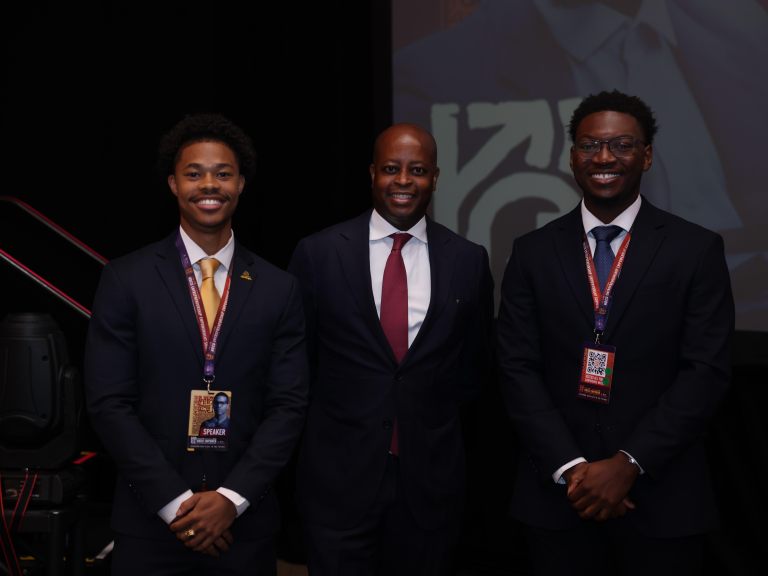
Howard alum Jayson Johnson built Rooted, a campus app that now has more than 2,000 users at Howard, and the company just landed a $100,000 investment from the university itself. The timing lines up with another milestone: Johnson has become the first Howard alum ever named a Knight-Hennessy Scholar. He’s a 2026 Howard graduate in Mechanical Engineering headed to Stanford this fall for a PhD in Aeronautics & Astronautics as part of an 87-person global cohort in the Knight-Hennessy Scholars program. Meanwhile, back on campus, Howard’s $100,000 equity and licensing deal with Tree Technologies — the startup Johnson co-founded with fellow alum Noah Adeyeye — makes the university a direct stakeholder in the app it just adopted.
A Historic First for Howard
No Howard alum had reached the Knight-Hennessy cohort before Johnson, so this selection carries weight well beyond his individual résumé. The fellowship, one of the most competitive graduate scholarships in the world, funds multidisciplinary leaders across Stanford’s schools. Johnson already arrives with a stacked track record: he’s a Karsh STEM Scholar, a Patti Grace Smith Fellow, and a past winner of the HU Empower Pitch Competition alongside Adeyeye. Consequently, his selection reads less like a surprise and more like the natural next step in a pattern of recognition that started well before graduation.
As a Knight-Hennessy Scholar, Johnson will study propulsion and aerospace systems at the graduate level. However, he isn’t stepping away from entrepreneurship to do it. Instead, he plans to keep building Rooted throughout his PhD, splitting time between coursework and running the company he and Adeyeye launched together on Howard’s campus.

Two Founders, One Idea
Rooted started as Johnson and Adeyeye trying to fix a problem every Howard student knows well: too much campus information scattered across too many places. Together, they built a single app where students could check dining hall menus and hours, pull up a digital student ID, vote in campus elections, and browse Grove, an in-app student marketplace. Since launching, Rooted has grown to more than 2,000 active users at Howard, with dining menus standing out as the most-used feature by a wide margin.
Neither founder built this alone. Johnson and Adeyeye have run Rooted as true co-founders from day one, and that partnership is exactly what caught Howard’s attention. Rather than treating Rooted as an outside vendor, the university decided to invest directly in the company its own students built.
Meet the Other Half of Rooted
Adeyeye’s name shows up in every part of this story, not as a supporting role but as an equal architect of it. He and Johnson built Rooted together, pitched it together, and won the HU Empower competition together in 2024 — and that $100,000 investment from Howard now flows into a company the two of them own jointly. While Johnson heads to Stanford this fall, Adeyeye is staying closest to day-to-day operations, keeping Rooted running for the 2,000-plus Howard students who use it. That division of labor — one founder pushing into aerospace research, the other holding down the company at home — is exactly the kind of partnership that let Rooted grow in the first place.
Howard Bets $100K on Its Own
The new agreement pairs a $100,000 equity investment with a licensing partnership that keeps Rooted running as Howard’s official campus app. It’s a notable move for any university, but it’s especially significant for an HBCU putting capital behind Black-founded student tech rather than simply adopting an outside platform. Johnson and Adeyeye first caught the school’s eye in 2024, when they won $20,000 together at the HU Empower Pitch Competition. That early win effectively became proof of concept, and two years later, Howard is scaling its bet by 5x.
For both founders, the deal validates a thesis they’ve pushed since their undergrad years: HBCUs don’t just need better technology, they need to own a stake in the technology their students create. Because Howard now holds equity in Tree Technologies, the university benefits directly if Rooted grows beyond one campus.

Where Rooted Goes From Here
Rooted’s roadmap extends well past dining menus. Johnson and Adeyeye have already shipped digital ID, campus elections, and the Grove marketplace, and events functionality now runs alongside them in the same app. Each feature was built to solve a specific pain point the founders experienced firsthand as students, which likely explains why adoption climbed so quickly among their peers. Furthermore, the Howard partnership positions the company to expand its footprint at other HBCUs looking for the same kind of centralized, student-built infrastructure.
Johnson heads to Stanford this fall to begin his PhD, and Rooted isn’t going on pause. Students on Howard’s campus can already track dining hours, vote, shop Grove, and manage their digital ID by choosing to download Rooted on iOS or Android. As Johnson balances aerospace research with running a growing company alongside Adeyeye, their story adds a new data point to a growing trend: HBCU-trained founders building the tools their own campuses actually use, then getting their home institutions to invest in that vision.
Between the Knight-Hennessy honor and Howard’s $100K bet on Tree Technologies, Johnson and Adeyeye’s next chapter is shaping up to be just as ambitious as the one they just finished at Howard.