
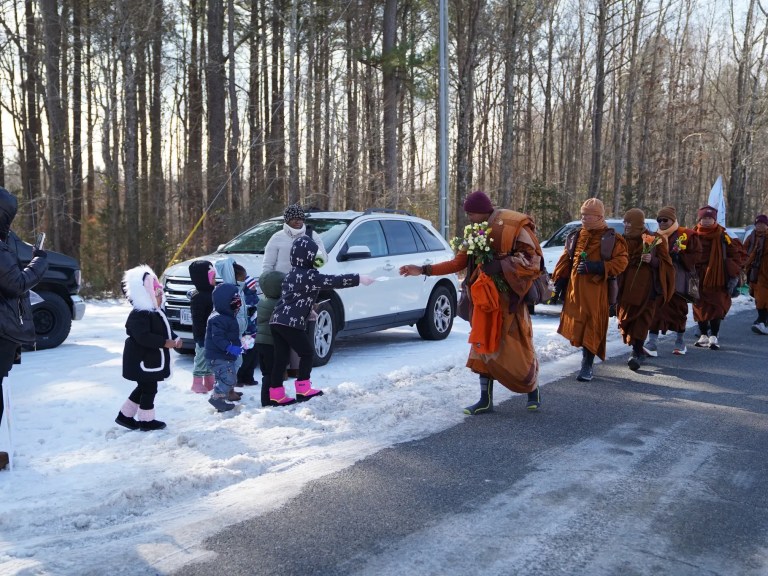
A powerful symbol of reflection and unity made its way through historically Black universities in Virginia earlier this week as a group of Buddhist monks on a national pilgrimage stopped at two HBCU campuses during their nationwide Walk for Peace.
The journey — a roughly 2,300-mile trek from Texas to Washington, D.C., led by monks from the Huong Dao Vipassana Bhavana Center — is designed to promote compassion, nonviolence, and mindfulness across the United States.
The visit brought mindfulness and community dialogue to Virginia State University and Virginia Union University, where students and faculty engaged with the monks through conversations, teachings, and cultural moments that paused campus life to think deeply about peace, community, and healing.
Historic Pilgrimage Arrives on HBCU Campuses
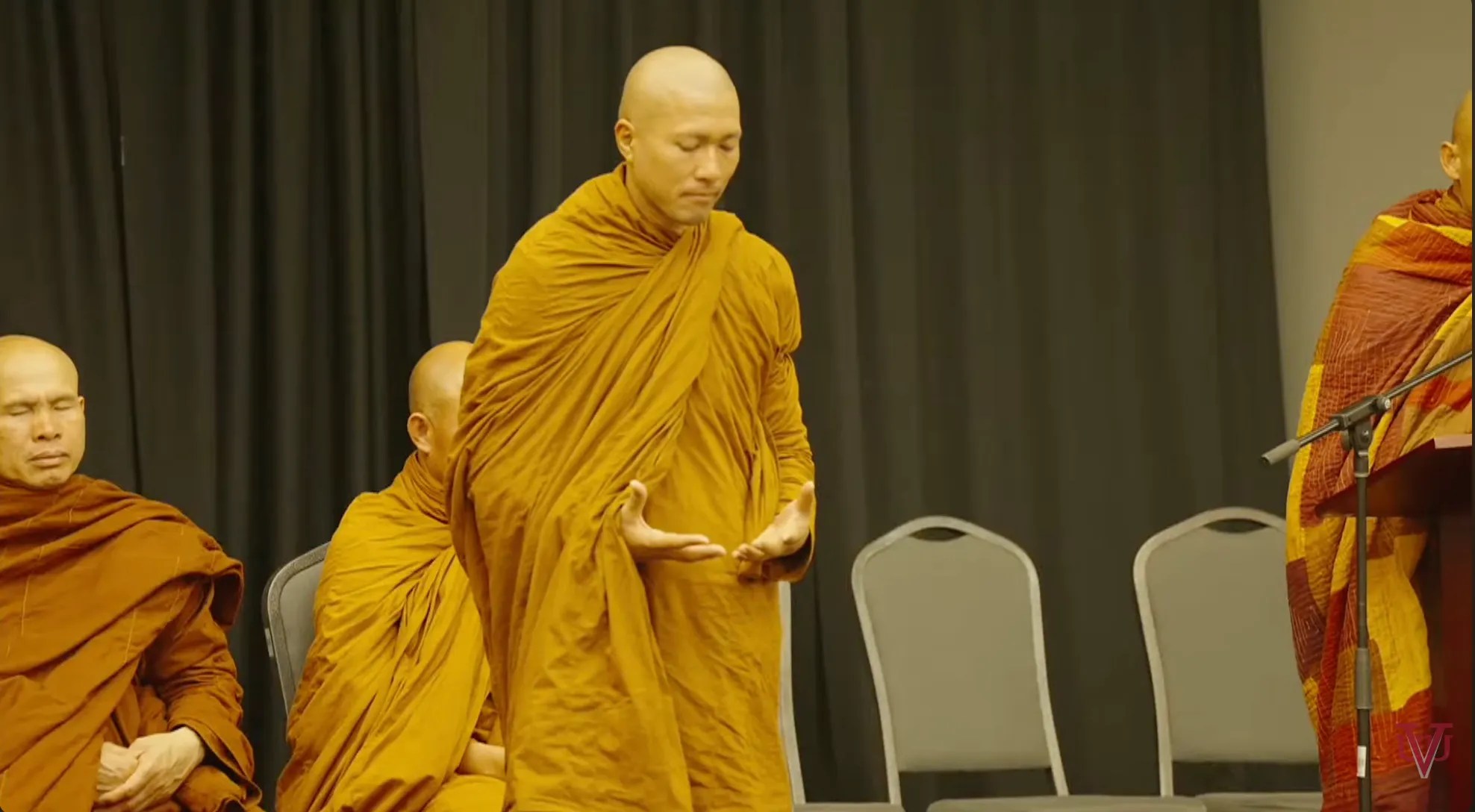
On Jan. 31, the 19 monks arrived at Virginia State University on Day 98 of their Walk for Peace journey. For one night, the campus became a quiet refuge from the rigor of the road and an unexpected stage for cultural exchange. Students and members of the VSU community had the opportunity to meet the monks in an intimate program at the Alfred W. Harris Academic Commons.
The gathering included moments of reflection, teachings from the monks, and a performance by the Trojan Explosion Marching Band, blending traditions of rhythm and spiritual calm in a rare intersection of HBCU culture and Buddhist practice.
University administrators described the overnight stop as spontaneous in its planning but deeply consistent with the institution’s values. Eldon Burton, assistant vice president at Virginia State, framed the visit as reinforcing community dialogue and mutual respect, core principles in both campus life and the monks’ message.
Mindfulness, Dialogue and Campus Healing
After leaving Virginia State, the Walk for Peace continued north toward Richmond, where thousands gathered to greet the monks on Day 100 of the journey. Local officials, including Virginia’s governor and city leaders, praised the pilgrimage as an uplifting moment that transcended political and cultural divides. The arrival at Virginia Union University included blessings, teachings, and a Q&A session where students learned about mindfulness practices and the philosophical foundations behind the monks’ mission. Conversations emphasized that peace begins internally — in each person’s mind and daily actions — and that perseverance and compassion are central to societal healing.
The monks’ presence on campus was described as contemplative rather than ceremonial. Students and faculty alike were drawn into discussions about the meaning of peace, the discipline required for long-distance walking meditation, and the humility behind reaching out to communities across the country.
The Walk for Peace Movement
The Walk for Peace is not simply a long hike; it’s a spiritual pilgrimage rooted in Buddhist teachings of compassion and nonviolence. The route stretches from Fort Worth, Texas, to the nation’s capital, with the monks and their team stopping in cities and towns along the way to share their message and interact with the public. Organized by Walk for Peace USA, this pilgrimage seeks to foster national unity and offer a model of sustained, grassroots commitment to peace.
Despite the difficulty of the journey — months of sustained walking through winter weather and physical fatigue — the monks have drawn significant attention at each stop, attracting large crowds, local officials, and community leaders. Their presence in college towns and civic centers has highlighted how deeply people yearn for messages of hope, compassion, and understanding in a world often divided by conflict.
HBCUs as Spaces for Reflection and Growth
The stops at HBCU campuses underscore how these institutions serve as more than centers for academics and athletics; they are also places where culture, community, and social dialogue intersect. For students at Virginia State and Virginia Union, the monks’ visit offered a rare chance to engage with an international message of peace and spirituality, bringing perspectives that complement the rich traditions of HBCU community building.
HBCUs have a long history of shaping conversations about justice, identity, resilience, and healing. From civil rights movements to cultural dialogues, historically Black universities have been platforms where major societal themes are explored and lived. The Walk for Peace’s passage through Vatican HBCUs became another such moment — one that reminded students that peace is not only a political aspiration but a daily practice rooted in empathy and understanding.
Looking Beyond Virginia
As the monks continue their journey toward Washington, D.C., the impact of their stop at historically Black institutions will likely ripple outward, inspiring greater interest in mindfulness, unity, and cross-cultural engagement. For students, faculty, and alumni of HBCUs, the event may serve as a reminder that peace, community, and mutual respect are foundational to both personal and collective success.