

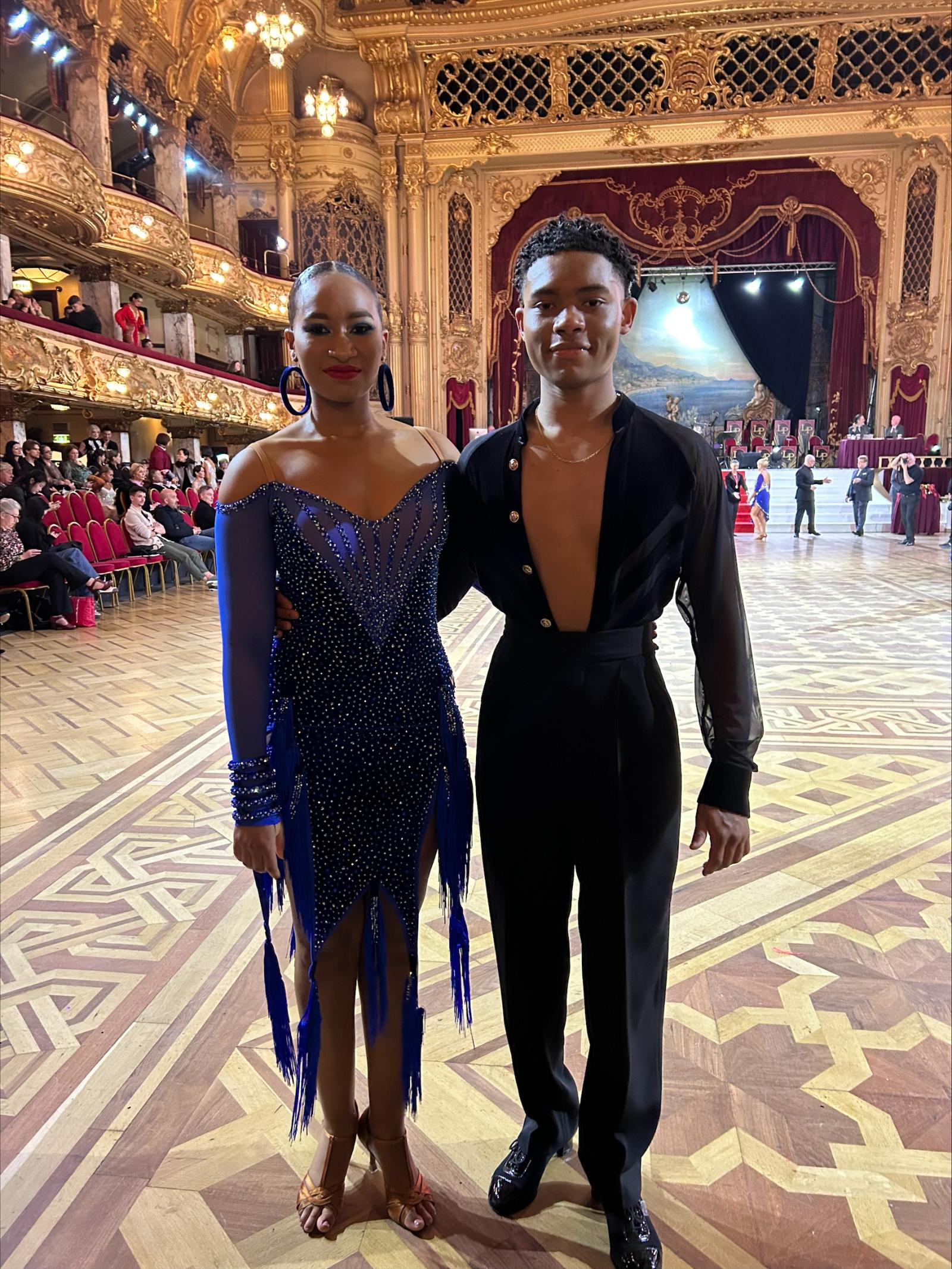
A Howard ballroom dance team could soon become a reality as freshman Brock Montgomery works to introduce competitive ballroom dance to historically Black colleges and universities. Montgomery, a two-time national champion Latin ballroom dancer, is leading an effort to establish what would be the first competitive collegiate ballroom program at an HBCU, beginning at Howard University.
Montgomery’s push was recently highlighted in a feature detailing his vision to bring ballroom dance into Black collegiate spaces where the sport has historically lacked representation. As a student navigating both elite competitive dance and campus life at Howard, Montgomery sees the university as the perfect foundation to build a program that could eventually expand across the HBCU ecosystem.
A Championship Résumé Behind the Movement
Montgomery is entering this effort with an elite competitive background. Alongside his younger sister, Charli Ana Montgomery, he has earned multiple national titles in Latin ballroom dance, including championships at the USA Dance National Championships, placing the duo among the top-ranked African American ballroom competitors in the country.
Their experience extends beyond domestic competition. The siblings represented the United States at the World DanceSport Federation World Championships, competing internationally in the Youth Latin category. That level of exposure has given Montgomery firsthand insight into the global structure of ballroom dance — and what it takes to build a legitimate collegiate pipeline rather than a casual student club.
Why a Howard Ballroom Dance Team Matters
While ballroom dance teams are well established at several predominantly white institutions, HBCUs have largely been excluded from that competitive circuit. Montgomery views that gap as an opportunity to expand access and reshape perceptions around who belongs in ballroom spaces.
A Howard ballroom dance team would introduce students to a discipline that blends athleticism, artistry, and international competition. Montgomery has emphasized that no prior dance experience would be required, allowing beginners and advanced dancers to grow together. Long-term, the vision includes competitive travel, professional exposure, and eventually scholarship opportunities similar to those offered at non-HBCU institutions.
Institutional Support and Campus Momentum
Montgomery has already begun working through Howard’s internal approval process to formalize the program. Support from faculty within the Chadwick A. Boseman College of Fine Arts has helped legitimize the effort, while conversations continue around structure, funding, and long-term sustainability.
Howard-affiliated platforms have also amplified Montgomery’s work, signaling growing campus interest. The initiative aligns with broader efforts to expand student-led innovation and creative programming at Howard, particularly in areas where Black representation has historically been limited.
Expanding HBCU Dance and Performance Culture
HBCUs have long shaped national performance culture through marching bands, step teams, majorettes, and contemporary dance programs. Adding ballroom dance represents an evolution — not a departure — from that legacy.
For Montgomery, the initiative is deeply personal. He has spoken about navigating competitive ballroom spaces where Black dancers are often underrepresented, and how attending Howard has offered a sense of cultural grounding he previously lacked. His goal is to ensure future Black dancers can pursue elite competition without sacrificing community or belonging.
A Blueprint for Other HBCUs
If successful, the Howard ballroom dance team could serve as a national blueprint. Montgomery envisions a future where multiple HBCUs field ballroom programs, creating an intercollegiate network that introduces Black students to a global competitive art form while keeping HBCU culture at the center.
As momentum builds, the initiative highlights how student leadership continues to expand what’s possible on HBCU campuses — redefining excellence while staying rooted in tradition.