
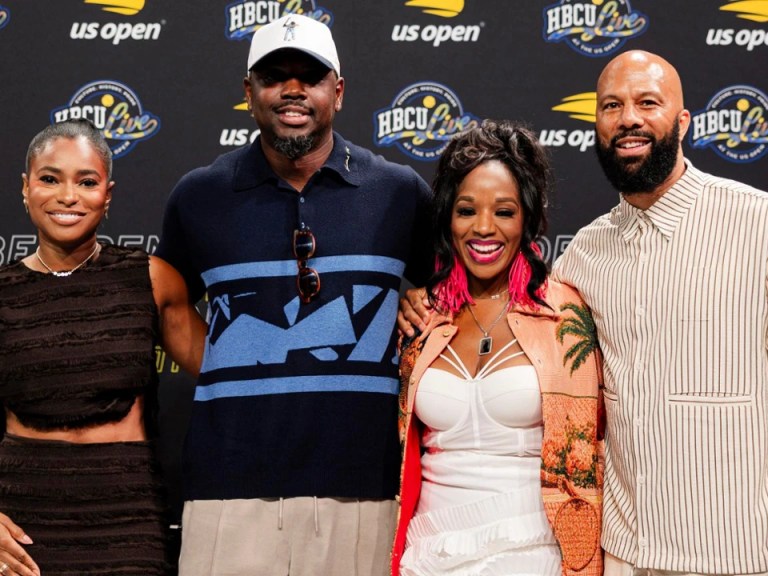
Tennis has never had an easy relationship with access, and Sean Holcomb-Jones has spent years trying to change that from inside the sport’s biggest stage. As the USTA’s Director of Diversity, Equity and Inclusion, Holcomb-Jones has pushed to grow tennis beyond its traditional audience since 2021. He’s not an outsider doing this work either. He’s a former head tennis coach at Morgan State and an HBCU alum himself, which makes his fingerprints on HBCU Live feel less like a corporate initiative and more like something personal.
A Program Built by Someone Who Lived It
Holcomb-Jones was central to one of the more meaningful moves the USTA has made in recent years: an official partnership with the American Tennis Association, the oldest Black athletic organization in the country. That partnership didn’t happen in a vacuum. It sits alongside HBCU Live, the marching bands at Arthur Ashe Stadium, and a broader effort to remove barriers that have kept tennis feeling closed off to Black communities for generations. When someone who coached at an HBCU is the one shaping these programs, the difference shows up in the details, not just the headlines.
Morgan State’s Moment Fits the Bigger Pattern
This year’s HBCU Live landed on September 2, with Morgan State’s Magnificent Marching Machine performing and President David K. Wilson tossing the ceremonial coin to open the tournament’s first match. That kind of visibility doesn’t happen by accident at a Grand Slam. It happens because people like Holcomb-Jones spent years building the infrastructure that makes an HBCU president’s coin toss feel natural instead of novel.
Morgan State’s band has built its own case for that kind of stage anyway. The Magnificent Marching Machine has performed at NFL games, marched in the Macy’s Thanksgiving Day Parade, and earned a selection to the Rose Parade earlier this year. Landing HBCU Live at the US Open adds another line to a resume that keeps stacking up.
Why This Goes Beyond a Halftime Show
Tennis carries a country-club reputation that HBCU Live directly pushes against. The event’s roots trace back to honoring Althea Gibson, the player who broke tennis’s color barrier decades ago, and that history gives HBCU Live weight most cultural programming at a sporting event doesn’t have. It isn’t just a celebration bolted onto the schedule. It’s a direct answer to a sport that’s historically excluded the very communities now filling Arthur Ashe Stadium’s stands during HBCU Live.
Holcomb-Jones has talked openly about that exclusion and what it takes to undo it. His work connects the dots between what fans see on the court, like the marching bands and step performances, and what’s happening behind the scenes through partnerships like the ATA collaboration. That combination is what separates HBCU Live from a simple crowd-pleaser. It’s tied to actual structural change inside how the USTA operates.
The Growing Crowd Tells Its Own Story
USTA leadership has pointed to something worth noticing: fans now show up specifically for HBCU Live rather than stumbling into it. That shift matters more than it might seem at first. It means the audience isn’t just tolerating the programming. People are planning around it, treating it as a reason to attend rather than a bonus once they’re already there.
That kind of loyalty doesn’t build overnight, and it doesn’t build without someone like Holcomb-Jones staying in the role long enough to see the payoff. Programs tend to fade when the person who created them moves on. HBCU Live has instead grown year over year, which says something about the consistency behind it.
What This Means for HBCUs Going Forward
Every year HBCU Live runs, it puts HBCU culture in front of an audience that tennis rarely reaches otherwise. A Grand Slam crowd isn’t an HBCU crowd by default, and that gap is exactly what makes this programming valuable. Morgan State’s band, Wilson’s coin toss, and Holcomb-Jones’s years of groundwork all point toward the same outcome: tennis becoming a sport where HBCU representation isn’t a novelty anymore.
For a sport still working through its access problem, having someone who coached at an HBCU running point on inclusion changes what these programs actually accomplish. HBCU Live isn’t just a nice moment wedged between matches. It’s become one of the clearer examples of what happens when the person building a diversity program has actually lived the experience they’re trying to open up to everyone else.