
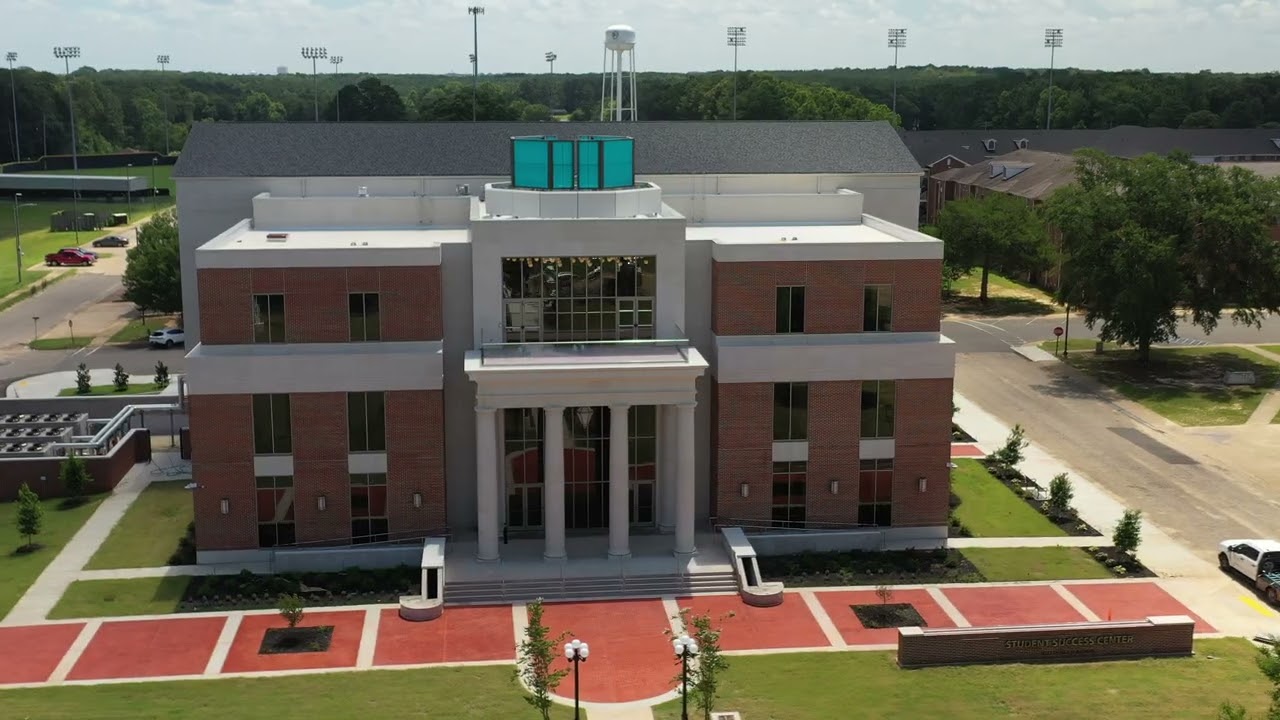
The Grambling State Student Success Center opened its doors Friday, and for anyone who’s ever sprinted across campus between the financial aid office and the registrar in 100-degree Louisiana heat, this one’s personal. The three-story, 60,000-square-foot building consolidates admissions, financial aid, housing, career development, and academic support under a single roof on the campus quadrangle.
GSU held its ribbon-cutting ceremony at 10 a.m. Friday at 353 Founder Avenue, timed deliberately to land during the university’s 125th anniversary celebration. That’s not a coincidence. President Martin Lemelle Jr. has spent two years framing this project as a legacy investment, not just a construction job.
Why the Grambling State Student Success Center Took Three Years to Build
Ground broke back in June 2024, and the project ran on a tight, publicly tracked budget the entire time. Black & Gold Facilities Inc. director Robert Clark was blunt about the number during the groundbreaking: $25 million, not a dollar more. “We’ve got $25 million — not $26M, not $27.5M, but $25M,” Clark said at the time, according to Grambling State News.
Three years later, that promise held. Officials confirmed the building came in on time and within budget, funded through U.S. Department of Education dollars tied to the university’s pandemic-era federal relief allocation. Because that funding source was federal rather than state-based, Louisiana taxpayers didn’t cover any additional cost beyond what GSU had already been allocated.
What Actually Moved Into the Building
Six departments now share the space: Campus Living and Housing, University College and academic support, Career and Professional Development, Admissions and Recruitment, the Registrar, and Financial Aid. M3A Architecture designed the facility, and Lincoln Builders handled construction, with the layout specifically built to sit in axis with Long Jones Hall on the quad.
That positioning matters more than it sounds. Brandon Logan, GSU’s vice president of University Advancement and Innovation, said as a former student he remembers exactly how disjointed the old system felt. Walking from building to building during a Louisiana summer, just to handle basic paperwork, wasn’t a minor inconvenience — it was a real barrier for students juggling class schedules, jobs, and everything else college demands.
The Retention Argument Behind the Investment
Lemelle has consistently tied this project back to student outcomes rather than aesthetics. “Students, whether they’re from Nepal or New Orleans, will come to this building, be admitted to Grambling State University, have their financial aid package, start their career and professional development journey, all empowered by our wonderful staff and faculty,” Lemelle said at the ribbon-cutting, according to KTVE/myarklamiss.com’s coverage.
That’s the real bet here. Centralized services tend to shorten wait times and cut down on the kind of registration friction that quietly pushes students toward stopping out. GSU is framing the building as infrastructure for retention, not just a nicer lobby experience — and for a university actively working to grow enrollment, that distinction carries weight with the board and with prospective families touring campus.
How This Fits Grambling’s Broader Building Push
This isn’t an isolated project, either. GSU reopened its Child Development Center last year with a separate $2 million federal grant, and the university has been steadily expanding facilities aimed at reducing the everyday obstacles students face outside the classroom. Together, those investments suggest a school treating physical infrastructure as a retention strategy, not a cosmetic upgrade.
University of Louisiana System President Rick Gallot, who previously served as GSU’s own president, was on hand for the original groundbreaking and credited Lemelle’s financial conservatism for freeing up the funding in the first place. According to Grambling State News’ original announcement, that fiscal discipline is part of why the university could pursue construction without touching state funds or tuition dollars.
What Comes Next for Students
Fall semester students can now walk into one building for nearly every administrative task tied to enrollment and support services. That includes new students navigating admissions for the first time and returning students handling financial aid renewals or career planning appointments.
For a university this size, cutting down on internal bureaucracy isn’t a small thing. It’s the difference between a student giving up on a form and a student actually getting registered on time. Whether that translates into measurably higher retention numbers will take a few semesters to confirm, but the university has built the infrastructure to make that case.
Grambling’s approach here reflects a pattern showing up across HBCU campus development more broadly — schools investing directly in the friction points that drive students away, rather than just chasing bigger enrollment numbers without the support systems to back them up. It’s the kind of project that won’t make headlines nationally, but for the students walking those halls this semester, it’s the whole ballgame. Keep an eye on Grambling State’s next moves as the university continues building out its 125th-anniversary momentum.