
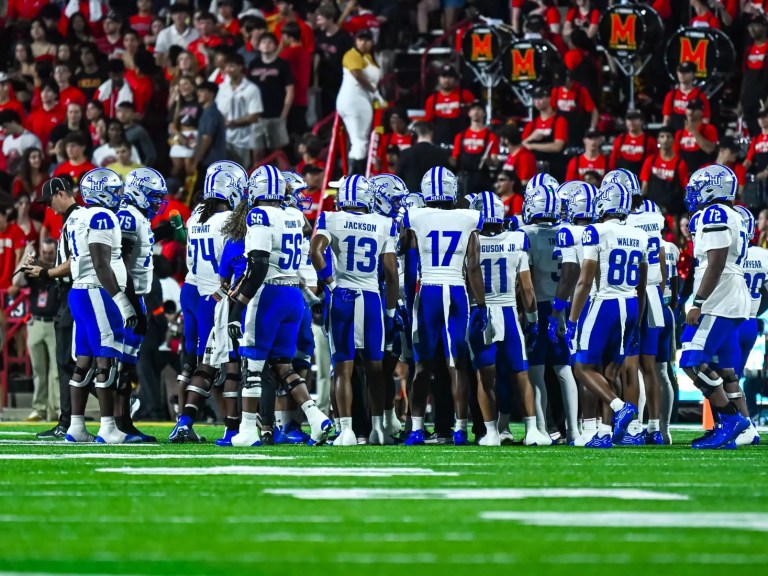
Hampton football learned exactly what the jump to Power Four competition looks like Saturday. The Pirates were shut out 62-0 at Maryland in their first-ever meeting with a Power Four opponent. It was a lopsided scoreline that told only part of the story. Hampton entered the game 1-0 after a 45-0 win over Virginia-Lynchburg the week before. It left College Park 1-1. More importantly, it left with a clear look at the gap between where the program is now and where it wants to go.
A Rough Night Against a Different Level of Speed
Maryland outgained Hampton 646-85 in total yards, a margin that speaks for itself. The Pirates managed just 10 rushing yards on 31 attempts. They added only 75 yards through the air, most of it after the outcome was already decided. Hampton reached midfield on only two drives all night. The Pirates never got inside Maryland’s red zone. Head coach Van Malone didn’t dress it up afterward. He said his players quickly realized the speed of the game was faster than anything they had seen. Some of what showed up on film, he admitted, wouldn’t look pretty.
That kind of honesty matters more than the final score. Hampton’s defense had allowed 233 rushing yards per game a year ago, so absorbing a Power Four backfield was always going to be a stress test. Maryland running back DeJuan Williams broke off a 94-yard touchdown run on the game’s opening snap, the second-longest run in Terrapins history. The rest of the night followed that same script. Maryland scored six rushing touchdowns, its most in a single game since 2001. The Pirates simply didn’t have the horses up front to slow it down.
Bright Spots Were Hard to Find, But Not Impossible
Quarterback Jalen Woods did generate one moment worth remembering. He connected with receiver TK Paisant for a 30-yard gain down the sideline in the first quarter. It was one of the few times all night Hampton’s offense operated with any rhythm. Backup quarterback Tre’Von Taylor also saw time under center as the game got out of hand. That gave Malone a chance to evaluate depth at the position without risking more snaps from his starter. Neither passer found consistent room to work. Maryland’s own athletics site credited a defense that recorded five sacks and three interceptions for making sure Hampton never settled into anything resembling a game plan.
That defensive pressure compounded everything else. Every time Hampton faced second-and-long or third-and-long, Maryland’s front generated pressure. The Pirates rarely had time to let plays develop downfield, and the interceptions came in bunches once Hampton was forced to abandon the run entirely. It’s the kind of setback that shows up starkly in a box score. In the long run, though, it tends to matter less than how a program responds the following week.
Context Matters More Than the Final Score
Games like this one are part of the deal for HBCU programs that schedule Power Four opponents for a paycheck and a measuring-stick opportunity. Hampton is hardly the first MEAC program to take a lopsided loss against a bigger-budget opponent, and it won’t be the last. What matters more for Malone’s program is how it bounces back in conference play. The roster gap narrows considerably there. Hampton’s own talent and depth can show up the way it did against Virginia-Lynchburg in Week 1, when the Pirates controlled the game from start to finish and never let the outcome feel in doubt.
Maryland, for its part, entered the season needing a jolt in the run game. The Terps ranked near the bottom of the Big Ten on the ground in 2025, and they got exactly the response they were looking for against Hampton behind a rushing attack that produced its highest touchdown total in over two decades. None of that changes what Hampton needs to focus on now. The offensive line couldn’t create push against a bigger, faster front. The secondary got exposed early and often. Building the kind of physical toughness that stands up against faster, deeper rosters doesn’t happen overnight. Saturday made that gap obvious in a way conference play rarely does.
What’s Next for the Pirates
Hampton returns to a schedule better suited to its level in the coming weeks, and this game will fade quickly from the season’s larger storyline if the Pirates take care of business in MEAC play. Malone’s message after the game leaned on perspective rather than panic. He framed the loss as an environment his young players hadn’t experienced before, not as a referendum on the program itself. That framing matters. This roster still has to turn around and prepare for conference opponents who won’t feel anything like Maryland did on Saturday night.
For a Hampton team looking to build on last season, the response over the next month says more. It will say far more about this year’s Pirates than one lopsided night at a Power Four stadium ever could. Programs get remembered for how they play the games that count, not the ones written into the schedule to cover a budget line. Hampton has time to show that distinction still holds.