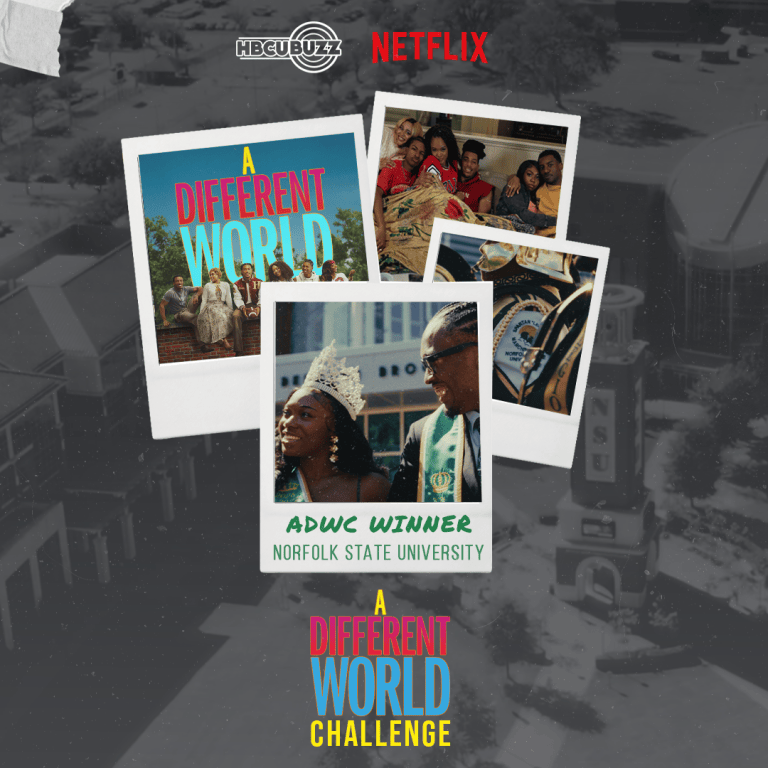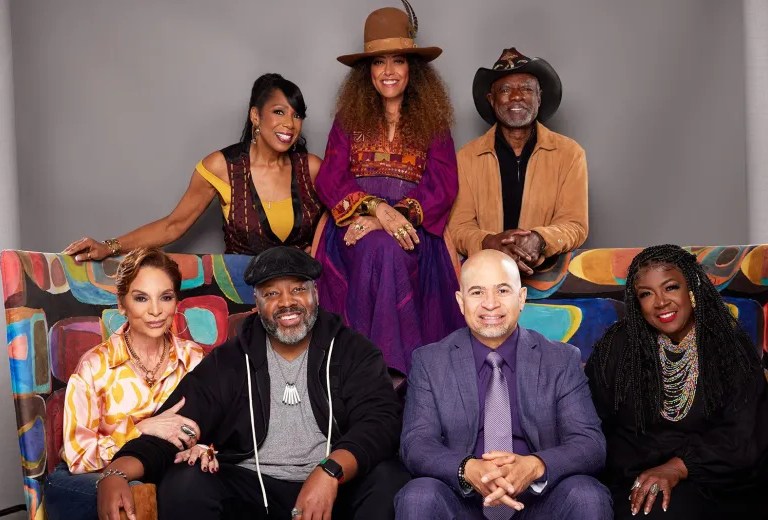

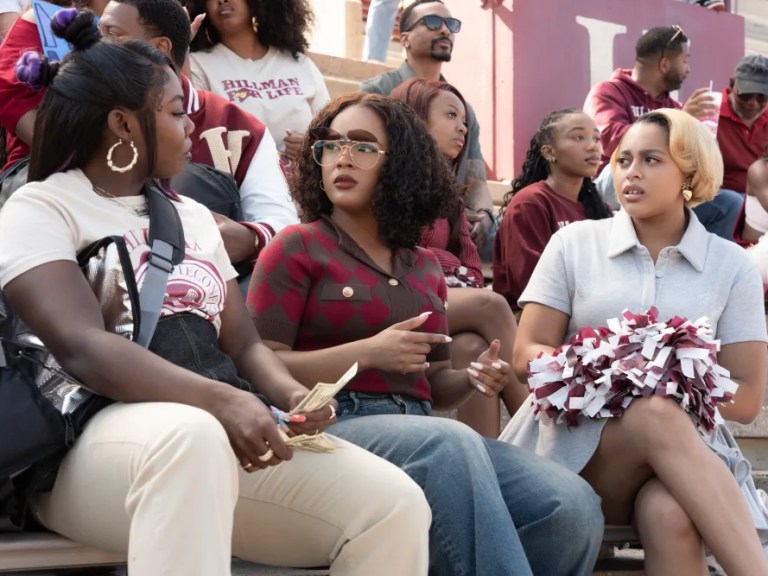
About four minutes into the first episode of Netflix’s new A Different World, I paused the episode. I had almost cried.
Deborah Wayne, the daughter of Whitley Gilbert and Dwayne Wayne, had wanted to attend New York University’s Tisch School of the Arts. Instead, she was beginning her college experience at Hillman, the fictional historically Black college at the center of the series.
I am a senior at NYU. I was watching a character wish she could attend the university where I’m spending my senior year, while I found myself wondering about the kind of college experience she was about to have.
I had already put off watching the show for nearly three weeks. I knew that seeing the traditions, friendships, and everyday experiences of students at a historically Black college or university might make me emotional. What I hadn’t expected was for my own university to be mentioned within the first five minutes.
I don’t regret choosing NYU. But I still wonder about Spelman.
I was accepted to Spelman College and Clark Atlanta University. Both of my older sisters attended HBCUs. One graduated from Spelman, where she now works, and the other attended Howard University. I grew up in Orlando, Florida, in a Jamaican American family where Black culture and community were familiar parts of everyday life.
An HBCU education wasn’t something I had only imagined through television. It was part of my family’s story, and it could have been part of mine.
A Full Ride vs. Spelman
But my parents had already taken out significant loans to help pay for my sisters’ college educations. By the time I was applying to universities, they made it clear that they weren’t going to take on that kind of debt again. I needed to attend a school that would give me enough financial aid.
NYU offered me a full ride. Spelman didn’t.
The decision wasn’t simply about whether I preferred New York or Atlanta, or whether I wanted to attend a predominantly white institution or an HBCU. There was a financial reality my family couldn’t ignore. I had dreamed of attending NYU, and the opportunity to receive an education there without placing the same burden on my parents was extraordinary.
But what does it mean when the college experience you might have wanted isn’t the one your family can afford?
What A Different World Gets Right About Money
That question became more interesting as I continued watching A Different World, because money is central to the show’s story, too.
In the first episode, students at Hillman learn that their financial aid is being threatened. Deborah’s roommate, Rashida, discovers that she has lost a grant, and other students face similar news. By the end of the season, students are organizing against funding cuts, housing shortages, and the financial decisions affecting their education.
Deborah comes from a financially privileged family, but the students around her don’t all have that security. For some, the question isn’t simply whether they belong at Hillman. It’s whether they can afford to remain there.
I found that distinction meaningful. College is often described as a place where young people discover who they are and build their futures. But how much freedom do students actually have to choose the college experience they want when money determines which opportunities are available to them?
I know what financial aid made possible for me.
NYU has given me opportunities I genuinely love. I’ve studied abroad in Ghana and England, met remarkable people, and learned from professors whose work and guidance have shaped my ambitions. As a journalism student interested in African history, culture, and Black storytelling, I’ve been able to explore questions that matter deeply to me.
I would choose many of those experiences again.
Opportunity and Loneliness at NYU
But my social life has been harder to love.
I haven’t made many friends, and I haven’t found the Black community in New York that I hoped I would. That’s difficult to admit alongside a list of opportunities. Sometimes, it feels as though being grateful for everything I’ve received should leave little room to acknowledge what’s missing.
But the opportunities and the loneliness have existed together.
Some of that has to do with me. I have a responsibility to show up, reach out, and make space for relationships. I also attend a university whose buildings are spread across New York City. The idea that the city is our campus is exciting. Living it can make me wonder where, within that enormous campus, I’m supposed to find my people.
As a Black student, that question has another dimension.
The Numbers Behind the Feeling
In fall 2024, Black students made up approximately 4 percent of NYU’s incoming first-year class, down from roughly 7.5 percent the previous year. By fall 2025, that figure had fallen to approximately 3.4 percent.
Those figures don’t represent the entire undergraduate population, but they reveal a troubling shift in the university’s entering classes.
NYU prides itself on being a global university, bringing together students from countries around the world. I value that international diversity, and I’ve benefited from it personally.
But international diversity and Black community aren’t interchangeable.
A university can bring together students from dozens of countries while still leaving Black students searching for a larger community of people who share parts of their cultural experiences.
And I’m not the only student thinking about what Black representation at NYU should look like.
On October 9, 2026, students gathered in Washington Square Park to demand increased Black enrollment, more Black faculty, and a dedicated space for Black students. The campaign, organized by NYU’s chapter of Students for a Democratic Society and supported by other student organizations, calls for Black enrollment to reach 20 percent within five years.
I don’t think a larger Black student population would automatically solve every student’s experience of loneliness or isolation. But I also don’t think the numbers are irrelevant to the question of belonging.
What does diversity mean when Black students make up such a small percentage of incoming classes? And what does it mean to celebrate that diversity while students are organizing to demand greater representation?
Six Students in Accra
I’ve found myself thinking about similar questions when reflecting on my experience studying abroad in Ghana.
During the fall of 2024, I studied at NYU Accra, the university’s only study-away site on the African continent. There were eight students in my cohort. The following semester, there were just six.
Studying in Ghana was one of the most transformative experiences of my undergraduate education. It deepened my interests in African history and culture, challenged how I understood my own identity, and shaped the questions I hope to pursue through journalism and research.
I’m incredibly grateful that NYU gave me the opportunity to go.
But I’ve also wondered why so few students choose to study there.
In a November 2024 overview of its global network, NYU reported that Accra hosted an average of 14 students per semester, compared with 495 in London. Accra offered 12 courses, while London offered 97.
How much does the number of courses available influence where students choose to study? How does the university promote its different global sites? And why does its only study-away location in Africa attract so few students compared with destinations in Europe?
Student interest, academic requirements, and program capacity all matter. But so do the opportunities universities make available and the ways they encourage students to consider them.
I find myself returning to the same question: How much of our educational experience is shaped by what we want, and how much by what is made possible for us?
For much of my undergraduate career, I’ve studied Black life, written about Black experiences, and looked for opportunities to deepen my understanding of Africa and its diaspora. Yet I’ve also wondered what it would have been like to attend a university where Black history, traditions, and community were central to the institution’s identity.
Singing in the Pit
When the students at Hillman gathered in the Pit and began singing “Can We Talk,” I smiled.
It was such a small moment, but it brought me so much joy. I thought about a friend of mine who attends Howard University, where she’s a member of Alpha Kappa Alpha Sorority, Incorporated, and how much she loves her college experience. I thought about my sisters, the traditions they experienced, and the friendships I might have formed if I’d attended an HBCU.
I know Black college life is more than the scenes that make it onto television or social media. There are difficult classes, financial pressures, ordinary days, and relationships that don’t work out.
Still, watching those students sing together reminded me of a kind of community I’ve spent much of college hoping to find.
And perhaps what made the show especially personal was knowing that parts of the new A Different World were filmed at Spelman and Clark Atlanta, the very institutions where I had once been accepted.
I was watching a fictional version of a college experience that had once been a real possibility for me.
Of course, Hillman is fictional. Its friendships are written. I can’t compare every lonely day of my own life to a television series and conclude that I would have been happier somewhere else. Attending Spelman wouldn’t have guaranteed close friendships or an easier college experience. I might have struggled there, too.
But knowing that doesn’t make the feeling disappear.
The Replies I Didn’t Expect
After watching the show, I shared some of these thoughts on Threads. I admitted that although I love NYU, watching A Different World made me wonder whether I should have attended an HBCU.
I hadn’t realized how many other people were carrying similar feelings.
One woman shared that she had chosen the University of North Carolina at Chapel Hill over Spelman because UNC offered her a full scholarship while Spelman would have required loans. She loved her experience at UNC, but she still wondered about the one she might have had at Spelman.
Her response immediately reminded me of my own financial circumstances.
Another woman described enjoying her time at the University of Georgia while continuing to grieve the possibility of attending Spelman. Someone else, nearly five years out of college, shared that she still mourned not attending Xavier University of Louisiana.
I was struck by how long those feelings had stayed with people.
But another response complicated my thinking. A woman who had attended an HBCU explained that she worked multiple jobs during college and missed some of the activities and connections she had hoped to experience.
Even attending the institution you wanted doesn’t necessarily mean getting the experience you imagined. Financial realities can shape life on an HBCU campus just as they can determine whether someone attends one in the first place.
Reading those responses, I began to realize that the question wasn’t necessarily whether we had made the wrong decisions. It was how to make sense of the possibilities that remained unavailable to us.
Living With the Other Path
In an October 27 New York Times opinion essay, sociologist Tressie McMillan Cottom reflected on A Different World and the promises of Black progress and opportunity associated with Hillman College. Her essay considered the gap between the future that Hillman once helped Black Americans imagine and the realities that followed.
Her argument made me think about my own longing differently.
I wasn’t watching the show wishing to return to an earlier generation of Black college life. I was wondering about an experience I could have chosen for myself just four years ago.
And even that possibility was shaped by money.
I think that’s part of what makes the NYU reference so interesting.
Two Students, Two Detours
Here was Deborah Wayne, arriving at an HBCU after wanting something else. Her disappointment involved the place I had chosen. My longing involved the kind of place where she had landed. Yet neither of our college experiences could be separated from the circumstances that brought us there.
The difference, of course, is that Deborah is fictional. I can’t know what would have happened if I’d attended Spelman, or whether I would have found the community I’ve been searching for. I might have found myself longing for some of the opportunities NYU has given me.
I am happy that NYU is part of my story. I am grateful for the financial aid that made my education possible, for the professors who have invested in me, and for the experiences that have shaped who I am becoming.
But I still wonder what it would have felt like to spend these four years at Spelman.
Maybe that’s what I’ve been trying to understand all along. I can know why I made a decision without knowing what my life would have looked like if I’d made another. I can recognize that my parents’ financial circumstances shaped my options without resenting them for it. And I can love the education I’ve received without pretending it gave me every experience I hoped for.
About four minutes into A Different World, a character wanted NYU. I paused the episode, nearly in tears, then kept watching her begin the college life I will always wonder about.
Robin Young is a senior journalism student at New York University. The views expressed are her own.