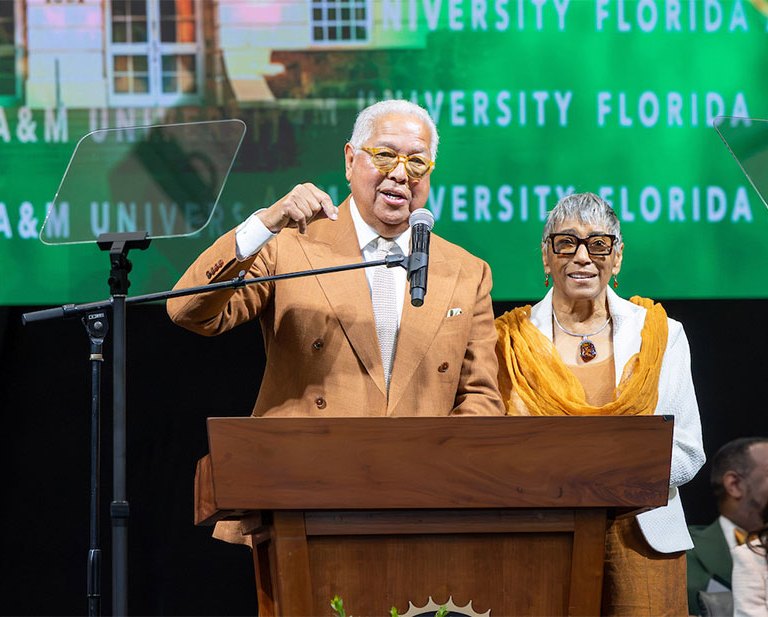

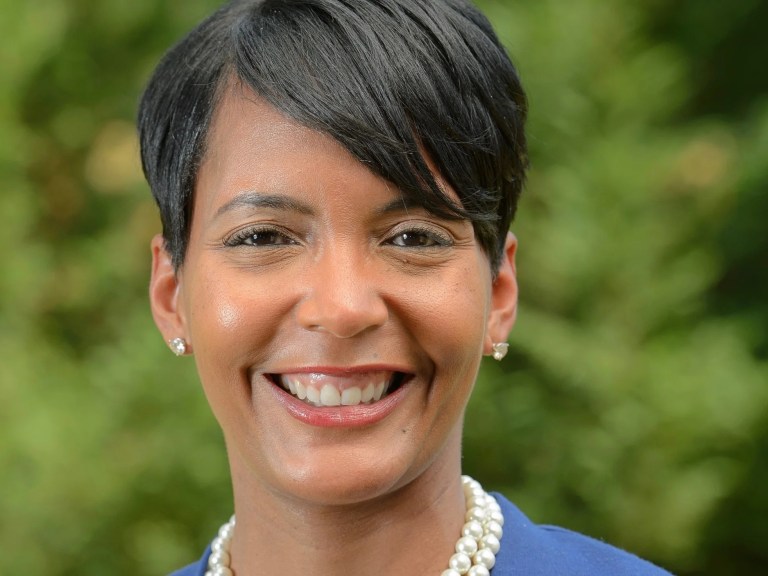
Keisha Lance Bottoms is Georgia’s next governor, and the Florida A&M University alumna made history doing it. On Tuesday night, the former Atlanta mayor defeated Republican businessman Rick Jackson. As a result, she becomes the first Black governor and the first woman governor in Georgia history.
The Associated Press called the race around 9:30 p.m. At that point, Bottoms led by roughly 11 points. That margin held as the night went on.
For the HBCU community, this one hits different. A Rattler from FAMU’s journalism school will now run one of the most closely watched states in America.
A Night Georgia Democrats Waited Decades For
The scale of the win matters. Bottoms flips the governor’s office after more than two decades of Republican control. She will succeed term-limited Gov. Brian Kemp in January.
No Democrat had won a Georgia governor’s race since Roy Barnes in 1998. Meanwhile, Atlanta politicians have historically struggled to win statewide. Bottoms broke both patterns in one night.
She also had company at the top of the ticket. Sen. Jon Ossoff won reelection over Republican Mike Collins. Together, the two wins signal how much metro Atlanta’s growth is reshaping state politics. Local outlet WABE has full results and reaction from election night.
The national picture is still taking shape. Black men like Virginia’s Douglas Wilder and Maryland’s Wes Moore have led states before. However, no Black woman has ever served as governor in America. Whether Bottoms claims that title outright may hinge on Minnesota, where Republican Lisa Demuth is also on the ballot. Either way, Bottoms has already rewritten Georgia history.
Keisha Lance Bottoms’ Road From FAMU to the Governor’s Mansion
Long before politics, Bottoms was a student in Tallahassee. She earned her degree in broadcast journalism from FAMU’s School of Journalism and Graphic Communication. Later, she added a law degree from Georgia State University.
Her career moved fast after that. She served as a judge and on the Atlanta City Council. Then, in 2017, Atlanta voters elected her as the city’s 60th mayor. She led the city through the pandemic and the 2020 protests.
After one term, Bottoms chose not to seek reelection. Instead, she joined the Biden White House as a senior advisor for public engagement. In that role, she often hosted conversations with HBCU students and leaders. Earlier, Democrats had also tapped her as DNC vice chair for civic engagement and voter protection.
Her journalism training never fully left her, either. In 2022, she joined CNN as a political commentator. She called the job a dream nearly 30 years in the making, a nod to her FAMU broadcast days.
She also stayed close to the HBCU world in other ways. For example, she became the first honorary fellow of a Clark Atlanta University-based institute that trains future HBCU leaders. She is also a member of Delta Sigma Theta Sorority, Inc.
HBCU Buzz has followed every step of her journey. You can catch up on our full Keisha Lance Bottoms coverage going back to her mayoral days.
What She Ran On
Bottoms built her campaign around kitchen-table issues. Her top priority is full Medicaid expansion. That plan would replace Georgia Pathways, the state’s narrower model with work requirements.
She also pushed to raise Georgia’s minimum wage to $15 an hour. In addition, she called for restoring abortion access and cutting targeted consumer taxes.
Jackson, a healthcare executive, ran as a political outsider. However, he never found a way to close the gap. Bottoms led from the first returns until the AP made its call.
Of course, governing will be harder than campaigning. Medicaid expansion and a wage hike both need the General Assembly. Consequently, much of her agenda will depend on negotiation from day one.
Why Keisha Lance Bottoms’ Win Matters for HBCUs
Georgia is one of the most HBCU-rich states in the country. Spelman, Morehouse, Clark Atlanta, Morris Brown, Savannah State, Fort Valley State, Albany State and Paine all sit within its borders. Now, the state’s chief executive is an HBCU graduate herself.
That matters for budgets, too. Public HBCUs like Fort Valley State, Savannah State and Albany State depend on state funding decisions. A governor who knows the HBCU experience firsthand could shape those conversations.
The win also continues a line of HBCU-educated leaders in Georgia politics. Spelman alumna Stacey Abrams ran for governor twice, in 2018 and 2022. Before Bottoms, Atlanta had a string of HBCU-educated mayors, including Howard alumni Shirley Franklin and Kasim Reed. Now Bottoms has reached the office Abrams twice pursued.
FAMU, in particular, can claim a big night. The university has produced judges, mayors, executives, and now a governor. For a deeper look at the school’s alumni network, check out our Florida A&M University coverage.
What Comes Next
Bottoms will be sworn in as Georgia’s 84th governor in January. Between now and then, she will build her transition team and name her cabinet.
HBCU graduates will be watching those picks closely. As mayor, she tapped several Morehouse graduates for her administration. Similar choices at the state level would not surprise anyone.
Meanwhile, the Associated Press report on her victory lays out how she flipped a key swing state. The bigger story for our readers is simpler. A Rattler is headed to the Governor’s Mansion.
Stay with HBCU Buzz for continued coverage of Governor-elect Keisha Lance Bottoms as her administration takes shape.