
Howard NCAA Tournament viewership tells a bigger story than the final score
The Howard NCAA Tournament viewership story is about much more than one March Madness game. It is about what happens when an HBCU gets real national exposure, holds the country’s attention, and reminds people that HBCU basketball is not just good for culture — it is good for business too.
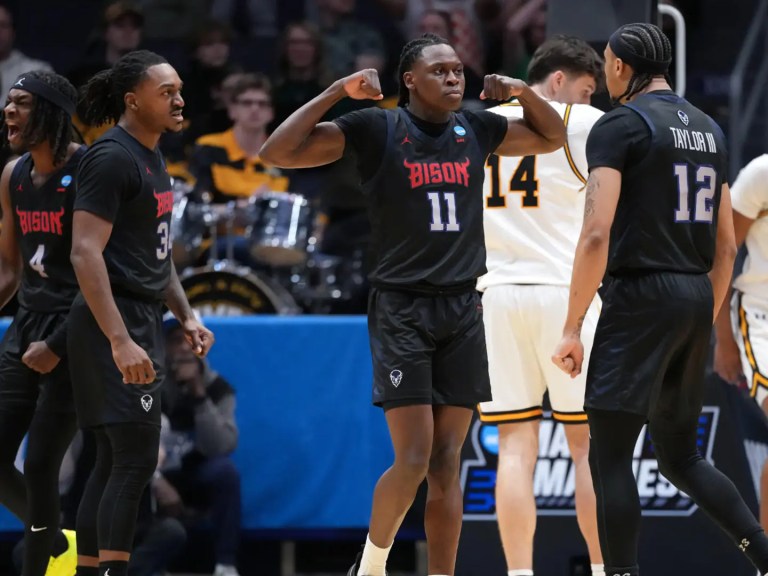
Howard entered the 2026 NCAA Tournament already carrying momentum after beating UMBC 86-83 in the First Four, the program’s first NCAA Tournament win. Two days later, the Bison pushed No. 1 seed Michigan in the first half, knocking down 10 threes and trailing only 50-46 at the break before eventually falling 101-80. That suspense mattered well beyond the box score.
Howard helped power record NCAA Tournament ratings
According to Nielsen data reported by HBCU Gameday and corroborated by Sports Media Watch, the opening day of the 2026 men’s NCAA Tournament averaged 9.8 million viewers across CBS, TBS, TNT, and truTV, making it the most-watched opening day on record and up 6% from 2025. The primetime window featuring Michigan-Howard and VCU-North Carolina averaged a record 12.5 million viewers, and the Michigan-Howard matchup itself averaged 4.52 million viewers.
That matters because it gives hard numbers to something HBCU fans have been saying for years: if you put Black college programs on the biggest stage, people will watch. Not just HBCU alumni. Not just loyalists. National audiences.
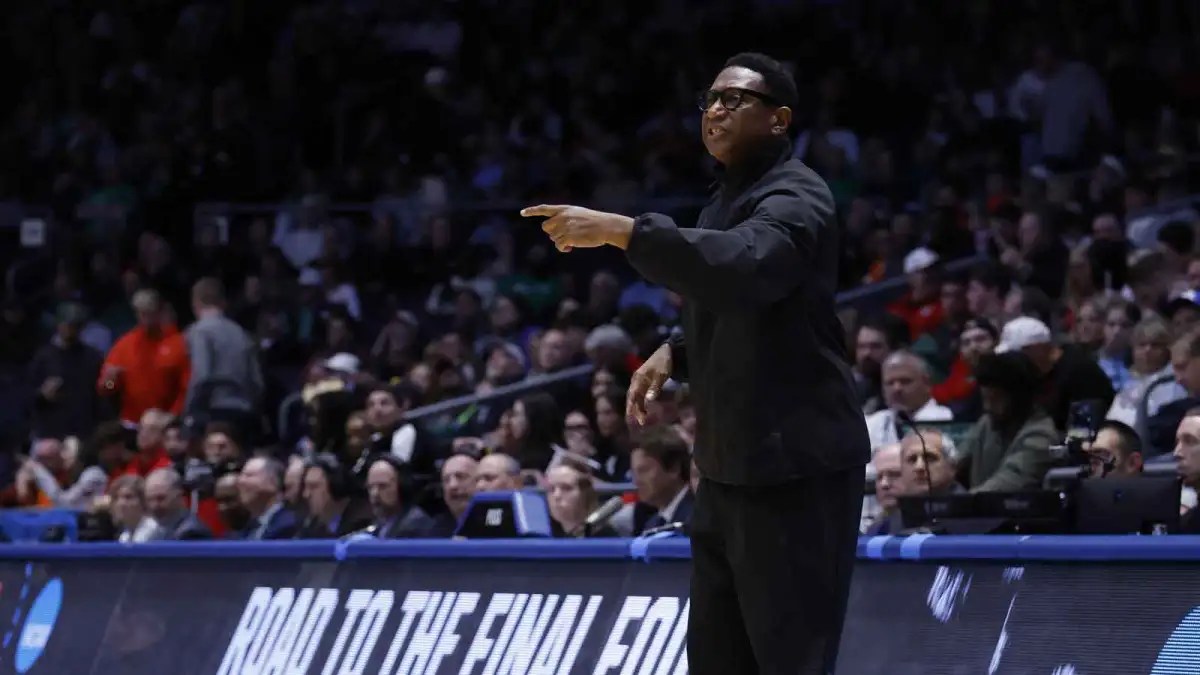
This was not just a Howard moment, it was an HBCU basketball moment
The easy version of this story is to frame Howard as a plucky underdog that scared a top seed for a half. But that is too small. The bigger takeaway is that Howard became appointment viewing because the possibility of an HBCU making history immediately changed the emotional temperature of the tournament.
That is what made the game powerful. It had drama, cultural meaning, and a clear storyline casual viewers could understand in real time. A No. 16 seed from Howard University was not supposed to make Michigan uncomfortable. Once the Bison did, the game stopped feeling routine and started feeling like a national event.
That shift is important for HBCU basketball. Too often, HBCU programs are discussed as if they only matter inside their own ecosystem. But audiences respond to stakes, identity, and momentum. Howard brought all three.
Howard’s run showed what visibility can do
Howard did not arrive in that moment by accident. The Bison were MEAC regular-season and tournament champions, then made more history by surviving the First Four. Their tournament path gave them a chance to enter the national conversation with credibility already established.
Once the Michigan game tipped off, Howard gave viewers a reason to stay. The Bison’s shooting, confidence, and first-half pace created the kind of tension March Madness is built on. For one half, the possibility of a No. 16-over-No. 1 upset involving an HBCU became real enough to pull people in.
That is the part brands, networks, and decision-makers should pay attention to. Visibility is not just about being included. It is about being compelling once the spotlight arrives. Howard proved that HBCU programs can do that on the biggest stage available.
Why Howard NCAA Tournament viewership should matter to media and sponsors
The Howard NCAA Tournament viewership numbers also expose a larger market truth. HBCU sports are often treated as niche content until a major moment forces the broader industry to pay attention. Then suddenly the same schools, athletes, and storylines become valuable because they are driving engagement.
That pattern is outdated.
What happened with Howard should challenge the lazy assumption that HBCU sports only deserve limited investment. If one nationally televised game can help lift a record-setting broadcast window, that means HBCU programs are not just culturally important. They are commercially relevant.
For media companies, that should mean more intentional coverage before the moment becomes undeniable. For sponsors, it should mean understanding that HBCU audiences are not passive. They show up, amplify, and pull wider audiences into the story when the story is given room to breathe.
This is what happens when an HBCU gets a real chance on a big stage
There is also something deeper here. Howard’s tournament run was not simply about ratings. It was about proof.
Proof that HBCU excellence does not need a special disclaimer. Proof that the distance between “mid-major curiosity” and “national attraction” can disappear fast when the matchup is right and the performance is strong. Proof that an HBCU program can help anchor one of the most-watched windows in NCAA Tournament history.
That should force a broader rethink of how NCAA exposure gets distributed and which programs are seen as capable of carrying national interest. Because if the audience follows when an HBCU gets close to history, then the industry should stop acting surprised every time it happens.
The bigger takeaway for HBCU sports
Howard did not finish the upset. But the Bison still moved the conversation.
They showed that HBCU sports are not only about legacy or pride. They are part of the live-event economy. They create urgency. They create emotion. And when the right moment hits, they create numbers that executives cannot ignore.
That is why this story matters. Not because Howard almost shocked Michigan, but because the country leaned in when the possibility was on the table.
And that may be the clearest lesson of all: when HBCUs are given a real platform, the audience does not disappear. It grows.