
Howard University Cardi B course brings a current music moment into the classroom
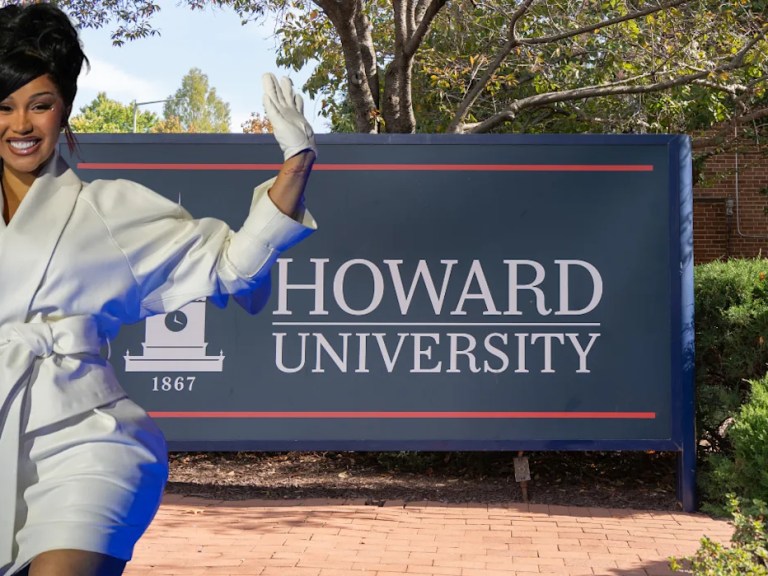
The Howard University Cardi B course is one of those stories that immediately grabs attention because of the celebrity attached to it, but the real substance is in what the class is trying to do. Howard is offering a new three credit Fall 2026 course titled The Cardi B: Am I The Drama? The Art, Production, Marketing and Cultural Impact in partnership with the Warner Music Blavatnik Center for Music Business. The course is designed to examine the art, business, branding, media strategy, and cultural influence surrounding Cardi B’s current era, turning a live music rollout into a serious case study for students who want to understand how culture and commerce move together in real time.
That is what makes this story bigger than a headline built around a famous name. HBCUs have long understood that Black culture is not just something to celebrate from a distance. It is something worth studying, interrogating, and building careers around. Howard’s move reflects that tradition while also pushing it forward. Instead of treating the music business like a static field that can only be taught through older examples, the university is asking students to analyze a current artist whose visibility, controversy, strategy, and public narrative all reveal how modern entertainment really works. That kind of classroom approach feels especially aligned with a generation of students who are already watching branding, fandom, virality, and identity shape the industry in real time.
Howard University Cardi B course is about strategy not celebrity
The easiest way to misunderstand this story is to assume the class is simply about Cardi B as a celebrity figure. It is more accurate to say the course uses Cardi B as a framework for studying a full ecosystem. Howard says the class will bridge music, business, marketing, media, gender studies, production, and cultural theory, while placing one of the most visible artists in rap at the center of that discussion. Students in the university’s hip hop studies space will not just be talking about songs. They will be looking at how an artist’s campaign is built, how public attention is managed, how controversy becomes part of narrative formation, and how cultural moments can be converted into commercial momentum.
That framing matters because the music business is no longer just about recording a strong album and waiting for the public to respond. It is about creating a conversation that feels impossible to ignore. It is about visual language, social media timing, fan psychology, internet discourse, performance choices, partnerships, headlines, and the discipline to keep attention moving in your direction. The course reportedly centers on the rollout of Am I The Drama? and the larger strategy behind it, giving students a chance to study not only what happened, but why it worked and how it traveled. That is the kind of practical breakdown that makes entertainment education feel less theoretical and more like preparation.
Howard keeps building a bigger academic lane for hip hop
This class also makes sense in the context of what Howard has already been building. The university’s music and media ecosystem has been expanding its academic commitment to hip hop through the Hip Hop Studies minor and related industry partnerships. Howard’s own communications materials say the minor launched in Spring 2025 and was designed to allow students across multiple schools to study hip hop’s history, influence, and ongoing relevance across disciplines. That matters because it means the Cardi B course is not a random one off. It sits inside a broader institutional effort to treat hip hop as both scholarship and industry, which is exactly where many HBCUs have the power to lead rather than follow.
The Warner Music Blavatnik Center adds another important layer to that story. According to Howard, the center already provides students with specialized curriculum, mentorship, executive access, career readiness training, and exposure to influential partner organizations in the music and entertainment business. In that context, a class built around a live album campaign feels like a logical extension of the university’s larger strategy. Howard is not just teaching students how to admire culture. It is building a structure that helps them analyze, enter, and eventually influence the industries that profit from it. For students interested in artist development, label strategy, content creation, live production, branding, communications, or cultural criticism, that is a meaningful difference.
Black women hip hop and public scrutiny are part of the lesson
Another reason this course stands out is because it is not treating Cardi B’s career as a clean corporate success story stripped of complexity. Howard says the course will be co taught by Dr. Msia Kibona Clark, associate professor of African Studies and director and faculty coordinator of the Hip Hop Studies minor, alongside Prof. Pat Parks, theatre arts administration area coordinator in the Chadwick A. Boseman College of Fine Arts. Together, they plan to examine live performance and cultural production through a hip hop feminist lens, using Cardi B’s career to open discussions about respectability politics, misogynoir, agency, visibility, and the policing of Black womanhood.
That intellectual frame is a big part of why this story matters. Black women in entertainment are often expected to generate culture while also absorbing outsized judgment for the way they speak, present themselves, market themselves, or respond to criticism. Cardi B’s career has been a lightning rod for those conversations for years. A course like this gives students a way to wrestle with those tensions seriously instead of flattening them into social media talking points. It also reinforces a truth HBCUs have often been better at protecting than mainstream institutions: Black cultural production deserves rigorous study on its own terms, especially when it reveals how power, image, gender, and economics intersect in public life.
What this says about HBCUs and the future of culture based education
In many ways, the Howard University Cardi B course is really a story about the future of HBCU education. It shows what can happen when an institution refuses to separate academic rigor from cultural relevance. Rather than chasing attention for the sake of being trendy, Howard appears to be using a current artist and a recognizable rollout to help students sharpen the exact kinds of analytic and professional skills they will need in media and entertainment careers. That is a smart academic play, but it is also an HBCU play. It starts from the idea that Black culture is not peripheral to intellectual life. It is central to it.
And that may be the biggest takeaway here. The headline may pull readers in because Cardi B’s name is attached to it, but the deeper story is that Howard continues to position itself at the intersection of culture, scholarship, and industry access. At a time when attention has become a form of currency and storytelling has become one of the most important engines in modern business, this course feels less like a gimmick and more like a blueprint. For HBCUs looking to show how Black studies, music business, media strategy, and cultural criticism can live in the same room, Howard just offered a very public example of what that can look like.