Jackson State University alumna Felicia Neal Daniel has been chosen for the rewarding position of CFO at one of Atlanta’s most prestigious museums. Learn more in the JSU release below!
Source: Hisour
Atlanta’s High Museum of Art has appointed Jackson State University alumna Felicia Neal Daniel as chief financial officer in Georgia. Daniel is responsible for development of financial strategy, annual and long-term financial planning, and ongoing financial reporting and operations.
“I am delighted to join the High Museum of Art and am deeply honored to serve the community in this capacity,” Daniel said. “I am energized by the High’s people, its mission and its commitment to diversity and inclusion that is embedded in the organization’s core values as a museum with an international footprint. I am devoted to upholding the High’s legacy of nurturing a climate of fiscal sustainability.”
For the past eight years, Daniel held leadership positions with the city of Atlanta’s Department of Finance, serving as revenue director from 2013 to 2017 and chief revenue officer from 2017 to 2021. In that role, she spearheaded the city’s annual strategic revenue budgeting process, including the development of financial models to inform the mayor’s fiscal priorities.
Her other responsibilities included operational oversight, revenue forecasting and administration of revenue accounting, billing, collections, budgeting and cash operations. From 2009 to 2013, she was accounting manager for the Cobb County Tax Commissioner, and she held previous finance positions in the property management and travel/hospitality sectors.
Daniel is a Certified Treasury Professional (CTP) with the Association of Financial Professionals, a Certified Government Financial Manager (CGFM, Association of Government Accountants) and a Certified Public Finance Officer (CPFO, Government Finance Officer Association). She holds a certificate of public financial management from Georgia State University’s Andrew Young School of Policy Studies – Center for State and Local Finance and was a member of Atlanta’s 2017-2018 cohort class of the KPMG Executive Leadership Institute for Women.
Daniel earned a Master of Business Administration degree from Kennesaw State University and a Bachelor of Business Administration/Accounting degree from JSU.
Nicknamed “DaCakeGoat,” Mississippi Valley State University student Corterrius Allen has developed craft of making cakes tremendously since he first started. A popular network has taken notice, and now the student majoring in social work is heading to TV! Get the story from Donell Maxie at MVSU below.
Corterrius “DaCakeGoat” Allen started his journey and love of making and designing cakes with a $35 baking kit and two cupcake pans that his mom, Jacquelyn Allen, purchased.
He made his first cake for a friend, and while he says, “the cake was ugly,” his friend loved it and told him, “It was delicious.”
Fast forward a couple of years, and the 20-year-old Mississippi Valley State University Social Work major has come a long way since that $35 baking kit.
Allen now has a thriving business, and he is excited to announce that he will be competing in Halloween Wars on Food Network, which will air on Sunday, September 19 at 9 p.m. (EST), 8 p.m. (CST). Allen will be teamed up with Holly Webster from Las Vegas, Nevada, and Amy Strickland from Orlando, Fla.
“I was on google searching for an opportunity to test my skills. I felt I was getting better, and I wanted to find a competition that would challenge me. I found a company called Super Delicious and reached out to them. They emailed me that I could apply for Halloween Wars. So I signed up, did an interview and a call sometime later that I made it, and they flew me out,” said Allen.
The Shelby native said walking into the competition was a nervous experience, but he allowed his personality to speak for him quickly adjusted.
“Walking in seeing all the cake decorators made me nervous in the beginning, but I knew it would give me the chance to learn from these seasoned bakers while also helping me measure where my skills are,” Allen said.
Additionally, he explained that he was the youngest person in the competition.
A native of Shelby, Miss Allen said his love of designing cakes just came out of nowhere. “My senior year, I worked at a bakery in Cleveland called “The Sweetery,” While working, I was making buttercream, washing dishes, and baking, but I never cake decorated,” he explained.
Following graduation, Allen attended Coahoma Community College, and it was during his time there when he started to explore baking on an entirely different level.
“There is something therapeutic about baking and designing cakes. I love the designs and coming up with different levels of creativity. One day I want to own my cake studio,” said Allen.
“My motto is that, ‘Every day is somebody’s birthday.’ That means every morning, I have the opportunity to help place a smile on someone’s face and share in their happiness,” he explained.
In his short time in the field, Allen said he had experienced criticism, but he takes every mean comment and uses it for positive outcomes.
“I want every person to learn how to take the criticism and use it for motivation. It would be best if you always believed in yourself and never be satisfied because it can always be better,” Allen said. I want people to be fine standing out and being themselves.”
As a social work major, Allen believes that much of what he learns inspires him to do other things with baking.
“I love people, and I love making kids smile. I want to use my platform to help kids by providing cakes to children with special needs,” he added.
You can follow Allen’s Instagram at dacakegoat or his Facebook page at CJA’s Cakes and Cupcakes.
Fettered gifts represent “mistreatment for African American institutions”
While several HBCUs have received millions in unrestricted donations from donors like Google and philanthropist MacKenzie Scott, there is something to be said about unusually restricted donations to these institutions. Learn how restricted donations are becoming a thing of the past in the full story from Bloomberg Equality by Simone Silvan below.
Credit: Erik S. Lesser/Getty Images
Historically Black colleges and universities have long been saddled with corporate donations with overly specific conditions, Prairie View A&M University President Ruth Simmons said Wednesday in a Bloomberg Virtual Equality Briefing.
“When we know they are going across town to a White institution and making a very generous, unrestricted gift, and they come to us, and make a very limited, short-term gift with all kinds of restrictions, that’s tantamount to continuing a tradition of mistreatment for African American institutions,” Simmons said at the Bloomberg event HBCUs: The Path to Prosperity. “So we have to stand up to them and say, ‘I’m sorry, but that won’t do.’”
That’s changing with a wave of multi-million dollar unrestricted donations to HBCUs from billionaire philanthropist MacKenzie Scott, which were followed this year by grants from companies, including Bank of America Corp. and Alphabet Inc.’s Google. Simmons, the former president of both Brown University and Smith College, spoke alongside presidents of Spelman College and Dillard University, which also received funds from Scott.
Bank of America gave $10 million to form the Center for Black Entrepreneurship at Spelman and Morehouse College without any additional strings, said Spelman President Mary Schmidt Campbell. She added that Scott’s donation would endow faculty for decades.
Google also granted $50 million in unrestricted funds to 10 HBCUs, including Spelman and Prairie View. The HBCU presidents at the event agreed that Scott’s gift set a new standard for the philanthropic landscape.
The money also helped shore up institutions that had been struggling even before the pandemic decimated college enrollment.
“What we thought was the beginning of the end for HBCUs,” said Dillard University president Walter Kimbrough. “was a new beginning.”
Morris Brown College is restoring Fountain Hall, a building with beautiful architecture that has remained on the campus for over 100 years. Learn about the work now being done to the building after a $500,000 grant was given in the release below.
The windows are boarded upinside in the Morris Brown College classroom where W.E.B. DuBois wrote “A Litany of Atlanta” in 1906 in response to the Atlanta Race Massacre.
Fountain Hall, nearly 140 years old, has sat dormant and decaying for more than a decade.
Sunlight peers through a stained glass window in the abandoned chapel space at Fountain Hall on the campus of Morris Brown College, Thursday, December 5, 2019. (ALYSSA POINTER/ALYSSA.POINTER@AJC.COM)
But there is hope.
The private college received $500,000 from the National Park Service Historically Black Colleges and Universities Grant Programto start the process of restoring all of the windows in the building, including two stained glass windows honoring Atlanta University’s Founder Reverend E. A. Ware and his wife Jane Twichwell Ware.
Last year, the college received $500,000 from the park service to repair the building’s roof, iconic bell tower and clock face.
“Fountain Hall is our iconic symbol of strength and perseverance,” said the college’s president, Kevin James. “Students who went to Morris Brown experienced so many milestones in that building. We are going to need that building.”
Credit: Photo by Stan Coleman
Once a key member of the Atlanta University Center, Morris Brown College became a shell of its former self after losing its Southern Association of Colleges and Schools accreditation in 2003 because of financial mismanagement. The school filed for bankruptcy in 2012.
Loss of accreditation meant the loss of federal funding, which meant the loss of students who depended on financial aid. At its peak, Morris Brown had a student body of 2,700 students in the mid-1990s.
Now, 75 students are enrolled there — an improvement over the 20 it had in 2019. This past spring, the Virginia-based accreditation agency Transnational Association of Christian Colleges and Schools approved Morris Brown’s application for candidacy status, though the school is not yet accredited.
“But we are restoring Morris Brown one brick at a time,” said James.
Founded in 1881 by the Georgia Conference of the African Methodist Episcopal Church and named for one of its bishops, Morris Brown was the first institution of higher education in Georgia created by Black people for Black people.
Credit: alyssa.pointer@ajc.com
Fountain Hall, originally named Stone Hall, was built in 1882 by Atlanta University on the crest of Diamond Hill, one of the highest points in the city. The four-sided clock atop Fountain Hall can be seen for miles and rang every hour.
Atlanta University used the three-story, red brick, High Victorian-style building from 1882 until 1929 primarily as an administration building, chapel and library.
Du Bois’ office, which he maintained from 1897 to 1910 while teaching at Atlanta University, was in Fountain Hall. It was made a National Historic Landmark in 1975.
Inside the building today, the rooms are littered with peeling paint, shattered windows and dead squirrels. What hasn’t been vandalized has deteriorated in the years since the building was functional.
The windows project could total as much as $1 million, and the school still has to raise millions more to completely restore Fountain Hall, said R. Candy Tate, who wrote the grant as the chair of the Hallowed Grounds Committee of the Atlanta Branch of the Association for the Study of African American Life and History.
Credit: BEN GRAY / AJC
“In the grand scheme of things, we have raised a lot of money in grants, but this is a $30 million project,” Tate said.
In May, the college announced that Chick-fil-A was awarding Morris Brown $500,000 to train student leaders.
There are also nascent plans for Hilton to build a hotel on campus. And, maybe one day, Morris Brown will rejoin the Atlanta University Center Consortium, a collective of the city’s historically Black colleges.
In 2019, Morris Brown was awarded $75,000 by the National Trust for Historic Preservation to hire consultants to advise on raising funds for the restoration of Fountain Hall
“We are hopeful,” James said. “We believe that, as we are showing our resurrection, corporate donors will begin pouring in for Fountain Hall, because they will see a good project.”
On October 23, they will hear it.
In the middle of a raging pandemic and without a football program or even electricity in Fountain Hall, Morris Brown plans to hold homecoming, the annual return of alumni to campusthat Black colleges look forward to all year.
For the first time in more than two decades, the bell enclosed in the clock with four new faces will ring out across Diamond Hill.
“That bell hasn’t been heard in 25 years,” James said. “It would mean so much to so many.”
Dee Anderson and Alabama A&M begin defense of their Spring 2021 Southwestern Athletic Conference (SWAC) Championship with a trip to league newcomer Bethune-Cookman on Thursday, September 16.
Alabama A&M (1-0, 0-0 SWAC) football opens defense of their Southwestern Athletic Conference (SWAC) Championship and does so in a big way as their first meeting in 42 years with league newcomer Bethune-Cookman (0-2, 0-0 SWAC) will be aired live on ESPNU on Thursday, September 16. Kickoff is set for 6:30 p.m. Central from Daytona Beach, Florida.
Based upon available records, the last time these two teams hooked up was on September 29, 1979 as the Bulldogs posted a 12-0 victory. Overall, however, BCU holds an 11-4-1 advantage in the all-time series with their last victory being a 34-21 decision on October 2, 1976. One of the program’s longest standing series, it dates back to a 0-0 tie on December 1, 1924 in Miami, Florida.
Fans can follow all the action through live stats and catch full coverage following the game on www.AAMUSports.com, the official online home of Alabama A&M Athletics. Catch the live broadcast on ESPNU through your cable provider or online.
NEW SEASON, SAME RESULT A&M opened Fall 2021 with a win over South Carolina State, much the same as they did in the spring but under far different circumstances.
In the spring it would be a game in Orangeburg arranged four days prior to the teams meeting as a COVID-19 replacement game and would be one that would A&M would take handily, 31-7. This time out, at Louis Crews Stadium on Saturday, September 4, the Bulldogs would still pull out a win but would have to fight from behind twice in the second half to pull out a thrilling 42-41 victory.
That one would see graduate quarterback Aqeel Glass (St. Louis, Mo.) throw for 426 yards and four touchdowns while scoring the eventual game-winner with a one-yard TD run with 6:30 to play. While that one put the Bulldogs ahead, it would be junior safety Trenell Troutman (Orlando, Fla.) that put the stamp on it as he picked off a fourth down heave and ran it back 50 yards on SCSU’s final drive.
SECOND VERSE, SAME AS THE FIRST After laying claim to most every award he could in Spring 2021 (and being in the running for same in the fall), Glass opened up the new season with some more honors.
Following his 28-of-49, 426-yard and five touchdown day, the National Football League (NFL) prospect was named both the SWAC Player of the Week and BOXTOROW’s National Player of the Week.
WATCH ME NOW With the majority of this spring’s top performers back in the fold for Fall 2021, all eyes are on A&M. Glass headlines those in the spotlight as he has been named to the Walter Payton Award Watch List representing the top player at the Football Championship Subdivision, the Deacon Jones Watch List as the top player at an HBCU and both the Reese’s Senior Bowl and College Football Performance Awards (CFPA).
He is joined by Ibrahim on the Deacon Jones and has also been named a BOXTOROW Preseason All-American and SWAC Preseason Player of the Year. Those pale in comparison, however, to being the first player selected to play in the inaugural HBCU Legacy Bowl, a new postseason All-Star game featuring the top 100 HBCU National Football League (NFL) draft eligible players.
HOME, SWEET HOME (FINALLY) Alabama A&M was finally able to shed the road warrior mentality, at least for a week, as they finally returned to the friendly confines of Louis Crews Stadium to open the Fall 2021 season.
It was the first time in 651 days that the Bulldogs had played in front of their home fans, a crowd of 12,300 on hand to witness their one-point victory. Following a Spring 2021 season that saw them play all of their games on the road on their way to the first Historically Black College and University (HBCU) National Championship in program history, A&M played their first game in Huntsville since a 30-13 victory over Mississippi Valley State on November 23, 2019.
ABOUT THE BETHUNE-COOKMAN WILDCATS BCU has opened the season at 0-2 but the record is deceptive as they have been playing Football Bowl Subdivision (FBS) opponents over the first two weeks.
They opened the year at the University of Texas El Paso (UTEP), dropping a 38-28 decision on September 4 before falling 63-14 at Central Florida a week later. Those are the program’s first games since going 7-4 in 2019 as they did not play in Spring 2021.
Scouting The Alabama A&M University Bulldogs Record: 1-0, 0-0 SWAC Last Time Out: W, 42-41 vs. South Carolina State on September 4 Streak: Seven Wins
Individual Statistical Special Team Leaders Field Goals Made:N/A – 0 Punting Yards: Ben Lennon – 501 Touchbacks: Ben Lennon – 1 Inside 20-Yard Line: Ben Lennon – 2 Punt Returns: Marcus Riley – 2 Punt Return Yards: Marcus Riley – -4 Kickoff Returns: Que’Shaun Byrd – 4 Kickoff Return Yards: Que’Shaun Byrd – 42
Team Statistics Scoring: 21.0 Passing: 235.0 Rushing: 71.0 Total Offense: 306.0 Touchdowns: 6 Kickoff Return Average: 13.2 Punt Return Yards Average: -2.0 Time of Possession: 26:40 Sacks: 3 Interceptions: 0 Tackles: 155 Tackles For Loss: 8.0
Johns Hopkins, JHU Applied Physics Laboratory and Aberdeen Proving Ground Among Partners on First-of-Its-Kind, HBCU-led Center
The U.S. Department of Defense has awarded Morgan State University $7.5 million to establish the new Center for Advanced Electro-Photonics with 2D Materials. Get the fulls story from MSU’s official release below.
Morgan State University today that researchers from its School of Computer, Mathematical and Natural Sciences (SCMNS) were awarded a five-year, $7.5-million grant from the U.S. Department of Defense (DoD) to found the Center for Advanced Electro-Photonics with 2D Materials. Designed to explore the technological efficacy and use of emergent two-dimensional (2D) materials, the new Center will be run jointly by Morgan and Johns Hopkins University (JHU) in partnership with the JHU Applied Physics Laboratory (APL), with additional contributions from scientists at the Adelphi Laboratory Center (ALC) and Aberdeen Proving Ground (APG) research centers of the U.S. Army.
The advanced research center, focused exclusively on electro-photonics, is believed to be the first of its kind at any Historically Black College or University (HBCU). Fundamental to the Center’s research operations will be its mission to train underrepresented diverse students by expanding talent pipelines within the technology workforce and defense sector. Ramesh C. Budhani, Ph.D., professor of Physics at Morgan, will serve as the principal investigator and director of the Center for Advanced Electro-Photonics.
“Morgan is firmly committed to cementing our place as a leading research institution with results-driven outcomes that impact our greater communities, foster innovation addressing today’s foremost social challenges and bring to market emerging technologies with considerable effect,” said David K. Wilson, president of Morgan State University. “It is through this level of investment that institutions—like Morgan—can significantly stride toward an equitable pursuit of advanced research that is most associated with our nation’s top-tier research universities.”
The Center and its research are expected to have far-reaching implications that will not only impact industry but also make significant contributions to STEM education and participation of underrepresented minority students in advanced scientific research. The exposure of students to specific technologies, and their accumulated experience attained at the newly created center, will increase proficiencies and marketability within private and public sector industries. The cornerstone of the applied experience made available through the Center’s research will be summer internships for both Morgan and JHU students, co-advising of Ph.D. dissertations, and joint annual workshops. Additional funding from the grant will underwrite internships for 10 to 15 undergraduate students and five students from area high schools and community colleges.
“This is the first DoD grant of this type ever awarded to Morgan providing the opportunity to establish the center for advanced materials research here at Morgan,” said Hongtao Yu, Ph.D., provost and senior vice president for Academic Affairs and former dean of SCMNS at Morgan. “As Maryland’s ‘preeminent public urban research university’, we take considerable stock in creating viable pathways for world-class scientific research and diversifying the workforce in STEM. We are excited to be leading this impressive group of researchers from both Morgan State and Johns Hopkins.”
In recent years, materials research has entered a new paradigm of sophistication with the availability of nanofabrication tools, precision metrology and advanced computational methods paving the way for increased higher education research and development in this arena.
The DoD funding will provide vital resources in the realm of scientific research rooted in thin films and nanostructures of refractory metal dichalcogenides and layered materials of a semiconductor and thermoelectric material called bismuth telluride, which is often used as a topological insulator. These layered materials will be synthesized at Morgan. Subsequent highly critical stability calculations and growth kinetics modeling of the 2D materials, along with experimental device development, will be performed by JHU and APL researchers.
“The Center for Advanced Electro-Photonics with 2D Materials will provide an outstanding platform to train STEM students for cutting-edge research on an emergent class of quantum materials and technologies for clean energy, electromagnetic sensing and information processing,” said Dr. Budhani. “This Center will also pave the way for launching a dedicated doctoral program in advanced materials research at Morgan.”
“Johns Hopkins is pleased to be a partner with Morgan State on this initiative. By furthering the relationship between our institutions via the Center for Advanced Electro-Photonics with 2D Materials, we are creating pathways of success for students while increasing our research capacity in the area of next-generation materials for a variety of applications,” said Susanna Thon, co-PI on the grant and associate professor in the Department of Electrical and Computer Engineering at JHU. “We are especially excited about the potential to attract top-notch talent to Baltimore by combining the strengths of our two schools.”
The joint research effort will target three specific areas of 2D material technology: wearable photovoltaics (PV) and thermally managed photosensors augmented by plasmonic nanostructures; hybrid PV—thermoelectric technologies for the use of individual warfighters; and interrogation of quantum defects with light and quantized photogalvanic effects. These three research facets will be pursued in close coordination with Army scientists at APL-ALC and APL-APG. Beyond their defense sector applications, the 2D (layered) materials have universal functionality that can be used in many products and technologies in today’s marketplace, including high-efficiency solar cells, photon sensors, detectors of other electromagnetic fields and thermoelectric devices for waste-heat harvesting and refrigeration. In additional, the Center’s research is expected to provide clean energy solutions to protect the environment, sensors and detectors of defense forces, and other modern technologies.
This country’s history of social progress would be nothing if not for social justice advocates. The people who rally around and fight for those who need the support, and organize so that the impact spreads far and wide. Social workers are some of the most impactful vessels for community change, and programs like the Master of Social Work at Howard University provide the strong foundation they need for work in the field.
The online Master of Social Work (MSW) from the Howard University School of Social Work may be perfect for you if you’re looking for professional practice directly in clinical and macro environments. You’ll be able to attend live online classes and complete coursework through a centralized platform at your own pace. With research, practice, and advocacy, you can reform systems of injustice and strengthen your community like a true Bison!
There are two ways to complete the 60-credit Traditional MSW program. Part time students can work their way through the program in 36 months. Or, in an option that will become available in September 2022, full time students can complete the program in a few as 20 months. Because fieldwork is integral to social work, the MSW program will also incorporate a required 1,000 hours (52 weeks) at an approved placement site somewhere in your community! If you don’t know where, don’t stress, because a one-on-one placement specialist will help you secure your fieldwork placement.
Because Howard social workers are all unique in how they desire to change the world, this MSW program is offering two concentration options. The best way to choose is to conceptualize whether you prefer to solve problems on a micro or macro level:
Direct Practice
With direct practice, students will be working directly with clients at the family and group level. The required courses will focus on intervention strategies, assessment planning, and psychopathology.
Community, Administration and Policy Practice
With the Community, Administration and Policy Practice concentration, you’ll learn how to advocate for communities on a larger scale. The required courses will be directed towards community organizing, human resource administration and social policy analysis.
Leverage Howard’s irreplaceable history of producing leaders, and begin your own journey by applying! The early priority deadline is September 20th, while the priority deadline is October 18th. The absolute final deadline falls on November 17th. Learn more about the online MSW program offered by Howard University’s School of Social Work by clicking here.
A new grant from Mastercard is supporting Morehouse College and Spelman College in the establishment of a new Center for Black Entrepreneurship! Get the full story about the new $5 million grant from CBS 46 by Iyani Hughes from below.
Source: The Atlanta Journal-Constitution
Atlanta-based HBCU’s Morehouse College and Spelman College received a $5 million investment from Mastercard to drive innovation and economic inclusion Wednesday.
According to a press release, Mastercard made the massive investment to develop the Center for Black Entrepreneurship, which will further the development of cutting-edge entrepreneurial programming, thought leadership, networking and academic and mentorship opportunities for aspiring Black entrepreneurs.
The philanthropic funding, delivered by the Mastercard Impact Fund, is reportedly part of Mastercard’s $500 million, five-year In Solidarity commitment to advance racial equity and economic opportunity through city programs to support Black communities, affordable financial tools and services, and expanding access to capital and resources for Black-owned businesses.
With increased funding, HBCUs will be able to scale the already critical role they play in helping to train and develop the next generation of Black entrepreneurs and innovators.
In partnership with the Black Economic Alliance Foundation (BEA), Morehouse College and Spelman College are in the process of establishing the Center for Black Entrepreneurship (CBE) with financial support from Mastercard, among others.
The CBE will help assemble, educate and empower a new generation of Black entrepreneurial talent. Specifically, the CBE will focus on eliminating opportunity gaps between Black entrepreneurs, professional investors and business builders by leveraging education, mentorship and access to capital and opportunity.
The CBE will be located on the campuses of Spelman College and Morehouse College in southwest Atlanta. Spelman plans to house it in its new academic facility, the Center for Innovation & the Arts, and Morehouse will house it within a new facility on campus.
The Atlanta metro area is home to 57 colleges and universities and over 100,000 Black-owned businesses, making it a hub for Black students and entrepreneurs. Despite Atlanta being the ninth-largest metro area in the country and housing the second-largest population of Black people in America, there is a significant disconnect between venture capital firms that are traditionally West Coast-based and emerging Black student entrepreneurs, who are disproportionately located on the East Coast and in the South.
Mastercard’s grant will support the hiring of adjunct faculty, the creation of an online entrepreneurship program, experiential courses and pitch competitions that will enable students to put their classroom instruction in practice. In addition to the grant, Mastercard will provide in-kind support, such as digital technology training and access to Start Path, the company’s global startup engagement program created to help the best and brightest later-stage startups maximize their opportunity for success.
Texas Southern University has received a substantial grant to support its center for environmental and climate justice, named after an advocate that has been called the father of environmental justice. Get the full story from the TSU release below!
Dr. Robert D. Bullard (Source: Dr. Robert D. Bullard)
Texas Southern University (TSU) has been awarded $4 million from the Bezos Earth Fund to support the Robert D. Bullard Center for Environmental and Climate Justice. The Fund’s grant will continue groundbreaking environmental justice initiatives led by Dr. Robert Bullard, a distinguished TSU professor known as the “father of environmental justice.”
“TSU is proud to have our Bullard Center included in this critical environmental justice work and we are grateful for such generous support from the Bezos Earth Fund. Congratulations to Dr. Bullard and all of those who have received grant awards,” said Texas Southern University President Lesia L. Crumpton-Young.
Launched in 2020, the Bezos Earth Fund is a $10 billion commitment to fund scientists, activists, NGOs, and private-sector entities that are taking critical action to combat the climate crisis, preserve and protect the natural world, and support climate justice.
(Source: ABC News)
“This grant will enhance the Bullard Center and our partners’ capacity to develop ‘roadmaps’ for directing much-needed Justice40 and infrastructure investments to disadvantaged communities that historically have been left behind,” said Dr. Bullard, founder of the Center for Environmental and Climate Justice. “It will also create a rapid response team of experts and professionals to perform ‘quick-strike’ support to our most vulnerable and marginalized communities where structural inequality and systemic racism pose equal access challenges to Justice40 benefits, funding and investments.”
The Bezos Earth Fund has announced that it will commit $150 million in 2021 to environmental justice organizations to support the historic Justice40 initiative led by the Biden administration. Justice40 is a federal effort to ensure that government agencies work with states and local communities to deliver at least 40 percent of the overall benefits from federal investments in climate and clean energy to disadvantaged communities.
Basketball coach “Coach K,” also known as Kevin Herod has grown to become Talladega College‘s most winning coach, and he can’t wait to get the season started. Learn more about the bball legend in the Talladega release below.
Kevin Herod, athletic director and head women’s basketball coach for Talladega College begins each practice with affirmations and prayer. Since his tenure, the College’s women’s basketball program has had the highest winning percentage in the state of Alabama in all divisions.
Herod, also known as ‘Coach K,’ began his career at the College in 2009, serving as an assistant basketball coach. In 2014, he became the athletic director and has served as the head women’s basketball coach for eight years. Herod’s father inspired him to become a coach and he still remains one of his greatest mentors.
Herod was named the Gulf Coast Athletic Conference (GCAC) Coach Of the Year for a total of three years, his team has won five GCAC championships, has a winning percentage of .727, and has over 152 wins over a seven-year period.
Although he is proud of the aforementioned attainments, he said his program’s graduation rate is one of his most paramount victories in the history of his career.
“We have a 96 percent graduation rate,” said Herod. “My primary goal is to make sure our ladies graduate on time so that they are prepared for what happens after basketball.”
Herod contributes his success as being one of the ‘winningest’ coaches in the state to his players and the College’s administration. “The groups of ladies that I have had the honor of coaching have been committed, disciplined, and goal-driven,” he said.
“When you have a combination of these three things, it helps you to win on and off the court.”
When he began his coaching career, Herod said he thought his most memorable experiences would be championship wins but now, he often reflects on the first time he saw one of his players walk across the stage to receive her diploma.
“Basketball is the ticket that affords them the opportunity but graduation is the goal, “ said Herod.
When asked what spectators should expect during this season he said, “We are focusing on character, perseverance, dedication, diligence, and mental health.”
“What you will see on the court is going to embody all of those things and I am looking forward to this being a great season,” added Herod.
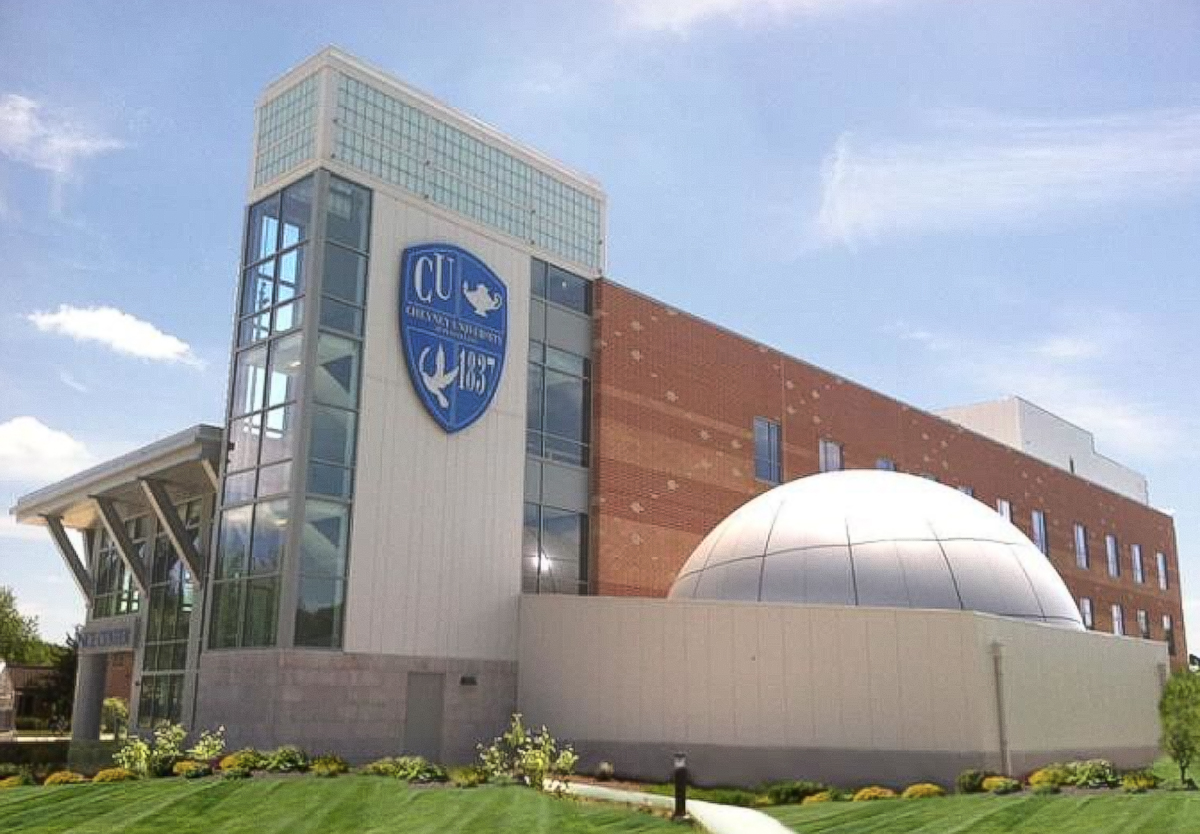
Cheyney University is planning to launch an innovative STEM building on campus! Learn more about the new Life Sciences and Technology hub from the release at the The Philadelphia Tribune below.
Cheyney University has announced plans to launch a Life Sciences and Technology hub.
The news comes as the enrollment for students majoring in science, technology, engineering and mathematics (STEM) has been growing at the nation’s first HBCU.
The funding for the hub will come from a Title III FUTURE Act Grant from the U.S. Department of Education.
“The program will afford students the opportunity to engage more deeply with the faculty and our corporate partners and help them prepare for and explore career options,” said Cheyney President Aaron A. Walton in a statement.
“This is exactly the vision we had in mind when we began inviting partners to locate on campus over two years ago,” he added.
Cheyney has recently seen an increase in students majoring in STEM from 13% in 2017-18 to 25% entering the fall 2021 semester.
The university’s goal is to have 30% of its student body majoring in biosciences and technology within four years.
Walton believes that having the hub makes the target for the university more realistic.
“We have almost doubled the percentage of students majoring in STEM in four years,” Walton said. “With the assets we have put into place, there is every reason to believe we can increase that figure and surpass our goal in these next four years.”
Located in the university’s Science Center, which is equipped with state of the art laboratories in biology, chemistry and computer science as well as a faculty research laboratory, the hub will provide programming designed to support science students, connecting them with resources and guidance to help them acclimate to scientific studies and career work.
STEM tutorials will also be available this fall through the hub to support academic progress.
“Our faculty are here from our Natural and Applied Sciences Department,” said Vanessa Atkins, director of the life science and technology hub. “Our students are getting additional tutoring and really getting all of the support that they need.
“This is also an opportunity for our students to be in a space where there are professionals from different industries,” she said. “The hub brings together all of these resources and helps our students to focus on their own success and taking ownership of that.
“It’s all about them working toward building skills, having experiences and moving toward their career goals,” she added.
The hub marks the culmination of Cheyney’s efforts to recruit private biological, chemical and other STEM companies to the university’s campus.
Mosaic Development Partners has been working with Cheyney to bring partners to the university.
Eight companies have either set up shop on the college campus or will establish operations in the coming months, creating numerous paid, hands-on internship opportunities.
Some of the companies already housed in Cheyney’s Science Center include ASI Chemicals Inc. (pharmaceuticals), SureBiochem (lab testing), Navrogen (cancer research) and Epcot Crenshaw (analytical services).
American Additive Manufacturing (large-scale 3D printing) and Advanced Alchemy labs (hemp farming and processing) will come to the campus in the future.
Cheyney also has an ongoing partnership with the Wistar Institute with the goal of expanding life science research education, training and business development opportunities in Pennsylvania.
Cheyney students will work directly with all of the companies.
“We want our students to benefit from the partnerships that we have by giving them the opportunity to connect with professionals who understand the job as well as have them be exposed to different types of work in the STEM field,” Atkins said.
“That includes having our partners be guest speakers for particular courses and having our students participate in internships where they have the opportunity to go in and be a part of the work that our partners are doing in their lab,” she added.
Atkins said what she wants students to take away from the life science and technology hub is that they can be STEM professionals.
“We want our students to know that they can have a career in STEM and it’s not beyond their grasp,” Atkins said. “We want them to go into these spaces knowing that they have the experience and skills to contribute and make a difference in their communities.”
Charlyne Smith, PhD., a Coppin State University alumna, has gone on to become a PWI’s first black woman who earned her PhD in nuclear engineering! Get the full story from Xavier Murphy below.
Charlyne Smith, who grew up in St. Catherine and is a former student at St. Catherine High School in Jamaica, is the first Black woman to earn a PhD in Nuclear Engineering from the University of Florida (UF). Smith was inspired by her grandfather to use her intelligence and drive to help “make Jamaica a better place. As a child in St. Catherine, Smith dreamed of becoming a scientist and inventor so she could help to resolve some of the basic problems faced by families like hers, who struggled to access electrical power and other reliable infrastructure. She wondered why, when she lived on a tropical island surrounded by water, all 2.8 million residents of Jamaica did not have access to power and clean water and decided to do something about it and focused energy toward solving the energy problem for her country and others like it.
Prior to attending FSU, she was a student at Coppin State University (CSU) in Baltimore, Maryland. She graduated in 2017 with a degree in chemistry and mathematics. While at Coppin, she studied fruits with dark pigments to create dye-sensitized solar cells (DSSCs), hypothesizing that these cells would absorb enough ultraviolet radiation (UV) to power large devices. She discovered this was not a feasible path toward providing reliable power to third-world countries in the immediate future. After a conversation with Dr. Nickie Peters – her first meeting with a nuclear scientist – at an alumni event at CSU, Smith moved on from solar research to pursue a career in the nuclear field, becoming convinced that nuclear technology has the potential to make real change happen immediately. She received a National Science Foundation Graduate Research Fellowship in 2018 to study at UF’s Department of Materials Science and Engineering.
After traveling to the United States to pursue academic opportunities in solar energy research, Smith realized the “severity of living conditions in Jamaica.” The disparity between the reliable energy available in the US compared to the unreliable energy access in Jamaica motivated her to ensure that the next generation of Jamaican children “will never know a day without access to clean water and reliable electricity.” While Smith acknowledges that renewable technology like solar will benefit these countries within 50 to 100 years, she also believes that every minute spent on research that does not directly improve the lives of families today only exacerbates the problem.
Jamaica operates the only nuclear reactor in the Caribbean, the Slowpoke research reactor, which is used chiefly for education and training and not for energy-related applications. Smith believes the reactor should be used to improve access to reliable energy on the island immediately, and that once people are educated about the real potential of nuclear power, they will fear it less and move toward a better future.
This was her reason to seek a PhD in Nuclear Engineering at the University of Florida. “For me, nuclear is the obvious immediate solution while renewable research takes some time to reach its maximum potential. I do this for my Grandfather. I do this for the survival of countries like mine,” she said.
Next month, Coppin State University is honoring one of its local basketball legends: former coach Ron “Fang” Mitchell! The longtime men’s basketball coach is going to be honored on the university’s arena floor. The honor comes after he served in his position for 28 years! Get the full story from Edward Lee at The Baltimore Sun below.
Coppin State will name the floor at its Physical Education Complex Arena in Baltimore after former men’s basketball coach Ron “Fang” Mitchell as part of “Fang Day” on Oct. 16, the school announced Tuesday.
In 28 years leading the Eagles from 1986 until 2014, Mitchell accumulated 429 victories, making him the winningest coach in Mid-Eastern Athletic Conference history. During his tenure, Coppin State won 10 regular-season league championships — including six straight from 1994-99 — and four conference tournament titles, advancing to the NCAA tournament in 1990, 1993, 1997, and 2008.
Beginning with the 1988-89 season, the Eagles recorded 11 consecutive winning seasons that included six of at least 20 victories.
Mitchell, a six-time MEAC Coach of the Year, guided the Eagles to one of the greatest upsets in NCAA tournament history in 1997 when No. 15 seed Coppin State upended No. 2 seed South Carolina in the first round. The historic win marked just the third time that a No. 15 seed defeated a No. 2 seed in the NCAA tournament and was the first victory for a MEAC program.
“It is a privilege to be able to celebrate Coach Fang and the many accomplishments and highlights of his lengthy career in, not just college basketball, but Coppin basketball,” said Coppin State president Dr. Anthony L. Jenkins. “His impact was felt both on and off the court, and it is only fitting that we acknowledge that influence at Coppin State University.”
A special ceremony to honor Mitchell will begin at 1 p.m. in the PEC Arena and will include an on-campus outdoor celebration, which will feature music, food trucks, and other entertainment.
Winston-Salem State football fans will be spread out for the home games this season because of COVID-19.(Journal File Photo)
Winston-Salem State’s first home football game, which is scheduled for Sept. 25 against Elizabeth City State, will have restrictions for those in attendance.
The restrictions, however, are not known yet.
N.C. A&T has decided that fans will have to prove they’ve been vaccinated or have proof of a recent negative COVID-19 test to get into games, WSSU could have those restrictions at the 13,500-seat Bowman Gray Stadium.
Right now all Etienne Thomas, who is WSSU’s athletics director, could say is that fans will be asked to wear masks.
“We will ask you to wear masks,” Thomas said. “And we’re spreading people out, so like in our Red Seats we will have fans spread out so there are at least two seats between every two people.”
Thomas said there will be more protocols in place, but “they are still being determined.”
Thomas said that while she would prefer a full stadium, normal WSSU attendance will allow fans to distance.
“We can spread people out, and that’s what we will do,” Thomas said.
Most of the 900 or so WSSU fans at Catawba’s Shuford Stadium on Saturday wore masks throughout the game. Fans at the WSSU-N.C. Central game Saturday in Durham will be required to wear masks since it is an on-campus stadium.
The stadium is owned by the city of Winston-Salem, and Ben Rowe, an assistant city manager, said any changes to the attendance policy for the Rams’ three home football games would be decided in a joint effort.
“We have not discussed this option with university officials,” Rowe wrote in an email about proof of vaccination. “We would work together on that kind of decision.”
The homecoming game, on Oct. 23 against Livingstone, traditionally has been one of the most heavily attended games in recent years.
Over the last five seasons WSSU has averaged about 5,000 fans for non-homecoming games. At homecoming games, however, the stadium is usually full even if the fans aren’t in their seats but walking around the spacious concourse or at tailgate parties outside the stadium.
“We still have some time to figure all of that out with our homecoming game more than a month away,” Thomas said.
A&T has already scaled down homecoming festivities to combat the ongoing COVID-19 issues and the rising cases of the delta variant.
Winston-Salem State plays N.C. Central on Oct. 16, 1999. WSSU’s #12 is Tory Woodbury.Christine Rucker, Journal file photo
“We are looking at what that would take for us because it’s a different dynamic than A&T’s homecoming, and it’s a different footprint,” Thomas said. “So from the logistics, but also the personnel that we have, we have to see what we are capable of changing.”
Thomas will keep Chancellor Elwood Robinson and top officials informed about possible changes to homecoming in the next couple of weeks.
“I’ll provide them with some logistics and what that plan could look like if we have to go that route,” Thomas said, “and the virus will really speak to us at that point.”
As for the Sept. 25 game at Bowman Gray Stadium, the Rams will celebrate Community Day with two ceremonies to recognize the naming of the playing surface after Bill Hayes, a legendary coach and athletics director at WSSU. Bill Hayes Field will be unveiled in a pregame ceremony for the 1:30 p.m. game as well as a halftime ceremony.
“It’s great to have that city partnership with the city council and with the help of councilmember (Annette Scippio) and Donald Evans (a former WSSU star) for all of this to happen,” Thomas said, “and it’s just a great way to celebrate Coach Hayes.”
Not only did Hayes’ former players at WSSU and N.C. A&T help with making the naming of the field a reality there’s also a statue that is in the works. Others who helped work behind the scenes are Winston-Salem State grades Reginald and Aimee McCaskill, who are prominent alums who live in Winston-Salem.
“We’re really looking forward to our first home game in a long time,” Thomas said
The 16 honorees are thriving in sports like track, equestrian, cheerleading, basketball, and more!
There are HBCU students and alumni that have made history in almost every industry there is: music, technology, photography, engineering, dance, science, modeling, and so much more. Beginning in 2020, Nike set out to highlight these HBCU trailblazers by honoring the individuals who “run the yard” at their HBCU, through launching a “Nike Yardrunners” campaign. No matter what they set their minds to, the Yardrunners honorees are known for their dedication to their craft, their charisma, and their lasting impact. Last year, Nike honored 12 Yardrunners that were dominating the business industry as entrepreneurs, and that list includes our own HBCU Buzz founder Luke Lawal Jr.
Those in this year’s class, Nike Yardrunners 2.0, aren’t your typical athletes by any measure. The 16 honorees are boldly creating change in sports like track, equestrian, cheerleading, basketball, and NASCAR. Get a snapshot of the people making sure athletics will never be the same:
Mulbe Marcellus Dillard IV of Florida A&M University
Mulbe Marcellus Dillard IV has taken the golf world by storm as one of few black professionals in the sport. Hailing from Chicago, he has used golf to elevate higher mentally, reaching major tournaments and beyond.
Taliyah Townsend of North Carolina A&T State University
The athletic talents of Taliyah Townsend have taken her all the way to the Olympics. But even after reaching one of the highest platforms in sports, she still has another height to reach: a doctorate of pharmacy from Howard University’s College of Pharmacy!
Jennifer Gray of Alabama A&M University
Recent Alabama A&M University graduate Jennifer Gray has connected the precision her time cheerleading required to the timeliness and discipline needed for her budding career in electrical engineering. Through her sorority Alpha Kappa Alpha Sorority, Inc., she has continued to emphasize the value of community building and leadership.
A’zia Reed of Kentucky State University
A’zia Reed has confidently led the Kentucky State University Thorobreds as a power forward on their basketball team. The All American athlete credits a positive mindset with her ability to dominate the classroom and basketball court relentlessly.
Brehanna Daniels of Norfolk State University
Basketball player Brehanna Daniels is encouraging other black women like herself to boldly follow their dreams through her unique story. After learning about NASCAR’s Drive for Diversity program in her senior year, she stepped out on faith and expressed an interest in pit crew development. She ultimately was accepted into the program as the only woman out of 24, and now pushes for representation in the industry as the First Female Nascar Black Crew Pit Member.
Grant Bennett of Morehouse College
Playing baseball elevated the confidence and perspective of Grant Bennett while he studied at Morehouse College. Now the ambitious athlete encourages others to pursue what may appear to be out of reach with the founding of his non-profit The Two-Six Project. Centered in Fayetteville, NC, he supports marginalized youth to build their own leadership skills through scholarships and programming.
Lynae Bogues of Spelman College
Dancer Lynae Bogues has found a creative way to raise the alarm on issues affecting the black community by evolving into a poet. Through her platform as an influencer and YouTuber, she inspires others to look beyond their circumstances and elevate, because she has taken the time and inner work to do the same.
Solomon Mangham of Howard University
Former Howard University basketball player Solomon Mangham is used to seeing greatness, both in himself and in the black community. Now as an entrepreneur who works in private equity, he has made it his mission to elevate the hard workers in his community through exposure to new opportunities.
Chester Hutcherson of Tuskegee University
For former star Tuskegee University linebacker Chester Hutcherson, ambition is the main thing needed to succeed. His self-confidence despite discouraging odds has allowed the member of Omega Psi Phi Fraternity, Inc. to have a flourishing career in mechanical engineering and other areas of his life.
Alphonse Nicholson of North Carolina Central University
Actor J. Alphonse is creating a legacy with roots founded in his lessons as a drummer at NCCU. The resilient entertainer has brought his talents to projects from the “P-Valley” show on STARZ all the way to Broadway. Yet prior to the fame, he showcased his hard work ethic as a drummer on the NCCU band! He learned a lesson that has followed him through his career: work hard to earn your spot and be dependable enough to keep it!
Clint Gray and Derrick Moore of Tennessee State University
The supportive culture at alma mater Tennessee State University empowered football teammates Clint Gray and Derrick Moore to create what would become a national pizza chain. Through the success of Slim & Husky’s Pizza, the entrepreneurs give back to TSU students, and encourage others interested in business to strongly consider an HBCU.
Dr. Tara Turner of Clark Atlanta University
No-nonsense tennis powerhouse Dr. Tara Turner turned her discipline in academics and athletics into a lifestyle that continues to inspire countless others. Now as head tennis coach at her alma mater Clark Atlanta University, she takes no nonsense but encourages others to pursue the height of their potential. In fact, the HBCU Elite founder and member of Delta Sigma Theta Sorority, Inc. now boasts a tennis team that has the highest GPA of any athletic team on campus!
Martin Oliver of Central State University
Professional basketball player Martin Oliver found success through perseverance, but he didn’t always have the mindset to keep himself on the right track. While crediting his alma mater with elevating his confidence, the Central State University graduate works to encourage others to bank on themselves through difficult circumstances.
Dominique Pierre of Delaware State University
Since first starting out at five years old, equestrian Dominique Pierre has loved the sport. The adventurous nature of the Delaware State University graduate’s personality and her love for horses has encouraged her to be bold and encourage others to be open-minded and try new things.
Kahdre Walker of Bethune-Cookman University
Professional dancer and Bethune-Cookman University drum major Kahdre Walker is a fierce performer who thrives on overcoming obstacles. Through his faith, he confidently tackles roadblocks by taking one step at a time.
Learn how Nike is celebrating the rich history, heritage and legacy of HBCUs here!
The White House’s HBCU advisory board exists to make advancements in our HBCU community, but the COVID-19 pandemic is proving to be a formidable foe. Get the full story on how the board plans to tackle everything from lower infections to vaccinations in the story from Francesca Chambers at The Kansas City Star.
Credit: Delaware State University
President Joe Biden’s new advisory board on Historically Black Colleges and Universities will face an immediate challenge of how to approach COVID-19 prevention, with booster shots on the horizon and some states preventing public colleges and universities from mandating vaccinations for their students.
Biden this week tapped his former inaugural committee head Tony Allen, president of Delaware State University, to chair the presidential advisory board and make recommendations on policies to help HBCUs, including with their response to the coronavirus pandemic.
“HBCUs are not only educational institutions, they’re community institutions. These are places where not just students but the public can go and receive some services that they might not otherwise have an easy time getting,” Allen said in an interview.
Delaware State University mandated vaccines on its campus this academic year, and Allen said he would be in contact with fellow advisory board members and HBCU leaders across the country about additional efforts to curb the spread of the coronavirus at their schools.
HBCUs have been encouraging their students to get vaccinated and many have vaccination sites on or near their campuses that can help with booster shots to vaccinated Americans as soon as they are allowed.
The FDA will meet with its advisory committee next week to consider the approval of a Pfizer booster shot for individuals age 16 and older, and the Biden administration is eyeing the week of Sept. 20 for a nationwide rollout of booster shots to eligible individuals.
Allen said that if boosters are approved for widespread use, “it is likely that we will encourage, if not mandate, the booster shots” at DSU to help combat the delta variant. HBCUs are also poised to provide booster shots to the surrounding communities, Allen said, just as they did with vaccinations.
After Biden announced Thursday that most workers will be required to get vaccinated or test weekly, North Carolina A&T Chancellor Harold Martin said his school, which has the largest enrollment of any HBCU, is preparing for an influx of individuals seeking inoculations.
“We expect that we’re going to see a ramp up not only in our employees and our students, but we expect to see a ramp up in the community around us who are seeking to get, to be vaccinated for the first time,” Martin said.
The White House said it would be up to the presidential advisory board to determine its approach to vaccine mandates.
Trey Baker, senior advisor for public engagement at the White House, said that Allen and the board will help guide administration efforts to distribute pandemic assistance to HBCUs that is intended to help the schools remain open and make technological improvements that allow for remote instruction.
“There’s a lot of funding that’s there. And so part of this will be having someone who’s in that position who will help shepherd the universities, the college presidents, to know how to access the resources to benefit the institutions,” Baker said.
Biden signed an executive order this month reestablishing the White House HBCU initiative and the board that will advise Biden and the administration on policy and funding levels.
Lodriguez Murray, senior vice president of public policy and government affairs at the United Negro College Fund, said that he was pleased to see efforts to help with pandemic-related issues explicitly mentioned in the executive order.
“You can’t call together that kind of task force with as much brain power as they have without really putting them on the spot in terms of dealing with this pandemic,” Murray said. “I think that if that language were not included, it would be an elephant in the room.”
Biden has not yet named anyone besides Allen to the advisory board. His order said the board would be made up of HBCU presidents, educators, philanthropists, business leaders, entrepreneurs and other industry leaders.
Allen said he would be assisting with the selection of board members and the naming of an executive director.
Biden’s executive order revokes the HBCU mandate established under the previous administration and replaces it with a new initiative. Recent presidents have signed similar orders in February, weeks after their inaugurations. Biden’s new guidance was issued muchlater, on Sept. 3.
Allen was a former speechwriter for Biden when he was a Delaware senator and an advisory board member on his presidential transition. Before DSU hewas head of corporate reputation atBank of America.
N.C. A&T’s Martin, who sat on former President Donald Trump’s HBCU advisory board, said it is imperative for the committee to have the “trust and confidence and support” of the White House, members of Congress and HBCU heads.
“I think a reconstitution of the advisory board, inclusive of new leadership will help to enhance significantly trust,” he said. “I think having Tony Allen as president of Delaware State, with a strong relationship, with support and the ear of the president, will be critically important for the advisory board.”
Allen said he spoke with Biden and Harris about HBCUs at the January inauguration.
“He knows my interests from the very beginning,” Allen said of the advisory board appointment. “His focus on HBCUs — I can tell you, even at the end of the inauguration, I got to spend just a few minutes with him and Vice President Harris — they both said, you can expect our continued and sustained support as a result.”
Harris is a graduate of Howard University, a private HBCU in Washington, D.C., making her the highest ranking U.S. official to have attended a historically Black institution. She visited Hampton University, a private HBCU near Norfolk, Va., on Friday.
“She’s not just the example of excellence that comes from HBCUs, she’s thoughtful on the topic, has been supportive throughout her public life,” Allen said of Harris, “and I know will help me and the board of advisors, as we shape, what, again, I think should be sustainable, equitable resources for HBCUs, the likes of which we haven’t seen.”
The administration directed $3 billion in pandemic assistance to HBCUs in a COVID-relief law earlier this year, and Biden asked Congress for another $90 billion for higher education institutions that serve minorities as part of his economic agenda.
Securing funds to improve the physical infrastructure at HBCUs, including at research institutions, and expanding access to Federal Pell Grants will be priorities for the advisory board, Allen said. Student debt relief will also be a “big part” of their efforts, he said.
Baker said he expects the advisory board to help establish partnerships between HBCUs and corporations and that Allen’s previous corporate experience will be vital to that effort.
FAMU flags wave in front of Hard Rock Stadium during the tailgate before the Orange Blossom Classic featuring Florida A&M University and Jackson State University in Miami Gardens, Florida, on Sunday, September 5, 2021.(Credit: Daniel A. Varela)
Inspiring more philanthropic organizations and businesses to partner with HBCUs is crucial to the future success of the schools, UNCF’s Murray said.
“We’re used to HBCUs saying, we’ve done so much with so little for so long,” he added. “It’s up to Dr. Allen now to figure out the federal role, to figure out how to get rid of that phrase and start saying, HBCUs finally have as strong a level of resources as any other group of institutions, now let’s see how much more we and their students can do with a significant level of investment.” Read more here: https://www.kansascity.com/news/politics-government/article254137043.html#storylink=cpy
Allen said that increasing investments in HBCUs is a priority.
“This is a renaissance moment for HBCUs, but more importantly, it’s a time where folks are paying attention to us,” he said. “And no one HBCU president is going to be able to do that by themselves, I’m going to need all my colleagues to be with me in this effort.”