Mrs. Obama: Fight ‘of Our Era’ at the Polls


(The Root) — On the heels of her widely praised speech at the Democratic National Convention, first lady Michelle Obama delivered another high-profile address, this time at the Congressional Black Caucus Foundation’s annual Phoenix Awards gala in Washington, D.C. As first reported on The Root, this year marked the first lady’s first year delivering a keynote at the event where her husband has spoken in previous years.

The first lady was warmly embraced by the Phoenix Awards audience, just like she was by the supportive crowd at the Democratic National Convention, but that is where similarities between the two speeches end. Her speech before the Congressional Black Caucus Foundation audience was one of the most overtly political of her tenure as first lady, drawing comparisons between the civil rights battles of the 20th century and what’s at stake in the 2012 presidential election.

Though she’s no stranger to the campaign trail, the first lady’s speeches have tended to focus on policy and her husband’s accomplishments, without wading too deeply into controversial political terrain. Her Democratic Convention speech was hailed for its subtlety, drawing contrasts to her husband’s opponent, while never mentioning him by name, and making references to reproductive rights, while never mentioning abortion. But there was little subtlety about her Phoenix Awards speech. Mrs. Obama’s message was explicit: We are in the political and civil rights battle of our time, and we all have to roll up our sleeves and fight. Read more…

Alcorn State and a new race debate

In 1948, Medgar Evers arrived at Alcorn College with a GI Bill, a football scholarship and eyes that had seen two very different sides of the same world.

Mississippi represented one side. Evers grew up in Decatur, a farming town buried inside a state in which extreme racial divisiveness was status quo for the times.

But at 23 years old, Evers, the great-grandson of a slave, also had seen a world that was as different from Mississippi as moonlight and sunlight.

Evers served in the Army and fought in the Battle of Normandy during World War II. Stationed in France, he had a French girlfriend and marveled at how he was more accepted in another country than his own home. It gave him hope that one day he could fully enjoy the rights he’d been systematically denied in America.

Alcorn was a perfect landing spot — and basically the only landing spot. Alcorn and Jackson State were the only two universities African-Americans in Mississippi could attend. Like all historically black colleges and universities at the time, Alcorn was a safe haven for blacks who wanted to pursue an education but were unable to do so in mainstream America because of widespread racism and discrimination.

Evers thrived at Alcorn. He majored in business, captained the football team, lettered in track and was a member of the debate team.

Evers was eager to figure out how to merge both sides of the world he’d seen. Some would say the slain Civil Rights activist — who was assassinated in his own driveway in 1963 — accomplished that after he left Alcorn. He organized boycotts against gas stations that refused to service black customers. He vigorously campaigned to desegregate the University of Mississippi, which denied his law school application but eventually was forced to accept James Meredith in 1962.

But 50 years after Evers fought for Meredith’s enrollment, integration continues to be a touchy issue in the state of Mississippi.

Alcorn State president M. Christopher Brown II couldn’t risk the information being leaked, so he took every precaution. Brown knew once people found out who he had hired as his next football coach, he’d have a lot of questions to answer. This was a historic hire for not just Alcorn, but the entire Southwestern Athletic Conference. read more…

HBCU tennis tournament slated for International Park

Clayton County again will host the annual HBCU National Tennis Championships, to be held Thursday through Saturday at International Park.

One of the county’s most popular landmarks and the site of Olympic volleyball in 1996, International Park is also known for its state -of-the-art tennis facilities. It has 17 hard courts, a pro shop and professional staff.

The three-day competition will feature 70 matches per day and 140 top talents representing NCAA Division I and II and NAIA tennis programs from Historically Black Colleges and Universities (HBCU).

In addition to Atlanta schools Morehouse College and Clark Atlanta University, five-time defending champ Florida A&M men’s team and Southern University’s Lady Jaguars will be seeking their fourth consecutive championships.

Participants will be competing for national championships, covenant trophies and $1,000 prizes for their schools. Prize packages will be awarded to both men’s and women’s teams.

“Once again, Clayton County is pleased to host the HBCU National Tennis Championships, and we hope to maintain the relationship for years to come,” said Clayton County Commissioner Sonna Singleton. “The amenities offered at International Park provide an opportunity to attract this type of world-class event.” read more…

Entertainment Manager Yandy Smith Talks Value of Black College Experience

The summer break is in full swing for many of you college students. And although I’m sure you’ve already applied and been accepted to your chosen college or university, I wanted to provide you with some insight on the HBCU experience.

Going away to college is an amazing experience. And attending a Historically Black College or University (HBCU) offers one that is truly unique. When applying to colleges during my senior year of high school, I always knew I wanted to go to an HBCU. My first inside look at the college experience was with the popular ’90s show, “A Different World.” Yes, I knew it was just a TV sitcom and only recounted a fraction of the HBCU experience, but I was still fascinated, leading me to Howard University in Washington D.C. Once I settled in at HU, I felt right at home.

HBCUs have such a rich cultural history and offer a unity that predominately white schools may not. HBCU’s were created many years ago to provide an opportunity for black people seeking a higher education. Today, some people are not in support of black students attending predominately black universities because they say it’s not representative of the real world and does not offer the same educational values as other universities. I can only speak from my own personal experience, and I can’t explain how honored I am to hold a degree from an HBCU. Not only did I encounter a highly intellectual learning environment, but also a culturally supportive one. Yes, once you enter the workforce you will encounter people of many different cultures and races. But, my well-rounded education from HU has prepared me for anything and everything, making me the boss I am today!

Over the years, HBCU’s have bred many successful people who have made great contributions to our society including filmmaker and activist Spike Lee; billionaire media icon Oprah Winfrey; Black Enterprise publisher and entrepreneur Earl Graves Sr.; and NAACP Image Award-winning actor Lance Gross. read more…

Howard University Hosting 2nd Annual Social Media Conference

Social media experts and scholars from across the United States and five foreign countries will present their research, best practices and ideas on the changing landscape and power of social media in society at the second annual Social Media Technology Conference and Workshop Sept. 27-28, 2012 at Howard University in Washington.

The conference and workshop hosted by Howard and Bowie State University brings together scholars and professionals in the area of social media to share their perspectives on the technical, ethical, economic, legal, political and cultural implications of social media use.  Jan Shaffer, executive director of the J-Lab at American University, will present the keynote addressing the social media landscape at 12:30 p.m. on Thursday, Sept. 27.

The conference will feature more than 40 presentations, panel discussions and workshops and offer extraordinary opportunities to network with other educators, professionals and experts in the area of digital media, communications and teaching.

To see the full schedule or register for the second annual Social Media Technology Conference and Workshop, log onto http://socialmediatechnologyconference.com

Source

Keke Palmer Campaigns for Obama & Voting at Bethune Cookman


Actress Keke Palmer spoke to hundreds of students at Bethune Cookman University this past week urging the importance of voting and promoting her top candidate for the election, President Barack Obama.

“We are the future. Young adults identify with me,” Palmer said about why she’s working to help re-elect the president.

Palmer spoke on crucial issues that she believes the President stands for such as Obamacare, women’s rights, and affordable education.

At 19, the child star hope to one day be able to go back to a traditional college, and has hopes of attending an HBCU.

“I always think about it. I want to have a real college experience like you all have – something that can’t be taken away from me,” Palmer said, adding she will eventually take some time off to go back to school.

Read the full article here

Jackson State University names James Renick interim provost

Jackson State University has named James Renick as its new interim provost.

Renick most recently served as senior adviser to JSU President Carolyn Meyers, said David Hoard, Jackson State’s vice president of institutional advancement.

The former provost, Mark Hardy, was reassigned Monday as special assistant for the academic fundraising initiative under Hoard’s supervision, Hoard said.

Renick previously served as senior adviser to the president at Central State University. Before that, he was senior vice president of the American Council on Education, chancellor at North Carolina Agricultural & Technical State University — where Meyers had served as provost — and chancellor of University of Michigan at Deerborn, Hoard said.

Hoard also came from North Carolina A&T, where he was a vice chancellor of development and university relations.

In other staff changes on Monday, JSU named Robin Pack as the new interim executive director of human resources, Hoard said. Referenced

The U.S Department of Education Awards nearly $228 million to 97 HBCU’s. Breakdown

On September 18th, 2012 the U.S Department of Education awarded nearly 228 million dollars to HBCU’s in five-year grants. The formula for the grants is formulated by the number of Pell Grant recipients per year, number of graduates over the past with graduate school or professional training, which determines a proportion of total funding which is appropriated to each institution.

The U.S Secretary of Education, Anne Duncan said, “HBCU’s have made enduring, even staggering contributions to American life despite the steep financial challenges many have faced….The grants will help these important institutions continue to provide their students with the quality education they need to compete in the global economy.

The Grio released negative connotations in an article, “Obama White House awards HBCU’s, but how will the money be managed?” The article depicts HBCU’s as schools who have Presidents that mismanage funds and questions their ability to manage the funding. Hence, 16 HBCU’s have vacancies for President.

Yet, although HBCU’s account for only three percent of all U.S. colleges, they produce 40 percent of the nation’s black science graduates. They are responsible for generating 75 percent of all African-American Ph.D.’s and 70 percent of black federal judges.

We attempted to reach out to Jim Bradshaw at the U.S Department of Education but, he was not available for questioning.


A complete list of the 97 grant award recipients follows:

Alabama

  • Alabama A&M University — $3,236,524
  • Alabama State University — $3,994,637
  • Bishop State CC—Carver Campus — $500,000
  • Bishop State CC—Main Campus — $1,838,546
  • Concordia College—Selma — $1,002,132
  • Gadsden State Community College — $250,000
  • H. Councill Trenholm State Technical College — $1,244,976
  • J.F. Drake State Technical College — $1,433,843
  • Lawson State Community College — $2,991,584
  • Miles College — $2,011,679
  • Oakwood College — $1,576,796
  • Shelton State Community College — $1,145,605
  • Stillman College — $1,742,200
  • Talladega College — $1,339,273
  • Tuskegee University — $2,279,998

Arkansas

  • Arkansas Baptist College — $1,435,675
  • Philander Smith University — $1,859,312
  • Shorter College — $250,000
  • University of Arkansas, Pine Bluff — $3,275,591

District of Columbia

  • University of the District of Columbia — $2,415,668

Delaware

  • Delaware State University — $2,173,761

Florida

  • Bethune-Cookman University — $2,926,836
  • Edward Waters College — $1,297,176
  • Florida A&M University — $6,596,639
  • Florida Memorial University — $2,025,731

Georgia

  • Albany State University — $3,724,604
  • Clark Atlanta University — $2,756,524
  • Fort Valley State University — $2,626,143
  • Morehouse College — $2,300,748
  • Paine College — $1,514,609
  • Savannah State University — $2,793,926
  • Spelman College — $2,085,873

Kentucky

  • Kentucky State University — $2,192,831

Louisiana

  • Dillard University — $2,006,534
  • Grambling State University — $3,444,511
  • Southern University & A&M College — $5,331,871
  • Southern University New Orleans — $2,577,184
  • Southern University Shreveport — $2,812,234
  • Xavier University of Louisiana — $3,199,496

Maryland

  • Bowie State University — $3,001,958
  • Coppin State University — $2,774,741
  • Morgan State University — $3,890,113
  • University of Maryland, Eastern Shore — $2,535,353

Missouri

  • Harris-Stowe State University — $1,578,832
  • Lincoln University — $2,289,891

Mississippi

  • Alcorn State University — $2,981,217
  • Coahoma Community College — $2,472,769
  • Hinds Community College — $1,592,626
  • Jackson State University — $5,314,828
  • Mississippi Valley State University — $2,539,567
  • Rust College — $1,505,037
  • Tougaloo College — $2,195,106

North Carolina

  • Bennett College — $1,457,849
  • Elizabeth City State University — $3,474,658
  • Fayetteville State University  — $3,842,872
  • Johnson C. Smith University  — $1,886,314
  • Livingstone College — $1,476,226
  • North Carolina A&T State University — $5,246,940
  • North Carolina Central University — $4,090,693
  • St. Augustine’s College — $1,638,519
  • Shaw University  — $2,467,589
  • Winston-Salem State University — $4,375,966

Ohio

  • Central State University — $1,978,028
  • Wilberforce University — $1,231,005

Oklahoma

  • Langston University — $2,356,747

Pennsylvania

  • Cheyney University of Pennsylvania — $1,712,647
  • Lincoln University of Pennsylvania — $2,081,149

South Carolina

  • Allen University — $1,382,744
  • Benedict College — $2,672,945
  • Claflin University — $1,844,621
  • Clinton Junior College — $250,000
  • Denmark Technical College — $1,610,441
  • Morris College — $1,561,979
  • South Carolina State University — $3,354,581
  • Voorhees College — $1,743,086

Tennessee

  • Fisk University — $1,356,300
  • Lane College — $2,691,975
  • LeMoyne-Owen College — $1,252,907
  • Tennessee State University — $4,851,718

Texas

  • Huston-Tillotson University — $1,985,989
  • Jarvis Christian College — $991,903
  • Paul Quinn College — $1,079,394
  • Prairie View A&M University — $4,334,301
  • SW Christian College — $250,000
  • St. Philip’s College — $5,404,878
  • Texas College — $1,095,504
  • Texas Southern University — $4,438,376
  • Wiley College — $1,600,510

Virginia

  • Hampton University — $2,641,339
  • Norfolk State University — $3,312,058
  • St. Paul’s College — $1,392,751
  • Virginia State University — $3,679,066
  • Virginia Union University — $1,719,627
  • Virginia University of Lynchburg — $500,000

West Virginia

  • Bluefield State College — $1,208,548
  • West Virginia State University — $1,921,352

U.S. Virgin Islands

  • University of Virgin Islands — $1,650,898

Florida HBCUs get millions

Florida’s four Historically Black Colleges and Universities (HBCUs) – are slated to receive approximately $12.8 million of a $227.9 million grant awarded by the U.S. Department of Education this week, which continues grant-making to HBCUs that started under the George W. Bush administration.

Ninety-seven HBCUs in 19 states, the District of Columbia and the U.S. Virgin Islands will be able to strengthen their academic resources, financial management systems, endowment-building capacity, and physical plants as a result, according to a press release from USDOE.

FAMU received $6,596,639 – the largest single amount of any HBCU in the country.

Bethune-Cookman University received $2,926,836; Florida Memorial University $2,025,731; and Edward Waters College, $1,297,176.

Every school that was funded received a minimum of $250,000. read more…

Fuel Pizza headed to Howard University area

Fuel Pizza has signed a lease near Howard University, according to the broker who represents the pizzeria.

Fuel will occupy about 2,300 square feet at 2301 Georgia Ave. NW, next door to a new Potbelly’s location. It will be the third Fuel spot, following its other D.C. restaurants at 1606 K St. NW and 600 F St. NW.

Fuel entered the local market in January. The company, based in Charlotte, N.C., has a gas station theme to its pizza restaurants, and serves up wings, sandwiches and pizzas with festive flavors like bacon and bleu cheese or barbecue chicken.

The new restaurant will likely open next spring, according to broker Jeff Edelstein of Roadside Development. more info…

Happy Founders’ Day, Iota Phi Theta

On this day, 49 years ago, twelve men bonded together on the footsteps of Hurt Gymnasium on the campus of Morgan State College (now known as Morgan State University) and formed Iota Phi Theta Fraternity, Inc. These men are acknowledged and honored today for their courage to stand up against the stigma of conformity, and their will to provide a perpetual image of hope, self-respect, dignity, perseverance, and brotherhood for all persons underserved.

For more than 400 years, blacks in North America faced trials and tribulations in hopes of someday reaching the Promised Land.  Surely, in the rebellious years of the 1960s, black Americans could not fathom the idea of pledging allegiance to a land whose actions suggest “three-fifths of a person” still suited them best.

Tired of continuous discrimination, blacks pulled themselves up by their bootlace and sought after free will and equal rights. (It is telling to note how this era of radical change re-sparked a flame in America that stirred many black men and women to take a stand for freedom, liberty and justice for all once more.)

Among the first to make a serious effort for change were Iota Phi Theta Founders Albert Hicks, Lonnie Spruill Jr., Charles Briscoe, Frank Coakley, John Slade, Barron Willis, Webster Lewis, Louis Hudnell, Charles Brown, Charles Gregory, Elias Dorsey Jr., and Michael Williams.

These men are the true meaning of “rebels with a cause,” and as non-traditional students, they had no time for trivial games.  They rallied on their motto, “Building a Tradition, not Resting Upon One!” and encouraged people to be leaders in their community rather than solely followers.

With their instrumental hard work to improve the character of black men, and the black community, the Founders of Iota Phi Theta are remembered for their fundamental principles toward the development and perpetuation of scholarship, leadership, citizenship, fidelity and brotherhood among men.

Let’s pay tribute to these honorable men who paved the way for many of us, though we must also be reminded that the struggle for freedom, peace and happiness is not yet over.

Former Delaware State University Professor Faces Prison Time for Assisting Peaceful Rally

Delaware State University (DSU)  was founded in 1891 and is one of the country’s first and most prominent historically black colleges (HBCUs).  Located in Dover, Delaware, the fully accredited university has additional satellite campuses located in the Delaware cities of Wilmington and Georgetown. Approximately 4,200 students are currently enrolled in the school. It is the second largest public university in the state of Delaware.

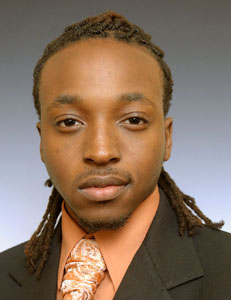
Dr. Jahi Issa (pictured above)  was formerly employed by DSU as a professor of  American History and Africana Studies. On August 17, 2012, Dr. Issa was fired by the HBCU for reasons attributed to an arrest he received on campus during a rally organized by the school’s students. They demonstrated a peaceful rally, which was organized to protest the recent firings of  favored black professors at DSU. After the melee, Delaware State Attorney Beau Biden’s offices filed Class A misdemeanors against the former professor. read more…

Sam Covelli, Panera Bread Franchisee, Allegedly Didn’t Want Black Employees In Public View

An Ohio franchisee who runs several western Pennsylvania Panera Bread stores has agreed to pay more than $76,000 to settle discrimination claims by current and former black employees.

Chief U.S. District Judge Gary Lancaster on Monday told attorneys for Guy Vines, the black worker, and the company he sued in January, Warren, Ohio-based Covelli Enterprises, to advertise the settlement in newspapers in Pennsylvania, Ohio, Florida, Kentucky and West Virginia, where Covelli operates Panera stores.

Vines sued claiming he was denied promotions and made to work in the kitchen because company owner Sam Covelli didn’t want black employees in areas where the public was served. About 200 to 300 black workers may be entitled to money, Vines’ attorney, Samuel Cordes told the judge.

According to online court records, Vines will receive $10,000 for being the lead plaintiff and Cordes will receive $66,000 in legal fees. In addition, Covelli must pay a yet-to-be determined amount based on how many current and former employees respond to the advertisements and file claims.

Those workers will get 70 cents an hour for each hour they worked in excess of one year at any of Covelli’s Panera’s stores. That’s based upon how much money Covelli’s workers stood to gain had they been promoted after their first year.

The settlement covers all current or former black employees who worked for Covelli for at least a year between Jan. 11, 2008 and Jan. 11, 2012 – the day Vines filed his lawsuit. Vines contends he was hired in November 2009 and quit in August 2011 over his alleged mistreatment.

Cordes and Covelli’s attorney, Brad Funari, declined to comment after the hearing.

Covelli continues to deny wrongdoing as part of the settlement. read more…

FAMU Blames Drum Major for His Own Death

Florida A&M University has said that drum major Robert Champion was responsible for what happened to him on Bus C on the November night when he was hazed and eventually died.

According to a filing Monday in the Orange County Circuit Court by Richard Mitchell, who was hired to represent FAMU in the civil case, Champion, in his position as a leader, was aware of the dangers involved with hazing, yet “expressly assumed the risk of the hazing injuries that caused his death.”

The documents also state that Champion’s knowledge of hazing, and his witnessing of others being hazed that night, left the decision to participate as a personal choice.

“He realized and appreciated the possibility of injuries as a result of such danger, and not withstanding the opportunity to avoid the danger simply by not showing up at the designated place and time, he deliberately exposed himself to the danger,.” according to the filing.

The Champion family filed a wrongful death suit that  Champion’s parents, Robert and Pamela Champion, filed against it and Fabulous Coach Lines in July, claiming the university “negligently failed to have any policies or procedures governing, monitoring, or disciplining FAMU Band members for facilitation, participation or encouragement of hazing activities, or in the alternative.”

In addition,Mitchell also claimed that the university is not responsible for the actions of students while not involved in university-sanctioned or sponsored events, and that the damages incurred “were caused by the active and intervening acts of persons not under FAMU’s control.”

According to prosecutors, Champion was killed following the Florida Classic in Orlando on Nov. 19, 2011, after he participated in a hazing incident called “crossing over,” where he endured punches, kicks and violence from other band members as he tried to push his way to the back of a charter bus. read more…

Black history museum misses its opening date for third time

Saturday was the third missed opening-day deadline for the Minnesota African American Museum. The founder says negotiations with the bank continue.

Saturday was the third missed opening-day deadline for the Minnesota African American Museum. The founder says negotiations with the bank continue.

A new museum celebrating the history of blacks in Minnesota failed to open as scheduled last weekend, the third time in the past year it has missed its own deadline for opening to the public.

The doors were locked Monday at the Minnesota African American Museum and Cultural Center at 1700 3rd Ave. S. in Minneapolis on Monday, and construction work had stopped. Inside, wires were hanging from wall outlets.

The adjacent carriage house, which housed the museum’s office, was also locked.

Mahmoud El-Kati, professor emeritus at Macalester College and a member of the museum board, said he was aware the museum was not going to open last Saturday. But El-Kati said he was not privy to information about negotiations between the museum and the bank that holds the museum’s mortgage.

Roxanne Givens, the museum founder, said in an interview earlier this month that it would open Sept. 15. But she also said that if differences with the bank were not resolved, construction might stop. In a text message Monday to the Star Tribune, Givens said only that negotiations with the bank continue.

The museum is depending on a $1 million grant, approved by the Legislature last year, to help with construction. But the state will not release the money until it is listed in first position on the museum mortgage. First position ensures that the state would recover some money if the museum fails. read more…

Gay marriage debate: Why did Harry Jackson pull out of the scheduled Howard University forum?

This much is not in dispute:

Bishop Harry Jackson, pastor of Hope Christian Church in Beltsville and a well-known activist against same -sex marriage, was invited to debate Rep. Emmanuel Cleaver, the chairman of the Congressional Black Caucus, on the topic of same sex marriage at Howard University’s Andrew Rankin Memorial Chapel Wednesday night. But Jackson backed out on Tuesday.

That’s where the agreement ends.

Jackson says he was not invited to participate by event organizers –SiriusXM Satellite Radio host Joe Madison, and his wife and executive producer Sharon – until two days before the event. A scheduling conflict prompted him to cancel, Jackson said, but he added that a sense that the deck was stacked against his point of view was “a secondary reason” for not taking part .

“I only thought that I was talking to [Cleaver], but I understand other people were going to be involved,” Jackson said. “I also was concerned that it was being held at Howard” because he perceives the university to be a liberal insititution. He said he preferred a more neutral site for the event and wanted to be involved in deciding who else would would be invited.

He certainly didn’t back out because he was afraid to express his views against same sex marriage, he said.

“I never back away from a fight,” said Jackson, who has campaigned against same sex marriage in the Maryland, where a law allowing the practice will be put to a voter referendum in November. Jackson also fought against the same-sex marriage law in the District and recently hosted a national forum on the issue in Charlotte.

For their part, Joe and Sharon Madison said they had spoken to Jackson and received his commitment to participate in the debate in May.

“Sharon talked to Bishop Jackson’s office on four different occasions up until Monday,” said veteran journalist Joe Madison. “It was only then, as the last minute, that Jackson office called and pulled out without any explanation.”

The event was also structured to be fair, he said. read more…