INROADS: A Key to Success for Business Students Attending HBCU’S

INROADS: A Key to Success for Business Students Attending HBCU’S

In the 21st Century there is nothing more important than diversity in the work force. INROADS, an international organization makes sure that the most successful students of color get the experience and exposure in the work force.

INROADS was created by Frank C. Carr, and has been booming ever since. The objective of this international organization is to mentor, mold, and develop minority students into successful businessmen and businesswomen in America, and all over the world.

A minority college student can apply to be a part of the organization as soon as freshmen year, and as late as sophomore year. The objective is for INROADS to find an internship for the student to work at for the two to three summers, and possibly full time after graduation. There are many corporations that sponsor and higher these students each year. Some include PriceWaterhouseCoopers, Travelers Insurance, Abercrombie and Fitch, Goldman Sachs, Google, and Johnson and Johnson.

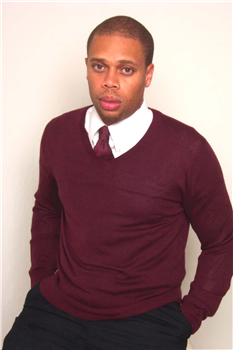
Kristopher Kirkpatrick

Norfolk State and Tidewater Community College Strengthen Academic Partnership

Norfolk State University and Tidewater Community College are working together to ensure that students who transfer from TCC to NSU realize their dream of attaining a bachelor’s degree. The two institutions will reaffirm their commitment and their partnership at a signing of the Guaranteed Admission and Transfer agreement and Partnership for Academic and Student Success (PASSport).

The signing will take place at 10 a.m. on Wednesday, Aug. 17, at the New Student Center, Room 307, located on the NSU campus.

Recognizing that many students engage in education as a life-long learning process, NSU and TCC understand the criticality of a robust agreement for transfer to a baccalaureate degree for all community college students, regardless of their initial curriculum choice.

“Norfolk State University is especially pleased to reaffirm its partnership with TCC,” says NSU President Tony Atwater. “Higher education attainment is a shared priority and goal for both of our institutions. Consequently, NSU and TCC will collaborate in new and additional ways to increase the number of degrees granted to students in the Hampton Roads area.”

Read Full Article at NSU

Dominion grant supports with $50,000 to Virginia State School of Business digital textbook initiative

Dominion Resources has awarded Virginia State University $50,000 to expand a digital textbook pilot project aimed at reducing costs and increasing student retention. The grant is part of more than $200,000 in grants by Dominion to colleges and community colleges in Central Virginia to support programs in business, skilled craft, engineering, environmental and technical studies, and for student-led conservation programs.

The VSU grant will equip students in the Reginald F. Lewis School of Business with real-time learning assessments, access to educational networking and allow for increased interaction. The contribution will sustain the School of Business’s Digital Instruction Project by purchasing seat licenses for Flat World open source textbooks.

The school piloted the use of these textbooks in during the 2010-11 school year, saving students more than $200,000 and increasing student success. The project last year was conducted in nine core School of Business classes and, with Dominion’s grant, will be expanded this year to 16 classes.

Open source digital texts cost about $20 per text, as compared to more than $250 for some accounting and finance texts. Moreover, instructors can tailor the texts to their specific classes and update them continuously with topical case studies.

Dr. Mirta Martin, Dean of the Reginald F. Lewis School of Business, said she is delighted to be able to sustain and expand the use of open source digital texts. “Before using adopting digital texts, more than 40 percent of our students tried to get by without class texts because of the expense,” she said. With Dominion’s generous investment, our students will have access to class texts and a wide range of study tools.”

Read Full Article at VSU

VUU to Host Special Olympics Walk-a-thon

Special Olympics Virginia’s 11th Annual City of Richmond Walk-A-Thon will be held at Virginia Union University Campus, (Henderson building) from 9:00 a.m. until 12: 30 p.m. on Saturday, October 1, 2011. The 1, 2, and 3 mile walk/run will raise money for the Special Olympics Virginia Urban Programs, which benefits over 5000 City of Richmond adults and children with intellectual disabilities.

The event is being presented by Virginia Union University. Over 500 volunteers, athletes, fraternities, sororities, and sponsors are expected to come out and support this event! American Family Fitness Centers will be awarding a free membership to the participant who raises the most money. Other agencies and organizations who will be participating are Richmond Parks & Recreation, Richmond Residential Services, Richmond Behavioral Health Authority, Richmond Goodwill, Richmond Police Department, Midlothian Chapter of Jack and Jill of America Inc., Senior Connections-The Capital Area on Aging, The Huff Center, Career Support Systems, The Young Men’s Love and Union Club, Diamondz Are Forever SC, Thompson Hospitality, Virginia Girls Scout Troops, Bank of America, Scott & Stringfellow Inc., NHS Human Services, The Virginia Home, Fidura & Associates, and Tiffanies Manor for Young Adults. Special Olympics Virginia hopes to raise over $5,000.00 for its City of Richmond athletes. There will be a live performance by The Band Belief! Music, fun, and prizes for all participants.

Special Olympics Virginia, the state chapter of Special Olympics Inc., provides year-round training in 19 sports and more than 2000 athletic competitions to over 14,000 athletes with intellectual disabilities in the Commonwealth. The benefits of participation in Special Olympics for people with intellectual disabilities include improved physical fitness and motor skills, greater self-confidence, a more positive self-image, friendships, and increased family support. Special Olympics athletes carry these benefits with them into their daily lives at home, in the classroom, on the job, as well as in the community. Special Olympics Virginia has provided competitions to the citizens of Virginia with intellectual disabilities since 1968 and was incorporated by Special Olympics Inc. in 1975. There is no cost to the athlete or their family to participate.

For more information or to register, please contact Floyd E. Miller, Director of Urban Programs at 804-467-6012.

Earth Gang – HBCU Buzz Artist Spotlight – Hampton University

Name: Earth Gang
School: Hampton University
Genre: Hip Hop
Management:
Website: Www.EarthGangHasa.Tumblr.com

Bio: Many intellectuals and quantum physics enthusiasts consider the world’s uncanny circumstances to be products of cosmic probability. Some inhabitants of this world are perpetually successful and talented beyond average human capacity. People of this caliber don’t view their dreams and goals as defining moments in their lives. Instead, they see monumental achievement the way the common man sees blinking: it’s just going to happen. Two men of this nature are Johnny Venus and Doctor Diego, the founding and only members of the eccentric and insightful music duo EarthGang. The first three singles—“Thump, Thump, Thump” “Opium” and “Miss the Show” are absolutely stellar. With eerie beats and unusual samples, Earthgang speaks on a range of topics; the industry, their hometown, women and the outsider’s perception of their music. Their emcee cadence is nowhere near jigsaw. At most times they are outside of the beat, almost talking, leaving leftover track in each bar. The unusual thing about this style is, the words still unquestionably fit and are undeniably catchy.

09 Miss The Show by giannilee

Jackson State President Meyers issues challenge to university, donates $10,000 to JSU


Jackson State University President Carolyn W. Meyers prepped the university faculty and staff for the fall 2011 semester with a state of the university report and a challenge to keep reaching toward new heights.


“What got us here, won’t get us there,” she said during JSU’s Fall Faculty and Staff Seminar on Aug. 11. “We can’t miss the boat.”


Meyers’ address outlined many university accomplishments during her first 200 days as president, which included a successful reaffirmation of accreditation visit from the Southern Association of Colleges and Schools, a state and regional alumni relationship building tour, the organization of a new senior leadership team and selected faculty and staff salary increases.

Read Full article at JSU

Coppin State Develops New Initiative to Prepare Teachers Current News

August 19, 2011, Coppin State University’s School of Education creates center to fast track the demand for qualified teachers. The Teacher Education Advisement & Retention Center, (TEAR-C) is a new initiative to enhance Coppin’s School of Education Teacher Preparation Programs.

TEAR-C will house highly-trained academic advisors who are classroom practitioners in K-12 and higher education, experts in curriculum development, and comprehensive researchers of measurable and effective retention models for undergraduate students. Additionally, this initiative will increase enrollment and retention rates of pre-service teachers. TEAR-C has also developed a Praxis Preparatory Model called PTP, which means practice, taken, and pass, to improve student success rates in passing examinations for teacher certification.

“We have the secret anecdote to produce more highly qualified and accomplished teachers, and it is called TEAR-C.” said newly appointed director Professor Ray, who is a third-year doctoral student of Higher Education Leadership and Curriculum Development at Nova Southeastern University.

Coppin was developed in 1900 as a Teachers College by Fannie Jackson Coppin. Now, the School of Education under Ray’s leadership plans to rebuild Fanny’s vision and reclaim the legacy by intrinsically and effectively preparing pre-service teachers. Beginning in the student’s freshman year, TEAR-C will align pre-service teachers toward complying with national accrediting body’s expectations of realistic clinical practices. Thus, TEAR-C will build a rigorous preparation program for teachers utilizing the assistance of Coppin’s Alumni teachers and exemplary instructional leaders. Both are highly fortified with experience to improve quality high-access instruction.

Read Full Article at Coppin State 

Southern University and A&M College Out-of-State Fee Waiver Policy


Realizing that Southern University and A&M College’s student population must reflect a global diversity and that the University must recruit, retain and graduate students who represent scholarship consistent with its mission of providing a high quality global educational experience and graduating competent, informed and productive citizens, every appropriate strategy must be implemented to assist in achieving this mission.

Accordingly, in an effort to positively impact SUBR’s recruitment, retention and graduation rates and to significantly enhance and expand its student diversity, the University offers the following out-of-state fee waiver policy.

A full out-of-state fee waiver will be granted to any incoming freshman who graduated with a minimum 3.0 cumulative GPA and a minimum ACT composite score of 22 or SAT of 1030.
Read Full Article at Southern University A&M


24th Annual UNCF Walk for Education


The United Negro College Fund will host its 24th annual Walk for Education in New Orleans onSaturday, Oct. 1, 2011 from 7:30 a.m. to 1 p.m. The 5K run/walk will start in the Audubon Park Riverview area behind the zoo.

Every year Dillard and Xavier universities compete to see which school has the best turnout and raises the most funds.
A minimum pledge of $30 through Sep. 28 entitles you to a race number, official race day T-shirt, free food and drinks, and admission to Audubon Zoo.Click here to learn more and to register.


Paine College announces new academic structure and new deans

Dr. George C. Bradley, President announced the appointment of Dr. Steven Thomas as the dean of its newly created School of Professional Studies and Dr. Emily Williams as the dean of its newly created School of Arts and Sciences. The new appointments come on the helm of the College’s new Provost and Vice President of Academic Affairs, Dr. Marcus Tillery.

More than three years ago, Paine College embarked on a 5- year strategic plan. The strategic plan called for the College to build on its legacies and capitalize on its achievements to move closer to the vision and mission of becoming a premier liberal arts College in our region and in the nation.

This plan has helped the institution implement the reorganization of its academic structure, moving its academic programs from divisions to schools. The School of Professional Studies encompasses the Department of Business Administration, Department of Education and Department of Media Studies. The School of Arts and Sciences encompasses the Department of Humanities, Department of Social Sciences, and Department of Mathematics, Sciences and Technology.

“The two schools will afford the College the opportunity to have deans who will raise resources to strengthen student resources for scholarly work and to develop graduate programs,” said Bradley.

Each of the deans has distinct visions for each school.

“The new structure provides an opportunity for the deans to foster relationships with industry and gauge their needs in an effort to develop innovative programs and produce graduates that can meet those needs,” said Thomas

Read Full Article at Paine College 

SSU to kick off ‘Tell Them We Are Rising’ project Aug. 25 with lecture

Savannah State University will kick off its “Tell Them We Are Rising!: Exploring Slavery, Emancipation and the African-American Experience in Savannah and Southeast Georgia” project at 6 p.m., Thursday, Aug. 25, with a lecture on Lowcountry Africana heritage from New York University history professor Michael Gomez. The event will be held in Torian Auditorium in the Howard Jordan building on campus and is free and open to the public.

The founding director of the Association for the Study of the Worldwide African Diaspora (ASWAD), Gomez is widely recognized for his research on African identities and the South, particularly the Lowcountry region. He is the editor and author of several books, including “Black Crescent: African Muslims in the Americas” and “Reversing Sail: A History of the African Diaspora,” and has written articles appearing in The Journal of African American History, Journal of Black Studies and numerous other publications. Prior to joining the faculty at NYU, Gomez was a history professor at both Spelman College and the University of Georgia.

Savannah State received a $99,929 grant from the National Endowment for the Humanities to fund the “Tell Them We Are Rising” project, in which a group of faculty from several academic disciplines will participate in lectures, colloquia, workshops and conferences. The initial phase of the project will focus on the historical periods of slavery and emancipation; public lectures and workshops are scheduled monthly from August 2011 and April 2012.

Read Full Article at SSU

FVSU Brims With New Freshmen

Summer vacation is over, and Fort Valley State University is coming alive. The campus is bustling with activity as freshmen adjust to campus life. Vanescia Holman is among 1,100 first-year students making the transition. The projected number of freshmen this fall represents a 35 percent increase over last year. She’ll join a swelling Wildcat student population of more than 4,000 returning, traditional, out-of-state, international and graduate students, a 15 percent boost over last year.

The mass communications student, a Columbus, Ga. native is the first in her immediate family to earn a high school diploma.

Holman chose Fort Valley State University based on a recommendation by her cousin, Sherry Brown, an FVSU alum and a major in the U.S. Army. Brown is the first person in Holman’s extended family to receive a college degree.

“My cousin said FVSU is awesome, and told me to ‘rock with the Blue and roll with the Gold,’” says the 19-year-old student who decided to “keep up the family tradition” by being the second to graduate from FVSU. “My experience at FVSU, so far, has been fantastic.”

This semester, Fort Valley State is expecting a record enrollment. “We’re going to have to see how many students can resolve their finances,” says Rivers. “But, right now our enrollment picture is looking beautiful. I believe we’ll have a historic enrollment.”

Read Full Article at FVSU

Auburn University president addresses Tuskegee graduates during summer commencement

Tuskegee University held its summer commencement today in the University Chapel. According to the Office of the Registrar, degrees conferred included business, chemistry, engineering and liberal arts. Newly commissioned officers of the U.S. Air Force were also recognized by their ROTC unit.

The speaker for the occasion was Jay Gogue, president of Auburn University.

“We should fully embrace our neighbor and engage in a variety of collaborative relationships,” said Tuskegee University President Gilbert L. Rochon about Gogue.

“He has reached out to Tuskegee University and the community here and has demonstrated that he is a strong partner.”

Gogue reminded graduates about how important their day of commencement was and will always be.

“You will remember this day for the rest of your lives,” Gogue told the graduates.
“When you see ‘Tuskegee’ on someone’s resume or record, you know they’ve been well-trained and educated, and have achieved (being) that citizen scholar.”

Gogue, whose institution has been collaborating with Tuskegee on several projects, encouraged graduates to have inspiration in their lives and careers.

“It doesn’t really matter (what or who it is),” Gogue said. “It needs to be a thing that you’re passionate about… the thing that you decide will inspire you.”

Read Full Article at Tuskegee University 

Howard Alumnus David Oliver, Setting Records and Spreading the HU Legacy

Howard alumnus David Oliver, the 110-meter hurdles Olympic bronze medalist at the 2008 Beijing Games, continues to set records, capture headlines and tear down barriers on his quest to earn an Olympic gold.

Oliver, who is the first two-time All-American in Howard’s history, holds the American record with his 12.89-second burst last summer in Paris, a mark that’s the fourth fastest ever in the 110 hurdles.

Now, with the Olympics in London just around the corner, Oliver is gaining a lot more attention.  On Friday, Aug. 19, he was featured in 33 newspapers, including the Washington Post, and three television stations.

Read about how this 2005 Howard graduate is continuing his quest and spreading the name of Howard University around the world.

WASHINGTON POST
American record holder David Oliver brings power and panache to hurdles
http://www.washingtonpost.com/sports/american-record-holder-david-oliver-brings-power-and-panache-to-hurdles/2011/08/18/gIQA9NLtNJ_story.html 

ASSOCIATED PRESS (32 newspapers, three television stations)
Chiseled by football, Oliver carving out elite status with force
http://washingtonexaminer.com/sports/2011/08/oliver-brings-football-mentality-hurdles

Long Live the King Part III—The Promised Land

In the past two weeks, I have been writing about the legacy of Martin Luther King, Jr. in anticipation of the unveiling of the MLK monument on the Washington Mall on August 28th. The MLK Memorial is significant for numerous reasons, but two reasons in particular stick out to me. 1.) The MLK Memorial is the first memorial of an African-American or non U.S. president to be placed on the Washington Mall. 15 years in the making, with millions and millions of dollars donated to raise this mountain of a monument. Lucky for us, Arizona, New Hampshire and Utah couldn’t stand in the way of this dedication to The King, like they did when Martin Luther King, Jr. Day was proposed and put into effect by President Ronald Reagan. Martin Luther King, Jr. Day was first observed in 1986, and was finally recognized by all 50 states… in 2000, when Utah finally stepped out of the 50’s and made it a state holiday. Arizona Senator John McCain opposed the idea of Martin Luther King, Jr. Day (which should have been reiterated over and over again somehow during the 2008 presidential campaign. I don’t know how that slipped through the cracks.) but he eventually got on board after losing favoritism in the public’s eye for himself and his state in 1992. As for Utah, I think it took them so long to approve the holiday because nobody told them it wasn’t 1959 anymore.

2.)  The MLK Memorial romanticizes King as a preacher who advocated nonviolence and peaceful negotiations to end the prejudice and racist era in America. This is a momentous event for Black America because the greatest icon of our people is getting his due credit. The name Martin Luther King, Jr. is synonymous with civil rights and social justice, for people of all races, religions, creeds—He did it for everybody. I disagree that his daughter said King would have opposed gay marriage. I think he would have embraced homosexuals because it would be consistent with his dream—a world where everyone “will not be judged not by the color of their skin, but by the content of their character.” A world where everyone can sit at the table of brotherhood and join hands—Black, White, Christian, Muslim, straight, gay, Democrat, Republican—and celebrate unity and harmony. No prejudice, no discrimination, all love. Martin Luther King’s dream was bigger than him, bigger than all of us. The least we can do is memorialize him with a monument.

It pleases the rest of America too, because it holds our greatest champion in the image in which they want to view him—as a passive aggressive civil rights leader. He was the safe Negro, one who won’t hurt or fight them. Don’t get me wrong; King deserves the memorial, the recognition, and the near God-like admiration. Like I said in my last column, King changed America like no other man before him did. He preached nonviolence and love, but he was still a man, and his patience did grow thin.

Life is a continual story of shattered dreams.”

He had wanted to work with America for freedom and equality, not against it. He pleaded and asked, but he never demanded, and he began to grow tired. King dedicated a decade to the Civil Rights Movement, with no end in sight. He was still working hard, especially after the Civil Rights Act of 1964 when so many more adversaries grew after recognizing the power of the Movement. He wanted change, so he became more radical in his disgust and distrust of the United States. The King believed that African-Americans has done more than enough to benefit and prosper America—fighting in every war the U.S. has ever been involved in, including the Civil War where Blacks fought for both the Union and the Confederacy, slaves building the financial backbone of the country through cotton picking, slavery in general—and that it was time for America to start doing something for its most unappreciated and unsatisfied citizens. King had done something for America, and it was time America did something for him. King stopped asking, and started demanding. His Dream was slowly starting to feel unfilled.

King sensed that the fight would continue, but a new battle was waging within his own people. There was a growing tension between King’s SCLC, nonviolent and pacifist approach and the militant, extremist, and growing Black Power and Nation of Islam movements. The youth could not get with King and the civil rights movement because they felt it was prehistoric and useless. Nas said it best in his collaborative song with The Game called “Letter to the King” about the youth’s apathy to King:

“As a kid I ain’t relate really/I would say your Dream speech jokingly/’Til  your world awoken me/First I thought you were passive/soft one who ass kissed/I was young but honest/I was feeling Muhammad.”  

In examining our history, there have always been clashing perspectives and personalities dueling for leadership in the African-American community. King was our Anointed One, he was our Moses. We’ve been searching for someone to fill that void ever since April 4, 1968. We feel that we need a leader, a savior, someone we can call on when we’re in despair. Someone we can look at and see ourselves. Follow the leader—well which one do we follow? It’s either Booker T. Washington or W.E.B. DuBois; Richard Wright or Ralph Ellison, Martin Luther King or Malcolm X, Malcolm X or the Nation of Islam, Ali or Liston/Frazier/Foreman. We even see it in over-hyped, sometimes competitive and sometimes fatal rap battles: Biggie or Pac, Nas or Jay-Z, 50 Cent or Ja Rule, Nicki or Kim, etc. Somebody always has to be the chief, the alpha male, the H.N.I.C. There is a constant duality of influential leaders in the Black community. It’s because we’re so diverse and yet so divisive that we have so many persons trying to be the shepherd. Meanwhile, every other ethnicity are out here establishing more businesses and making millions off of African-Americans.

Those young, rebellious, angry black men and women felt that King’s rhetoric didn’t create results. They wanted action, and if they didn’t get what they wanted, they would revolt. King would never do something like that, America thought. America believed King would never write a sermon like Rev. Jeremiah Wright’s scolding, infamous speech brought to the nation’s attention during the 2008 presidential campaign of Barack Obama, damning America for its sins against its people and for its involvement in international conflict instead of taking care of home first. How wrong they were. In the twilight of his career, King did start to share the same sentiments as Jeremiah Wright, Malcolm X, Stokely Carmichael and countless others towards America the Ugly. King was becoming a radical. King’s last speech, found on his body after he was assassinated, was a work in progress titled “Why America May Go to Hell.” America doesn’t like that side of Martin Luther King, Jr.

“If America does not use her vast resources of wealth to end poverty, to make it possible for all of God’s children to have the basic necessities of life, she too will go to Hell.”

King has to be marching down the road in peaceful protests for America to be comfortable to go so far as to champion his lifelong work alongside the likes of Abraham Lincoln and Thomas Jefferson. He has to be begging and pleading with America to give us our freedom. America doesn’t want its civil rights leaders provoking the people in questioning their actions, like King did about Vietnam. King vehemently opposed the Vietnam War, and his stance against the war was this: how can America go to Southeast Asia and continue with a war it had been waging since the late 50’s, when there was a war going on back on its own shores. A war against 200 years of Jim Crow and inequality. A war on immoral behavior and social injustice.

            “But I heard the voice of Jesus, saying still to fight on.”

He was angry at America. He was fed up with the government and the Vietnam War. He hated Lyndon Johnson. I hope that none of this gets lost in history as we idolize King. I hope that the King of his later years—the radical, the one fighting for economic equality, the one who was writing “Why America May Go to Hell”—is remembered just as the one who preached that nonviolence is love. King was too dynamic of a leader and a man to be pigeonheld as a passive aggressive civil rights leader.

I think if James Earl Ray hadn’t assassinated the King, his unfinished speech “Why America May Go to Hell” would have shaken the core of the American psyche. America thought it was all over. The ‘whites only’ signs had come down, the schools had been desegregated, no more dogs running wild or hoses being sprayed on people. It’s in the past now they thought, you black folks can go on home with your freedom—but King wasn’t done. King was becoming more radical, not only with his effort to end the Vietnam War, but by trying to create economic equality for African-Americans.

If King was alive today, he would have marched up to Congress and have a few words for them about the debt ceiling and the bleak state of the economy. Obama might not have gotten them back from recess, but King could have. One big thing to always remember about American politics and socioeconomic changes—whatever is going on in America, affects African-Americans even worse than anyone else. That’s not playing the race card or being the martyr, it is the truth. King knew what would be coming down the road—economic turmoil. That’s why King threw himself into the Memphis sanitation strike and the Poor People’s Campaign, an ambitious attempt to stop Washington in its tracks by having the nation’s poorest people descend on D.C. for economic rights. King knew that the only bigger battle than racism in America is classism. What’s the point in being free if we’re poor?

“The vast majority of Negroes in our country are still perishing on a lonely island of poverty in the midst of a vast ocean of material prosperity.”

We can only imagine what King would have said and done if he were alive today. There is no doubt in my mind that he’d be pissed at Congress for putting what’s better for their party and their pockets before what’s better for the people. You know he would have a fit over the Iraq and Afghanistan wars, as well as the slow government response to Hurricane Katrina. With the condition that New Orleans is in years after Katrina, King would probably still be down there. King would have been there mourning for the victims of 9/11, the Virginia Tech massacre, the Haiti earthquake and the nuclear power plant meltdown and tsunami crisis in Japan. Who cares if he would have loved or hated Obama, in his day a black president was unfathomable, but I can imagine he still would have held him accountable. That’s what’s missing in our homes, in our community, and in our leadership: accountability. King lives on through us, but only if we hold ourselves accountable.

We got to keep marching y’all.

UMES welcomes back Neufville as interim president

Mortimer H. Neufville is on the job as interim president of the University of Maryland Eastern Shore, where he previously held a number of senior administrative posts from the early 1980s to the mid-1990s.

William Kirwan, the University System of Maryland’s chancellor, tapped Neufville to lead UMES while a search is underway to find a replacement for Dr. Thelma B. Thompson. Thompson retired Aug. 15 after serving nine years as UMES president.

In the week before Thompson officially stepped down, Neufville held “get-acquainted” sessions with senior UMES administrators, deans and department chairs. He also huddled with Thompson to ensure a seamless transition.

Like Thompson, Neufville, 71, is a native of Jamaica. But he is no stranger to long-serving UMES employees.

He left Lincoln University in 1983 to become UMES’ dean of agricultural science and 1890 Research Director. His leadership performance earned him promotions from the late William P. Hytche, who as president hired him. Neufville held these other posts at UMES:

Read Full Article at UMES