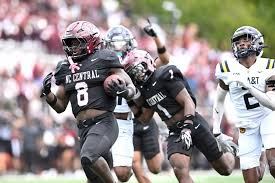

The one-time transfer rule is getting support from at least one HBCU head coach. North Carolina A&T football coach Shawn Gibbs said he likes the part of President Donald Trump’s recent executive order that would still let athletes transfer, but only once without penalty before graduation. Gibbs made the comment on the Aggie Pridecast and said the current system has swung too far toward constant movement. For a sport now shaped by roster turnover, NIL deals, and fast exits, his comments tap into a larger debate across North Carolina A&T and the wider black college football world.
Shawn Gibbs says the one-time transfer rule makes sense
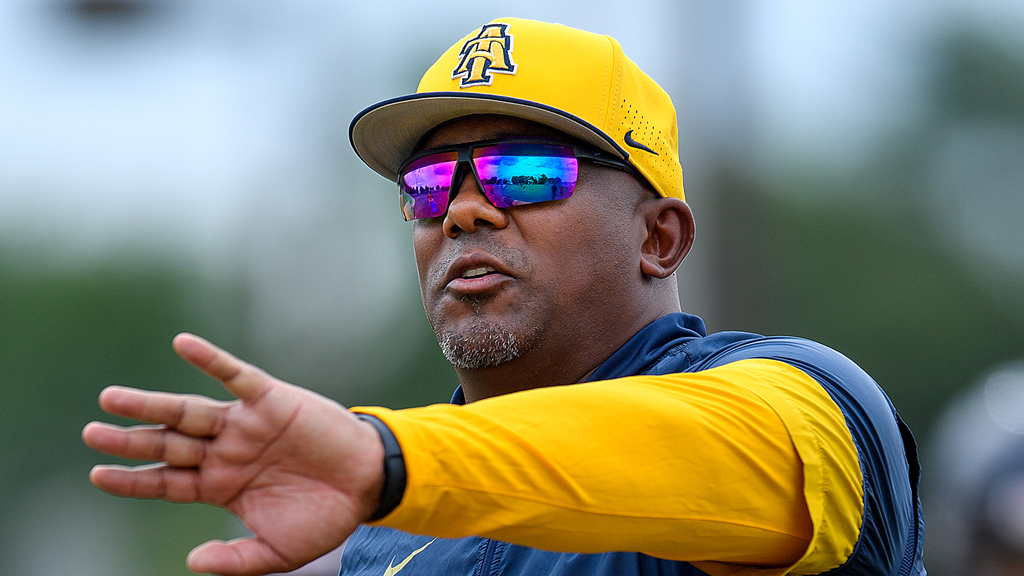
Gibbs did not call for shutting down player freedom. He actually said the opposite. He made clear that athletes should still have a chance to find the right fit. But he also said he does not believe the answer is for players to move from school to school every year. In his view, the one-time transfer rule would keep some flexibility in place while slowing a trend that has made roster building harder for coaches across college football. Gibbs said a player should be able to transfer once, but after that should have to sit out a season. That approach, he argued, could cut back on the chaos.
That point matters at the HBCU level. Programs do not always have the same depth, money, or recruiting reach as schools in the Power Four. So when players leave often, the effect can hit harder. It can disrupt development, chemistry, and long-term planning. Gibbs is entering his second season at NC A&T, and his comments suggest he sees transfer reform as a roster issue as much as a fairness issue. He also admitted there is no perfect answer. He said any new rule will leave someone unhappy, and coaches will simply have to adjust.
What Trump’s order would change for college athletes
The executive order itself goes beyond one coach’s opinion. The White House said the NCAA should update or clarify its rules before August 1, 2026. Under the order, athletes would be limited to a five-year participation period, with narrow exceptions for things like military or missionary service. The order also says athletes should be able to transfer one time during that five-year window with immediate eligibility, plus one more time after earning a four-year degree. It also pushes for tighter rules around transfer timing, NIL activity, agent oversight, and revenue-sharing rules tied to women’s and Olympic sports.
The order also carries real pressure. Reuters reported that it directs federal agencies to evaluate whether violations of transfer, eligibility, revenue-sharing, and pay-for-play rules should affect a school’s access to federal grants and contracts. ESPN also reported that schools that use athletes outside the proposed limits could risk federal funding under the order’s framework. That turns this from a symbolic political headline into something college leaders have to take seriously, even if the final outcome is still unclear.
Why the one-time transfer rule is gaining traction
The one-time transfer rule speaks to a frustration that many coaches, fans, and administrators already feel. The transfer portal has given athletes more power, but it has also created a cycle where some players treat each offseason like open free agency. That may help individual players in some cases, but it can also weaken roster stability. Gibbs used sharp language when he pushed back on athletes becoming “mercenaries for hire” who land at a different school every season. His point was simple. A sport built on constant movement becomes harder to coach, harder to develop, and harder to trust.
NCAA president Charlie Baker has also suggested that parts of the order match conversations already happening inside the NCAA. According to ESPN, Baker said the order includes ideas that are consistent with issues the NCAA has already been discussing with committees and lawmakers. That matters because it suggests transfer reform was already on the table before the White House stepped in. In other words, the one-time transfer rule did not come out of nowhere. The executive order simply added more political force to a debate that had already been building.
HBCU football could feel this change in a different way
If the one-time transfer rule moves forward, HBCU football programs may feel the effects in very specific ways. The portal has created both risk and opportunity for Black college teams. Some HBCUs have lost talent to bigger programs after breakout seasons. Others have used the portal to add players looking for more snaps, a better fit, or a fresh start. A tighter transfer system could slow both trends. That might help coaches who want more roster stability, but it could also reduce flexibility for players who are still trying to find the right program. That tradeoff is part of why this debate will not end soon. This is an inference based on how portal movement affects HBCU rosters, not a direct claim from the order itself.
There is also the legal question. ESPN reported that several lawyers who work with schools and athletes believe the order would face constitutional challenges and could be ruled unenforceable if it is challenged in court. That uncertainty matters. Even if many coaches agree that transfer rules need guardrails, the White House cannot simply erase years of legal pressure on the NCAA with one order. So the one-time transfer rule may reflect where some leaders want college sports to go, but it is not yet a settled reality.
Shawn Gibbs put a growing college sports debate into plain language
This is why Shawn Gibbs’ comments stand out. He said what many coaches say privately. Players should have freedom, but the system also needs limits. His support for the one-time transfer rule gives the story an HBCU voice at a moment when college sports policy often gets framed through the lens of the richest conferences first. Gibbs did not present the rule as a cure-all. He simply argued that a sport built around nonstop exits is not healthy for teams or players. That message is likely to resonate with coaches far beyond Greensboro.
For now, the order remains a proposal backed by federal pressure, NCAA discussion, and real legal uncertainty. But the larger point is already clear. The fight over athlete movement is not going away. And with Shawn Gibbs now on record, HBCU football is part of that conversation in a very visible way.