

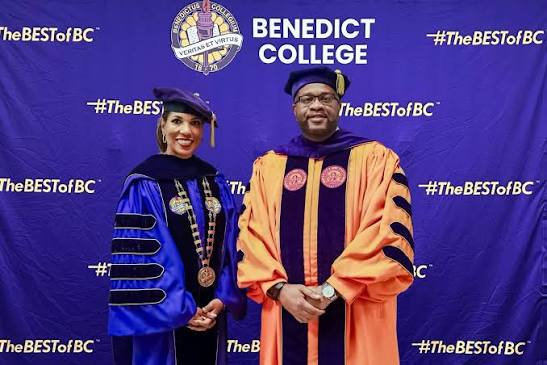
Benedict College’s ABET electrical engineering accreditation makes it the first HBCU in South Carolina to hold this distinction, and the timing couldn’t be better for a school riding real enrollment momentum. The Columbia-based HBCU announced the milestone Sept. 3, putting it among just four institutions statewide with ABET accreditation in any engineering discipline.
President Dr. Roslyn Clark Artis didn’t downplay what this means for the campus. “ABET accreditation is a tremendous achievement for Benedict College and a powerful testament to the excellence of our faculty, the strength of our academic programs, and our commitment to preparing students for careers that will shape the future,” Artis said in the announcement.
What ABET Accreditation Actually Unlocks for Students
This isn’t a symbolic honor. ABET accreditation is the credential engineering employers, graduate schools, and licensing boards actually check for. Graduates of Benedict’s electrical engineering program can now sit for the Fundamentals of Engineering exam immediately after graduation, putting them on the standard path toward professional licensure — something non-accredited programs simply can’t offer in the same way.
That matters enormously for hiring. Large engineering firms and government contractors frequently require ABET accreditation as a baseline for entry-level roles, and graduate programs weigh it heavily during admissions. Consequently, this accreditation doesn’t just validate the program Benedict already built — it removes a real barrier that could’ve quietly limited where its electrical engineering graduates were competitive.
Benedict Has Done This Before
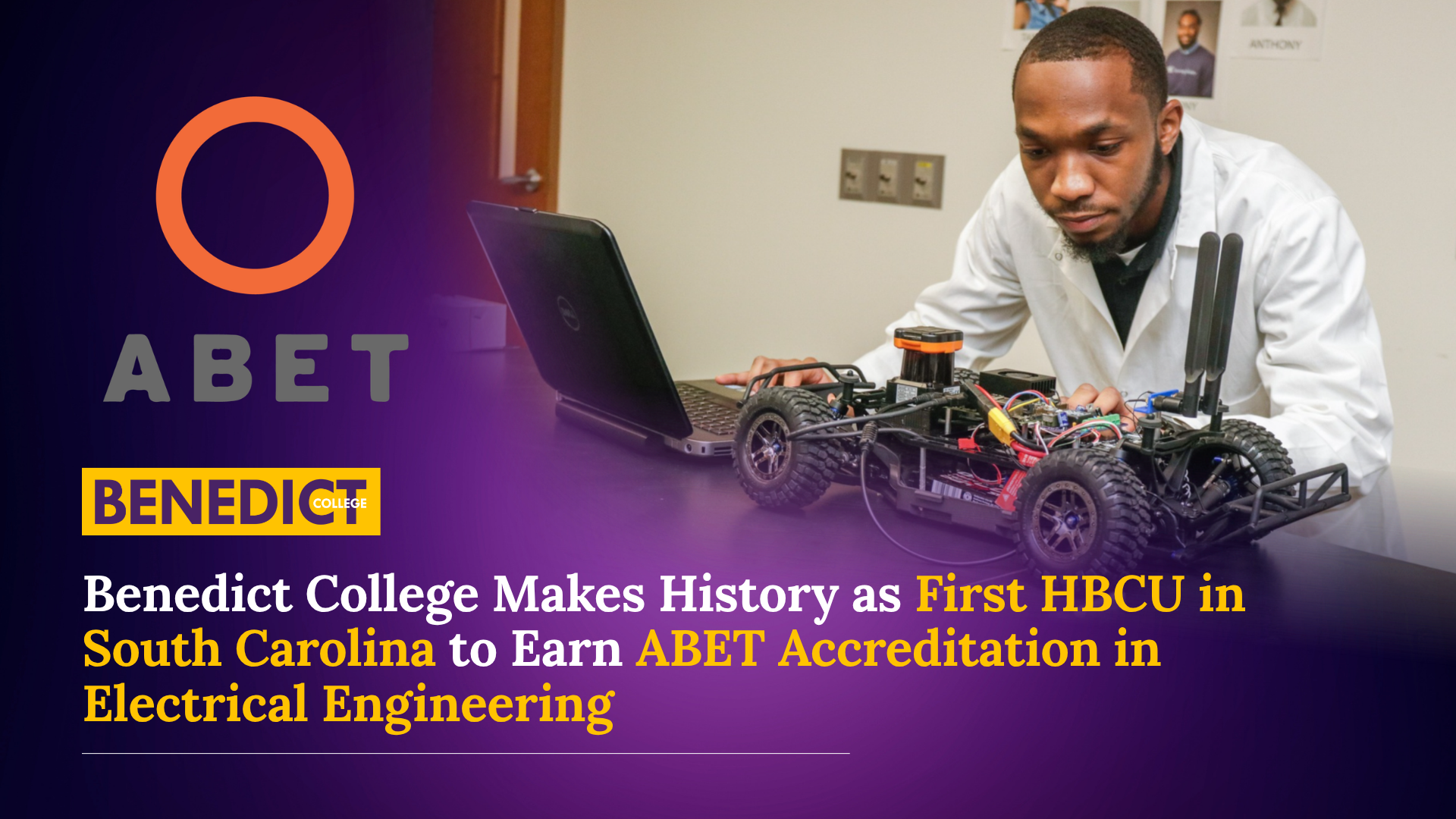
Electrical engineering isn’t Benedict’s first rodeo with ABET. The college earned accreditation for its Environmental Engineering program back in 2022, becoming the first HBCU in South Carolina to hit that milestone as well, and only the second HBCU nationally to achieve it. Clemson University remains the only other institution in the state with an accredited environmental engineering program, which gives you a sense of how small this club actually is.
That track record isn’t incidental. Dr. Jessica Furrer, dean of Benedict’s School of Science and Engineering, has been central to both accreditation pushes, and the college is now actively preparing its Computer Science and Computer Engineering programs for the same process. If those efforts land, Benedict would hold ABET accreditation across four separate STEM disciplines — an unusually deep bench for a school this size.
Why This Lands at the Right Moment
Timing matters here, too. Benedict welcomed 731 new traditional undergraduate students for Fall 2026, its highest new-enrollment total since 2019 and a 15.3 percent increase over last year, marking a third consecutive year of growth. Pairing that recruitment momentum with a newly accredited engineering program gives Benedict a stronger pitch to exactly the kind of STEM-focused prospective students it’s trying to attract.
It also strengthens the college’s broader institutional narrative. Under Artis, whose contract was extended through 2031, Benedict has leaned hard into high-growth fields like cybersecurity, computer science, and esports administration. Electrical engineering accreditation slots neatly into that strategy, giving the college another accredited program to point to when recruiting students who might otherwise default to a predominantly white institution for engineering.
The Bigger Picture for HBCU Engineering Programs
Benedict’s announcement adds to a pattern worth watching across HBCUs generally. Bethune-Cookman’s computer engineering program has held ABET accreditation since 2013, and Savannah State has built out ABET-accredited engineering technology programs in its region. Each new accreditation chips away at a long-standing gap: engineering fields where HBCU graduates have historically been underrepresented, partly because fewer HBCU programs carried the accreditation employers screen for.
That gap has real economic consequences. Electrical engineering consistently ranks among the higher-paying fields for new graduates, and licensure-track careers in the discipline tend to offer long-term earning stability that many liberal arts degrees don’t. A South Carolina HBCU producing ABET-accredited electrical engineers means more Black graduates entering that pipeline with the same credentials as their peers from Clemson or USC.
What Comes Next
Benedict hasn’t disclosed enrollment figures specific to the electrical engineering program itself, so it’s not yet clear how many students will benefit immediately from this accreditation versus how much it’s aimed at future recruitment. Given the environmental engineering program’s history — enrollment there more than doubled after its 2022 accreditation — there’s reason to expect a similar bump here.
For now, Benedict College gets to add another first to its list, and it’s one with real professional weight behind it. As the college works toward accrediting computer science and computer engineering next, this electrical engineering milestone is worth watching as part of a longer STEM accreditation push that’s quietly making Benedict one of the more credentialed engineering options among HBCUs in the Southeast.