HBCU Students Are Being Disproportionately Affected By Roe’s Reversal

Roughly three-quarters of HBCUs are located in states that have banned or mostly banned abortions. Learn more in the story by Lauren Lumpkin at The New York Post.

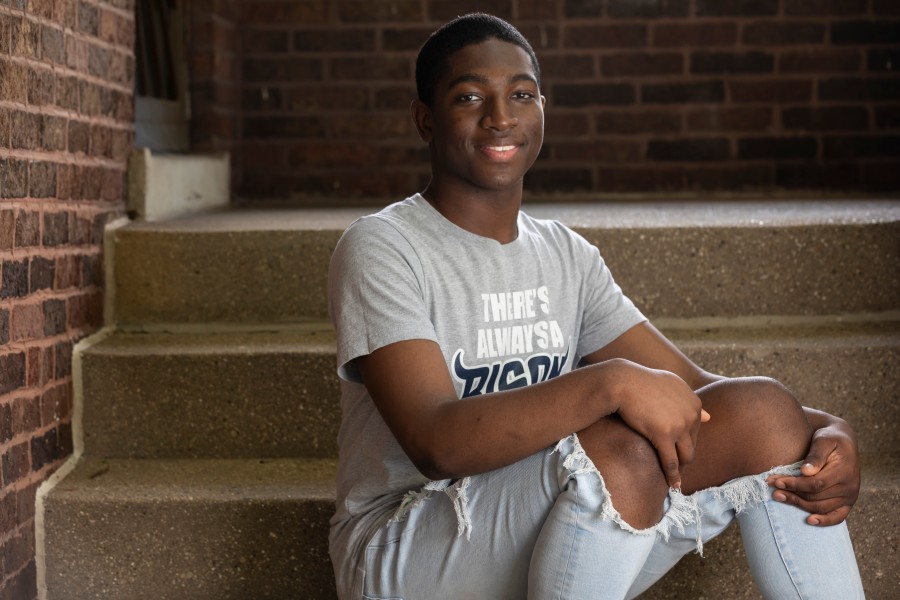
Dillard University student and reproductive justice activist Kalaya Sibley poses for a portrait in Washington, D.C., where she is interning for the summer. (Amanda Andrade-Rhoades for The Washington Post)

Many of the country’s historically Black colleges and universities (HBCUs) are scattered across the South, in states where Black Americans, in the wake of the Civil War, pooled their resources and finally gained access to higher education.

Now, however, their descendants are disproportionately losing their right to reproductive health, students at those schools say.

The Supreme Court’s recent decision to overturn Roe v. Wade, the landmark case that legalized abortion nationwide, will have a outsize effect on students at HBCUs due to their concentration in states that are restricting access to the procedure. Nearly three-quarters of HBCUs recognized by the Department of Education are in states that have banned or mostly banned abortions. Those 72 schools enroll more than 166,000 students.

Meanwhile, 21 HBCUs are located in states where abortion is currently legal but could be under threat. Maryland, D.C. and Delaware — where abortions are legal and likely to stay that way — have seven historically Black schools between them.

But the Supreme Court’s abortion decision is also energizing student-led movements for more sexual wellness education and wider access to contraceptives on campus.

Student leaders at Dillard University in New Orleans want to make sure students maintain access to contraceptives, said Marissa Pittman, 20, a rising junior and student body president. Paige Hawkins, a rising senior at Clark Atlanta University, runs the school’s chapter of Planned Parenthood Generation Action and said the group plans to host more educational events when the school year starts.

“As the freshmen come in in August, [we want them to know] if you need access to contraceptives, access to safe abortions, please let us know,” said Hawkins, 21, who is studying English. Georgia has a six-week abortion ban from 2019 that is pending in the courts and will likely take effect. “Though this may ban safe abortions, it’s not going to ban abortions,” Hawkins said. “People are going to go through the process of possibly hurting themselves.”

Many of these students, who chose to attend HBCUs, have now found themselves in states where most abortions are illegal. For Kalaya Sibley, 20, attending an HBCU meant carrying on a family tradition and going to a school that was created with students like herself in mind.

“It’s unfair, first of all, and it’s unjust,” Sibley, a rising senior at Dillard, said about the restrictions in Louisiana. The state had an abortion ban that went into effect after the Supreme Court decision, but it was blocked by a judge until a hearing on July 29.

“I believe everyone should have a right to make decisions about their bodies,” Sibley said. “Knowing that people who look like me, and even just women in general, have to experience these roadblocks … is defeating.”

Now, it is critical that students know what legal options exist, said Rochelle L. Ford, Dillard’s president.

“I think presidents around the country, regardless of their student population, they have to wrestle with that and provide those services,” Ford said. “That means making sure all students, male and female, know what prevention options are, they know what resources are available to help support them when they might be confronted with having to make decisions about their reproductive health.”

In Texas, officials at Prairie View A&M University plan to bolster existing health education programs, said Tondra L. Moore, the school’s executive director of health services. “While HBCUs are highly concentrated in regions of the U.S. that will most likely limit access to reproductive services, HBCU college health providers are well versed in providing excellent care to students with limited resources,” Moore said in a statement.

Sixty-nine percent of full-time, first-year students at Prairie View receive Pell grants — federal grants reserved for low-income families — which is on par with the need at HBCUs across the country. For these young people, resources are already tight, and traveling out of state for an abortion isn’t financially feasible, students said.

Research indicates the long-term effects of being denied an abortion pose even more economic challenges. A woman who is denied an abortion faces an almost fourfold increase in the odds her household will fall below the poverty line, according to the Turnaway Study, which tracked the effects of unintended pregnancy on women’s lives. She is less likely than a woman who sought and received an abortion to graduate with an advanced degree.

“I think it’ll have a negative effect because most Black women, minority women, usually if they get pregnant and if they’re in school, they don’t finish or they drop out,” said Hope Morgan, 22, a rising senior and criminal justice major at Prairie View.

Many students are afraid of what could happen to themselves or others if they end up with an unwanted pregnancy. Nina Giddens, who is studying public health with a double concentration in prelaw and international affairs at Xavier University of Louisiana, says restrictions on abortion could make what was already a difficult decision even harder.

“I have this fear of what could happen,” said Giddens, 21. “What happens if we’re in a dire situation and this is something that we need?”

At Xavier, a Catholic school in New Orleans, abortion and reproductive health are not often discussed openly, she added. The university’s health center offers testing for sexually transmitted infections, according to its website, but Giddens said condoms and other contraceptives are more difficult to come by. The university does not offer condoms or other contraceptives in the health center, a spokeswoman confirmed. Officials declined to comment further.

In more recent years, however, students have worked with administrators to host seminars about sexual health care and lead peer education groups. “A lot of our push around reproductive justice has been student-led,” Giddens said.

For the rising senior and Atlanta native, the overturning of Roe is strengthening her ties to the South. She wants to continue her education there.

“Black women’s maternal health in America is not in the greatest state,” she said. Black women are three times more likely to die from pregnancy-related complications than White women, according to the Centers for Disease Control and Prevention. “Me, personally, I’m more determined to disprove myths around reproductive health. I’m more determined to fight for reproductive justice knowing it’s going to disproportionally impact my community.”

Thomas K. Hudson, president of Jackson State University in Jackson, Miss., said it is too early to know how abortion access will factor into prospective students’ decisions about where to attend college, but he doesn’t anticipate it becoming an issue.

“Typically our students, they come for the environment, they come for the educational opportunities that we offer,” Hudson said. About two-thirds of Jackson State’s freshman class were out-of-state students during the fall 2020 semester, according to federal data.

In the meantime, Hudson said the school will continue to offer services including free contraceptives, birth control, testing for sexually transmitted infections and mental health counseling.

For students such as Sibley, however, the recent changes in her region are pushing her out.

“I don’t see myself attending law school in a southern state,” said Sibley, holding back tears. The Dallas native said living in the South, where the shadow of Jim Crow still lingers, has taken an emotional toll and “the limiting of abortion access was the cherry on top for me.”

“That is another limitation that I just don’t want to experience,” she continued. “It’s tiring. It’s annoying. It’s frustrating.

Lincoln University of Missouri Ends Provost Search With New Hire

Missouri’s Lincoln University has selected a new leader, and he’s an alumnus of Southern University A&M! Learn more in the story by Ryan Pivoney at the News Tribune below.

After nearly a year of searching, Lincoln University has a new provost and vice president of academic affairs.

Michael Self has accepted the roles, and in Lincoln’s top academic affairs post, he will oversee the university’s academic planning and work on new initiatives across academic departments. He will begin working remotely Aug. 1 before transitioning to campus full time Aug. 15.

“Lincoln has a rich history and legacy of assisting students with achieving their life goals,” Self said in a university news release. “I was most attracted to Lincoln because of the amazing synergy between the university’s strategic and academic plans, which focus on building a welcoming culture as a framework for sustained academic excellence and student success.”

In his role as provost, Self will work with University President John Moseley and Lincoln’s executive leadership team to set the direction of academic strategies and operations for the institution in Jefferson City, including implementation of Lincoln’s strategic plan, administration of educational budgets and review of teaching and learning throughout the university.

During the search, Moseley said he wanted a provost with previous experience as a provost or associate provost. He said he wanted someone who communicates well with faculty, staff and students, and who understood the needs of Lincoln students.

Self previously served as assistant provost and dean of graduate studies at Metropolitan State University in St. Paul, Minnesota. He’s also been the vice president for assessment at Community College of Allegheny County in Pittsburgh, Pennsylvania, and dean of instruction for career and technical education at Bakersfield College in Bakersfield, California. Self has also held a vice provost position at Miami Dade College and vice president position at Fisk University in Nashville, Tennessee.

“Dr. Self’s experiences will be a great addition to our team as we work (to) help our students advance their academic achievements,” Moseley said. “His background in university assessment and institutional research will inform data-driven decisions, enabling Lincoln to respond to student needs efficiently and elevate our classroom instruction to support student achievement.”

Self earned a doctor of philosophy degree in science and mathematics education and master of science degree in mathematics from Southern University and A&M College, as well as a master of arts degree in theological studies from Liberty University.

Self’s selection ends Lincoln’s months-long national search for a provost, which was revamped in March after three candidates were brought to campus but not offered the position.

When the LU Board of Curators started the search process in 2021, it paid around $130,000 for Greenwood/Asher & Associates, an outside search firm, to assist with finding a university provost and president. What resulted was Moseley, who was serving as interim president, being selected for the permanent president position and three provost candidates identified but none selected.

Moseley, after being named university president, began overseeing the provost search in March. Candidates were brought to campus last week.

FAMU Rattlers Become First HBCU To Get Cooling System For Football Fall Camp

Florida A&M University is determined to keep its football players cool, making history! Learn more in the FAMU release below.

Florida A&M Football fall camp is just over a week away, and the Rattlers are excited about adding the coolant chamber to help keep the student-athletes cool during the Florida summer.
 
Florida A&M joins other Power Five programs, such as LSU and FSU, in implementing a coolant chamber on their campus and is the first HBCU to do so.
 
The Rattlers can have this cooling chamber thanks to the FAMU 220 Quarterback Club’s support in providing the unit funding.
 
“I think this is probably my proudest moment as a Rattler,” said President of the 220 Quarterback Club Eddie Jackson. “Coach (Willie) Simmons told me two years ago that his greatest priority was to make sure that none of his players died by heatstroke or got seriously sick from heatstroke. He wanted some help with that. I saw an article in Sports Illustrated about the coolant center. I saw this guy with the funny name, Paul Boudreaux, and I gave him a call and he was very helpful. He came and talked to the 220 Quarterback Club, he met the president and Coach Simmons got excited and our club got excited. We raised the money for the unit in about two weeks.”
 
Head Coach Willie Simmons is thankful and excited about the unit being delivered ahead of the 2022 fall camp.
 
“First off, I can’t say anything without giving a huge shoutout to Eddie Jackson and the 220 Quarterback Club,” said Head Coach Willie Simmons. “They saw the vision and raised funds to make this possible in order to make sure our guys are safe during this hot summer as we report to training camp is something I’m extremely proud and excited about.”
 
Interim Director of Athletics Michael Smith on what the addition of the cooling chamber means to Florida A&M ahead of fall camp:
 
“This is going to go a long way with our program, particularly our football program, giving our student-athletes the opportunity to recharge and get themselves in a good place during and after practice,” said Interim Director of Athletics Michael Smith. “Safety is real important, so I know our athletic training team will be happy to have an aid to assist them in that space. We’re excited about it for all the right reasons. Coach Simmons is excited about it, and the coaching staff and the community are really happy to have this type of apparatus in our backyard, so we can do what is most befitting for our student-athletes.”
 
The Rattlers report for camp on July 28, with the first practice scheduled for July 29 as they prepare for their week zero game at North Carolina on Saturday, August 27 at 8:00 p.m.
 

More Chicago High School Grads Are Eyeing HBCUs As Their Top College Choice

HBCUs are receiving an influx of talent from Chicago, and they’re happy to be there. Learn more in the WBEZ Chicago story by Anna Savchenko below.

Historically Black colleges are a tradition in many families, but after the racial reckoning of 2020 more students are applying to these schools.

Kendrick Jackson is headed to Howard University, a top HBCU, later this summer to start his freshman year. “I want to be somewhere where I can give you everything about me and you fall in love with who I am,” Jackson said. Manuel Martinez / WBEZ

Right up until decision day, Evan Wimberly had every intention of going to Cornell University in upstate New York. The year was 2018 and Wimberly had just graduated from Chicago’s Whitney Young Magnet High School.

The prestige of the Ivy League school had lured him in. He also thought it would give him a better shot at getting into medical school down the road. But a last minute visit to Xavier University of Louisiana changed his mind.

“I loved the atmosphere,” Wimberly said. “And it seemed like a very family oriented place as opposed to when I took my visit to Cornell.”

Wimberly turned down offers from Cornell and several other predominantly white institutions because he decided he wanted a school like Xavier where he could experience that sense of community firsthand.

WBEZ
Evan Wimberly chose Xaxier University of Louisiana over Cornell University. Courtesy of Evan Wimberly

Attending a historically Black college or university is a longstanding tradition within many Black families, but Wimberly is the first in his to attend an HBCU. And since 2018, an increasing number of high school seniors in Chicago and beyond have been seeking out these schools.

Eight HBCUs have been part of the Common Application — an online tool used by most college applicants — since 2018. Collectively, they’ve seen applications increase by 29% during that time, according to Common App data. The Common App doesn’t name schools, but several top-ranked schools confirmed they were among the eight, including Xavier, Howard University and Spelman College in Atlanta. Spelman said its applications from Chicago have grown 32% over the last decade.

There are now 23 HBCUs that use the Common App. Applications to other top schools in the U.S. also are up significantly over the last several years.

Several factors contribute to the HBCU spike, said Karen Calloway, principal of Kenwood Academy, a school serving mostly Black students on the South Side. But she said it boils down to a growing desire from students to find a school where they feel they will belong.

“Students just want to be in a community where they can express themselves organically without any kind of repercussion,” Calloway said. “And I think that students of color have adopted that way of thinking — more so over the last two years,” since the unrest following the murder of George Floyd, she said.

“What we’ve gone through in the last two years, as a race, I think that students are feeling very connected to pursuing an education at a historically Black college or university,” said Calloway, who is also African-American.

Finding a home away from home

Kendrick Jackson, a Chicago High School for the Arts 2022 graduate, has been wearing his crimson Howard University hoodie for a couple of weeks. Sitting cross-legged on his bed, he smiles as he thinks about all the YouTube videos he watched during the pandemic to figure out where he wanted to study music and business.

Aside from Howard, a historically Black university in Washington, D.C., he was also considering the Berklee College of Music and two other HBCUs, Morgan State University and Morehouse College. But what really set him on Howard was a NPR Tiny Desk performance of the school’s Afro Blues ensemble that he found online.

“I remember watching that video and how they sang, and how they were interpreting the music, and I was just like, ‘Oh my goodness, I need to learn something like that,’ ” Jackson said.

WBEZ
Kendrick Jackson Manuel Martinez / WBEZ

Jackson also was aware of the overtly formal culture that can exist within prestigious music schools like Berklee. He thought it would force him to portray a specific image of himself.

“I felt that at Berklee, I couldn’t be who I wanted to be. I felt like I’d have to just be … a watered-down Kendrick. … I want to be somewhere where I can give you everything about me and you fall in love with who I am.’ ”

Calloway, from Kenwood Academy, said she sees that a lot in her African-American students.

“A lot of that does have to do with how these schools make them feel when they get on those campuses,” she said.

Calloway organizes a national college tour for Kenwood students each year that includes an array of predominantly white institutions, known as PWIs, and HBCUs. Students get to meet Kenwood grads who give them informal tours.

“We do that at every school, regardless of what type of school it is,” she said. “But it appears as though it has more bang when we do it at the historically Black colleges.”

When Wimberly toured Xavier, he recalls how his tour guide gave him a detailed layout of what his life would look like at the school and gave him a rundown of the different organizations he could join.

At Cornell, Wimberly said he saw some buildings, listened to a talk for an hour but walked away without little new information. “And if, let’s say, I had gone to a predominantly white institution such as Cornell, there’s not too many students there that necessarily look like me,” he said.

Eventually, he found that at Xavier.

“White is not right”

Romeldia Salter’s daughter Corinne had her sights set on Stanford University, the University of California Los Angeles and several other PWIs before the civil unrest of 2020. As a Spelman graduate, Salter had hoped both her daughters would end up in Atlanta, eating in the same dining halls and studying in the same classrooms she had. But she kept her distance.

“I didn’t push Spelman at all. And then all the political and social strife [of 2020] and the George Floyd, the Breonna Taylor, all of that happened and she was home … doing school remotely,” Salter said of her daughter, who went to high school in Chicago.

For the teens that witnessed the social justice movement take off, that year changed the way they saw the world. It also changed where many of them saw themselves going to college.

“Out of that, my youngest daughter found her voice. She has a blog, so she started writing, she started reading … and then all of a sudden it was ‘I’m choosing Spelman,’’ Salter said.

At the same time, Salter, who is the principal of Penn Elementary on the West side, noticed a similar perspective shift among parents. She had always been a fierce advocate for HBCUs and encouraged both her students at Penn and the parents in her circle to consider them.

But convincing parents had never been easy, she said.

Even Salter’s father, who was a Michigan State graduate, had concerns over her going to Spelman at the time.

“He was all about me attending Michigan State and did not think that going to an HBCU would be a wise choice as there are so many people who believe that ‘white is right, it’s better, it’s more resourced, you’ll have better chances, you’ll have better opportunities,” Salter said. “That just speaks to the stereotypical perspective that people have of Black people. And when HBCUs were designed, they were created for us because we couldn’t go anywhere else.”

But Salter thrived at Spelman. And after 2020, she didn’t have to convince anyone of the magic of HBCUs anymore. Parents, she said, just stopped buying into the notion that white schools were better or that they would offer their children more job opportunities. Many also realized they didn’t want their children to be in educational environments where they didn’t feel like they could have open discussions about systemic racism in America.

Choosing family

Still, there are struggles at some HBCUs. Torene Harvin had a hard time covering her tuition when she attended Bennett College, a historically Black all-women’s school in Greensboro, North Carolina.

The school offered her little scholarship money. And as a freshman in the early 2010s, she attended protests and wrote letters to the administration with other students “just to fight for our rights at the school.”

Still, she remembers how the strong sisterhood at Bennett helped her overcome her hardships. “It’s like you have this big family that just came from all places in the United States,” Harvin said.

Harvin now works in communications at Northwestern University. Sitting in her office, she recalled being blown away by the scholarship money she received from Northwestern when she arrived there as a master’s student in 2015. But she also remembers having a hard time adjusting to the mostly white school.

“I was just really trying to figure out, how do I connect with people who don’t look like me?” she said. “And when I was at my HBCU … we didn’t have to think about racism and deal with discrimination. It was like, a euphoric land where we can just be ourselves.”

For Harvin, choosing an HBCU was like choosing family, because that’s where her parents wanted her to go.

And that’s where she wants to send her 3-year-old daughter when the time comes.

“I don’t care where she goes for grad school,” Harvin said. “But she has to go to an HBCU.”

ECSU Appoints James M. DuBose As Athletic Director

Elizabeth City State University has selected North Carolina A&T State University alumnus James M. DuBose as its next AD! Learn more in the ECSU release.

Photo. Credit: Elizabeth City State University

Elizabeth City State University (ECSU) has permanently appointed James M. DuBose, Jr. as the next athletic director, beginning July 15, 2022. DuBose has been serving as interim athletic director since April 11, 2022, and will continue his oversight of the university’s 11 women’s and men’s teams in the Central Intercollegiate Athletics Conference (CIAA).

Since joining ECSU, DuBose has achieved several notable accomplishments for the university, including securing two televised games for the 2022 football season, adding new athletic corporate sponsorships, hiring additional coaches and support staff in the athletics department, and developing partnerships with campus and community organizations.

“James is a seasoned athletics administrator who has quickly made a positive impact in moving several initiatives forward for the university’s Athletics Department,” says ECSU Chancellor Karrie G. Dixon. “We are pleased that he will continue this trajectory in creating a winning program that is laser-focused on our student-athletes.”

DuBose came to ECSU from Winston-Salem State University (WSSU), where he served in a variety of roles, most recently as senior associate athletic director for Development and Administration. In that position, he assisted with day-to-day operations, external relations, fundraising and budget strategies and scholarship portfolios. In addition, DuBose supervised athletic training, cheerleading, facilities and events, football, gameday operations, marketing, sports information and strength and conditioning. DuBose also held senior leadership positions at WSSU, including director of Tickets, Promotions and Events, director of Fundraising, and associate athletic director.

DuBose is a member of the National Society of Leadership and Success, as well as the National Association of Athletic Development Directors (NAADD), where he is a recipient of a 2022 NAADD Diversity Initiative Program award.

“The Viking community has quickly embraced me and supported the new departmental strategies I’ve started executing since arriving at ECSU this spring,” states DuBose. “My priorities center around creating the best collegiate experience, both inside and outside the classroom, for our student-athletes and showcasing their talents to the already supportive ECSU family, our fans, the regional community and the nation. I remain thankful to Chancellor Dixon for offering me this opportunity to lead and elevate a stellar Division 2 athletic organization.”

DuBose is a graduate of North Carolina A&T State University where he earned a Bachelor of Arts in Agricultural Economics. He earned both a master’s in Sports Management and a graduate certificate in Athletic Administration from Southern New Hampshire University. He received the 2022 Distinguished Scholar Award from Southern New Hampshire. He is married to Teshuna Worrells DuBose, and they have two sons, Jamond and Jameson.

Recent Howard University Alumnus Highlighted In Forbes For Social Equity Work

A Fulbright Scholar and 2021 Howard University graduate was recently profiled in Forbes! Learn more about his work from Marybeth Gasman at Forbes.

Virgil Parker, graduate of Howard University. (Photo Credit: YA PHOTOS)

Virgil Parker graduated from Howard University, a historically Black university in Washington, D.C., in 2021. Hailing from Rochester, New York and born to teenage parents, Parker was raised mainly by his mother and maternal grandmother. He was also fortunate to have the love and support of other family and community members who stepped in to care for him and his mother at times. Without much income nor assets, Parker and his family were able to “survive with some help from government programs like section 8 housing, food stamps, and social security.” As a new college graduate, he is dedicating his career to social equity and community empowerment largely because he understands the role that community support can play in one’s future. 

Parker’s mother encouraged him to attend one of the nation’s 105 Historically Black Colleges and Universities (HBCUs) and he chose Howard. According to Parker, “My mother wanted me to attend a school that had a rich and historic legacy, and one that could help get me closer to my cultural roots as a Black individual.” He added, “I chose Howard University because of its ability to produce significant leaders in the areas of politics, entertainment and social justice.” Parker hopes to follow in the footsteps of those who have graduated from Howard and to have a significant influence and impact on society. 

Howard shaped Parker as a person in deep and significant ways. As he recalls, the HBCU helped him to become “a more selfless, authentic, perseverant, well-rounded individual who is committed to helping people.” Attending an HBCU, opened Parker’s mind to the types of success that Black people could accomplish. Coming from an impoverished background, Parker noted that he did not have access to Black leadership as they “weren’t very visible” to him in his community. He shared, “Entering Howard university was my first time seeing so many Black leaders in politics, academia, corporate america and countless other areas.” Parker was inspired to attend an HBCU because it gave him a glimpse into what Black people call ‘Black excellence.’

In his efforts to bring about social equity and empower communities, Parker is highly supportive of HBCUs, regularly hosting events focused on these historic institutions, and encouraging others to give philanthropically to HBCUs and consider them for their education. According to Parker, “I support HBCUs because they are sacred spaces that are important to both American history and global Black and brown communities. I fight hard for HBCUs because I love the fact that they have produced significant leaders in so many areas, including Civil Rights activist Martin Luther King Jr., entertainer Oprah Winfrey, U.S. Vice President Kamala Harris, U.S. representative John Lewis and so many others.” 

Recently, Parker partnered with the both the Aspen Institute and the Indiana University Lilly Family School of Philanthropy (Lilly) to bring attention to social equity issues. He worked with Aspen to produce a series to talk about The Future of HBCUs in the COVID Era. He also partnered with Lilly to have a conversation about Increasing Philanthropic Impact for Communities and Institutions of Color. Lastly, he represented Howard as a HBCU Competitiveness Scholar for the White House Initiative on HBCUs. The role allowed Parker to work with other HBCU students to be a connector between Federal resources and opportunities for HBCUs.

With his Howard University education as a foundation, Parker’s goal is to pursue a career at the nexus of media, activism and philanthropy. He aims to use media to “talk with legal experts, influencers, politicians and others to break down critical issues happening in our society.” Once identifying these issues, he hopes to partner with companies, foundations and philanthropic leaders to help fund solutions. Parker aims to do work that rectifies social inequities and builds upon community resources to create more opportunity for Black and brown communities and society overall.

Currently, Parker is a U.S. Fulbright scholar in Canada working to diversify U.S.-Canada trade.

Deion Sanders Donating Half of Salary For New Jackson State Football Facility

Jackson State University football coach Deion Sanders Deion Sanders is changing the game. Also lovingly known as Coach Prime, the former NFL star has brought quite a lot of publicity to the HBCU’s football program. Now he will be bringing a check too! Learn more in the New York Post story by Matthew Neschis below.

Photo Credit: Getty

Deion Sanders is placing his team’s best interests before his own. 

The Jackson State football coach has agreed to donate half of his salary to expedite the renovations being done on the program’s football operations facility. He revealed the selfless move in an Instagram post on Monday.

Sanders signed a four-year deal with Jackson State that boasts an average value of $300,000 per year in 2020. Now, it seems the 54-year-old is willing to part with a large sum of that money. 

In the video – which has garnered over 41,000 views as of Monday – Sanders first considers donating ¼ of his salary, only to raise the input several moments later alongside business manager Constance Schwartz-Morini.

“I’ll put half on it to get this done,” Sanders said. “If you don’t believe me, check me. I will send you the receipts.

Jackson State looks to finish construction on the new facility by Aug. 4, one day before the start of football camp and one month before the 2022 regular season kicks off, according to the Mississippi Clarion-Ledge. Once completed, the facility will feature a new state-of-the-art locker room, coach’s offices, meeting areas and players lounge.

The new amenities are just a fraction of the improvements that the Tigers have undergone since Sanders’ takeover in 2020. Following a strong 2021 season in which they finished 11-2, the program made a serious splash in the college football world by landing Travis Hunter, the No. 1 overall recruit in the 2022 class.

Sanders will look to keep the program’s success rolling as he enters his third season at the helm.

Jordan Peele’s ‘Nope’ Creatively Bypasses The Typical Supernatural Alien Storyline

Nope Debuts July 22, 2022

Jordan Peele’s latest feature film Nope is almost here, but the highly-anticipated project is still shrouded in secrecy. There’s just as much mystery about the plot now as there was when the trailer first dropped months ago. However, what we do know is that Nope is redefining how viewers experience supernatural thrillers. Plus with elements of comedy mixed into the scary yet adventurous thriller, there’s something for everybody. 

In Nope, a family living on a California ranch is shocked when an indescribable force begins causing strange things to happen in their isolated small town. Brother OJ Haywood (Daniel Kaluuya) and sister Emerald (Keke Palmer) are used to drama between each other, but this is unlike anything they’ve ever seen. In an attempt to solve the mystery, the siblings join forces to catch whatever is at the center of all the chaos on camera and put a stop to it. With supporting actors Brandon Perea, Michael Wincott, and Steven Yeun added to the ensemble, Nope is positioned to give viewers an extraordinary experience. The film is written and directed by Jordan Peele, the man behind cult favorites Get Out and Us.

As an afro-centric filmmaker, Peele has never shied away from connecting his work to the real world, and this film is no different. With Nope he strikes the difficult balance of leading with the Black experience, without making it the center of the story. Indeed, his nuances of Black culture add flavor to the film in a way that even Peele himself has never captured before. 

“I think it’s impossible to make any movie without it being about race, because race is all around us,” Peele recently told Craig Melvin in an interview with TODAY.  “Race has informed my entire artistic journey. Part of it has been trying to reconcile the box, and the boxes, that this country puts people of color in, and trying to break out of that box,” he shared. As a culture, there are many things we say “nope” to, but somehow skipping this alien thriller isn’t one of them. 

Nope premieres exclusively in theaters Friday, July 22, 2022.

FAMU Announces Plan To Assist Students Unable to be Accommodated in On-Campus Housing

Leaders at Florida A&M University have devised a plan to ensure students have the on-campus housing they need to succeed. Learn more in the story by Andrew Skerritt below.

Photo Credit: Florida A&M University

Florida A&M University (FAMU) has developed a plan to assist enrolled first-time-in-college (FTIC) and transfer students who could not secure on-campus housing. Students under 18 and those with disabilities or who require ADA assistance will get priority.

The plan is designed to assist the 506 FTIC students on the waitlist to secure some of the 2,450 on-campus beds. Those students will be eligible to receive $4,000 ($2,000 per semester) for the school year for off-campus rent assistance and the on-campus Gold 400 meal plan valued at $5,716 for the 2022-2023 school year. 

The first 200 AA transfer students and transfers with fewer than 60 hours who are currently on the waitlist also are eligible for this package.

The first 400 upperclassmen assigned on-campus housing who indicate by 5 p.m. July 22 their desire to move off campus will receive this package for the 2022-2023 school year as well. The University hopes that enough upperclassmen will accept the offer and thus create vacancies for FTIC students who can move on campus. Interested students should immediately contact the Office of University Housing by email at famuhousing@famu.edu

The relief will serve as a $1,079 average monthly room and board subsidy to ease the financial burden of the additional cost of off-campus housing for the nine-month 2022-2023 school year. 

Student moves into the FAMU Towers in August 2021. Photo Credit: Florida A&M University

“FAMU maintained these funds to address issues such as this. Our plan provides some relief for our students and their families,” said President Larry Robinson, Ph.D. “This action is consistent with what we have been doing to promote student success. We have heard the concerns of parents and students, and we developed this plan to assist them.”

The University experienced a spike in demand for on-campus housing due to a larger freshman class as well as a jump in the number of transfer students. At the same time, inflation has made off-campus housing options less attractive. University residence halls – FAMU Towers, Polkinghorne Villages, Sampson & Young, Palmetto and Phase III – were 90.5 percent filled this spring semester. 

On campus lodging costs range from $2,828 per semester for Palmetto apartments to $3,770 per semester plus the cost of the meal plan for students living in the newer FAMU Towers.

Vice President for Student Affairs William E. Hudson, Jr., Ph.D., said the University is currently updating the master plan to address future student on-campus housing needs.

“We are also evaluating options with community partners as we review the ratio of students on and off campus,” Hudson said. “As we implement the FAMU strategic plan 2022 -2027, “Boldly Striking,” our focus on student success includes increasing on-campus residency to support the needs of both returning and new students.”

Tuskegee University ’44 Alumna Honored for Scholarships That Helped Students For Decades

A Class of 1944 Tuskegee University alumna is being honored for all her has given back to her alma mater. Learn more in the Tuskegee release below.

Dorothy Maye Gaithers, a former social and civil service professional and 1944 Tuskegee alumna, became the first recipient of the Helping Hands and Heart award because of her decades of support to Tuskegee’s social work students.

Photo Credit: Tuskegee University

The College of Arts and Science Department of Social Work presented the award during the National Child Abuse Prevention Month in April. Gaithers has supported service to abused and neglected children as a child welfare professional. The 101-year-old has been a faithful donor for decades and is dedicated to ensuring student retention and success. 

“Rarely can anyone say a donor is 101 years old, much less that the donor has donated for decades to the University,” said Dr. April Jones, Social Work Department Chair. “The Department has a rare gift; this is one of many stories of how Mother Tuskegee alumni and donors support the future legacy of the University and future minority social workers.”

Gaithers’ road to success is impressive: her high school academic success earned her a scholarship to Tuskegee Institute. As a civil servant for the County of Los Angeles and later for the State of California, Gaithers excelled as a social worker, deputy probation officer, psychiatric social worker, social service consultant, licensing program analyst, and program supervisor. She was among the first to be honored with the State of California Legendary Service Award. After retiring from the state service, Gaithers was a manager for Crystal Stairs, a nonprofit child advocacy corporation. In 2001, she accepted the position of social service coordinator for Second Baptist Church. In that capacity, she served faithfully with the Seniors’ Ministry until 2010. Gaithers’ professional career in social service spanned 43 years until her retirement in 1987.

“This work is truly a passion of my heart,” she said. “I feel so blessed and grateful to experience the joy of giving to these young scholars during this season of my life.”

Gaithers is thrilled to be the recipient of the award that mimics the motto of co-founder Booker T. Washington, “Education is not what a person is able to hold in his head, so much as it is …. skill of hand and strength of mind and heart; and we help you in these ways,” Dr. Jones said.

Image Credit: Tuskegee University

The Dorothy Gaithers Scholars Foundation has raised and awarded nearly $20,000 since 2013. The gifts from Gaithers have continued to lend students a helping hand while making the dream of graduation attainable.

“When students are in need, Mrs. Gaithers is always willing to help, and she recently provided financial assistance to students during the onset of the COVID-19 pandemic,” Dr. Jones said. “She had a special fundraiser for a graduating senior in need of a tuition scholarship, and it was because of her donation that the student was able to complete her studies. “

Learn more about Dorothy Gaithers and the scholarship at http://www.dorothygaithersscholars.org.

Lincoln University in Jefferson City Can’t Lose Sight of Its Black Historical Legacy

Lincoln University has never let go of its heritage, and it doesn’t anticipate doing so anytime soon. Learn more in the story by staff at The Kansas City Star.

The school was founded by Civil War soliders who weren’t admitted into other educational institutions. Facebook/Lincoln University – Missouri

Historically Black college or university does not mean Black only. Missouri’s Lincoln University, a Jefferson City HBCU, has a student enrollment that is 40% white. But the school has an obligation to maintain its founding roots, which were established after the Civil War by Black soldiers when Black people had no other higher education options.

Unfortunately, leadership at the public HBCU recently decided to refer to Lincoln as a “regional” institution.

That re-branding has “perplexed” Black alumni, said Sherman Bonds, national president of Lincoln’s alumni association. We agree with Bonds and wonder why the university’s new president, John Moseley, would refer to Lincoln as anything other than an HBCU — a longstanding and venerable brand.

Moseley, who is white, described the college as having dual identities, Inside Higher Ed reported.

“The African American space” that is an HBCU could be “reduced to the status of a regional college,” Bonds said this week. Doing that “diminishes the institution‘s national and international prominence,” he said.

Given attacks by Republican lawmakers against teaching about race in American history, it’s more important than ever that Lincoln hold steadfast to its Black historical identity. Iconic figures such as Martin Luther King, Jr., Thurgood Marshall, Oprah Winfrey, and Vice President Kamala Harris all graduated from HBCUs. These people and many other graduates like them changed life in America for the better, for everybody.

And every student at an HBCU like Lincoln, no matter their race, should learn the role of Black culture and African Americans in the development of our nation. But that’s not happening for all the students at Lincoln.

“It is a mission that we are constantly working toward,” said Moseley, Lincoln’s first white president since its founding president Richard Baxter Foster in 1866.

Moseley, Lincoln’s former basketball coach and athletic director, has taught at other HBCU institutions, so he’s well aware of the crucial role Black colleges have played in the advancement of Black Americans and the prosperity of the nation. “We certainly strive for every student to have the opportunity in the classroom and in life to reflect our belief in Black excellence,” Moseley said.

But opportunities vanish if students don’t take advantage of them. At Lincoln most of the white students enrolled don’t live on campus where the Black college experience, a traditional hallmark of HBCUs, happens.

Moseley said 95% of the students living on Lincoln’s campus are Black. These students are in leadership roles, attend social and cultural events and belong to the “Divine Nine” Black sororities and fraternities. The non-Black students take advantage of Lincoln’s low in-state tuition, which is 62% cheaper than the average Missouri school’s, and then return to their predominantly white, rural and suburban mid-Missouri communities.

A lot of Kansas City students are enrolled at Lincoln. And sure, that makes it regional. But that should not mean Lincoln abandons its responsibility as an HBCU, a designation for which it receives federal dollars.

“The biggest thing that you can promote in the state of Missouri is the legacy and the history of an historical Black college,” Bonds said in a letter responding to Moseley’s comments. “You don’t get that by changing your name and identity or regional platform.”

The 156-year-old Lincoln University is one of two historically Black colleges in Missouri. It was established after the Civil War to create pathways for opportunity for Black Americans. Black people were not admitted in significant numbers at white institutions of higher learning until the late 1950s and 1960s.

Moseley disputes that calling Lincoln regional would rebrand it. “The notion that we are going to turn it into something couldn’t be more false. Lincoln has been a racially diverse campus for some time.”

The number of white students at Lincoln increased to 33% after the 1954 Brown v. Board of Education desegregation case. At one point, approximately 80% of students were white. Across the country, about a quarter of the students enrolled in HBCUs were not African American.

Currently most of the Lincoln faculty also are not people of color. More effort should go toward recruiting and hiring Black professors, who are more likely to fulfill the curriculum’s demands through a Black cultural lens.

Moseley said he is committed to expanding the truth about race in American history, Black culture and excellence. Given that he has spent much of his career at HBCUs, we believe him.

We also believe that once an HBCU, always an HBCU. An institution like Lincoln will always be historically Black — if not based on the race of students, then certainly on campus culture, mission and ideology.

Bowie State University Appoints Amani Jennings As Dean of Students

Bowie State University has selected a student advocate in Amani Jennings, who will be the HBCU’s new Dean of Students. Learn more in the story by the BSU release below.

Higher Education Administrator Brings Over 20 Years of Experience

Amani Jennings, dean of students

Amani Jennings has been named the new Dean of Students at Bowie State University (BSU) effective immediately. He will serve as the voice and advocate for students while working closely with Academic Affairs and other departments to ensure that students’ well-being is the foundation of decisions made by BSU administrators.

Jennings brings two decades of higher education executive leadership experience in student affairs including retention, judicial affairs, student development, and academic support to BSU that encompasses budget management, human resource development and higher education policy research.

“Students must be sufficiently supported in all areas of college life and not just in the classroom,” said Dr. Brian Clemmons, BSU’s Vice President of Enrollment Management and Student Affairs. “As Dean of Students, Jennings will also direct, organize and manage student non-academic programs and  activities.”

Prior to joining BSU, Jennings was the Dean of Students and Title IX Coordinator at Georgian Court University in Lakewood, New Jersey, where he was responsible for the leadership, administration and management of the Office of Dean of Students, Student Affairs, the Counseling Center, Student Life & Engagement, Residence Life and Health Services. He was also responsible for developing comprehensive Title IX policies and procedures for campus community members and overseeing counseling, sexual and gender-based misconduct and student conduct.

“I believe that higher education must rely on innovation and the development of new best practices to meet the unique challenges facing the industry,” said Jennings. “My mission is to support BSU’s graduation of highly employable global citizens by developing a campus environment that blends the academic experience with career competencies and the success skills attained through transformative leadership,” he said.

“Bowie State University is honored to have Amani Jennings join our team,” said Dr. Clemmons. “I believe Amani will do great things at BSU and confident he will be the partner and leader our students need as Dean of Students.”

Jennings earned a bachelor’s degree in English and master’s degree in basic and urban education from Jersey City State College. He is a candidate to receive his Ph.D. in Educational Management from Hampton University.

How This 14-year-Old’s Life Changed After Meeting His Hero John Lewis

John Lewis, an alumnus of Fisk University and American Baptist College, has made an eternal impact. One of the people forever changed by Lewis’ work is a young boy who found his fascination in civil rights sparked by the political figure. Learn more in the story by Dana Bash and Abbie Sharpe at CNN

Photo Credit: CNN

Walking across the Edmund Pettus Bridge is a powerful experience for pretty much anyone who knows the history of Bloody Sunday, a 1965 march for voting rights in Selma, Alabama, that was stopped by violent, racist state troopers.

The power of Selma is next-level for young Tybre Faw

It’s where he met his hero, John Lewis, four years ago when he was just 10 years old. Lewis led the march in 1965 and nearly died after state troopers hit his skull with a billy club.

“It feels emotional,” Tybre said while walking across the storied bridge last month. “Every time I come to Selma or get near this bridge, I can still feel his presence.”

Tybre’s interest in the civil rights movement began after his elementary school performed a play on Martin Luther King Jr. and his teacher talked about a relative who had known King. After checking out books to read more about King and other leaders of that era, he learned about Lewis. When Tybre realized Lewis was then a congressman from Georgia, he became determined to meet him. In 2018, when Tybre heard that Lewis would be in Selma for the anniversary of Bloody Sunday, he asked his grandmothers to make the seven-hour drive with him from his home in Tennessee.

“I wanted to meet him and just say thanks to him for fighting for my rights, and many other people’s rights,” Tybre said of that first trip to Selma. The then-10-year-old wasn’t sure if he was even going to see Lewis that day. “I got way more than what I wanted.”

Meeting your hero

We, too, were in Selma in March 2018, following Lewis on his annual civil rights pilgrimage to commemorate the anniversary of the march.

We spotted Tybre standing in the parking lot outside the church where Lewis was attending a service. He was standing quietly, holding a handmade sign:

“Thank you, Rep. John Lewis. You have shown me how to have courage, raw courage. Selma was the turning point.”

It was striking how still this young boy was, standing for so long, waiting for hours.

“I was serious then,” he recalled, “It’s your hero. You’ve got to make a good impression.”

We brought him over to the door where Lewis was meant to exit, and when the congressman emerged, he noticed the boy immediately, read his sign and gave him a hug.

“Before I met him, I was standing on the side, and I was telling myself, ‘Do not cry. Do not cry. Do not cry.’ And I could feel my tears watering up, and then when I saw him, I just broke down,” Tybre explained. “It was powerful and emotional.”

As Lewis and a large group of lawmakers, including future Vice President Kamala Harris, prepared to march across the bridge, Lewis beckoned the young boy over to walk alongside him.

“I was so little, so the moment was really big,” Tybre remembered. “I [kept] thinking about what he did on this bridge and how he fought for my rights, and many more. It was just very overwhelming.”

A special bond

Their friendship lasted beyond that day in Selma. They stayed in contact and spent more time together.

“I got to see him just as a friend, and the relationship started to grow,” said Tybre. They had fun. 

He once joined the Georgia Democrat on the floor of the US House of Representatives and went to a football game at Benedict College with him. They talked often, and Tybre recalls FaceTiming the congressman on his birthday. As a gift, he sent him a library card.

“One of the things that started John Lewis to civil rights is he can’t go to the library and get a book because he was Black. He couldn’t get a library card. So we thought that would be a good gift for him,” Tybre explained.

Their special bond endured beyond Lewis’ death in 2020.

Lewis’ family invited Tybre to read the poem “Invictus” at the congressman’s funeral. It was Lewis’ favorite.

Among the slew of notable speakers, including three former Presidents, was a 12-year-old boy. It spoke volumes about their relationship and how important it was to Lewis to pass his hard-fought experiences and determination on to younger generations.

“I got through it, and then I couldn’t hold it in anymore, and the tears let out, but I was very proud of myself at that moment,” Tybre said of the funeral. “I felt strong, and like he was right beside me when I did it.”

Following in his footsteps

As a teenager, Lewis had reached out to his own civil rights icon — Martin Luther King Jr. 

King took a special interest in the young activist, just as Lewis did with Tybre more than 50 years later.

“I think he [saw] that, and maybe that’s one of the reasons why he took me under his wing,” Tybre said.

Their unforgettable story is depicted in a new children’s book from Scholastic — “Because of You, John Lewis: The True Story of a Remarkable Friendship.” It captures Lewis’ impact on this one young man, whose life has been forever changed.

“He taught me honor and integrity. He taught me how to be humble and how to be a good student, how to be a good person,” Tybre said.

And how to get into what Lewis famously called “good trouble.”

Tybre says that when he sees a bully on the playground, he thinks of Lewis’ famous phrase.

“Good trouble means you’re going to go over there, stand up for the other kid, and fight for what’s right. And good trouble, to me, is fighting for what’s right, standing out and speaking up,” he said.

It’s been two years since the congressman died, and though the two had only a short time together, Lewis’ legacy lives on in Tybre. 

“I never thought I would be so involved in marches, and I just got to see the world bigger. And my little corner wasn’t enough. He changed my entire life,” Tybre said. 

At 14 years old, he’s already decided he wants to run for office one day.

“I hope I can get into government and have a national voice so I can tell more people to get in good trouble and to be more involved,” Tybre said. “I do want to be in John Lewis’ place. I want to get in his office. If that can be possible, that would be amazing.”

Tybre is also a football player — he’s a lineman on both sides of the ball — and said most of his friends are more focused on sports and activities other than history and civil rights. But he is trying to change that.

“My goal is to get every kid to know John Lewis, about his legacy and what he stands for,” he said. “Get in good trouble and follow in his footsteps. That’s my goal.”

SWAC Commissioner Dr. Charles McClelland’s Selected For Historic Position at NCAA

An HBCU sports figure is making history with his latest role! Learn more in the story below from Kyle T. Mosley at Sports Illustrated, in collaboration with SWAC PR.

Dr. Charles McClelland has been rising within the NCAA Division 1 basketball ranks for several years. Today, the NCAA announced his historic appointment as the Chair of the Division 1 men’s basketball committee, the first for an HBCU representative in the history of the governing body.

SWAC ANNOUNCEMENT

Southwestern Athletic Conference Commissioner Dr. Charles McClelland will be the first person representing an HBCU league or institution to chair the Division I men’s basketball committee when he assumes that duty for the 2023-24 season. McClelland, who has been on the committee since 2019, will be the vice chair for the upcoming season, supporting incoming chair Chris Reynolds, the director of athletics at Bradley University.

McClelland has been at the SWAC since 2018 and previously served as Vice President of Intercollegiate Athletics at Texas Southern University, a position he held for a decade. Prior to going to Texas Southern, he spent seven years as director of athletics at Prairie View A&M University, from which he received his undergraduate degree in 1993 and his MBA in 1997. McClelland also holds a doctoral degree in higher education from Texas A&M.

“It is a tremendous honor to be selected by my colleagues and I am very excited to continue the important work of the men’s basketball committee,” McClelland said. “In my opinion, the NCAA tournament is the greatest sporting event in the world, and we will continue to work tirelessly to ensure the future success of this great enterprise.”

In other news pertaining to the committee’s makeup, the Pac-12 Conference has appointed University of Arizona Athletics Director Dave Heeke as its new representative, replacing UCLA Athletics Director Martin Jarmond. 

Reynolds, McClelland and Heeke will serve on the 2022-23 committee with Greg Byrne, the director of athletics at Alabama; Barry Collier, the director of athletics at Butler; Mark Coyle, the director of athletics at Minnesota; Bubba Cunningham, the director of athletics at North Carolina; Keith Gill, the commissioner of the Sun Belt Conference; Bernadette McGlade, the commissioner of the Atlantic 10 Conference; Martin Newton, the director of athletics at Samford University; Jamie Pollard, the director of athletics at Iowa State; and Tom Wistrcill; the commissioner of the Big Sky Conference.

That group, along with 2021-22 committee chair Tom Burnett, discussed a variety of topics at its annual summer meeting in Kissimmee, Fla. this week, including ticketing, selections, tournament operations, officiating, ancillary events, broadcast and media issues, long-range planning and the Men’s Final Four site selection process, which is scheduled to conclude with the announcement of the 2027-2031 sites in November.

Houston Community Mourns TSU’s DJ D Baby, Who Tragically Fell Off Balcony

Darian “DJ D Baby” Lewis is being mourned after she tragically fell from a balcony earlier this month, later causing her death. Learn more about the young star, who had attended Texas Southern University, in the story from AJ McDougall at The Daily Beast below.

The musician known as DJ D Baby landed on a pool deck on the building’s ninth floor and was hospitalized for over a week.

In the early hours of July 4, a DJ just beginning to make a name for herself on the Houston music scene plummeted from the balcony of a high-rise apartment building, falling four floors to a pool deck below. The only other person present on the balcony that morning—the DJ’s girlfriend—said she watched her partner climb up on a patio chair and pitch over the railing.

“There’s no way I could have pushed her over” the edge, Nishia Jackson wrote in a Facebook post, claiming her girlfriend “was only able to get over because she climbed on to the furniture.”

“I would have literally had to pick her up & throw her over which is absolutely absurd!” Jackson continued. “WE WERE NOT FIGHTING!”

Darian Lewis, who spun under the name DJ D Baby, died more than a week after being hospitalized from the fall, her mother said Wednesday.

“My youngest and only daughter has transitioned,” Terri Lewis wrote on Facebook, “please pray for the family, my heart is heavy and broken.”

Darian Lewis had celebrated her 23rd birthday only weeks before her death. Details of her 5 a.m. fall, which took her from the 13th to the 9th floor of the downtown building, remain murky. Her girlfriend, Jackson, took to social media just prior to the announcement of Lewis’ death, writing that she’s been silent “out of respect for D, watching so many of you turn this tragedy into something it’s not.”

Lewis, who usually “barely drank,” had been intoxicated that night, Jackson recounted. After being dropped off at Jackson’s apartment by an “associate,” Lewis rushed out to the patio when she was told she couldn’t drive herself home, Jackson said. The DJ then allegedly climbed up on the chair and “fell over before I could save her,” according to Jackson.

“I’m aware there are a lot of rumors going around & they’re all very disheartening,” Jackson wrote. “We were far from perfect. We had issues like most however, I would never hurt her whom I love, nor anyone in such a manner.” She added that she’d been “devastated” by similar gossip that Lewis had been trying to hurt herself.

Houston authorities have told local outlets that Lewis’ death appeared to be an accident but that an active investigation into the matter remains ongoing.

“We’re going to trust the system, and we’re going to let them do their job,” Darrin Lewis, the DJ’s father, told Fox 26 Houston.

Claiming to be the “youngest female DJ in Houston,” Darian Lewis was a rising social media star with more than 27,000 followers on Instagram as of Thursday. “She did things people that are 56—my age—haven’t done,” her father said.

Lewis was 12 years old when she first fell in love with music, according to an electronic press kit, playing both the flute and, later, the guitar. She was given a DJ controller as a high school graduation gift and began introducing herself as D Baby to her classmates at Texas Southern University soon after.

“The crazy part about is at the time, I could barely DJ. I saw going to college as a way to reinvent myself and start a new journey,” Lewis told VoyageHouston last year. “The rest is history in the making.”

Lawson State Alum Married 50 Years Shares Relationship Advice In Local Highlight

Andrew White, a Lawson State Community College alumnus, is opening up about the fruitful life that bloomed from his marriage and education. Learn more in the story by Je’Don Holloway-Talley at the Birmingham Times.

“You Had Me at Hello’’ highlights married couples and the love that binds them.

ANDREW AND STELLA WHITE  

Live: Birmingham

Married: July 17, 1971

Met: Fall 1970, at work inside the AT&T Building in downtown Birmingham. Stella was 18 and worked as a cord board long-distance operator, and Andrew was 23, and a communications technician. 

“I saw Stella in the cafeteria. We’d all go down and have lunch and all the guys would sit together and all the ladies would sit together and one day she came into the cafeteria and I finally got up enough nerve to say something when she walked by. That was the initial spark, I said ‘hello, how are you?’ and asked her for her number,” Andrew recalled. 

“I remember it differently, I remember a friend of his stopping me.  Andrew was kind of shy and [his friend] spoke up for him… He said that Andrew wanted my number and Andrew was kinda cute so I gave it to him,” Stella said.

“I called within the next two or three days, and the call went well. It was some general [conversation] so there weren’t a lot of words, like she said, I was kinda shy, but I figured I needed to get my foot in the door and set up a day for a date,” Andrew said.  

“I hadn’t been on too many dates at that time because I was kinda young so I was looking forward to it. I didn’t get to go too many places, my dad was a preacher…,” said Stella.

First date: Fall 1970, a few weeks after their first phone conversation. The couple went bowling and sightseeing around the city. “. . . We went on the Southside of Birmingham and he was dressed casual and I had on church clothes,” Stella laughed. “I was in the church, I didn’t know how to dress for a date, but we made it work, I could bowl in a dress.” 

“We just drove around, I was not a club guy or a dinner guy, so it was just about us being together,” Andrew said.   

“I just remember his car, it was a 1965 Chevy Impala, and we were just driving around the city and talking. We were talking and seeing each other at work every day and so we just [kept the conversation going],” Stella said.

The turn: “It went very quickly . . .  we married within six months of meeting. One day we were driving and having a discussion about something, I can’t remember what, but he said, ‘when we get married blah blah blah,’ that’s the first I heard that he was serious enough to be thinking about marriage,” Stella said. 

“As far as I knew we were only dating each other exclusively, so I thought she might be the one,” Andrew said. “In my mind, I was already ready for marriage. I was thinking this was what I wanted, I was ready for it, so all I needed was the right candidate.” 

There was never a life-changing discussion, “he’s a man of few words, even to this day,” Stella said.

The proposal: Spring 1971, at Stella’s parent’s house in Mason City. “I didn’t ask her father for her hand in marriage, I told him,” Andrew recalled. “It was like ‘by the way, pop, I’m gonna marry Stella’, I hadn’t read the book on proposals so I didn’t know I was supposed to ask,” he laughed. “I was just ready to get married, I already had my suit ready.”

“He never did ask, he would always assume [I’d marry him],” Stella said. “We would talk on the phone for long hours, I would be in my family room closet and my mother would come and pull the long cord around midnight and tell me I need to go bed… and all he used to talk about was when we get married. ‘When we get married, we’ll do this, when we get married, that’, so I always knew where it was going.”

The wedding: At Stella’s father’s church, Union Bethel Independent Methodist Church, on Birmingham’s Southside, officiated by her father’s friend [whose name they couldn’t recall]. Their colors were sunflower yellow, and white, and the bridesmaids wore “cute little straw hats,” Stella said. “Me, my mother, my sister, and my cousin made all the dresses. My mother made my wedding dress and we made the bridesmaid dresses.”

Most memorable for the bride was “my dad stopping at the gas station on the way to the church. He had to stop and get gas, and there I was in the gas station standing in the line with a wedding dress on, it was pouring down rain, and he was standing outside getting gas,” Stella remembered, “I was so perturbed with him. And we also had a groomsman not show up.”

Most memorable for the groom was the no-show groomsman. “I had screwed up picking this guy [to be my groomsmen] and with him not showing up one of the bridesmaids had to walk alone,” Andrew said. “He said he had to work, but that was no excuse not to show up.”

The couple had two wedding receptions. “One that was immediately after, and it was at the Birmingham YMCA,” Stella said. “That was the more formal one, and then we had a night reception at a hotel [no longer standing], and that was the real party. My two brothers had a band, ‘The Dynamic Soul Machine’ and they were very good, they were popular (they opened for The Commodores and Isaac Hayes before),” Stella said. 

“They brought the funk,” Andrew said. 

The couple honeymooned in Chicago, IL. “…it was a big city and there was a lot to do in the entertainment district,” Andrew said. “We went to the Gold Coast, it ran along Lake Michigan, and it was full of shops and entertainment. That was something we weren’t quite used to in Alabama,” Stella said.

(The Whites recently celebrated their 50th wedding anniversary in Birmingham at a restaurant named “Blueprint on 3rd.)

Words of wisdom: “When you come to up on a roadblock, you just have to dust yourself off and start over again, you have to regroup. Early in our marriage we were in a tornado, I was at home and he was at work. I had just had Tiffany, she was two months old, and we were thrown out into the yard by the tornado, so we had to start over. Every time you have some big difficulty in your marriage, you just have to regroup and start over again, you can’t let it stop you,” Stella said.

“You gotta be very flexible because you are the one that picked that person to be with and be with you. So you’re gonna have to be flexible on things you disagree on, you have to give a little. You can’t walk away every time you hit a bump in the road because you’re going to see a lot of them,” Andrew said.

Happily ever after: The Whites have three adult daughters, Andrea, Tiffany, and Toosdhi, a son, Justin, and four grandchildren.

Stella, 70, is a Birmingham Southside native, Ullman High School grad who attended the University of Alabama at Birmingham [UAB] where she earned a bachelor’s degree in elementary education, and a master’s degree in public administration.  Stella is retired and worked 25 years for Bell South, and 20 years teaching at Trace Crossings Elementary in Hoover.

Andrew, 73, is a Titusville native, and Wenonah High School grad. He attended Wenonah Trade School where he studied radio and tv repair, and Lawson State Community College where he earned an associate’s degree in business management. He retired as a communications technician with AT&T Long Lines after 38 years.