October 8, 2019 (Baltimore, MD): Premier lifestyle retailer DTLR, Inc. in collaboration with adidas Originals and label partners presents the 6th annual HBCU tour. DTLR and adidas Originals will power the 2019 HBCU tour with a fun boomerang photo booth experience and exclusive tour merchandise for attendees. The 2019 HBCU Tour will also host an exclusive listening session for students featuring unreleased music from label partners’ strong roster of next-generation and current superstars. Students will have the opportunity to rate new unreleased music on a three-stripe rating scale.
“The DTLR HBCU Tour is becoming one of the largest events of its kind. The tour represents our continuous efforts to engage and provide meaningful experiences to students attending Historically Black Colleges and Universities and our target consumer,” Shawn Caesar, Executive Vice President of Marketing at DTLR, Inc.
The 2019 HBCU Tour kicked off Saturday, October 5 in Tallahassee, FL at the world-famed Florida A&M University. The tour will also make stops at Morgan State University, Howard University, Virginia State University, Morehouse College, and North Carolina Central University. The 2019 HBCU Tour is FREE to students. Those interested in attending are encouraged to RSVP for the opportunity to receive giveaways, gift cards, and an unforgettable listening experience. Social media interaction is encouraged using the hashtag #DTLRHBCUTOUR. Stay connected with DTLR by following @dtlrvilla on Facebook, Twitter, and Instagram. For event details or to RSVP please visit www.dtlr.com/hbcutour.
DTLR, Inc. is one of the country’s most successful lifestyle retailers with over 250 stores in 19 states in the U.S. In 2017, DTLR Inc. joined forces with Sneaker Villa Inc. forming one of the nation’s largest fashion and lifestyle chains. DTLR retail locations offer a high energy shopping experience due to merchandise assortment, brand selections, music-inspired atmosphere, and local community connections. www.dtlrvilla.com
About adidas
About adidas Originals: Inspired by the rich sporting heritage of adidas – one of the world’s leading sports brands and a global designer and developer of athletic footwear and apparel – adidas Originals is a lifestyle brand founded in 2001. With the adidas archive at its foundation, adidas Originals continues to evolve the brand’s legacy through its commitment to product innovation and its ability to filter the creativity and courage found on courts and sporting arenas through the lens of contemporary youth culture. Marked by the iconic Trefoil logo that was first used in 1972 and championed by those that continue to shape and define creative culture, adidas Originals continues to lead the way as the pioneering sportswear brand for the street.
Historically black colleges and universities looking to raise money for major projects face higher fees than their non-HBCU counterparts, even when agencies that rate credit risk give HBCU-issued bonds their highest scores, according to research recently published in the Journal of Financial Economics.
There’s one big reason for the additional cost, according to the authors: racial discrimination.
Colleges and universities typically issue bonds to pay for big-ticket items, like a new dorm or athletic facility. Bonds are loans, paid back over time with interest. Multimillion dollar bonds are usually split across different investors, but schools don’t track down those investors. Instead, they pay underwriters. An underwriter buys an entire bond and then finds investors to buy chunks of it.
Out of the pool of bonds the authors studied, non-HBCUs pay on average 81 cents of every $100 raised to underwriters. For a $10 million non-HBCU bond, that’s $81,000 in fees going to an underwriter.
But HBCUs pay on average 92 cents per $100 raised to underwriters — about 14% more, the paper finds.
That’s $92,000 in underwriting fees on a $10 million HBCU bond. HBCUs are higher education institutions founded before 1964 primarily to educate black students, many of whom were barred from predominantly white institutions.
“The underlying notion is it’s harder for an [HBCU] underwriter to find a buyer and they pass the cost on to the schools,” says Bill Mayew, professor of accounting at Duke University and one of the paper’s authors. “That’s where the difference comes from.”
The financial premium is even higher for HBCUs in Alabama, Louisiana and Mississippi, where racial animus runs higher than in other states, according to data the authors analyze. In those three states, the cost to HBCUs for bond underwriting is 106 cents per $100 raised. That’s $106,000 going to an underwriter on a $10 million HBCU bond.
Understanding two types of discrimination
Economists point to two things that typically underlie actions a reasonable person could perceive as racist: statistical discrimination and taste-based discrimination.
Statistical discrimination happens when people take actual or perceived aggregate information and apply it to a specific situation. This happens sometimes in labor markets. A hiring manager considering two candidates from two different demographic groups might believe people from one group are less productive on average than people from the other. The hiring manager might argue they are not being racist in relying on stereotypes. They might say they are simply considering the company’s bottom line productivity.
Taste-based discrimination is discrimination based on personal taste. Someone, “simply has a preference for working with one type over the other,” as economists William Neilson and Shanshan Ying wrote in 2016 in a paper on the relationship between these types of discrimination. The hiring manager’s decision is based purely on distaste or preference for a candidate’s skin color.
“When you think of the notion of race discrimination, that’s a taste-based preference,” Mayew says.
Differentiating between statistical and taste-based discrimination is difficult to do, but important toward understanding why people make decisions that might appear discriminatory.
Credit ratings and insurance: disentangling HBCU discrimination
The authors look at a sample of 4,145 tax-exempt bonds issued from 1988 to 2010 from 965 four-year colleges totaling $150 billion. HBCUs, both public and private, issued 102 of those bonds.
Creditworthiness scores make it possible to parse the two types of discrimination. Ratings agencies like Moody’s and Standard & Poor’s rate higher education institutions’ credit risk. They provide a score that tells investors how likely the school is to default on its bond payments. A triple-A rating, the highest possible, means the college or university is practically assured to make their payments on time.
“You might say it’s not that buyers of bonds are racist, it’s they think those bonds are more likely to default,” Mayew says. “It’s really hard in most settings to disentangle those indications. But in the bond market, we can measure that really well with the credit rating so we can dig into and isolate race effects.”
Insurance is another way the authors rule out statistical discrimination. Universities can get bond insurance, so if they default the bond financer still gets paid back. Credit ratings and bond insurance give financers a sense of an institution’s likelihood of defaulting.
Still, the authors find that “identical [fee] differences are observed between HBCU and non-HBCUs with AAA ratings or when insured by the same company, even before the 2007–2009 financial crisis.”
HBCU bonds also take longer and cost more to offload in secondary markets. Those are markets where investors trade bonds that have already been financed. The authors find that HBCU bonds are 20% pricier than non-HBCU bonds to trade in secondary markets. Larger bonds — those over $50,000 — face a 60% premium. HBCU bonds overall linger 25% longer on secondary markets.
“If you’re going to say you’re talking about race discrimination you’ve got to provide a lot of evidence to make that case,” Mayew says. “That’s a tough piece of evidence to refute.”
Premiums are much higher in parts of the Deep South
If racism were the main driving factor behind higher HBCU bond fees, then HBCUs in states that are more racist should face even higher fees, according to the authors. Broadly capturing racism is not necessarily straightforward. The authors try to do it using a variety of data to rank racial animosity in the 50 states plus the District of Columbia.
They use survey responses capturing resentment and opposition to affirmative action from the Cooperative Congressional Election Study, a large yearly survey of American adults by county. They also turn to state-level data on racist Google searches, and the percentage of white voters in each state who voted for Barack Obama in 2008 compared with the share of white voters who chose John Kerry in 2004. And they consider geocoded racist tweets just after Obama was reelected in 2012.
Alabama, Louisiana and Mississippi scored highest for racial animosity. Georgia was next, but with a sharp drop-off. Those top-three states for racial animosity account for 4.7% of all bond issuances in the sample studied — but 26% of HBCU issuances. In those states, HBCUs pay about three times as much in bond underwriting fees as non-HBCUs, the authors find.
Tax exemptions limit the size of the market
The U.S. municipal bond market is worth almost $4 trillion. Though higher education bonds are a fraction of the total, that submarket is still big enough that taste-based discrimination shouldn’t matter. Anyone can finance a university bond issuance. If a racist investor doesn’t want to finance an HBCU project, there should be plenty of other investors to pony up capital.
But tax exemptions tend to limit university bond markets to the state a school is in. Interest payments are tax exempt if the bond is issued by an entity in the state where the financer is based. Someone living in Louisiana would receive tax-free interest payments by financing a Xavier University of Louisiana bond but not an Alabama State University bond.
The authors argue that a triple tax exemption — with interest payments on university bonds exempt from federal, state and local taxes — could take racism out of the equation. Triple tax exemption would allow HBCUs to, “tap into a larger market where racial preferences are different,” Mayew says.
Barriers to bonds
There’s no good way to quantify how much higher education institutions pay insurers and credit rating agencies, Mayew says, but those entities need to be paid in addition to underwriters. So there are costs to entering bond markets — and when it comes to underwriting, those costs are higher for HBCUs. That may mean some HBCUs pass up raising money through bonds, potentially forgoing major campus improvements.
“Bond markets should be one of the cheapest forms of capital,” Mayew says. “It’s many individual investors, and schools should be able to raise lots of money. And maybe 25 years ago, an HBCU passed up renovating a dorm. These are the opportunity costs schools face.”
Honda Battle of the Bands (HBOB) will return to Atlanta on Saturday, January 25, 2020 for dynamic performances by the nation’s top Historically Black Colleges and Universities (HBCU) marching bands and dance teams. Voting is now open for the public to choose their favorite marching bands to perform at the highly-anticipated return of the premier marching band event for HBCUs.
From now until midnight EDT on Saturday, October 12, fans can cast their votes daily to help determine which eight HBCU marching bands will wow the crowd with their musical arrangements, choreography and formations. To vote, visit HondaBattleoftheBands.com.
“HBOB was created to support the unique academic experience at HBCUs and honor the excellence of their marching bands. The program continues to help bring more visibility to these important academic institutions,” said Steve Morikawa, vice president of Corporate Relations and Social Responsibility for American Honda. “We can’t wait to get back to Atlantato see what these bands have in store for the fans.”
The 2020 Honda Battle of the Bands will be the 17thinvitational showcase. This year’s theme, Live the Dream, aims to inspire HBCU student musicians to create the life they envision for themselves. For many, this dream centers on music. Honda sees HBOB as a platform to help these students live their dreams.
Tickets for the HBOB invitational showcase will be available for purchase on October 5 at HondaBattleoftheBands.com.
To join the social media conversation, use #HBOB and visit the following social media handles for official updates:
Honda is committed to supporting HBCUs by investing in their music education and academic programming while also providing platforms to showcase their exceptional students. Through Honda Battle of the Bands and the Honda Campus All-Star Challenge, Honda has provided over $13 million in grants to HBCUs and touched the lives of more than 200,000 students over the past three decades.
About Honda Corporate Social Responsibility
Honda also is committed to making positive contributions to the communities where it does business, conducting socially responsible business practices and promoting diversity in its workforce. From Honda’s involvement in STEM education and Historically Black Colleges and Universities (HBCU) to its support of pediatric brain tumor research and volunteer efforts by Honda associates, including environmental clean-up activities, Honda believes in giving back to the communities where its associates live and work. Learn more at http://csr.honda.com/.
JACKSON, Miss. – The Grambling State University football team stepped into the win column on Saturday evening as they defeated Jackson State, 44-21, at Mississippi Veterans Memorial Stadium.
“I can’t say enough, how much our character really reveals itself, in this tough time that we have been going through. I’m so happy for them, but we still have a lot of work to do,” said Grambling State head coach Broderick Fobbs.
The first half of the game started off slow, as both Grambling and Jackson State remained scoreless in the first quarter. With Jackson State still having possession of the ball leading into the second, the opportunity for them to score first was seized as running back Jordan Johnson rushed for two yards into the end zone. After the PAT by Josh Littles, Jackson State led, 7-0.
On Grambling State’s second drive, Geremy Hickbottom threw 2-for-6 for 28 yards and even rushed for 11 yards, but it didn’t result in a touchdown. It was Miguel Mendez’s 27-yard field goal that gave GSU their first three points on the board.
With less than a minute remaining in the quarter, Hickbottom (while on the quarterback keeper) fumbled the ball, and although it was recovered by Rashad Jenkins, Grambling State who would take the lead of the game as De’Andre Hogues blocked a 37-yard field goal attempt. Devanir Martin, who was at the right place at the right time, picked up the ball and secured a 70-yard scoop and score into the end zone for GSU. Following Mendez’s PAT, Grambling State was up 10-7 at halftime.
Lyndon Rash led GSU in rushing with 39 yards, while Jalon Jones paced his team with 75. Hickbottom was 9-of-13 for 73 yards, while Jones threw 11 passes for 28 yards. Donald Johnson led Grambling State in receiving yards with 17, while Warren Newman led Jackson State with 10. Joseph McWilliams led GSU with five tackles, and Keonte Hampton tallied six.
Grambling State went through two drives before they were able to score again; on the third Hickbottom’s pass connected to Lyndon Rash for six yards for the touchdown. Following the PAT, GSU led, 17-7, with a 10-point deficit toward JSU.
Grambling State decided to stretch their lead, this time by 17, as Lyndon Rash rushed 59 yards into the end zone in a two play, 63 yards, 0:29 possession of the ball scoring drive. Following Mendez’s PAT, GSU now led, 24/7.
Not looking to see a blowout on their own field, Jackson State answered with a four-play, 65-yards, 1:43 possession scoring drive after Derrick Ponder’s pass to Ra’Mei Wallace was complete for 52 yards. Following Adrian Salazar’s field goal, the score was now 24-14, with GSU still leading.
Turning Point The fourth quarter belonged to GSU as Grambling State decided to widen the gap in points deficit between them and Jackson State some more, with three more scoring touchdowns. Hickbottom connected with Lyndon Rash for 10 yards into the end zone, and Joseph “Baby Joe” Williams intercepted a pass and returned the ball for 44 yards. With 8:16 remaining in the quarter, Dominique rushed for 31 yards into the end zone. Only two of three Mendez’s PAT kicks were good, but the lead had now expanded to 30 points (44-14).
Jackson State was able to score one last time as Ponder’s pass to Newman for 10 yards was complete. Salazar’s PAT was good, and the updated score was now 44-21.
RICHMOND, Va. (WRIC) — Dozens of students from the Bahamas were welcomed at Richmond International Airport on Monday night. They will continue their studies at Hampton University after Hurricane Dorian slammed the country weeks ago.
When they arrived, the students told 8News they were grateful of the opportunity and thankful to be alive and continue their education after the devastating hurricane. The students were in for a big surprise during their welcome to Virginia.
Students, faculty and staff at Hampton University, one of Virginia’s historically black colleges, greeted Bahamian students in true HBCU fashion.
“We wasn’t expecting the whole crowd to be out and the drums,” said Jullian Dean, one of the 46 students who came from the University of Bahamas. “It was really heartwarming and a good welcome.”
The Bahamas and its citizens are trying to recover after Hurricane Dorian gutted the country, leaving more than 50 people dead. Dean said their beloved university was badly damaged.
“Our campus in grand Bahama was basically ruined, it’s underwater,” he told 8News. “So, to have a college open up their facilities to us for a semester and basically take care of everything, just grateful, very grateful!”
Thanks to Hampton University and generous donors, the students will get free tuition, room and board for the semester.
“They’ve already been through so much devastation and loss that we felt if we brought a sense of normalcy back to their studies at least that could help,” said Hampton University’s Dr. Pamela Moolenaar-Wirsiy.
The Bahamian students are in the U.S. on expedited student visas and are not wasting any time hitting the books. The students have already got their classes picked out and schedules in line.
Historically Black College (HBCU) Spelman College is now the benefactor of a major grant from the U.S. Department of Defense.
The women’s college has received a $2-million grant from the Department of Defense to support its continued growth in STEM education. According to the school, the grant money will be used to establish The Center of Excellence for Minority Women in STEM, which will serve as the hub for all STEM undergraduate research and training activities at the college.
“The Center aligns with the College’s strategic priorities and ensures that our students are empowered and equipped to enter competitive STEM fields,” said Spelman President Mary Schmidt Campbell. “We are honored to be awarded this grant, and to have the support of the Department of Defense in assisting Spelman in fulfilling its mission to diversify STEM.”
Spelman has been focusing on STEM and is one of six “model institutions for excellence” designated by the National Science Foundation for its impressive track record of recruiting, retaining, and graduating minority women in the sciences.” Spellman has increased the number of students pursuing STEM majors has grown over the last three years.
“In 2017, 26 percent of Spelman students received degrees in STEM compared to 16 percent at other HBCUs and 17 percent at other liberal arts colleges,” Business Journals reported.
“Spelman has a strong record of educating women in STEM disciplines; however, there is still a lack of representation among women of color in STEM-related careers,” said Dr. Tasha Inniss, Ph.D., associate provost for research.
The new center will address minority under-representation, particularly in computer science, mathematics, and physics.
Spelman also announced the launch an annual Women in STEM Speaker Series as a way to promote learning about data science and artificial intelligence.
COLUMBIA – South Carolina is one of only four states to participate in Project Pipeline Repair, an exclusive initiative of the State Higher Education Executive Officers Association utilizing collaborative partnerships with historically black colleges and universities and state higher education agencies to cultivate a highly qualified pool of minority male teachers and change the “teaching narrative” and critical role of minority males through targeted and early recruitment.
Claflin University is the partnering HBCU in South Carolina. State project leads from all participating states were responsible with identifying exposure opportunities and supporting related programmatic activities. The W.K. Kellogg Foundation has provided generous support, used in part to promote the profession, raise awareness of the need and support recruits.
South Carolina Commission on Higher Education has partnered with Banton Media, a full-service marketing agency out of Myrtle Beach, to design, develop and deliver an integrated multimedia advertising campaign. The campaign will highlight the importance of minority male educators in the teaching profession, including existing and aspiring minority male educators, hoping to encourage minority males in high school and beyond to pursue teaching as a career. Banton Media’s services for the campaign (scheduled to launch in early August) will include graphic design, photography and video services, website development, public relations, social media, digital advertising, streaming TV and other traditional media.
Why the need? Recent data from the National Center of Education Statistics estimates that since 2014, ethnic and racial minorities make up more than half of the student population in U.S. public schools, yet people of color make up about 20 percent of teachers and a mere 2 percent are black men. South Carolina data reflects the national distribution. Statewide, people of color make up about 22 percent of teachers in South Carolina, with black men representing 2.8 percent and other male ethnicities at even lower percentages as reported by the South Carolina Department of Education.
Dr. Rusty Monhollon, CHE’s president and executive director, believes “Project Pipeline Repair is not only an opportunity to address the racial and gender disparities in our educational workforce, but it is also a viable solution to addressing the teacher shortage crisis that we currently face as a country and state. We must elevate the discussion to consider unconventional methods and untapped resources as possible solutions to this crisis. Minority men are an untapped resource, especially in the field of education.”
“This work is not new to South Carolina but requires concerted efforts and collaborative participation from essential stakeholders to create a pipeline of high quality and efficacious teachers and educational programs. CHE and other state agencies joined these efforts over three decades ago,” said Dr. John Lane, director of the CHE Division of Academic Affairs. “PPR is one of several initiatives developed to improve teacher education, and ultimately raise student academic achievement and address the teacher shortage crisis in South Carolina. However, it has uniquely helped CHE think about the role of HBCU’s contributing to education preparation.”
Dr. Regine Rucker, program manager in the Division of Academic Affairs with CHE and the project lead, added, “We were pleased to work with SHEEO and Claflin on this transformational project. Representation matters! It is imperative to do our best to provide an educational environment for all students that is inclusive and mirrors the national and global landscape. If efforts to prioritize the recruitment, retention, and advancement of minority males (students, teachers and administrators) at all levels of our educational system are to succeed, we must hear from them directly. Their insight and perspective on the challenges faced as minority men, as well opportunities missed, is often absent from many conversations, including education. Through this project, we wanted to give a face and voice to the experiences of minority males as students and professionals.”
The SHEEO project director of PPR, Dr. Denise Pearson, said, “Project Pipeline Repair: Restoring Minority Male Participation and Persistence in Education Preparation Programs is an innovative and bold attempt to collaborate with states toward mitigating teacher shortages, increasing teacher diversity, and shifting to a more productive narrative about the teaching the profession. The South Carolina Commission on Higher Education, through the leadership of Drs. John Lane and Regine Rucker, demonstrates a commitment to student success and educational equity, with clear acknowledgement of the relationship between policy and practice. It remains an honor to work with the Commission on this initiative – I look forward to building on what we started almost three years ago with generous funding from the W.K. Kellogg Foundation.”
TALLAHASSEE, Fla. — Moving up the ranks as one of the best Black colleges in the U.S. with a winning football team, Florida A&M University is on the rise and is planning to build on that success with a major fundraising tour.
Their multi-city, FAMU Rising Tour, kicks off in November in Orlando and goes through June. The university hopes to raise more than $12 million in donations for the 2019-2020 fiscal year.
Last year, FAMU raised a little over $11 million in alumni donations.
“People are going to see that we are being nationally recognized for the great work we do here and I think that is only going to bolster our fundraising efforts,” said Dr. Shawnta Friday-Stroud, Vice President of University Advancement.
The university plans to use the money raised to focus on student scholarships, student success initiatives, FAMU athletics, and the arts and history.
This homecoming season, MACRO is excited to host its first ever event on an HBCU campus. The MACRO x HU Summit will be held on the campus of Howard University on Tuesday Oct 8th. Events will be held on campus in Cramton Auditorium Theater from 11am-10pm.
Founded by Howard alum Charles D. King, MACRO is a multiplatform media company created to represent the perspective and voice of people of color (POC). The mission is to empower people of color to change the dynamic of how we are perceived and portrayed. There’s no better way to accomplish that than creating opportunities for more POC to have a seat at the table when decisions are being made.
MACRO is well known for MACRO Lodge at Sundance. The world-renowned Sundance Film Festival is the largest independent film festival in the United States. They host curated experiences, social events, and plenty of opportunities to network for actors, directors, and even more POC creatives in entertainment.
If you are a student interested in the entertainment industry, you definitely won’t want to miss the MACRO x HU Summit! MACRO, Howard, and Shea Moisture have all come together to bring Hollywood to Howard and leave students with an unforgettable day. There are a variety of events planned all day, from panels to an exclusive movie screening. And of course they’ve got students covered with food, giveaways, and more!
Panels will cover topics like what to know when navigating Hollywood, discussions with industry trailblazers, and even advice on the side jobs to aim for while working your way to the top. The Summit will also the screen the highly anticipated film “Queen and Slim.” With the screenplay from Lena Waithe and the characters acting as the black Bonnie and Clyde, it’s sure to be action-packed. It’s being screened early at the Summit and release nationwide November 27th.
When Jacquita Johnson graduated from Texas Southern University with a degree in health administration in 2017, she knew that being a change agent – and improving people’s lives – was in her future. She found the perfect avenue to make that happen – joining the Peace Corps and traveling to a village in South Africa to help with the HIV epidemic in that region.
“I realized that there were many avenues to be a catalyst for change and for me, the best way would be to work directly with those impacted at the ground level, fitting perfectly with the role of a Peace Corps Volunteer,” said Johnson. “TSU reinforced in me the need to always be of service to others. After a visit from Peace Corps recruiters, I decided to take the leap and submit my application; and I’m so glad I did! TSU and Peace Corps have been two of the most rewarding experiences I’ve ever had.”
Johnson, along with Dr. Claudette Ligons, a former TSU faculty member and former Peace Corps volunteer in Sierra Leone, West Africa, and Dr. Jody Olsen, director of the Peace Corps, will conduct a roundtable discussion about the international opportunities that the Peace Corps offers to TSU graduates. The event, which is scheduled for Wednesday, October 8, from 9:30-10:45 a.m. in the Public Affairs Building auditorium, will highlight the first-hand experiences of Johnson and Ligons, as well as cover the application process for becoming a Peace Corps volunteer. Currently, three TSU alumni serve as Peace Corps volunteers, with more than 85 Tiger alumni serving since the Peace Corps was founded in 1961.
Dr. Olsen, PhD, MSW, who was sworn into office as the 20th director of the Peace Corps in March 2018, will serve as moderator of the discussion, bringing her extensive background as both a Peace Corps volunteer and administrator to the table. She began her career as a Peace Corps volunteer, serving in Tunisia from 1966-1968. She has since served the agency in multiple leadership positions—as acting director in 2009; deputy director from 2002-2009; chief of staff from 1989-1992; regional director, North Africa, Near East, Asia, Pacific from 1981-1984; and country director in Togo from 1979-1981. Prior to returning to the Peace Corps in 2018, Dr. Olsen served as visiting professor at the University of Maryland-Baltimore School of Social Work and director of the University’s Center for Global Education Initiatives.
TSU students, faculty, and staff, as well as the public, are invited to this free, interactive discussion.
ABOUT TEXAS SOUTHERN UNIVERSITY
Texas Southern University (TSU) honors our designation as a special-purpose institution for urban programming and research. TSU is a comprehensive university providing higher education access to the nation’s underserved communities. TSU’s academic and research programs address critical urban issues, and prepares its diverse student population to become a force for positive change in a global society. TSU offers more than 100 undergraduate and graduate programs and concentrations – bachelor’s, master’s, doctoral and professional degrees – organized into 10 colleges and schools on a 150-acre campus nestled in the heart of Houston’s historic Third Ward. The University’s enrollment has a population of more than 10,000 undergraduate and graduate-school academic candidates. Texas Southern has been a distinguished educational pioneer since 1927, and the University has become one of the most diverse and respected institutions in Texas. TSU has positioned itself as a proactive leader in educating underserved students and many who are the first in their family to attend college.
ABOUT THE PEACE CORPS
The Peace Corps sends Americans with a passion for service abroad on behalf of the United States to work with communities and create lasting change. Volunteers create sustainable solutions to address challenges in education, health, community economic development, agriculture, the environment and youth development. Through their Peace Corps experience, volunteers gain a unique cultural understanding and a life-long commitment to service that positions them to succeed in today’s global economy. Since President John F. Kennedy established the Peace Corps in 1961, more than 235,000 Americans of all ages have served in 141 countries worldwide.
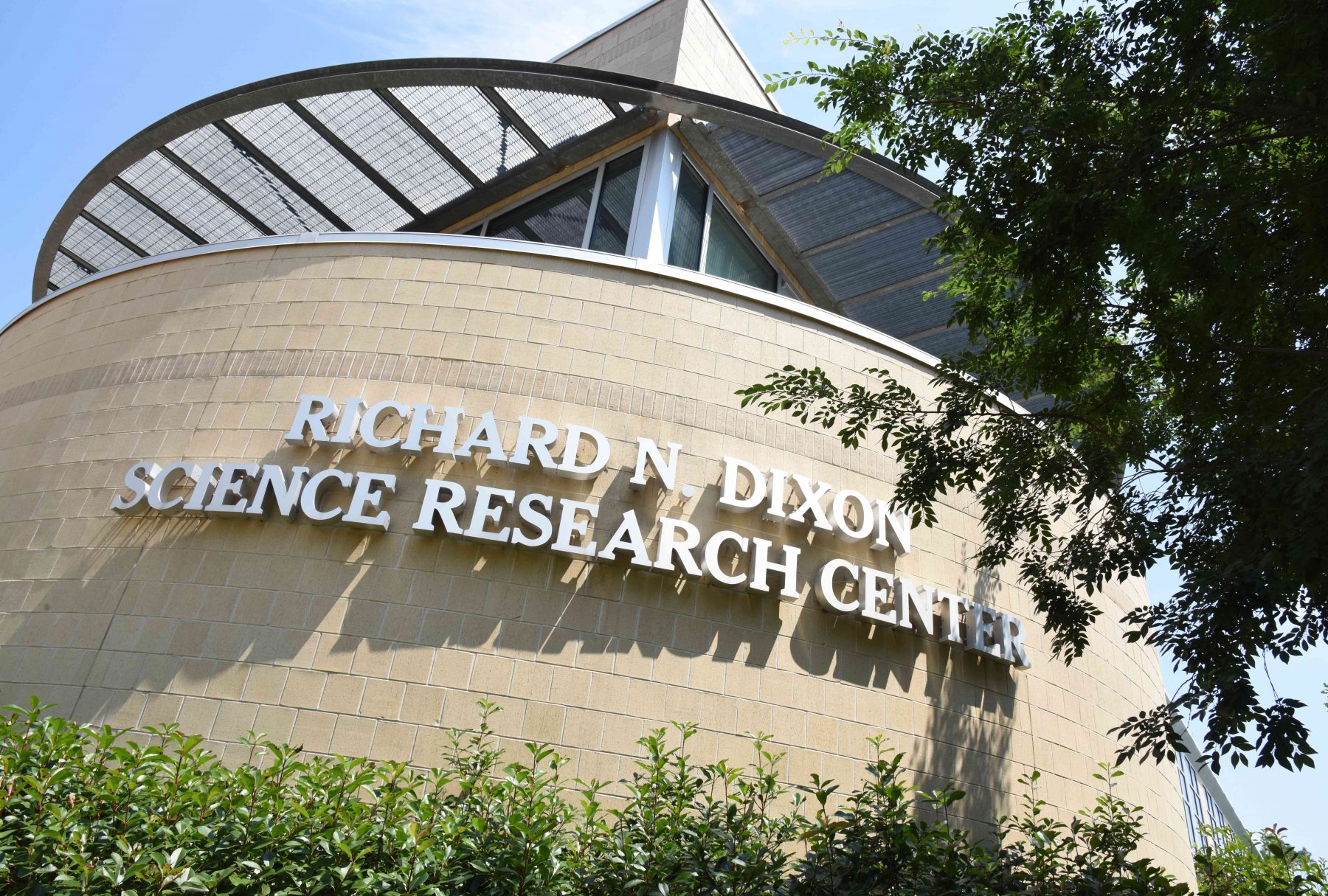
Morgan State University’s School of Computer, Mathematical and Natural Sciences (SCMNS) has announced its receipt of a $499,999 grant award from the National Science Foundation (NSF). The Excellence in Research (EiR) grant will be used to advance interdisciplinary research at the interface of biology, chemistry and engineering with a focus on studying the role of nanoparticles in cyanobacterium for enhanced biofuel production. The project, titled “Excellence in Research: Oxidative Stress Induced Impact of Cell-Penetrating Nanoparticles on Cellular Constituents in a Cyanobacterial Model,” is being managed under the direction of principal investigator Viji Sitther, Ph.D., associate professor of biology at Morgan, and her co-principal investigator, Huan Chen, Ph.D., a research faculty member at the National High Magnetic Field Laboratory (National MagLab), a user facility funded by the National Science Foundation and the state of Florida. The grant will fund the project until the end of July 2022.
“Dr. Sitther’s partnership with the National MagLab represents an exciting step forward in the advancement of the missions of the School of Computer, Mathematical and Natural Sciences and Morgan State University,” said Hongtao Yu, Ph.D., dean of the SCMNS. “This project enhances our research and scholarly activities as an R2 high research institution while providing our students with internship and graduate school opportunities. At a time when sustainable, carbon-neutral energy sources are needed more urgently than ever, Dr. Sitther’s research is a valuable contribution not only to our university but to the world at large.”
Morgan is one of several Historically Black Colleges or Universities (HBCUs) to have received an EiR grant. However, Morgan is the first HBCU to study the effect of nanoparticles on the protein and lipid content of a model cyanobacterium. Through this research, Dr. Sitther and her team will gain a comprehensive understanding of nanoparticle-cyanobacterial interactions that will offer far-reaching benefits for biotechnological applications, leveraging research in the areas of environmental-safe remediation, biosensing, and bioenergy. Once concluded, the research might make a huge positive impact on the environment by leading to the creation of an environmentally safe alternative energy source to replace fossil fuels.
Led by the two female researchers, the project will also serve to train and mentor underrepresented students in this specific area of the sciences, with an aim of enhancing the participation of women in STEM. With many members of the current workforce of biotechnologists preparing to retire within the next decade, some experts are projecting that the U.S. may face a shortage in the talent pool, particularly as it relates to minority populations. To start, a total of four students will participate in the research: two undergraduates, one master’s-level student and one doctoral student. While all of the students will be mentored and trained in cutting-edge interdisciplinary research in the biofuel program at Morgan, graduate students will also have an opportunity to receive training at National MagLab.
Dr. Huan Chen, research faculty member, National MagLab
“NSF awards (focus on) cutting-edge areas of basic research, and this project takes on an area of biofuel production where discoveries in nanotechnology have the potential to result in major advances,” said Don Millard, deputy director of NSF’s Division of Engineering Education and Centers. “Just as importantly, this award will enhance Morgan State’s research capacity, creating new opportunities for innovation. Undergraduate and graduate students will be given the ability to enhance their STEM learning by actually participating in research.”
Collaborations between the University and MagLab were first initiated in 2015, by Timothy Akers, Ph.D. an assistant vice president for Research Innovation and Advocacy at Morgan. Use of the state-of-the art facility at National MagLab has resulted in three peer-reviewed publications and this effort will continue through this funding.
The Foundation awarded these funds under the provisions of the NSF 18-522 Historically Black Colleges and Universities Undergraduate Program (HBCU-UP). While the majority of the award will be utilized by the University for big data analysis, work to characterize lipids will leverage the world-leading analytical instrumentation and expertise at the National MagLab. The research team plans to use a recently-launched 21 Tesla FT-ICR mass spectrometer at the MagLab’s ICR facility, which provides the highest mass accuracy and resolving power in the field.
“This collaborative effort will facilitate the type of mentor protégé relationship that is most critical for training our next generation STEM Workforce and steadily increasing the number of women and underrepresented minority students,” said Willie E. May, Ph.D., vice president for Research and Economic Development at Morgan. “Receiving the funding to support our collaboration with MagLab will be a ‘game changer’ for Morgan.”
This latest grant marks a continuation of funding support that Morgan has received from NSF in recent months, including resources for SCMNS to launch the PERSIST Program as well as a separate one-year pilot program that will help increase students’ proficiency and success in computer programming with the goal of retaining them as computer science majors.
The School of Computer, Mathematical and Natural Sciences comprises five departments: Biology (including the Medical Technology Program), Chemistry, Computer Science, Mathematics (including the Actuarial Science Program) and Physics (including Engineering Physics). The school offers three master’s degrees — Bioinformatics, Mathematics and Science (Biology, Chemistry and Physics) — and two Ph.D. degrees: Bio-Environmental Sciences and Industrial and Computational Mathematics. Its mission is to provide comprehensive programs that will educate and nurture the next generation of scientists, mathematicians and technologists, and to advance the frontiers of science and technology through research and innovation in service to local, regional and global communities.
About Morgan Morgan State University, founded in 1867, is a Carnegie-classified doctoral research institution offering more than 125 academic programs leading to degrees from the baccalaureate to the doctorate. As Maryland’s Preeminent Public Urban Research University, Morgan serves a multiethnic and multiracial student body and seeks to ensure that the doors of higher education are opened as wide as possible to as many as possible. For more information about Morgan State University, visit www.morgan.edu.
About the National High Magnetic Field Laboratory The National High Magnetic Field Laboratory is the world’s largest and highest-powered magnet facility. Located at Florida State University, the University of Florida and Los Alamos National Laboratory, the interdisciplinary National MagLab hosts scientists from around the world to perform basic research in high magnetic fields, advancing our understanding of materials, energy, and life. The lab is funded by the National Science Foundation (DMR-1644779) and the state of Florida. For more information, visit us online at nationalmaglab.org or follow us on Facebook, Twitter, Instagram and Pinterest at NationalMagLab.
This week the country marked National HBCU Week to recognize the accomplishments of historically black colleges and universities throughout the United States.
Earlier this month, leaders from the country’s 101 HBCUs convened in Washington, D.C. for the annual National HBCU Conference, where they spoke to Congress of the ongoing importance of HBCUs, and where President Donald Trump announced that religiously affiliated HBCUs would now receive full federal funding.
“Previously, federal law restricted more than 40 faith-based HBCUs and seminaries from fully accessing federal support for capital improvement projects. This meant that your faith-based institutions, which have made such extraordinary contributions to America, were unfairly punished for their religious beliefs,” Trump said in his Sept. 10 address to the conference.
“This week, our Department of Justice has published an opinion declaring such discriminatory restrictions as unconstitutional. It was a big step. And from now on, faith-based HBCUs will enjoy equal access to federal support,” Trump added.
Among the leaders present was President Reynold Verret of Xavier University of Louisiana, the only Catholic historically black college or university in the United States.
In his testimony before the U.S. House of Representatives Committee on Education and Labor, Verret emphasized the “critical role” of HBCUs in education.
Verret told CNA that in his testimony, he emphasized that as the U.S. grows in diversity, “the majority of our talents will be black and brown. And if we fail to cultivate that talent, we will actually do ourselves a great damage,” he said.
Students are not always fortunate enough to attend good schools, he added, and if black talents, such as those of Dr. Ben Carson, are not fostered, they will be lost. Carson was a prominent pediatric neurosurgeon before his run for president in 2016 and his current position as U.S. Housing and Urban Development Secretary.
Speaking about Xavier in particular, Verret said that the faculty encourages their students to consider the needs of their communities and their country when choosing their majors.
“The education of the student at Xavier or at a school like ourselves, it’s not just a benefit to that individual student, but a benefit to the larger community that he is contributing to, and to the nation,” Verret said.
The notion of putting one’s talents at the service of another is a critical part of Xavier University’s Catholic foundation, Verret added.
“It’s very much in our legacy at Xavier, that that expectation of contributing to more than just me…and we speak of that to our students,” he said. “That the majors that they engage in, whether it’s preparing for medicine, preparing for law, or becoming a major artist, will only have meaning when they put it in service of people. It’s not so much about my BMW, or my salary.”
The seeds of Xavier University were planted by then-Mother Katharine Drexel in 1915, when she and her Sisters of the Blessed Sacrament founded schools to serve Native American and African American populations throughout the United States, including a Catholic secondary school for African-Americans in Louisiana.
By 1917, she also established a preparatory school for teachers, one of the few career tracks available to Black Americans at the time. A few years later, that school was able to offer other degrees as well, and became a full-fledged university in 1925.
In a sense, Verret said, Mother Katharine “rescued the Church from herself” at the time, because she opened an institution where students of all colors were welcome. Xavier University was also the first Catholic university where men and women studied together, he added.
The spirit of Mother Katharine, now St. Katharine Drexel, and her mission to provide a quality education to those in need is still foundational to the mission of Xavier today, Verret said.
“Mother Katherine, when she came here with her sisters in 1915…she had in her mind those who needed an education,” Verret said. “…and every 15 years, maybe even 25 years, we look at ourselves and say – who else needs our service? If Mother Katharine was beginning today, she would have others on her list as well, because this is our mission.”
When it comes to academic performance, Xavier is a school that “is punching above our weight,” Verret said.
Though the school enrolls only 3,000-some students, Xavier ranks first in the country for the number of black graduates who will go on to complete medical school, according to the Association of American Medical Colleges.
It is also ranked among the nation’s top four colleges of pharmacy in graduating African Americans with Doctor of Pharmacy (Pharm D) degrees, and is number one in the nation in awarding bachelor’s degrees to African American students in the biological and biomedical sciences, the physical sciences, and physics, and number three in the nation for the number of African American graduates who go on to earn a Ph.D. in science and engineering fields.
Verret said that Xavier’s achievements show the important role that smaller, specialized colleges, such as HBCUs, or women’s colleges, or other religiously-affiliated colleges, can play in American higher education.
“That diversity of education (options) to satisfy young people’s needs is important to us, and HBCUs are one part of that landscape.”
HBCUs were founded at a time where it was illegal for black students to attend other institutions of higher education, and so they catered to black students out of necessity. Xavier is still predominately black, Verret said, but it always has been and continues to be accepting of students of all ethnicities and creeds, which was something Mother Katharine anticipated.
“We have an important reservoir of experience and knowledge and intuition about what America should become, which came from the children and descendants of former slaves,” Verret said, but students of all races and creeds are able to receive a good education at Xavier.
Among the other ethnicities at Xavier are a large group of Vietnamese students, as well as students from Iraq who came to the United States during the Iraq war, Verret said. More than 71 percent of Xavier students are African American, while just 19 percent are Catholic, in large part because African Americans in the south are primarily from Protestant or Evangelical ecclesial communities, Verret said.
Still, Verret said, it is important to have HBCUs as predominately black institutions, where black students who are still a minority in this country can go and not feel like they stand out.
Speaking from his own experience as a young college student, Verret said that HBCUs offer students a place where their race is “not an issue.”
“I’m not the representative (of blacks or African Americans). I am the editor of the school newspaper. I am one of the members of the chemistry club, I’m not the black member of the chemistry club,” he said. “It’s a certain freedom that many whites in the United States cannot understand because they’re not experiencing that.”
As for its Catholic identity, Verret said the school has a strong sense of Catholic service and social justice engrained into its mission.
As one example of service, Verret said that every year, student deans and other peer leaders volunteer their time to help move in new students on campus. When asked why they did so, Verret said one of the student leaders told him: “So that they’ll know next year, it’s their turn.”
The school’s sense of service can be seen in its mission statement, which notes: “The ultimate purpose of the University is to contribute to the promotion of a more just and humane society by preparing its students to assume roles of leadership and service in a global society.”
Another example of the school’s Catholic mission, Verret said, is in its spirit of camaraderie and solidarity in its successful pre-med program. Often schools will try to scare off medical or pre-medical students by telling them: “Look to your right and look to your left. One of you won’t be here (by the end),” Verret said.
“That notion, that doesn’t exist at Xavier. We gather and pull each other so that we should all go cross that finish line together.”
Enrollment is back up at Xavier after a couple of years of decline following Hurricane Katrina, Verret noted, and the way that the school, as well as other HBCUs, will preserve their legacy is by “telling their stories” and telling of their current successes, Verret said.
“The other HBCUs are of very different sizes and very different complexions. But at the same time, what I can say is the uniting theme is that they continue to educate and graduate students who go on and are at the core of what America needs to be.”
Ayn Rand once said: “The question isn’t who’s going to let me, it’s who’s going to stop me.” This is a quote Ms. Senior for the 2019-2020 academic school year, Damaria Joyner, chooses to live by and keep her motivated.
Ms. Senior DSU, Damaria Joyner
Raised in the Foster care system in Boston, Massachusetts, Damaria was raised by a single mother who managed to work long hours at night while still caring for three young children. Growing up in this circumstance, she viewed it as a way for her to stay focused on her studies, to beat all odds. “Growing up, I’ve never really had any role models, just people and circumstances I did not want to be like. I really just want to break all my generational cycles,” she stated.
The first step she needed to take to break this cycle was actually attending Delaware State University. “I’m from Boston, and there’s no Historically Black Colleges/Universities around there. It actually takes me about seven hours to get home. Being so far away from home was a struggle at first, but I knew I had a purpose and I had to make the best of this opportunity. I’m very close with my sister, and had to fill this void of being homesick. I got heavily involved on campus, joined different organizations on campus, building these relationships with my Hornet family. Since my freshman year, I met some of my ‘bestest’ friends who I know are going to be in my life for a lifetime. I am also a part of the Delta Lambda chapter of Alpha Kappa Alpha Sorority Incorporated, and I would forever be thankful for that. I came into college with just one sister, and now I got a bunch.”
When asked about some of her most memorable experiences at Delaware State, she described it to be very life changing. “I took several risks here at DSU. I couldn’t dance and was literally dancing in front of the whole school at coronation,” she stated. Her time at Delaware State helped boost her confidence as she took on some of her wildest dreams. “Coronation this year was based on Beychella, and I had to make Beyonce proud.”
“Besides becoming Ms. Senior, being an AKA was one of my top memorable experiences at DSU. My Probate Day was literally one of the best days ever. My adrenalin was crazy! From March 25th, 2018 I was officially an Alpha Woman! From that moment my life has never been the same. Since I joined, I can definitely say that there has been major growth in the way I view myself as a black woman in society.”
Throughout her years at DSU, Damaria explained that there were several obstacles she faced, but learned to bounce back from every situation. “College was literally the most stressful thing I’ve ever done, but that just shows I can withstand anything.” When asked, “How will your position as Ms. Senior impact your life after DSU,” she stated, “I know I can achieve it. DSU helped showed me that I can do anything!”
Damaria Joyner
The new Ms. Senior DSU further stated that “my platform when running for Ms. Senior was P.E.R.I.O.D. which stands for perseverance, excellence, resilience, integrity, opportunities, and determination. For my platform, I wanted to use a popular slogan that everyone uses and will remember. P.E.R.I.O.D. is a mindset and constant reminder I will get the job done, PERIOD! In other words, you got to always remember that I will persevere, excel in everything I do, be resilient, have integrity, offer and take on opportunities that will change our lives, and always be determined to reach our goals.” Very confident with her platform, she hoped that she would be able to impact at least one of her peers throughout this process.
Attending an HBCU was one of her best decisions. “This experience helped me grow as a black woman in society. Like I said before, coming here taught me that I can do anything. Like I really achieved every goal I set for myself — literally, no regrets!” Reminiscing about her time at Delaware State, her closing remark was: “I will forever be a hornet. I love my HBCU.”
In its eighth year, the Hoop for All Foundation continued to advocate and promote cancer awareness, prevention and treatment through its annual three-on-three basketball tournament located at Banneker Park in the Shaw neighborhood of Washington, D.C. on Saturday, Sept. 14.
With a specialized focus on brain cancer, the nonprofit organization raised roughly $1,500 for two cancer patients through various fundraising efforts and monetary donations.
Since the first tournament in 2012, founders and 2014 Howard graduates Kiera “KB” Thomas and Ayokunle “Ayo” Amoo have seen growth in all areas including attendees, volunteers and sponsorships.
Founders Kiera “KB” Thomas (left) and Ayokunle “Ayo” Amoo (right) at the 6th annual Hoop for Hope basketball tournament at Banneker Park in September 2017.
“The growth has been outstanding. It’s what we expected but also more than we could’ve ever imagined. Our committee has really become the backbone of what we do. They help us tie lose ends while Ayo and I can really focus on other things,” shared Thomas.
For future events, “I would like to see more women involvement in the foundation outside of the committee [members]. [I am] looking forward to kicking off events for women to play and participate,” Thomas said.
Guest appearances included three-time NBA All-Star Steven Francis and streetball veteran Randy Gill, better known as “White Chocolate” who attended Bowie State University.
“When I got drafted, [Banneker] was one of the first courts I ever refurbished. So when I found out about the tournament, it was only right for me to come back to where I started. It’s a good opportunity for people like myself to give a helping hand,” Francis told freelance journalist Nayo Campbell.
Amari Smith, a Howard graduate and the tournament’s ultimate ride-or-die supporter, has volunteered for seven years–the longest out of all committee members. Despite residing in New Jersey, she makes an effort to come out every year.
“Everything about it makes me return! The founders started this as students and it has grown and helped so many people. For many of us, cancer survivors and patients include our family members, loved ones and friends, so it really hits close to home,” Smith said.
She continued.
“I’ve seen how grateful people are that Hoop for All exists, the impact its made on the community and the awareness that it brings to us all. I’m a supporter forever and will continue to do whatever needs to be done.”
Over the past seven years, Hoop For Hope has remained consistent with its recurring theme of cancer awareness and hasraised thousands of dollars for breast cancer, lung cancer, colon cancer, prostate cancer, blood cancer and childhood cancer.
“The event impacts and motivates the surrounding community. We bring a unique street basketball experience while educating the people,” said Amoo. It’s always important to give back. No matter how big or small. This tournament is and will always be a part of our lives. We were called to do this as sophomores at Howard and the tournament will continue for generations to come.”
An event for all ages–the tournament featured dunk and three-point contests catering to all skill levels, interactive activities, giveaways, food and live halftime musical and choreographed performances by the Howard University Bisonettes, Kaviar Sundays and K. Dub.
Partners and sponsors included Target, Gatorade, Red Bull, Under Armour, Howard University Hospital and the Children’s Brain Tumor Foundation.
According to Amoo, next year’s focus will be cervical cancer. Information and updates on partnerships, sponsorships in addition to team and volunteer registration for 2020 can be found here.
“Godfather of Harlem” is a sobering look at what it’s like to be the city’s Robin Hood.
The premiere episode moved very quickly, likely simulating what it’s like to be confronted with change after 10 years away in prison. In the first scene, Forest Whitaker’s drug kingpin character Bumpy Johnson is seen leaving the legendary, loud Alcatraz prison. His loyal wife is there to pick him up, and something funny happens. As they drive by the famous Apollo, he is happy to see it’s still there but has to ask who headliner James Brown is.
His excited wife brings them to her new apartment, where a surprise party awaits. However, the joyous occasion seems to be more about the party goers instead.
Many at the party happily greet Bumpy, but they are quick to mention their issues and ideas— all of which are insinuated to need his funding. In his lifetime, Bumpy would often help residents in Harlem with costs that ranged from Thanksgiving turkeys to putting a child through college. But you can tell he is drained already from the self-serving conversations as he sneaks out the party early.
“Godfather” is a gem in that it gives viewers a historical context of New York in the late 60s. It’s unprecedented for any show or film to explore so much about Bumpy, including what it’s like to coexist in the streets with the Italian mafia. In Episode 1 Bumpy clashes with the Italians over territory they snatched from him during his prison stint. He’ll need better tactics, smarts, and manpower to reclaim what’s his. With so much at stake, the Episode 2 is likely to be very action-packed.
Another dynamic to watch out for will be the introduction of Bumpy’s relationship with Malcolm X. As the head of the Nation of Islam, his old friend Malcolm X seems to want drugs off the streets, and is happy to help fight off the mafia. You’ll have to watch the next episode to see how Bumpy leverages it all. He needs all the manpower he can get.
DALLAS, Texas – The Grambling State University football team got an early touchdown after Geremy Hickbottom’s 14-yard pass connected with Quentin Guice, but the Tigers were unable to sustain the lead as Prairie View A&M picked up a 42-36 victory on Saturday night at 96th State Fair Classic at the Cotton Bowl.
Prairie View A&M (2-2 overall, 2-1 SWAC) answered to Grambling State’s scoring drive with an impressive 60-yard rush by Dawonya Tucker. Following Amaury Martinez’s PAT, the score was tied at 7.
With their next ball possession, the Tigers came very close to scoring again in the end zone after Hickbottom’s 26-yard pass to Devante Davis connected for 26 yards, but red zone errors prevented the touchdown. Grambling State was, however, able to take the lead of the game, 10-7, after Mendez’s 24-yard field goal kick was good.
The Tigers wanted to stretch the lead a little more, and they were able to do so after a 10-yard rush into the end zone by Katrelle Starks. Following the PAT, Grambling State led, 17-7.
Grambling State’s 10-point advantage was short-lived after Tucker’s 13-yard rush for a touchdown. At the end of the first quarter, the Tigers were still up, 17-14.
Prairie View A&M tied the score at 17 in the second quarter after Martinez’s 27-yard field goal kick was good.
The score of the game was broken after Joseph McWilliams’ 42-yard interception touchdown. Following the PAT, Grambling State had the 23-17 advantage over Prairie View A&M.
Turning Point The Panthers answered to the Tigers’ last scoring drive with back-to-back touchdowns; Jalen Morton’s three-yard touchdown rush and a 20-yard pass from Morton to Chris Johnson. Prairie View A&M extended their lead of the game to eight; 31-23 into halftime. In comparison, the Panthers tallied 359 total yards to the Tigers’ 187.
The second half of the game worked in both team’s favor as Prairie View A&M scored eight more points off a touchdown and two-point conversion by Morton in the fourth quarter, followed by a 36-yard field goal by Martinez from the next ball possession.
The Panthers had a 19-point lead (42-23) but it wasn’t over for the Tigers. A two-yard rush by Charles Wright and 55-yard scoop and score by Quincy Mitchell had Grambling State only down by seven points (42-36).
In the end, Grambling State was unable to score again to take the lead and win the game.