Jackson State Student Spends Eight Weeks In Cameroon, Says Studying Abroad Is Invaluable

A life-changing experience is how Markus Brooks, a senior criminal justice major at JSU, described the eight weeks he spent in Cameroon over the summer.

“I think everyone should have the opportunity to go abroad. It does not necessarily have to be the continent of Africa, but go see how other people live,” he said. “They can share their perspective, and you can share yours and make a difference.”

From June 3 – Aug. 3, Brooks worked with the Limona Imaging and Medical Analysis Laboratory (LIMAL) Foundation in Cameroon. Located on the Gulf of Guinea, Cameroon is a Central African country of 24 million people, who speak French and English.

The internship materialized when Dr. Etta Morgan, who chairs the Department of Criminal Justice and Sociology, suggested the senior apply to study abroad through One World Exchange, a non-profit based in New York City.

“The out-of-the-country experience is invaluable. There is so much to be learned from other cultures that help our students appreciate what they have,” said Dr. Morgan, whose cousin, an attorney specializing in human rights advocacy and domestic public interests, co-founded One World Exchange after spending time overseas.

Markus Brooks, a senior criminal justice major, poses with members of the St. Francis Medical Center staff where he worked during his study-abroad experience in Cameroon. (Photo special to JSU)

Markus Brooks, a senior criminal justice major, poses with members of the St. Francis Medical Center staff where he worked during his study-abroad experience in Cameroon. (Photo special to JSU)

According to the website, the organization prepares “young leaders from under-represented backgrounds for future leadership opportunities through participation in eight-week international development and human rights service projects in developing countries.”

On a Monday in June, after a 13-hour drive from his hometown in Bloomington, Illinois, Brooks boarded an NYC flight to Montreal, Canada, then to Paris, France, until he landed in Douala, Cameroon.”

It was kind of a culture shock at first. We saw 12 people fit into one taxi. The driving was much different than the United States. There were not many rules to the road, I guess. I was a little bit freaked out at first,” he said.

A spectacular rooftop view of Yaounde, the capital of Cameroon, taken by Markus Brooks during his eight week stay in the French and English speaking country. (Photo special to JSU)

A spectacular rooftop view of Yaounde, the capital of Cameroon, taken by Markus Brooks during his eight-week stay in the French and English speaking country. (Photo special to JSU)

Brooks and two other students, from Rutgers University and Touro College, stayed at a compound with LIMAL workers and engaged in various form of community outreach throughout their host city.

“We worked with a medical center called St. Francis. We helped donate medical supplies to them because they didn’t really have much,” said Brooks. “We also went out in the local community and passed out flyers to inform citizens about the medical center because a lot of people didn’t know it was in the area.”

By the end of the trip, the Illinois native said there was a drastic increase in the number of people using the medical center’s services.

Markus Brooks, a criminal justice major at JSU, and students from the East coast, indulge in local cuisine during their stay in Cameroon,where they witnessed the Cameroon justice system in action, toured the sites and helped residents learn more about the medical center in the ares. (Photo special to JSU)

Markus Brooks, a criminal justice major at JSU, and students from the U.S. East Coast indulge in local cuisine during their stay in Cameroon. (Photo special to JSU)

An aspiring criminal attorney, Brooks visited several law firms and was able to sit in a Cameroon courtroom and hear civil and criminal cases. “Their court system works a little differently than the United States. It was really nice to learn and gain the experience of what law is like in another country,” he said.

The JSU student explained that Cameroonian judges appear to hear a wide variety of cases, and the attorneys are well-versed in many areas of law. In contrast, Brooks said that  U.S. judges and attorneys seem to specialize in just one or two areas of law.

Brooks also credited the book “Playing Up” by Vaughn L. McKoy for influencing his career choice.

“He (McKoy) ended up becoming an attorney and eventually working for the New Jersey attorney general’s office,” he shared. “Being in criminal justice, I can do so much more. Having a law degree sets the foundation for what I want to do because eventually, I want to get into politics become a congressman and run for president of the United States.”

Witnessing how others live also gave the student a chance to focus on human rights issues, which he said ties into his future career plans.

The “amazing” food was another highlight of the trip, Brooks revealed. A dish he favored was Choti Choti and corn fufu. “It’s cornmeal boiled, and you have Choti Choti leaves. They kind of look like collard greens, and you can mix it with fish and chicken, or you can add plantains, too,” he explained. “You take the corn fufu and smoosh it in your hands and scoop up the Choti Choti, and then you eat it.”

Brooks said the majority of the food the group consumed was organic and very healthy. Although he admitted to being intimidated by some food options, he still tried everything he was offered, including snails. “I’m talking snails the size of my hand,” said Brooks of collecting the mollusks in the backyard for dinner. “They’re actually good, believe it or not. They were really seasoned.”

However, when it came to prepping the snails for cooking, he bailed. “They took a stick and unwound the snail out of its shell. I ran out of the room. It was too much. I couldn’t watch that,” he said, shaking his head.

A member of Alpha Phi Alpha Fraternity, Inc., Brooks said the trip taught him not to take things for granted like food and clothes. Complaining about school is another thing he added to his lists of don’ts. “A lot of people don’t get the opportunity to get higher education. It’s the cost. Some people just don’t have the money,” he explained.

In his downtime, the 4.0 student said he visited the national museum and markets, which he called intense.

“In Cameroon, you bargain if you want to get food or clothes. It’s very busy. There are a lot of people at one time,” he said. “If you don’t agree with the price that the seller is going for, you can try to bargain it down. Sometimes they go for it and sometimes they don’t.”

Brooks said he purchased sculptures, soccer jerseys, dashikis, and Cameroonian outfits plus keychains, bracelets, and trinkets at a discount for his friends and family.

One of the outings the student said he loved was touring the slave port in Limbe.

“That was a really emotional moment because we saw the shackles, where they ate, where they were caged and the ports that sent them off to the United States,” he said. “It was heartbreaking, but also a learning experience because I got to see where my ancestors came from.”

Brooks said he embraced that moment and reminded himself to take advantage of his opportunities because his ancestors didn’t have a choice.

Overall, the presidential hopeful said he wanted to thank Dr. Morgan, One World, and the LIMAL Foundation for the study-abroad opportunity.  “I did so much and learned so much from so many people. I would definitely do it again,” he said.

Top Things To Know In The HBCU Community On Tuesday

HBCU News

Democratic presidential hopeful Tim Ryan stumped at historically black Paine College in Augusta on Monday, August 26, saying to the audience at the black college that “The next president is going to be the healer in chief.” Ryan’s speech had a focus on gun violence, according to The Augusta Chronicle. Ryan is a nine-term congressman from Ohio.

Extra: The event was hosted by the school’s student government association.

HBCU News

The “Wilberforce Unite” fundraising effort by Wilberforce University in Wilberforce has raised $478,000 so far, which is less than a quarter of its goal to raise $2 million in order to keep the black university’s accreditation, per ideastream. Wilberforce has two years to correct the problems.

Sports

Tennessee State football placed four on 100 all-time greatest HBCU players list compiled by national radio personality Donal Ware, reports Tennessean. Richard Dent, Claude Humphrey, Ed Jones, and Dominique Rodgers-Cromarti made the list.

Entertainment

Best friends Oprah Winfrey, who graduated from Tennessee State University in Nashville, and Gayle King hilariously guess the meaning of today’s slang words. “We know what that is,” Winfrey tells King who answers “Lit means it’s really great, it’s really fun.”

Partners

Former BET CEO Debra Lee recently shared how she became a woman of power in the entertainment industry. “I had to get comfortable with the fact that I was a powerful woman. Power is not necessarily something that I thought came with the position. But once I had it, I had to decide what I wanted to do with it, what I wanted my legacy to be, what issues I wanted to change, and how I wanted to use resources to help with those issues,” says Lee.

Court-Ordered Mediation In Maryland HBCU Case Ends Without Agreement

Court-ordered mediation of a 13-year-old case brought by a coalition of historically Black colleges and universities (HBCUs) has ended without a resolution.

The passing of the deadline without a deal has further frustrated efforts for fair funding that the coalition is seeking to help level the playing field with non-Black institutions in Maryland.

The U.S. Fourth Circuit Court of Appeals had imposed a July 31 deadline for the Coalition for Equity and Excellence in Maryland Higher Education to settle the case with the state.

The case was initially filed in 2006 when the coalition alleged the state practiced discrimination against its HBCUs by deliberately underfunding the universities and by allowing traditional state schools to continue to create new degree programs that were duplicative of those at the historically Black institutions.

The coalition also argue that the state’s actions have placed pressure on enrollment at HBCUs.

They have demanded increased funding and, to achieve parity, they’ve asked the state to merge the University of Baltimore with Morgan State, which is Maryland’s largest public historically Black university.

In 2013, Judge Catherine Blake of the U.S. District Court of Maryland, found the state in violation of the 14th Amendment rights of its HBCU students and alumni.

Her ruling said Maryland continues to “operate vestiges of a de jure system of segregation,” specifically by continuing a longstanding practice of duplicating academic programs offered at HBCU’s, rather than investing in making the HBCU programs attractive to a diverse range of students.

In 2017, after initial failed mediation between HBCU advocates and the state of Maryland, Blake ordered parties back into court.

Blake then ordered the state to remedy the lack of investment in Maryland’s HBCUs, and mandated that Maryland officials establish a set of new, unique and high-demand programs at each HBCU.

“The Plan should propose a set of new unique and/or high demand programs at each HBI, taking into account each HBI’s areas of strength, physical building capacity and the programmatic niches suggested by the plaintiff’s experts,” Blake wrote in a November 2017 ruling.

In January 2019, the court again ordered mediation between the parties and set the July 31 deadline for the parties to resolve the dispute.

“The HBCU coalition leading the lawsuit on behalf our HBCUs is doing a great service for our institutions,” Deborah Powell-Hayman, the president of the UMES National Alumni, said in an earlier interview with NNPA Newswire.

“This case holds more promise than anything I know, for getting the number and mix of academic programs, facilities and funding to make our alma mater as competitive as traditionally white institutions in attracting quality students, faculty and staff and federal grants and contracts,” she said.

The Maryland Attorney General’s Office has declined to comment.

“What we’re hoping for is that this case can get resolved not too long from now and that the HBCUs will be in a more competitive place,” Greenbaum told Maryland Matters, a website that focuses on Maryland government.

“There was no resolution,” said Jon Greenbaum, the chief counsel for the Lawyers’ Committee for Civil Rights, which represents the coalition of HBCUs, which includes the universities of Coppin State, Morgan State, Bowie State, and Maryland Eastern Shore.

Here’s Why You Should Consider Pledging A Black Greek Lettered Organization

Pledging a Black Greek Lettered Organization (BGLO) is one of the most important decisions that you can make during your matriculation in college, and particularly at a historically black college and university, or HBCU. There are several benefits of pledging a “Divine 9” organization, including the bond of love that you build with like-minded individuals, which is like having a brother, or a sister that you never had. You will also get the opportunity to network with other Black Greeks in the real world at corporate offices across the nation, and beyond once you graduate from your HBCU, and more.

Here are 4 reasons why you should consider pledging a BGLO at an HBCU:

Building a brotherhood/sisterhood

When you pledge a BGLO you will have brothers, and sisters that will always be there to help you if and when you need it. This is priceless. Having a brother to help pick you up when you fall is invaluable. A sister that will listen to you if you need someone to talk to is sent from heaven.

Networking with someone in every human endeavor

There are hundreds and thousands of members of BGLO in the world that are more than willing to help you secure the bag after college. This is one of the best things about pledging a “Divine 9” organization — knowing that there is at least one Black Greek in every human endeavor that can help you with career advice.

Continuing the legacy

Some students will receive the opportunity to continue their father’s legacy of pledging Iota Phi Theta Fraternity, Inc. Students who pledged Delta Sigma Theta has a mother who pledged the same sorority. Continue the legacy by following the streets that are paved in brown and gold.

Helping out in the community

Pledging is definitely making a lifelong commitment to helping your community be a better place to live, especially for the youth coming right behind us. The amount of community service that you did while in undergrad at you school’s chapter, if you are worthy, will help you become a better servant when you choose to be a part of a local alumni chapter after college.

That being said, it’s important that you keep in mind a couple of things. First, it is nearly impossible to change fraternities once you are worthy to become a pledge, so make sure you’re joining for all of the right reasons. Second, make your letters mean something by making better happen in the community.

Pledging a BGLO offers a lot of incredible rewards, and you will be content with your letters. Don’t quit!

Hampton Pirates Opens Season With Big Win Over Elizabeth City State

HAMPTON, Va. – Shai McKenzie ran for 121 yards and two touchdowns, while Deondre Francois threw for two and ran for another as Hampton opened the 2019 season with a 65-7 win over Elizabeth City State on Saturday night.

The Pirates scored on their first possession as Francois finished a six-play, 58-yard drive with a five-yard scamper at 12:47. His connection with Jadakis Bonds for a seven-yard score with 9:53 left in the first put Hampton up 13-0. McKenzie got into the scoring column on the next possession as he broke loose on a 30-yard run to lead 20-0 with 7:30 left.

Hampton used a 33-yard Evan Lomax field goal to push the lead to 23-0 at 12:17 left. Francois and Bonds connected again on a 25-yard scoring strike for a 30-0 lead with 9:25 left.

The defense set up the next score as Elijah Washington recovered a fumble in the end zone for a 37-0 lead with 8:13 remaining in the half. A short field gave Hampton its final score of the half as Will Robinson scored on a nine-yard run to lead 44-0 at half.

In the third, McKenzie scored his second one a 37-yard scamper to open the scoring for a 51-0 lead with 13 minutes left before Darran Butts ran one from seven yards out to lead 58-0 with 5:46 left.

ECSU got on the board on the ensuing kickoff as Zion Riddick took the kickoff 95 yards for a touchdown to make the score 58-7 with 5:30 left in the third. Hampton closed the scoring midway in the fourth on an Austin Bradley one-yard run.

Hampton gained 525 yards total offense with 336 on the ground and 189 in the air, while ECSU was held to 65 yards total offense as 55 came on the ground.
Francois threw for 91 yards and two touchdowns, while Austin Bradley threw for 98 as Hampton was a combined 13-for-27.

Hampton returns to action on September 7 hosting Virginia Union University at 6 pm.

Alabama A&M Beat Morehouse 35-30

CANTON, Ohio — Aqeel Glass threw four touchdown passes, including a 20-yarder to Brian Jenkins Jr. with 3 seconds to play, and Alabama A&M beat Morehouse College 35-30 on Sunday in the Black College Football Hall of Fame Classic at Tom Benson Hall of Fame Stadium.

Glass completed 28 of 44 passes for 397 yards, Jenkins finished with 12 receptions for 120 yards and Zabrian Moore added six catches for 117 yards — all of which were career highs for each player — for Alabama A&M (1-0).

Glass hit Anthony Howard for a 6-yard touchdown and the Bulldogs’ first possession of the second half and, after the defense forced a Morehouse punt, capped an eight-play, 87-yard drive with a 43-yard TD pass to tight end Kendric Johnson to make it 28-10 with 4:28 left in the third quarter. Jalen Brown threw scoring passes to Tremell Gooden and Santo Dunn before Dunn’s 1-yard touchdown run gave the Maroon Tigers their first lead at 30-28 with 1:01 to play. Glass completed four consecutive passes to move Alabama A&M to the 20 before a spike to stop clock and then hit Jenkins with an arcing pass in the corner of the end zone to win it.

Brown was 10-of-14 passing for 123 yards and added had 48 yards rushing on seven carries for Division-II Morehouse.

Gary Quarles returned the opening kickoff 54 yards and, on the game’s first play from scrimmage, Glass connected with Moore for a 40-yard touchdown.

The Best Black Poker Players of All Time

It’s time to appreciate the greats. Professional poker is one of the hardest jobs of all time, and it turns out that black players have been leaving their mark at the tables in a major way. They’re winning big in some of the most competitive tournaments in the world, raking in the dough and helping the industry evolve. But who exactly are these players, and what makes them stand out so much? Let’s take a look.  

Black Players Dominating the Scene

It’s not easy to become a professional poker player, especially outside the strict confines of major gambling hubs like Las Vegas and Atlantic City. It was even harder than that before poker started to become more mainstream. Where do you find the strength to go pro when you’re relegated to dimly-lit rooms and sketchy, privately-run games?

It seemed like American poker players were out of luck throughout the nineties and early 2000s, especially when the recession hit. The light began to shine when poker and casino gaming in general made a major comeback in 2013. More casinos began to open up around the states, with 48 states in total operating some form of legal live gambling today and 30 operating casino venues. 

Most US states are now offering some form of legal live gambling, and online gambling could be the next big thing for American players.

Black poker players like Phil Ivey, David Williams, and Paul Darden all come from different backgrounds, but they have one thing in common: a love for the game. So do many other people, and the growing number of poker rooms across the country gave them practice and encouragement to learn the ropes and recognize their own achievements through live games. 

These players began to rise as the industry was modernized and refined to a level which allowed for truly competitive and globalized play. As a result many of them started to play online poker games, which provided a perfect platform for professional development and allowed them to hone the skills required to become experts in the field. Today, the industry is booming. Black players have taken their seat at the table, rising to stardom while mentoring others and giving back to the poker community.

Phil Ivey Comes on Strong

Known as the Tiger Woods of poker, Phil Ivey is perhaps the most famous of all the black players. Born in California back in 1977, he was moved to New Jersey at just 3 months old. He got into poker as a young adult, playing against coworkers before finally moving up into the big leagues. 

Phil Ivey fell in love with this classic game at an early age, quickly rising through the ranks and establishing himself as a force to be reckoned with.

His career is storied and star-studded, with 10 World Series of Poker bracelets under his belt and a solitary World Poker Tour title. He has appeared nine times at World Poker Tour final tables, and has been widely regarded as one of the most talented and intelligent players in the world. 

His 2017 induction to the World Poker Hall of Fame was richly deserved, with reported winnings of over $26 million dollars from live games alone, and a reported net worth of over $100 million. Some of the cash even goes to a good cause, as Ivey has funded several charitable organizations for underprivileged children and the homeless. 

He even started the Budding Ivey Foundation, a non-profit organization which raises money for charities around the world, and has partnered with Make-a-Wish to play live casino games in Vegas with children who look up to him as a hero. He currently lives in Vegas, playing poker where it matters most. 

David Williams Strikes it Big

David Williams is a Texas native born in 1980, a relatively young player who has seen his share of the spotlight these past few years. He began his love of cards with the strategy card game Magic: The Gathering, which is (interestingly enough) a popular pastime among poker pros.

And it turned out to be very profitable indeed, as his live winnings exceed $8 million. After a notoriously famous moment when he came in second to poker superstar Greg Raymer in the 2004 WSOP, he became a sponsored poker professional, winning a gold bracelet at the 2006 WSOP and the World Poker Tournament Championship in 2010. 

David Williams plays against other professionals at the WPT Challenge the Champs 2017-2018 season.

Williams had a moment on season 7 of MasterChef, where he came got into the final round and almost considered switching careers. Instead, he decided to stick with what he knew, moving to Las Vegas and hitting the tables there. He’s big into online games, and still plays Magic, but he prefers to concentrate on poker these days.

Paul Darden Shakes Things Up

Paul Darden was born in 1968, making him one of the older poker professionals currently on the circuit. However, this man is proof that you can do anything you set your mind too. Despite being falsely accused of murder at age 15, the Connecticut native went on to win a WSOP bracelet in 2001 and a WPT title in 2002. 

His live winnings exceed $2 million, and he’s still active in the field of poker today. Darden was mentored by friend and competitor Phil Ivey, going on to take on thevital role of mentorshipfor professional Amnon Filippi and passing the poker torch. Despite having been diagnosed with multiple sclerosis, Darden is still playing his favorite game both online and in live games, having most recently participated in the 2015 WSOP. 

These three players are an inspiration not only to aspiring black poker players all over the world, but to any black professional hoping to leave a mark in his or her field of choice. With a combination of ambition, motivation, and pure skill, these players took the poker world by storm, proving to people across the country that they have what it takes to succeed.

Four Bison Selected To The 2019 Black College Football Player Of The Year Award Watch List

The Black College Football Hall of Fame (BCFHOF) revealed its 2019 Watch List for the Black College Football Player of the Year Award where Howard University saw four Bison on the list: senior wideouts Kyle Anthony (Miramar, Fla.) and Jequez Ezzard (College Park, Ga.), junior quarterback Caylin Newton (Atlanta) and redshirt sophomore running back Dedrick Parson (Philadelphia). The announcement came Wednesday.

“There are many gifted football players competing at Historically Black Colleges and Universities right now,” said Super Bowl XXII MVP and BCFHOF co-founder Doug Williams. “This Award is a way for the Black College Football Hall of Fame to recognize these talented student-athletes.”

All four Bison have received several preseason accolades, including 2019 Mid-Eastern Athletic Conference (MEAC) honors and Phil Steele FCS recognition.

Recently, both senior wideouts were named to the Phil Steele Preseason FCS All-America Third Team after giving defensive coordinators’ nightmares as they took turns victimizing several secondaries throughout the 2018 campaign. Anthony led the conference in receptions per game (5.3) and finished third in receiving yards per game (65.9). Ezzard led the country in yards per reception (26.6), while setting a new school record for receiving yards in a game (223) at Ohio (Sept. 1).

Newton made this third watch list after being named MEAC Preseason Player of the Year: College Football Performance Awards (CFPA) FCS National Performer of the Year (POY) Trophy Watch List and the STAT FCS Walter Payton Award Preseason Watch List. A year ago, the reigning MEAC Player of the Year ended his sophomore campaign ranking among the nation’s leaders in several categories, including passing yards per completion (1st/16.85) and total offense (7th/313.3). He completed his second season as the MEAC’s top passer with 2,629 yards and 22 touchdowns in 10 games.

After becoming the second consecutive Bison to win the league’s top rookie honor, Parson enters his sophomore year ranked among the conference leaders in several categories, including rushing yards (3rd), scoring (3rd) and all-purpose yards (6th). Last season, the Philadelphia native had two 100-yard games, including a season-best 149 in the home victory over Florida A&M (Nov. 3).

The Black College Football Player of the Year Award is presented annually to the most outstanding football player from a Historically Black College & University (HBCU). In 2016, former North Carolina A&T State and current Chicago Bears running back Tarik Cohen was selected as the inaugural recipient. Bowie State’s quarterback Amir Hall was the recipient for the past two seasons (2017 & 2018).

The winner of the 2019 Black College Football Player of the Year Award will be honored with the Deacon Jones Trophy during the Black College Football Hall of Fame Induction Ceremony, which takes place February 15, 2020 in Atlanta. The four finalists will be unveiled December 3, 2019.

“The Deacon Jones Trophy is the most coveted individual award a football player from an HBCU can receive,” said BCFHOF co-founder and 2012 inductee James Harris. “I enjoy monitoring the progress of these young men throughout the season.”

The watch list composes of 48 student-athletes from 27 different HBCUs, including 16 from the MEAC.

To view the 2019 Black College Football Player of the Year Award Watch List, please click here.

On Aug. 31, the Ron Prince era begins at FBS foe Maryland. Kickoff is set for noon on the Big Ten Network.

For more information, visit the Bison Athletics website at www.HUBison.com or the BCFHOF website at www.blackcollegefootballhof.org.Print Friendly Version

FAMU President Larry Robinson: ‘There’s A Tremendous Amount Of Talent Inside The Classrooms Of Florida’s HBCUs’

This week, four presidents of historically black colleges and universities (HBCUs) across Florida met as they showcased their institutions and insisted their schools will continue to play a role in the Sunshine State. 

At the first Florida HBCU Impact Summit in Tallahassee this week, the presidents of Florida A&M University (FAMU), Bethune-Cookman University (BCU), Edward Waters College (EWC) and Florida Memorial University (FMU) talked about the challenges and opportunities that HBCUs are facing in the state. They noted they make up four percent of colleges in the state while offering 18 percent of Bachelor of Science degrees earned by African Americans on Florida and $833 million to the state’s economy. 

FAMU President Larry Robinson said America was falling behind on science, technology, engineering, and mathematics (STEM) due to a lack of diversity–and HBCUs could help with that. 

“There’s a tremendous amount of talent inside the classrooms of these four institutions and others like them across the country,” Robinson said. 

“The next moon shot is the realization that we need to take advantage of the talent that is resident in these universities we call HBCUs,” Robinson added. “It’s the next big thing and we really need to embrace that.”

FMU President Jaffus Hardrick said that his school was going to aim for an increasingly larger profile in the years to come, pointing to FMU’s marching band and football team as ways to garner more attention. 

“We are bringing that level of creativity back to make sure we are making a big difference,” Hardrick said. “We will no longer be a secret. Everyone is going to know what we are doing. We are significant. We are relevant, and we are here to stay.”

BCU President E. LaBrent Chrite was named to his post back in April and started his new assignment a month ago. He offered his first take on his responsibilities. ADVERTISING

Princeton Art Museum Announce Partnership With HBCUs In Art Leadership Program

How does a curator create a museum exhibition? What does a day in the life of a working artist look like? How do science and technology help conserve art? How do issues of diversity and representation affect artists and professionals in the field?

In July, 12 students and seven faculty members from historically black colleges and universities (HBCUs) across the country addressed these questions and more in an inaugural partnership between the Princeton University Art Museum and the HBCU Alliance of Museums and Art Galleries, held on the Princeton campus.

The idea for the program was developed last summer by Caryl McFarlane, a higher education diversity consultant; Jontyle Robinson, curator and assistant professor, the Legacy Museum, Tuskegee University; and James Steward, the Nancy A. Nasher-David J. Haemisegger, Class of 1976, Director of the Princeton University Art Museum. Designed to help increase diversity in the art leadership field, the Curation, Leadership, Artistry and Practice Program (CLAP) introduces participants to the inner workings of a university art museum and exposes them to a variety of museum careers and opportunities, while honing practical skills in formal art analysis and academic research. Support is provided by Princeton’s Office of the Provost and the Humanities Council.

“The art museum field simply doesn’t look like the people of this country,” Steward said. “Working within the context of a leadership university, we feel the responsibility to afford opportunities to new generations of students, to introduce them to career paths they might not have considered, and thus to help ensure that museums and the humanities remain relevant.”

“With the Princeton University Art Museum as a powerful collaborative partner joining the Alliance of HBCU Museums and Galleries, the CLAP program met its goal of elevating expectations for our students and recent alumni in their exposure to art conservation and curatorial preparation and training,” said Robinson.

The participants lived on campus for the weeklong intensive program. Their days were packed with research and writing assignments; curator-led tours of the art museum and the University’s outdoor sculpture collection; guest lectures and workshops; studio visits with artists; and art-focused trips to New York City and East Orange, New Jersey.

Participants split into small groups for a major project pursued throughout the week — creating a formal proposal for an exhibition using works by African American artists in the art museum’s collections. The teamwork culminated in presentations pitching proposals to an audience of museum and University staff members and Thelma Golden, director of the Studio Museum in Harlem and a guest speaker.

CLAP is partly modeled on the 2018 collaboration between the Princeton University Library and HBCUscalled the Archives Research and Collaborative History (ARCH) Program.

One of the goals of CLAP is to open up career paths for students underrepresented in the field of cultural heritage and to establish mentor relationships for the participants. Some HBCU faculty members had an additional goal as part of their involvement in the program: preparing themselves to work with the students to develop a project or involvement in home campus museums when they return to their respective colleges and universities.

In addition to Steward, art museum staff members who participated as lecturers, discussion leaders and curators included: Mitra Abbaspour, the Haskell Curator of Modern and Contemporary Art; conservator Bart Devolder; Laura Giles, the Heather and Paul G. Haaga Jr., Class of 1970, Curator of Prints and Drawings; and Caroline Harris, the Diane W. and James E. Burke Associate Director for Education.

During one of the program sessions, Abbaspour walked the team of HBCU students and faculty through her installation “The Figure Abstracted” at the art museum. “Wetalked about strategies for building a story with art,” she said. “Their engagement, interest and savvy questions fueled an energetic conversation and taught me new ways to see, think about and articulate my own work.”

With photos, curator Anne Collins Smith of Spelman College Museum of Fine Art and the students captured the experience:

Thelma Golden, director and chief curator of The Studio Museum in Harlem, stands at a podium

In her keynote address, Thelma Golden, director and chief curator of The Studio Museum in Harlem, advised our young leaders that the world is a canvas, and that they as artists are responsible for embellishing the world with culture and perspective — two key components of authenticity. In curating an exhibit, she said, one becomes responsible for perpetuating artistic intent and highlighting pertinence over parity. Caption by Chima Osuagwu, Hampton University, Hampton, VirginiaPhoto byDenise Applewhite, Office of Communications

Conservator Bart Devolder discusses conservation techniques

Conservator Bart Devolder (left) explained the different approaches taken in conservation depending on the medium. In this photo, he is explaining how the shrinking and expanding of the wooden panel cracked and wrinkled the paint. This session gave us great insight to how the museum conserves and protects their collection. Caption by Nina Hylton, second from right, Tuskegee University, Tuskegee, AlabamaPhoto byDenise Applewhite, Office of Communications

Two women discussing a work of art on paper

I am examining a rare Henry Ossawa Tanner work on paper in the museum’s collection with Christine Perry [right; one of the HBCU faculty members and an art production specialist] of North Carolina Central University. I recognized the influence of Tanner in the works of John Biggers, artist and founder of Texas Southern University’s art department. Caption by Michael Marie Thomas, left, Texas Southern University; Houston, TexasPhoto byDenise Applewhite, Office of Communications

A student and a curator talk about a work of art on a wall

I am viewing Kerry James Marshall’s “Vignette (Wishing Well),” creating my own narrative for the print, while curator Laura Giles (right) explains the process of collecting and valuing the piece. The highlight of this session for me was understanding the painting’s importance to African American art and why this piece adds to the canon of the collection. Caption by Chanise Epps, Texas Southern UniversityPhoto byDenise Applewhite, Office of Communications

A student contemplates a portrait of Frederick Douglas

In one of the museum’s study rooms, Laura Giles talked about how prints and drawings indicate the most public and private respects of the artistic process, and how they enhance the audience’s discernment of art across time and media and serve as a key component of the museum’s overall teaching mission. Being a primarily graphite artist, this part of the program was very informative and taught me that I have only scratched the surface of what I can achieve. Caption by Ja’Vonte Gonzalez, standing, University of Arkansas at Pine BluffPhoto byDenise Applewhite, Office of Communications

Painter Mario Moore points at a large unfinished painting on a tour of his studio

We visited several galleries and studios, but Mario Moore’s space [Moore shown at right] in the Lewis Arts complex at Princeton was my favorite. He invited us to his process of putting together his exhibition — a culmination of his yearlong project as a Hodder Fellow at Princeton, painting black men and women with blue collar jobs who work at or around the University campus. He guided us through his technique and work style step by step. In Mario’s works he wants his audience to see black people in their work space where they aren’t typically seen. Caption by Torri Richardson, center in white blouse, University of Arkansas at Pine BluffPhoto byDenise Applewhite, Office of Communications

‘The Yolanda Adams Morning Show’ Finds Home On Texas Southern’s KTSU 90.9 FM

Houston, TX – Texas Southern University’s public radio station KTSU 90.9 FM is proud to announce “The Yolanda Adams Morning Show,” a nationally syndicated show, has a new home! Beginning Monday, September 16, Grammy Award-winning artist Yolanda Adams and comedian Marcus D. Wiley, both TSU alumni, will be on the airwaves from 5 a.m. – 9 a.m. Monday – Friday providing inspiration to listeners across the nation.

A news conference will be held to announce the debut of this exciting new show. 

WHAT:
 “Yolanda Adams Morning Show” Press Conference and Launch Event to announce the nationally syndicated morning radio show hosted by TSU alumni Grammy Award-winning artist Yolanda Adams and comedian Marcus D. Wiley.  
WHO: Hosts Yolanda Adams and Marcus D. Wiley, KTSU 90.9 FM General Manager Ernest Walker, TSU Vice President of University Advancement Melinda Spaulding and TSU President Austin Lane will be present. 
WHEN: Monday, August 26, 2019, 2 P.M.
WHERE: KTSU 90.9 FM Multipurpose Room – 4200 Tierwester St. Houston, TX 77004

You are encouraged to park in front of KTSU 90.9 FM Radio Station in Lot M. 

###

KTSU-FM is a major component of outreach for Texas Southern University, providing the community-at-large with non-commercial schedules of public affairs programming, jazz, blues, R & B oldies, gospel, reggae, neo soul, hip hop, zydeco music and other special programs 24 hours a day.

Texas Southern University (TSU) honors our designation as a special-purpose institution for urban programming and research. TSU is a comprehensive university providing higher education access to the nation’s underserved communities. TSU’s academic and research programs address critical urban issues, and prepares its diverse student population to become a force for positive change in a global society. TSU offers more than 100 undergraduate and graduate programs and concentrations – bachelor’s, master’s, doctoral and professional degrees – organized into 10 colleges and schools on a 150-acre campus nestled in the heart of Houston’s historic Third Ward. The University’s enrollment has a population of more than 10,000 undergraduate and graduate-school academic candidates. Texas Southern has been a distinguished educational pioneer since 1927, and the University has become one of the most diverse and respected institutions in Texas. TSU has positioned itself as a proactive leader in educating underserved students and many who are the first in their family to attend college.

Morgan State University Board Of Regents Approves Plan To Build New On-Campus Student Housing

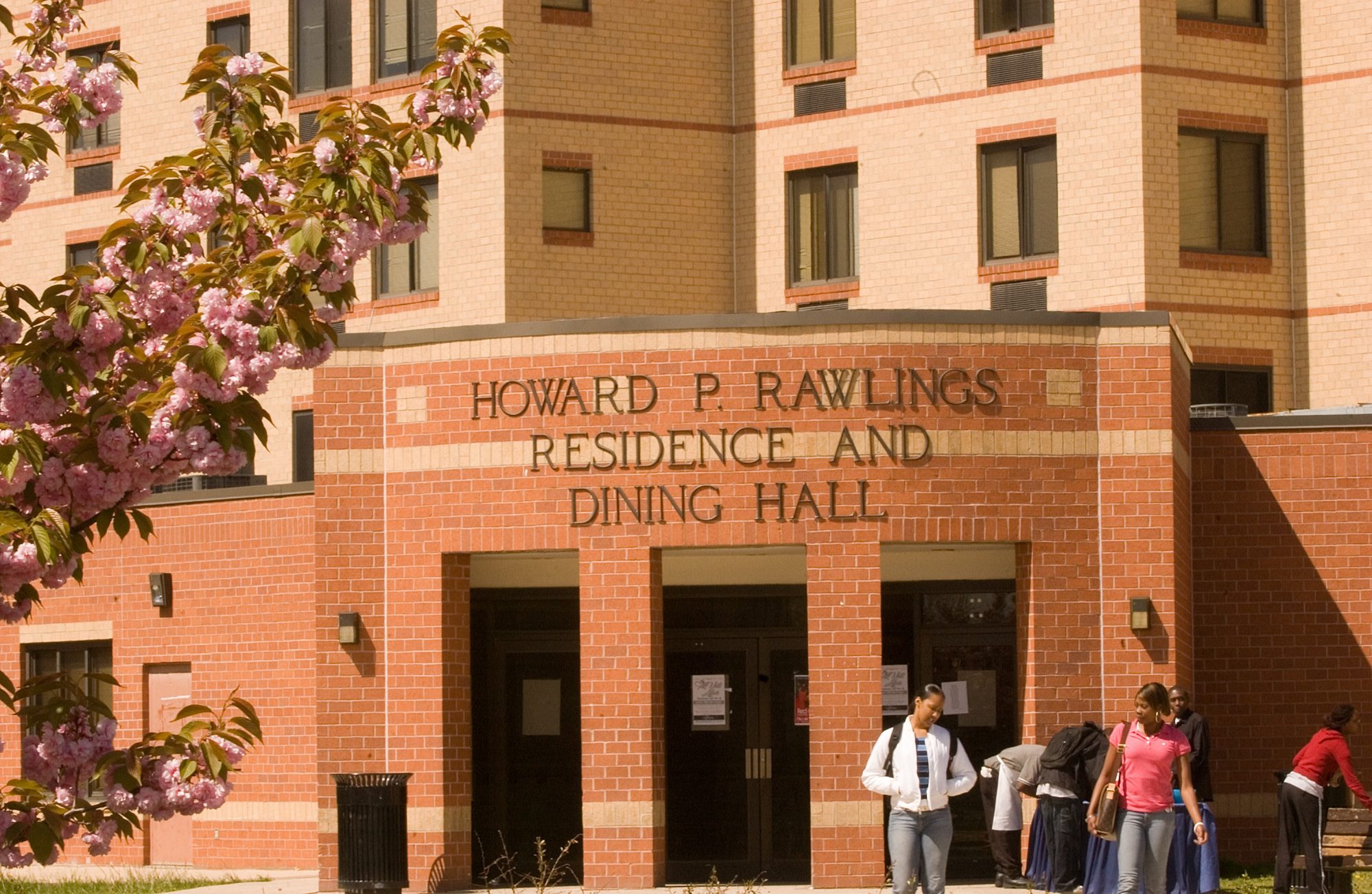
BALTIMORE – During the public session of its FY 2019–2020 first quarter meeting, Morgan State University Board of Regents approved a plan for the University to enter into an agreement with the Maryland Economic Development Corporation (MEDCO) as part of an effort to add new student housing on-campus. The unanimous approval allows the University to address the critical need for increased student residential facilities by adding between 700 and 900 new beds to accommodate Morgan’s growing new and returning student population. Once the agreement is finalized, MEDCO will collaborate with the University to begin design and construction of an innovative, apartment-style residence facility to be located on Morgan’s South Campus, adjacent to the site of the Thurgood Marshall Apartment Complex. The projected completion date for the new construction is fall 2022.

“Morgan is growing, and with the continued increase of new enrollment coupled with the University’s high retention rate, the need for more student housing on campus has never been greater,” said David Wilson, president of Morgan State University. “The Board’s recognition of the challenges the University faces in meeting the needs of our students, and their support to take bold action now, will benefit scores of future scholars seeking a complete college experience in a contemporary campus environment and choose to pursue their educational aspirations at Morgan.”

Rawlings

The University evaluated a number of options to build new housing on its campus. From that evaluation it was determined that Morgan would need to align with a proven partner with a track record of being able to successfully work with public institutions to build residential student housing. Partnering with MEDCO, with its history of collaborating with Maryland-based universities and colleges, was the best viable option.

“We made the decision to partner with MEDCO on this student housing project to take advantage of their proven expertise and experience in producing a high-quality facility that meets the needs of our students,” said Sidney Evans, Morgan’s vice president for Finance and Management.

The agreement, when finalized, will mark the second such collaboration with MEDCO on a residential housing project. The first resulted in the construction of the off-campus Morgan View apartment complex. With the Morgan View project, MEDCO assumed ownership of the off-campus residence as well as the responsibility for financing, developing and managing the facility.

Under the proposed terms of the agreement for the new on-campus residence, Morgan has the option to have MEDCO retain and oversee a third-party management company to carry out the day-to-day operations, while closely working with the University to ensure project success. MEDCO’s operational oversight would potentially include monitoring occupancy and facilitating leasing agreements, evaluating the marketing strategy and reviewing and developing operating budgets, among other things. MEDCO has similar agreements with a number of other Maryland-based higher education institutions besides Morgan, including Bowie State University; the University of Maryland, College Park; Frostburg State University; Towson University and UMBC.

“The addition of a new apartment-type housing facility at Morgan is long overdue,” said Kevin Banks, Ph.D., vice president for Student Affairs at Morgan. “This new construction will go a long way in helping us address the growing demand for on-campus housing for our students and providing contemporary amenities that will enhance the living-learning experience.”

Once the new residence is completed and ready for occupancy, the University will begin plans for the demolition of the aging Thurgood Marshall Apartment Complex. The space where the complex once stood will be converted to green space for all of the campus community to enjoy.

About Morgan
Morgan State University, founded in 1867, is a Carnegie-classified doctoral research institution offering more than 125 academic programs leading to degrees from the baccalaureate to the doctorate. As Maryland’s Preeminent Public Urban Research University, Morgan serves a multiethnic and multiracial student body and seeks to ensure that the doors of higher education are opened as wide as possible to as many as possible. For more information about Morgan State University, visit www.morgan.edu.

National Urban League President Marc Morial Is Redefining Civil Rights In The 21st Century

When you attend the BLACK ENTERPRISE Black Men Xcel summit (BMX) next week, you will quickly understand why we celebrate the best of who we are. On the opening night, we will hold our annual Xcel Awards, hosted by AT&T, in which we will  pay tribute to timeless standard-bearers: Rev. Jesse Jackson, civil rights icon and Rainbow Push founder and president; Eddie Levert, soul-stirring crooner and member of legendary trio The O’Jays; and Jerome Bettis, NFL Hall of Famer and ground-breaking entrepreneur.

Among our honorees will also be Marc Morial, one of our nation’s most accomplished servant-leaders, who continues to uplift communities and transform countless lives nationwide as president and CEO of the National Urban League (NUL), the largest historic civil rights and urban advocacy organization. For more than 15 years, he has been a transformative force as the head of the 105-year old organization. In fact, you couldn’t find a more committed change agent who brings strategic brilliance, laser-beam focus, and magnetic, action-oriented leadership to his role. So many – including myself—have learned from his energetic, effective approach to some of the most daunting challenges facing people of color.

Here are nine ways Morial, a leading, full-throated activist, is working to redefine civil rights in the 21st century with a focus on closing the economic gap between white and black Americans.

racial wealth gap

Eugene Mitchell, Marc Morial, and Rev. Jesse Jackson at the Rainbow PUSH Coalition and Citizenship Education Fund’s 22nd Annual Wall Street Project Economic Summit in Feb. 2019

During his tenure, NUL has evolved to represent the gold standard among charitable organizations, experiencing record fundraising success with its five-year, $280 million campaign. Moreover, Morial has secured the BBB nonprofit certification, which has confirmed NUL as a leading national nonprofit, and the coveted 4-star rating from Charity Navigator, placing it in the top 10% of all U.S. charities for adhering to best practices like good governance as well as meeting its mission in a fiscally-responsible manner.

Under Morial’s stewardship, NUL launched an unprecedented $100 million, five-year “Jobs Rebuild America: Educate, Employ, Empower” initiative in 2013 to “address the nation’s employment and education crisis.” Bringing together federal government, business, and nonprofit resources, it developed initiatives in 50 cities across the country like the Urban Youth Empowerment Program to help young adults gain sustainable jobs and Entrepreneurship Centers to advance small businesses growth through the Urban League affiliate network.

Morial helped create the Urban Empowerment Fund to provide loans to “urban impact” businesses as well as designed NUL’s New Markets Tax Credits program, which has resulted in $1 billion in community debt and equity investment in minority-owned firms and other urban-based businesses.

He expanded the State of Black America, the NUL’s highly-regarded annual report which reveals benchmarks, thought leadership, and solution-oriented proposals related to racial equality in key areas such as economics, education, health, social justice, and civic engagement. It also includes the Equality Index™, a quantitative tool for tracking racial equality in America through the Black-White Index and Hispanic-White Index.

National Urban League

2019 National Urban League Annual Press Conference July 2019 (Facebook/National Urban League)

The son of the late Ernest “ Dutch” Morial, New Orleans’ first African American mayor, serving from 1978 to 1986, the younger Morial proved to be an effective and popular chief executive of the city within his own right. During his two terms as mayor (1994-2002), his broad multi-racial coalition has been noted for leading the 1990s renaissance of The Big Easy. As a result, he left office with a 70% approval rating.

He made an impact on the federal level through key appointments. For example, President Obama tapped him to serve as Chair of the Census Advisory Committee, a member of the President’s Advisory Council on Financial Capability, and on the Department of Education’s Equity and Excellence Commission. He was also appointed to the Twenty-First Century Workforce Commission by President Bill Clinton.

As an attorney, Morial won the Louisiana State Bar Association’s Pro Bono Publico Award for his legal service to the poor and disadvantaged. He was also one of the youngest lawyers, at age 26, to argue and win a major case before the Louisiana Supreme Court.

As a Louisiana state senator, he was named Legislative Rookie of the Year, Education Senator of the Year, and Environmental Senator of the Year, while authoring laws on a wide range of vital areas.

Throughout the years, he has gained well-deserved recognition for his impact across disciplines, being cited as one of the 100 most influential Black Americans by Ebony Magazine, one of the Top 50 Nonprofit Executives by the Nonprofit Times, and one of the Top 100 Black Lawyers in America, among others

Join us at the Black Men Xcel summit and you’ll discover even more milestones related to this remarkable leader.

This post was written by Derek T. Tingle, a writer at Black Enterprise, where it was originally published. It is published here with permission.

A Letter To The Freshmen: Dear Class Of 2023

Dear Class Of 2023,

Congratulations! You made it.

After all the adversities you may have faced; bullying, “roasting”, and for some of you, racists teachers and administrators who mentally drained you every day, you made it. My name is Dennis Richmond, Jr. and I am the Founder and Director of The New York-New Jersey HBCU Initiative. The mission of The Initiative is to educate students throughout the states of New York and New Jersey about the educational opportunities available at HBCUs. I’m an HBCU alum myself, having graduated from Claflin University with a Bachelor of Arts in African and African American Studies in 2017. 

After working with students for the past couple of years, I have heard so many different stories. Some of you are coming from very negative home environments. Some of you are starting school with children. Some of you are independent students embarking on this journey alone and you’re afraid. With all that said, I would like to offer you all some college advice, to keep you on the straight and narrow. A little something, something from the big bro.

First off, be sure to keep your academics first. Do not put anything on campus before your academics. I mean that. That’s the main reason you’re there. Yeah, it might seem cool to want to run to her dorm late night and “talk” to her, Bro, or to pull up on him over the weekend, Sis. But remember, you have class in the morning. It’s easier for a GPA to drop. It’s hard for a GPA to rise. Case in point, stay focused on school.

Second, don’t challenge every professor. I cannot stress this one enough. Some professor’s love a good debate. Others on the other hand, feel as if they know everything. Just listen and take notes, Bro. I verbally battled professors before, Sis. Believe me when I tell you it is not worth it. At the end of the day, it’s their classroom.

Third, remember that not everybody is your friend. Most college campuses, even those that have large student bodies, are “small”, in a sense of students knowing other students’ business. Be careful who you confine your thoughts in. If you have some personal issues or some secrets that you share with people, be sure that those people will hear you out, love you, and support you. I’m telling you, be careful who you kekeke with. Some people on campus are just Hi-And-Bye people. You know, people you say what’s up to, but don’t really chill with. There’s nothing wrong with that.

Lastly, live it up! Nah, for real. You made it to college! Have fun! College doesn’t last forever and believe me when I tell you that the time spent on campus truly does fly by. Now with all that said, relax, pray and/or meditate as needed, and have the time of your life.

Now go out there and handle your BI you heard!

This story was written by Dennis Richmond Jr., a contributor to HBCU Buzz. Richmond is the Founder and Director of the NYNJ HBCU Initiative.

Students ‘Cry Out To The Administration’: Central State Alum Starts Petition To Remove Trent Mays From University

A Central State University alumni started a petition with 70 signatures to the black university’s president, Cynthia Jackson-Hammond, that calls for the removal of Trent Mays from the school, HBCU Buzz has learned.

Trent Mays is a convicted rapist who played quarterback at CSU but not since last year.

Apparently, Mays was featured in the the Netflix documentary “Roll Red Roll,” which highlights toxic high school football mentality.

The school’s motto is “Change is Central,” but Rashida Haugabook started the petition in hopes of CSU creating real change, challenging rape culture at colleges and universities nationwide.

“The current students as well as many other young people have cried out to the administration at Central State University via Facebook, Twitter and have also reached out via other mediums,” the petition reads, adding, “Let’s convene here in this petition to make our voices heard.”

“CSU prides itself on civility yet has a convicted rapist walking around campus everyday. How are students to feel safe on this type of campus where they recklessly disregard the safety of their students? Trent Mays allegedly raped another student on campus earlier this year.”

Many students would like CSU to be a place where students feel safe. Unfortunately, students believe that won’t happen until Mays is removed from the school.

EDITOR’S NOTE: Trent Mays hasn’t been on the Central State University football team since last year. We apologise if any offence was caused by our mistake.

WordCamp In Africa – Learning Growing Collaboration

The increase of African students with tech skills
that are more advanced than HBCU instructors
will be a serious issue in a few years. African
students are participating in WordCamp and
KidsCamp conferences increasingly.

“In our fast-changing world driven by digital technology, it is important that every child becomes a creative actor of localized digital solutions, not its passive consumer”.
@ashuna112 #ACW2019 #AfricaCodeWeek

The increase of African students with tech skills
that are more advanced than HBCU instructors
will be a serious issue in a few years. African
students are participating in WordCamp and
KidsCamp conferences increasingly. HBCU institutions need to be prepared for students that already have coding, programming,
web development and digital business skills.

There is a rapid expansion of WordCamp
conferences in Africa, this magnificent
continent of resources both human and 
environmental. WordCamp conferences are seen growing, thriving and educating people with a passion not just for technology, but opening doors for business ventures, entrepreneurial opportunities, unheard of digital collaboration. The opportunities
to enable and empowering African entrepreneurs to share their Brands and find
new Niches and partnerships.

As Blogger, Micro-bloggers, content creator and
digital influencer for over 15 years, digital
impressions expand based on engagements.
That engagement builds with the increase of
involvement, engagement, collaboration and
sharing content. 

WordCamp allows rapid and sustainable growth
based on thought leadership digitally and
correspondingly with continued engagement at
MeetUps. Content creation is only limited by the creative minds that apply what is learned at WordCamp conferences and the growing
number of KidsCamp and YouthCamp conferences.

WordCamp is a casual and at the same time
professional conference where information is shared related to WordPress. WP is a free and open source personal publishing application that powers over 40% of the web. The immersion of Africa will rapidly
increase these numbers and allow for those African digital innovators to share their talents, gifts and knowledge. 

Africa is expanding the influence of knowledge and applied knowledge to grow new generations of thought leaders, digital dreamers, critical thinkers and
collaborations that will take place not just locally, but expand nationally and across the continent. 

Accompanying the traditional WC are KidsCamp
and YouthCamp components that encourage kids from 7yrs to 14yrs and YouthCamp from 15yrs to 17yrs. There are increased numbers of youth, teens and young Africans that are starting businesses and becoming digital innovators, influencers and digital business owners.  

WC conferences build relevant discussions and
information is applicable immediately during and after the conference. Networking is formidable because real people with real careers, professions, businesses, and real dreams are present to share and help others. Mentors in multiple areas can be found and the growing number of Internships helps to provide youth and teens with real world opportunities to apply and learn skills to build on.  

Meetups allow discussions to be continued and the building of PLN’s or Professional Learning Networks that help assist in connections, collaborations and building networks. 

The formats from lectures/presentations, speed talks, or lightning presentations, panels and interviews. Presentations are diverse sessions that incorporate slides and videos that can be accessed from the presenters web site or through  WordCamp channel on http://WordPress.tv after the conference. The
professional development opportunities continue and can be used at the convenience from home or through mobile devices.

The building of digital infrastructures that allow for strong and consistent connections is growing quickly because of the demands for access. Access to tech is not a privilege, it has become a right, as education is a human right, digital access to educational, business
and humanitarian information is a right of all Africans not matter their educational, economic, cultural or color. New laws are in place to make sure access if available and equitable. 

As a WordCamp blogger, advocate, speaker, organizer, volunteer and a the value for the cost of a two day and the growing three day conference pays for itself. Africans are seeing that their Brand grows rapidly and their engagements increase proportionally to
following others on Social Media platforms like
Twitter, Instagram and LinkedIn.

To keep up to date access WordCamp Central and WordPress TV for relevant and real information. 

Resources:
WordCamp Central 
https://central.wordcamp.org/

WordPress TV
https://wordpress.tv/

Follow William Jackson and Aida Correa
on the hashtag #thatwordcamplife or #thatwordpresslife