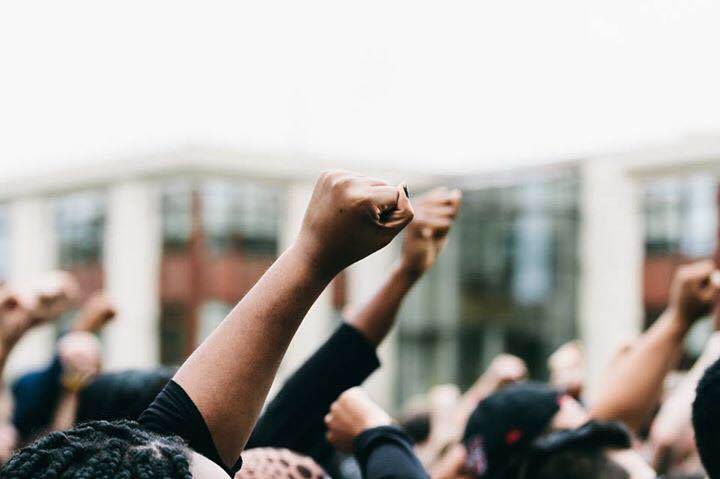
Do Black Lives Matter To The NCAA?

southern-football

Do Black Lives Matter to the NCAA, as long as these Black lives continue to create revenue? In today’s era of college sports it sure seems that way. African Americans have been more athletically inclined to become professional athletes in the NFL, NBA, MLB and even Olympians. However, many of these athletes, in order to go to the world class level of athletics, are first exploited of their talents through the NCAA system.

The issue at hand today is the inconsistent, untrustworthy, and morally bankrupt system that the NCAA is apparently proud to stand behind. Many of the African American athletes that goes through the NCAA system, and especially in the South often lead college teams on the field but stagger far behind in academics.

The NCAA recently created a television commercial stating that Black male student-athletes at Division 1 institutions graduate at rates higher than do Black men in the general student body. The statement has truth behind it if we are only speaking on the entire Division 1 level.

But, as it pertains to the conferences with actual winning football and basketball championships, million dollar bowl games, and the many Black Heisman trophy winners, it is another story.

According to Outkick The Coverage, across these 76 Division 1 universities, Black male student-athletes graduate at 5.3 percent points lower than their African American peers are not on collegiate teams. That is to say, nearly 50 percent of Black male student-athletes will not graduate within 6 years at these colleges.

It is clear to see that there is a divide between the NCAA and its dollar compared to the success of athletes both inside the classroom and on the field. The NCAA has basically taken the stance of “bare minimum.” Does the NCAA intentionally give these athletes just enough resources that they need to at least pass their classes, so that they will able to perform on game time day and continue the flow of revenue coming? Maybe.

However, graduation success and finishing through is solely up to the athlete.

But athletes are catching on to the NCAA’s game.

In late 2015, the African Americans players of the University of Missouri Football team participated in a sit out in light of the racial tension that had been plaguing the campus. They refused to participate in any game until the University’s president was removed from office, and he was, thanks to the “power” move of the athletes. Their belief was “Injustice anywhere is a threat to justice everywhere.” And based upon their actions and how they went about getting the attention of the school, it proves that without the Black Athletes the school, and more importantly the NCAA, will not be able to create the revenue it needs and wants.

At this point, the only way to catch the attention and receive proper change from the NCAA is to take away the “Black Magic.” What can we do to change this system? What can we do to make the playing field leveled?

Perhaps the NCAA should pay the players for their efforts. This would cost money, of course. But instead of doing this, the NCAA continues to choose to create grand, top notch training facilities instead giving athletes the false hope that they care.

So, to answer the question stated at the beginning, Black Lives Do Matter to the NCAA’s…wallet.

Indeed, without the talent of African American athletes there would be a drastic declined in revenue, this is not to take away from the talent of other racial backgrounds within these sports though. But it is to say that we fail to realize that Black athletes have more of the power in their hands, because they have less to lose than the NCAA.

All it takes is for a few, probably a lot more of courageous athletes to stand up and boycott playing altogether, at least until we can bring about equal change. Better yet, Black athletes should simply choose to play at HBCUs instead but that is another story.

34 HBCU Leaders Come Together In Support Of #BlackLivesMatter Movement

More than 30 historically black college and university (HBCU) presidents and chancellors has come together to denounce America’s gun violence problem in response to the shooting deaths of Alton Sterling in Baton Rouge and Philander Castile in Falcon Heights and the subsequent deadly cop ambush in Dallas that took the lives of five police officers. The 34 HBCU leaders have penned a letter taking a stand in honor of the Black Lives Matter movement announcing plans of the first-ever HBCU national symposium on gun violence. The following is the full text of the letter.

A man raises his arms at a rally during the National Action Network National March Against Police Violence in Washington December 13, 2014. Thousands of demonstrators gathered in Washington on Saturday for a march to protest the killings of unarmed black men by law enforcement officers and to urge Congress to do more to protect African-Americans from unjustified police violence. REUTERS/Joshua Roberts (UNITED STATES - Tags: POLITICS CRIME LAW CIVIL UNREST) - RTR4HWG2

We, the undersigned Presidents of America’s Historically Black Colleges and Universities (“HBCUs”) remain brokenhearted over the recent events that have taken place in Baton Rouge, LA, St. Paul, MN, and Dallas, TX. Our thoughts and prayers are with the impacted communities at large and the families who have lost their loved ones. These incidents have shaken our nation to its core and caused many people to question our country’s direction.

As people of deep faith and a unique sense of history, we know that senseless violence has never been the way forward in America. We are a society where, despite what many would lead you to believe, that which binds us to each other is far greater than anything that seeks to divide us. In the words of our President Barack Obama, “We are one people, we are one nation.”

HBCUs, by virtue of their special place in this nation, have always understood the hard work and sacrifices that must be made in order for America to live up to its ideals. From the moment that our doors first opened in 1842, the roles that our institutions have played were never narrowly confined to educating the men and women who sat in our classes and walked our campuses. Instead, ours was a much broader and more vital mission. We were charged with providing a light in the darkness for a people who had been constitutionally bound to the dark. Our very creation, existence, and persistence were, and always have been a duality of collaboration and protest. In this respect, America’s HBCUs were the birthplace of the idea that Black lives matter to our country.

Expressing our support for the idea that Black lives matter is in no way a declaration that other lives do not matter as well. As leaders of some of the most diverse colleges and universities in the country, we are well steeped in the value of open and inclusive communities. It is because of our experience with building strong and diverse communities that we unite, and invite all Americans to join us in the following series of actions that are intended to help propel our country forward to become a more perfect union:

1. The first-ever HBCU National Symposium on Gun Violence.

2. A commitment to raising the awareness of the debilitating impact of trauma on the lives of those who have been exposed to loss as a result of gun violence.

We know that none of these activities will bring back the lives that have been lost. Our hope, however, is that these efforts will foster dialogues that help to accelerate the creation of an environment where all human lives are valued equally and 2 discrimination based on one’s skin color, gender, and economic standing will become a relic of the past.

As we move forward in our endeavors, we will forever remember the lives of those slain and the loss their families have experienced. While we pray that their hearts and minds will one day know peace, we pledge to aggressively continue our efforts so that these types of prayers will one day become unnecessary.

With love and in solidarity,

Makola Abdullah, Virginia State University

Roslyn Clark Artis, Florida Memorial University

David L. Beckley, Rust College

Juliette B. Bell, University of Maryland Eastern Shore

Colette Pierce Burnette, Huston-Tillotson University

Mickey L. Burnim, Bowie State University

William B. Bynum, Jr., Mississippi Valley State University

Mary Schmidt Campbell, Ph.D., Spelman College

Lady June Cole, Allen University

Tashni-Ann Dubroy, Shaw University

George T. French, Jr., Miles College

Rosalind Fuse-Hall, Bennett College

Cynthia Hammond, Central State University

Logan Hampton, Lane College

Forrest Harris, Sr., American Baptist College

Fitz Hill, Arkansas Baptist College

Anthony L. Jenkins, West Virginia State University

Brian Johnson, Tuskegee University

Paul Jones, Fort Valley State University

Walter M. Kimbrough, Dillard University

Marsha V. Krotseng, Bluefield State University

Elmira Mangum, Florida Agricultural and Mechanical University

Ronald Mason, University of District of Columbia

Eddie N. Moore, Jr., Norfolk State University

Charlie Nelms, Group Mentor, Ret. Chancellor, N. Carolina Central University

Alfred Rankins, Jr., Alcorn State University

Kevin Rome, Lincoln University

Kent J. Smith, Jr., Langston University

Roderick Smothers, Philander Smith College

Michael J. Sorrell, Paul Quinn College

Dwaun J. Warmack, Harris-Stowe State University

Harry L. Williams, Delaware State University

David Wilson, Morgan State University

John Silvanus Wilson, Jr., Morehouse College

Why HBCU? Watch This To Find Out.

WhyHBCU is a nationally circulated awareness campaign that empowers and inspires youth to become apart of such institutions and invest in a better understanding and awareness of their own communities and culture through various initiatives. 

WhyHBCU spotlight individuals around the nation to share their story about how they ended up at an HBCU. Through their work, WhyHBCU hopes to encourage more college-bound students to consider attending HBCUs.

Will Morehouse Grad And Pastor Jamal Bryant’s New Talk Show Be A Hit?

Image result for rev jamal bryantThe Reverend Jamal Harrison Bryant, senior pastor and founder of The Empowerment Temple, and also a graduate of HBCU Morehouse College in Atlanta, joins associate pastor John Gray, Dr. E. Dewey Smith Jr. and Pastor Orrick Quick on a new daytime talk show called The Preachers that is unlike anything else in TV.

The show premiered last week.

From Madame Noire:

“In its debut episode, The Preachers sat down with actress, comedian and former co-host of The View Sherri Shepherd to learn more about her new role on the NBC comedy Trial & Error. During their time together, the hosts asked Shepherd how she feels raising a special-needs Black son in a social climate where police brutality runs rampant. Shepherd’s response allowed for both herself and the hosts to touch upon the tragic deaths of Alton Sterling, Philando Castile and the five Dallas police officers who were killed by a sniper during a peaceful Black Lives Matter protest. Here’s a small taste of that discussion [above].”

According to Fox News, The Preachers “offer spiritual take on today’s topics” and the TV station currently has the talk show set up on a three week test run.

What do you think of The Preachers? Let us know and comment below.

Head over to Madame Noire to read more.

Dillard Prof, Terri Cole To Use Melania Trump’s Speech To Teach Students A Lesson

On Tuesday, Dillard University professor of English Terri Cole tweeted that she will use Melania Trump’s speech at the Republican National Convention in Cleveland, which appears to be nearly word for word from First Lady Michelle Obama’s 2008 convention speech, as a lesson to show and teach her students on some of the common types of plagiarism during the new academic year at the black college next month.

“Actually, I’m kind of excited about using Melania’s speech in teaching first year composition this Fall,” she said. “It’s often hard to explain to students that plagiarism isn’t always just copy and paste. But using same ideas, in similar order, to same rhetorical effect is also plagiarism.”

Cole spoke with The Chronicle about plagiarism. Check out some of the highlights of the interview below.

Image result for dillard university terri cole
via WNYC.org

On teaching her students to not plagiarize their work:

“For me, and I teach freshman composition, it’s trying to unteach the systematic five-paragraph essay, the thoughtless writing, the “just put 500 words on the page and get it done.” So I’m trying to shift them from “Oh, I have to write something” to “Oh, I’m participating in a conversation and I have something I want to say.” If I can get them on the team of “I want to have thoughtful conversations,” then it automatically fixes the other stuff. I try to shift them into a different goal.”

On what she hopes her students will learn from Trump’s plagiarism:

“I think the major piece that comes across to students, regardless of what their major or their eventual field is, is to get your house in order before you go to the big stage.

Melania Trump’s plagiarism, if that had happened in my classroom, it wouldn’t have been a big deal. We wouldn’t go to student services. You’d come to my office, you’d do a rewrite. But this isn’t freshman comp. This is the Republican National Convention.

To me, the bigger red flag of this whole thing is actual money went into this, there were meetings, there was a team of speechwriters involved in some way, shape, or form. They’re experts, not Melania Trump, but experts in this field did this and missed it.

The lesson for students is that this is the same reason that you don’t write your paper the night before and then hand it in, because if you aren’t paying attention, if your cards aren’t in order, and then you send your work off to other people’s eyes, you look stupid because you haven’t done your due diligence.”

Cole also discussed the difficulties of being an English as a Second Language student, how she personally deals with plagiarism in the classroom and creative ways to get students more engaged in writing essays. Head over to The Chronicle to read more.

New Shoe Company Sole Savers Is More Than Just A Stylish Flat

Melodie Narain and Teresa Thomas are a mother and daughter duo who have partnered together to address the concerns of foot discomfort. Melodie’s inability to no longer wear heels, and Teresa’s several knee surgeries, sparked an idea to launch a company that addressed the needs of avid high heel consumers, thus creating Sole Savers.

Sole Savers, based out of Washington, D.C., provides a stylish rollable flat that acts as a comfortable back up to high heel shoes. The flat comes in 9 different colors and is compact, allowing the shoe to provide its customers with a level of convenience. Vice President, Teresa, believes the shoe would be especially perfect for college students.

“You can wear the shoes as you run across campus and use the sole savers bag to transport your books,” she says. “If a college student has a job and/or internship, you can slip the flats on during the work day.”

sole savers

For the company, the shoe not only provides simple comfort, but also caters to reducing health risks. Sole Savers CEO, Melodie, explains, “A lot of people don’t realize that heels can damage our feet. The longer you spend wearing a pair of painful heels, you will begin to deform your feet and start to do nerve damage. Having an alternate pair of shoes is a smart move for any woman.”

Sole Savers believes that the more women begin to protect their feet, the less their chances are of having negative foot, ankle and knee complications later in life.

In addition to comfort and protection, the company also works to partner with the community by providing financial contributions to various charities.

“What differentiates Sole Savers from other companies is that we are a philanthropic focused company. We try to pair with different charities, who aren’t as well known to provide assistance,” says Melodie. “For example, we paired with Remember Betty, a smaller charity that helps people with the financial aftermath of breast cancer.”

The company truly believes in their mantra “Every Sole has a Soul”, as they have used this way of thinking as motivation to continue to spread their monetary support.

Both Melodie and Teresa recognize a need for an increase in entrepreneurship and more advocacy of African-American businesses. “We encourage other people to follow their dreams and to start their own businesses. We want people to support one another as well as support small and minority owned businesses.”

As small business owners, both Melodie and Teresa understand the difficulties of jumpstarting a successfully business. However, this hasn’t stopped their goals of expanding their company.

Currently, the duo is developing another comfort shoe to add to their current line. The company is also seeking opportunities to include their flats inside major department stores across the nation.

To meet and support the Sole Savers team, the company will be participating as a Black Alumni Networking Expo vendor on August 13, 2016 from 11 a.m. – 2 a.m. The Black Alumni Networking Expo is a ticketed event and will take place in Arlington, Virginia.

Sole Savers PArt 2

To learn more about Sole Savers and/or purchase a pair of stylish flats, please visit www.solesavors.co

Morehouse Man Spike Lee Blasts Omarosa For Joining Trump Campaign

Perhaps we spoke too soon.

We recently covered the news of ex-Apprentice star Omarosa Manigault and her new gig as director of African-American outreach for the Donald Trump presidential campaign.

More on the Buzz: A Former Miss CSU, Omarosa, Named Head Of Black Outreach For Trump Campaign

“We can only imagine what other black celebrities might think about this news, or how she even plans to win a virtually losing game.”

Well, one black celeb is not happy at all with Omarosa’s latest move. In fact, “You’re fired,” Spike Lee would say to Omarosa.

Image result for spike lee omarosa

The Morehouse man recently took to his Instagram page to blast fellow HBCU alum Omarosa (Central State University), saying he is now “looking at her sideways” and said she will be giving “out free Popeye’s chicken with sides to deliver the black vote to Trump.”

“She’s never been a nice person, so not surprised,” one Instagram user commented on his post.

Welp. We hate to say we told you so, but, yeah…

Check out what he said on Instagram below.

https://www.instagram.com/p/BICwxSZhfrj/

The Rising Black LGBTQ Student Population At HBCUs

Added social pressure for African American LGBTQ (lesbian gay, bisexual, transgender, and questioning) individuals is not just at religious institutions; “We have to also look at institutions of higher learning, especially historically black college and universities (HBCUs) in fostering inclusion,” says Sharon J. Lettman-Hicks, Executive Director and CEO of the Washington, D.C.–based National Black Justice Coalition (NBJC). This civil rights group is committed to supporting public policy that empowers black LGBTQ people and families to live their most authentic lives without fear of discrimination, bias, stigma, or violence.

With this commitment in mind, NBJC launched its HBCU LGBTQ-Equality Initiative in 2010 to improve the overall capacity for HBCUs to provide their students and community—especially the black LGBTQ populace—with a 21st century education in securing a welcoming and affirming environment. The following year, nine HBCUs held a summit at Spelman College to address issues facing LGBTQ students. The goal was to break the silence on a subject considered taboo at most black college campuses.

Bringing About Institutional Change at HBCUs

NBJC recently appointed a full-time program manager for its HBCU Initiative to lead outreach efforts. Trinice J. McNally, a Bethune-Cookman University alumna, assumed the new role, bringing her experience as a former student affairs professional advancing LGBTQ/SGL equality through institutional change. She served as coordinator of the LGBTA Resource Center at North Carolina Central University in Durham, North Carolina, which is the second of three HBCU’s in the nation to have an LGBTA resource center and the first in the state.

“Central to NBJC’s mission is to educate and expand the knowledge of African American communities about the issues impacting the lives of black LGBT people, in order to accord dignity and respect to all black people and families,” says Lettman-Hicks. “Trinice is fully equipped to strategically lead our efforts to empower HBCUs to serve their LGBTQ/SGL population.”

The Rising Black LGBTQ Student Population

Lettman-Hicks notes that HBCUs develop many of the future leaders of black America as part of its core success story. With more than 300,000 students, mostly black and of African descent, there is no data available to establish how many of those students self-identify as LGBTQ/SGL. Additionally, there are minimal support structures and policies for LGBTQ/SGL people within the 100+ HBCUs focused primarily on advancing black America.

“Being afforded the opportunity to lead NBJC’s HBCU initiatives is simply ‘happiness made tangible’ as an HBCU graduate and someone committed to the advancement of LGBTQ/SGL people of color,” says McNally. “I look forward to crafting and providing the tools our HBCUs need at the intersection of racial and LGBT equality to create institutional inclusion of LGBTQ/SGL and gender nonconforming people on these campuses.”

This post was written by Carolyn M. Brown, a writer at Black Enterprise, where it was originally published. It is published here with permission.

A Case Of Mistaken Identity Turned This HBCU Alum Into Target

Micah David Johnson, a graduate of historically black Huston-Tillotson University in Austin, and also a member of Kappa Alpha Psi Fraternity, Inc., spoke with Rolling Out about being wrongly identified as a suspect in the deadly Dallas ambush that left five police officers dead and six others wounded on July 8. Some highlights of the interview are below.

If he received an apology from the freelance journalist who falsely accused him:

“Last night before I went to bed I checked and basically he had been apologizing all day. My cousin went to high school with the actual shooter, so she was like you’re trying to ruin my family’s reputation and that he could get someone hurt. I tweeted him and told him that was a picture of me and all he said was that he had been apologizing all day. He was saying everybody was [perpetuating] my image by posting and sharing my picture on social media. Granted that’s a good point but I don’t know who [had] seen the picture, in the city or in the nation. Just because he deleted the picture, didn’t mean that the damage hadn’t already been done.”

If he has any comments for those who have been misinformed about him:

I would like to tell them that my name is Micah David Johnson and not Micah Xavier Johnson. I am a proud, young Black man, [who is] a graduate of Huston-Tillotson University and Shepherd University. I am a compassionate man who wants to bridge the gap [between] people.

Johnson also discussed where he was the night the attack took place, when he first realized his face was being circulated across social media, his hopes moving forward and more. Head over to Rolling Out to read the entire interview.

Rep. Alma Adams Talks HBCU Pipeline To Capitol Hill

Last week, Rep. Alma S. Adams and Rep. Mark Walker—both of North Carolina—announced the Bipartisan Historically Black Colleges and Universities Caucus Internship Program.

In its pilot year, the internship program was created to establish a pipeline of talented HBCU students from the “Tar Heel State” to Capitol Hill. A recent study found that African Americans make up less than 1% of top Senate staffers.

Because a lack of diversity isn’t confined to the Senate, Democratic Rep. Adams and Republican Rep. Walker (who is white) are taking action to increase staff diversity in the U.S. House of Representatives.

Image result for congresswoman alma adams

The Bipartisan HBCU Caucus Internship is the first of its kind. Two interns are participating this year: Vashti Hinton of North Carolina A&T State University and Quanetta King of Johnson C. Smith University. The interns will each spend four weeks in the Senate offices of a Democrat, and then four weeks in those of a Republican; totaling eight weeks.

Recently, Black Enterprise spoke with Rep. Adams to learn more:

BE: Why did you and Rep. Walker start the Bipartisan HBCU Caucus Internship Program?

Adams: We both want to get students more involved, so they can understand the workings of congressional offices. It was important to both of us that they get experience serving in the offices of Republican as well as Democratic senators. For young people interested in government and policy and want to be part of shaping that, this is an opportunity for them to learn how to put theory into practice.

The students in the program will receive a small stipend.

BE: What is the goal of the internship?

Adams: For students to learn as much as they can about Capitol Hill. They’ll get to attend committee meetings, briefings, and hearings; meet ‘the whip,’ meet with Rep. Nia Love, an African American Republican congresswoman, and meet lobbyists, advocates, and senior staff.

This program will also help us to develop a pool of candidates to recruit from. Ultimately, we’d like this program to help fill posts like research assistants and legislative directors.

BE: Are students required to study a particular major?

Adams: No, but they should be interested in learning about government, political science, and policy.

They must also be a full-time junior or senior in good standing academically and socially. We don’t have a set GPA—but the university may set one.

This post was written by Robin White Goode, a writer at Black Enterprise, where it was originally published. It is published here with permission.

A Former Miss CSU, Omarosa, Named Head Of Black Outreach For Trump Campaign

A former Miss Central State University wants to make America great again by reaching out to black voters for The Donald.

Omarosa Manigault, the ex-Apprentice star, and also a graduate of Central State in Wilberforce, is joining Donald Trump’s campaign as director of African-American outreach. According to recent polls, though, the now formally nominated 2016 Republican presidential candidate is not resonating with black voters in the swing states of Ohio and Pennsylvania receiving zero percent approval among that demographic, reported USA Today.

So, er, no doubt the Ohio native will have a lot of work to do in her new leadership role.

Image result for omarosa donald trump

On Monday, Manigault announced her new role as head of black outreach for Trump’s campaign, saying on MSNBC, “I am the director of African-American outreach for Donald Trump. I am proud to serve in that role. It is a very difficult time for our country, but the good thing I know is that I know Donald Trump at his heart … and I know what he can do in that role.”

When asked about Trump’s poor showing in polls among Ohio and Pennsylvania’s black voters, Manigault said she was undeterred by these numbers (or the lack thereof).

“I’m wondering who they polled because I just spent an amazing weekend with African-Americans for Trump, about 300 of them,” Manigault said.

“So, I look at the data but my reality is that I’m surrounded by people who want to see Donald Trump as the next president of the United States who are African-American,” she added. “More importantly, our community — you know, I grew up Youngstown, Ohio, just 40 minutes down the road — economically we’re suffering. We’re hurting. I went to my family reunion this weekend, and I know family members who are still unemployed, who are still looking for jobs. Looking for ways to fill their gas tank and fill prescriptions for their family. Donald Trump is focused on improving the conditions of African-Americans in this country.”

We can only imagine what other black celebrities might think about this news, or how she even plans to win a virtually losing game.

But do you, Omarosa. Do you.

Eye Disease Leaves Bill Cosby ‘Completely Blind,’ Reports Say

The man who brought us Dr. Heathcliff “Cliff” Huxtable and fictional historically black college Hillman College is reportedly “completely blind” as his world crumbles around him.

Bill Cosby, who created the hit TV show “The Cosby Show” and its spinoff that is inspired by student life at Howard University—“A Different World”—is living “in his own personal hell,” an anonymous source told the New York Post.

From Wonderwall:

“His alleged victims may take some solace in the fact that he’s in his own personal hell,” says the Post’s source. “He has been suffering from a degenerative eye disease and is completely blind … All his Hollywood friends have turned their backs on him.”

The insider went on to say Cosby, now 79, “is confined to his house in Pennsylvania, and the only person on his side is his wife, Camille, who is masterminding his defense,” adding, “His only friends are the small army of lawyers on his payroll.”

Cosby suffers from a degenerative eye disease called keratoconus. With all of the news on allegations of rape and court visits over the past year, his illness has only gotten worse.

Indeed, this news is sad.

And yet it is hard to imagine anyone feeling sorry for the man when, according to Wonderwall, the “number of women claiming he drugged, raped and/or sexually assaulted them has climbed above 50.”

Now more than ever Cosby needs Jesus.

ASU Grad LaChanee’ Davis Likes To See Others Shine

LaChanee’ Davis, a Cleveland native and former Stingette of Alabama State University Mighty Marching Hornets Band, is a busy woman. Earlier this month, Davis and her dance organization Buck Out Cleveland, which is dedicated to preparing students for the opportunity to successfully audition and become collegiate dancers at a historically black college or university (HBCU), had a successful workshop partnering with two-year captain of North Carolina A&T’s Golden Delight Auxiliary, Desiree’ Hunter in Cleveland, Ohio. The event promised to provide participants with the chance to expand in areas of field, stand routines and parades, and it certainly did not fail to meet high demand. Still hungry for success, Davis is raising the bar.

Check out our full interview with LaChanee’ Davis as we talk on her new dance organization, lessons learned from the black college experience and much more below.

How was Buck Out Cleveland started? I realized that a lot of dancers and dance teams in Cleveland loved the “majorette” dance style, but were not given the opportunity to learn directly from experienced HBCU dancers. Then I recalled my experiences; I ventured to Alabama State with the dream of becoming a Stingette and I was rejected in 2011. As I realized that maybe that season just was not my season, I became close to former Stingettes on campus that motivated me and steered me in the right direction and really helped me to successfully audition for the 2012 season. I believe that if I would have had the dance experience that I gained from those former Stingettes prior to auditioning for the team, my outcome probably would have been different. The feeling of rejection is something I would not wish on anyone. In Ohio, dancers know about HBCUs but are not able to actually get to the schools to attend the different workshops that they offer simply because of distance, time and money. Buck Out Cleveland allows for different workshops to come here, teach their various dance styles and leave a lasting impression on the students. We are not promising any student who participates with us that they will make the team of their dreams, but we do promise that the experiences that they gain from us will allow them to be competitive contenders at any audition process that they wish to partake in.

What are some lessons learned from your black college experience? Alabama State taught me some of the most important life lessons that have allowed me to flourish as the woman I am today: discipline, time management and general organizational skills. Being a Mighty Marching Hornet allowed me to learn the value of those three things. Through Tau Beta Sigma (Delta Theta Chapter), I earned the name “Organized Khaos.” When things are chaotic, I have always felt the need to organize them. But when I am placed in the middle of an unorganized situation, it makes me feel chaotic. My HBCU really made sure that before I walked across the stage that I was prepared for life after, including organization and professionalism in every aspect of my life and my career.

What motivates you to dance? Seeing others shine is what really keeps me motivated. I daydream sometimes of seeing some of the high school students I work with now become collegiate dancers and one day come back to Cleveland and motivate others to do the same thing I did. Although I have grown to be comfortable in the background while encouraging those that are passionate about dancing, I am aware that I sometimes have to step up to the front in order to guide and cultivate the talents of the students. That alone keeps me dancing, constantly trying to make sure that I am at my best to teach them to be better than the best.

How has social media and technology played a role in branding yourself? Social media has helped me brand myself starting from my first season as a Stingette. YouTube introduced me to the audience that I target today. I went from being addressed in the comments as some no name, dark-skinned girl who can “really dance in the first row” to people actually knowing my name and acknowledging my talent. I believe that more than anything people fell in love with the passion that radiated from me as I danced. I envisioned every game being my last, because I never took my gift for granted. That same following pored over into Instagram and Facebook. Although I am no longer a performing Stingette, some of those same followers still support my dream and vision today and know that working with me is worth their time and energy, based off of what they already know I am capable of from when they used to watch me on the first row on YouTube videos. We live in an era where people are forming careers from YouTube videos, Instagram posts, vines, and many more forms of social media. I never thought that I would be included in that form of entrepreneurship, but I am thankful for every post and repost that got me to this point and will take me further.

What advice would you give to those wanting to follow in your footsteps? There has been so many times where I wanted to quit. Mainly, I wanted to give up simply because I felt as if I was not accepted, or I just was not good enough. Then I had to realize that I had a purpose before anyone else had an opinion. I put on my blinders and I continued to take consistent steps towards what I wanted. If anything else came along that distracted me from what was important, I cut it loose and told myself to focus. I am not exactly where I want to be but I am close simply because I mapped out what needs to be done and eliminated what did not fit in that equation. My advice for others would be to set a goal, research and take the necessary steps towards that goal, conquer that goal and inspire someone else. It is a never ending cycle.

Buck Out Cleveland is also currently looking for different workshop instructors from various schools to host classes like Simone Hurd (Central State University), Desiree’ Hunter (NCAT) and Asia Martin (ASU) did as well as future sponsors to partner with. If you think you are interested, and want stay connected for more information about events and workshops contact LaChanee’ Davis at 216-714-BUCK (2825).

Check out upcoming dates and events for Buck Out Cleveland:

Buck Out Cleveland Partners with Asia Martin

Legendary? Indeed! It has been confirmed that Buck Out Cleveland will be hosting an unforgettable workshop with Alabama State University’s two year captain and 2016 choreographer, Asia “Slaysia” Martin.

Mark your calendars for July 29, 2016 in Cleveland, Ohio! Surrounding teams are advised to pre-register now, as the event will not be open to the public until community and high school teams are given the chance to pre-register first.

Pre-Registration Form

216 Buck-Off: Dance Competition

We are currently preparing for our biggest event yet: The 216 Buck Off. This event is a dance competition scheduled to take place Saturday, September 3, 2016. It is our goal that every year, starting this year, we host this competition with a different dance line, around the Cleveland area, to bring in more funds to each team and promote them all individually. We also will believe that the funds we raise from this year’s event will help Buck Out Cleveland help dancers from Cleveland and surrounding areas venture off to college with scholarship opportunities offered by our organization. We invite you and your team to submit a participation request below to compete in this year’s first annual competition (majorette dance style only). Click the link below to complete the necessary to confirm your team’s reservation in the competition.

Dance Competition Registration Form

You can follow Buck Out Cleveland on social media, Facebook, Instagram, and YouTube. Please send all inquiries via email here, BuckOutCleveland@gmail.com.

Wiley College To Attend Inaugural Convening Of Second Chance Pell Pilot Program

Image result for second chance pellMarshall, Texas — Wiley College President Dr. Haywood L. Strickland and key staff members are in Washington, D.C. today attending the inaugural convening of the Second Chance Pell Pilot Program, which allows incarcerated students to receive federal Pell Grant funding for postsecondary education. Last month, the U.S. Department of Education announced. Wiley College as one of  69 selected colleges and universities that will provide postsecondary education to nearly 12,000 students in more than 100 state and federal prisons nationwide. Wiley  was selected to participate in the program out of more than 200 applicants in 48 states.

“Wiley College is committed to the principle of educational access, and on our campus, we believe in second chances when people are equipped with the tools to succeed,” said Dr. Strickland. “Education is a powerful tool. It can alter the course of a life from one filled with negativity, crime, and repeated mistakes  to one filled with  hope and fulfilled promises of  positive change.”

In 1994, Pell Grant eligibility for students in state and federal prisons was eliminated as part of the Violent Crime Control and Law Enforcement Act. Last year, the U.S. Department of Education announced the Second Chance Pell Pilot Program to restore educational access for some of those individuals, improving their chances of successful and productive reentry after they are released.

The convening, which is hosted by the U.S. Department of Education, the U.S. Department of Justice’s Bureau of Justice Assistance, and the Vera Institute of Justice (Vera), features keynote presentations by Deputy Attorney General Sally Q. Yates and U.S. Department of Education Secretary John B. King, who will also moderate a panel of students describing their college experiences in prison.

During the day-long conference, postsecondary and correctional leaders from the selected pilot programs will have the opportunity to share ideas and hear from leaders in the field of correctional education in preparation for developing and implementing new programs or expanding existing ones.

“Expanding educational opportunity for people who are incarcerated not only improves their lives, but strengthens our communities by preparing them to contribute to society rather than return to prison,” said Fred Patrick, director of Vera’s Center on Sentencing and Corrections. “We are thrilled that Wiley College is a partner in this important initiative to restore and expand access to college in prison.”

Working with three facilities in Louisiana-St. Gabriel Department of Corrections, Winnfield Correctional Center, and Madison Parish Detention Center- Wiley College will offer the Associate of Arts Degree,  the Bachelor of Arts Degree, and the Bachelor of Business Administration Degree in disciplines such as  Criminal Justice, Business Administration, Hospitality and Tourism, Interdisciplinary Studies (various concentrations), and Sociology that are designed to be completed in two to four years, respectively.    Courses will be offered online via a portal and Wiley faculty and advisors will make periodic visits to the correctional facilities.

As a part of the re-entry plan for graduates, Wiley College will track job placement outcomes of all Second Chance Program graduates every six months for five years.

With support from the U.S. Department of Justice, Bureau of Justice Assistance, Vera is providing technical assistance to the selected Second Chance Pell sites as part of the Expanding Access to Postsecondary Education Project. The project aims to facilitate the implementation and scaling up of quality higher education programs in prisons and those that work with students after they return home, and to assist with the development of policies, procedures, and practices to increase the participation of incarcerated and formerly incarcerated individuals in these programs.