
Team of HBCUs Gets $3M for Semiconductor Research

Seven HBCUs have secured a $3 million NSF grant to advance semiconductor research and enhance workforce development.

In an achievement aimed at advancing semiconductor research and enhancing workforce development, researchers from seven Historically Black Colleges and Universities have secured a three-year, $3 million grant from the National Science Foundation.

This initiative is part of the NSF’s $10.5 million inaugural Advancing Research Capacity at HBCUs through Exploration and Innovation Ideas Lab. ARC-HBCU aims to foster interdisciplinary research in science, technology, engineering, and mathematics at HBCUs.

Central State University will lead the “Partnership for Advancing Research Capacity in Semiconductors at Historically Black Colleges and Universities” project. The collaboration includes Fayetteville State University, Hampton University, Alabama Agricultural and Mechanical University, Meharry Medical College, and Coppin State University.

NC A&T Semiconductor Researchers

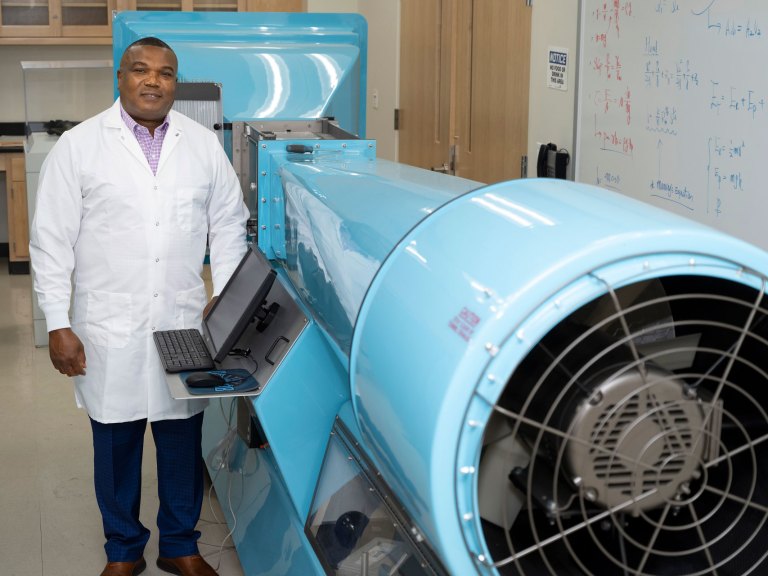
NC A&T will receive $688,000 over the grant’s three-year duration. Michael Curry, Ph.D., and Jerald Dumas, Ph.D., NC A&T Department of Nanoengineering at the Joint School of Nanoscience and Nanoengineering faculty members, are spearheading efforts focused on sustainable biomanufacturing and workforce development. 

Despite previous funding attempts, disparities remain between HBCUs and predominantly White institutions regarding research capabilities. “Less than 10% of HBCUs are considered R2 institutions and are equipped with the appropriate resources and funding that supports the capacity for high-impact research,” Curry explained.

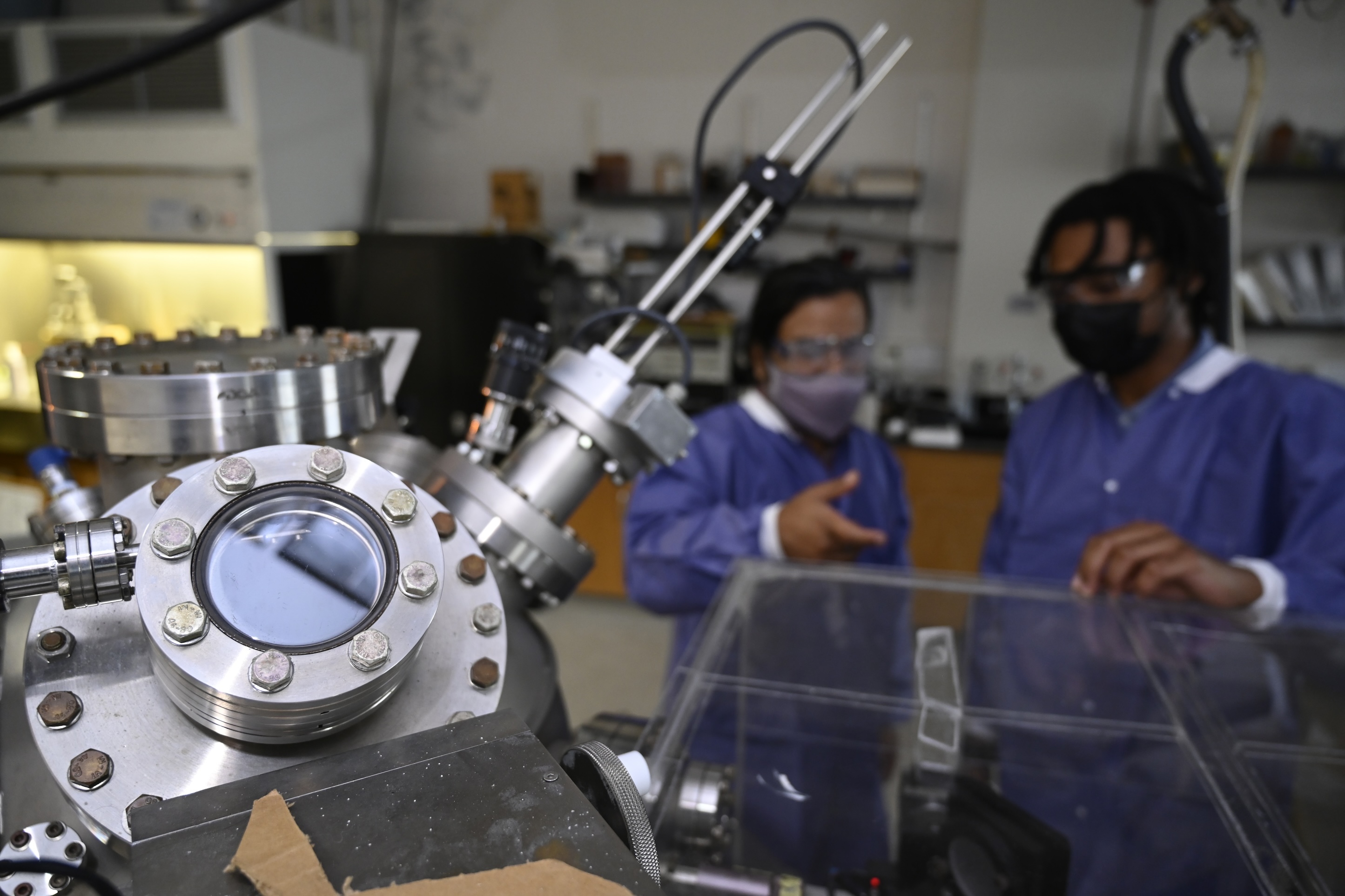
Both researchers are committed to addressing these inequities. Dr. Curry specializes in sustainable biomanufacturing using plant-based materials, while Dr. Dumas is establishing a bio-inspired polymer engineering lab. Their collaboration aims to develop processes to mitigate the waste created during semiconductor manufacturing.

“We have to have a way to deal with that waste, given the push to increase production. ” Curry said. “Part of our efforts is to lead the development of technology and mechanisms by which we can sustainably develop tech that can mitigate or remediate the waste that will be generated.”

A significant aspect of the grant is its emphasis on workforce development. The team plans to introduce certificate programs and training opportunities to build a skilled workforce at varying educational levels. “My passion is entrepreneurship and learning,” said Dumas. “Grants like this one is the perfect opportunity to provide training not only to faculty but to students as well.”

“The semiconductor industry is going to require a lot of the workforce that doesn’t necessarily need an advanced degree, but maybe they need a certificate, a reskilling, so they can potentially change careers to an incredibly vibrant and emerging field that will have a huge impact on our nation’s economy,” added Curry.

Delaware State University Celebrates New Buildings With Beam Signing 

Delaware State University celebrated a construction milestone of its Early Childhood Innovation Center with a beam-signing event.

The construction of the Early Childhood Innovation Center at Delaware State University is officially halfway complete. University officials and state education leaders gathered for a beam signing event on Sept. 25th to commemorate this milestone. This occasion allowed attendees to leave their mark on a steel beam of the two-story facility.

Among those present were DSU President Tony Allen, Delaware Secretary of Education Dr. Mark Holodick, ECIC executive director Dr. Kim Krzanowski, DSU Education Department Chair Dr. Shelley Rouser, and members of the DSU Board of Trustees and other university and state officials. 

The Early Childhood Innovation Center

Dr. Holodick highlighted the collaborative effort that has brought the ECIC project to fruition. “It came about through partnerships between the Governor’s Office, the state Department of Education and Delaware State University, early childhood advocates and experts, all working to plan for an Early Childhood Innovation Center that does an outstanding job of preparing professionals to work with young children, while simultaneously providing a space for our youngest learners,” he stated.

The ECIC, projected for completion by March 2025, will serve multiple functions. The first floor will house DSU’s Early Childhood Lab School, while the second floor will accommodate the ECIC itself. This center aims to elevate the standards of early childhood care by providing essential training to childcare providers, enabling them to become certified as child development associates.

President Allen emphasized the project’s importance. “This is making sure that our childcare providers in the state have the right education and training, something that they have been wanting and deserve,” he said.

Dr. Rouser expressed enthusiasm about the anticipated impact of the ECIC. “The beam that is being signed today represents not only support to this building, but also the support that is going to happen inside of this building,” she remarked. “Our youngest learners – our little Hornets – are going to get the support they need for a strong foundation to take them to K-12 and beyond.”

DSU’s Agriculture Building

The ECIC is not the only construction project underway at DSU. Work has begun west of the site on a new agricultural academic building. The building will feature innovative design elements such as living walls and green roofs. Dr. Cherese Winstead Casson, dean of the College of Agriculture, Science and Technology, noted that the building will focus on research, teaching, and community engagement while utilizing advanced technology.

“It will prioritize experiential learning and flexible research environments to accommodate community stakeholders through strategically designed collaborative spaces,” said Casson.

The 15,000-square-foot-building will include lab spaces, interactive classrooms, auditoriums, a demonstration kitchen and a 21st century emerging technology center. The project is slated to be done in June 2025.

Simmons College of Kentucky Unveils New Residence Hall in Historic Ribbon Cutting Ceremony

Simmons College of Kentucky is celebrating the grand opening of its new residence hall, marking a historic milestone.

Simmons College of Kentucky is celebrating a significant milestone in its rich history with a ribbon-cutting and dedication ceremony for its new residence, which took place on Thursday.

Simmons College says the opening of this new residence hall symbolizes an investment in student living conditions and reinforces the college’s ongoing legacy of providing a holistic and enriching educational experience.

The ceremony commemorates the completion of the residence hall’s remodeling and unveils ambitious plans for future construction and expansion. In a remarkable announcement during the program, the college revealed a multi-million dollar donation from a private benefactor. This generous contribution aims to enhance Simmons College’s mission of offering modern, accessible housing options for students while supporting broader development initiatives.

“This is a historic moment for Simmons College and for our community,” said Dr. Kevin W. Cosby, President of Simmons College. “This residence hall is not only a place where students are housed but a foundation for future leaders to grow, learn, and shape the world around them.”

The new residence hall is Simmons College’s first in over a century. It features modern amenities for Simmons College students.

Future construction plans include additional academic spaces and state-of-the-art facilities tailored to support the academic journey of students. These developments align with Simmons College’s overarching goal of expanding its campus footprint to foster a more conducive learning environment.

Attendees of the ribbon-cutting ceremony had the opportunity to tour the newly opened facility, gain insights into the college’s ambitious development projects, and hear from President Cosby and other influential community leaders. 

Hampton University Celebrates Alumnus on Historic Promotion to Four-Star General

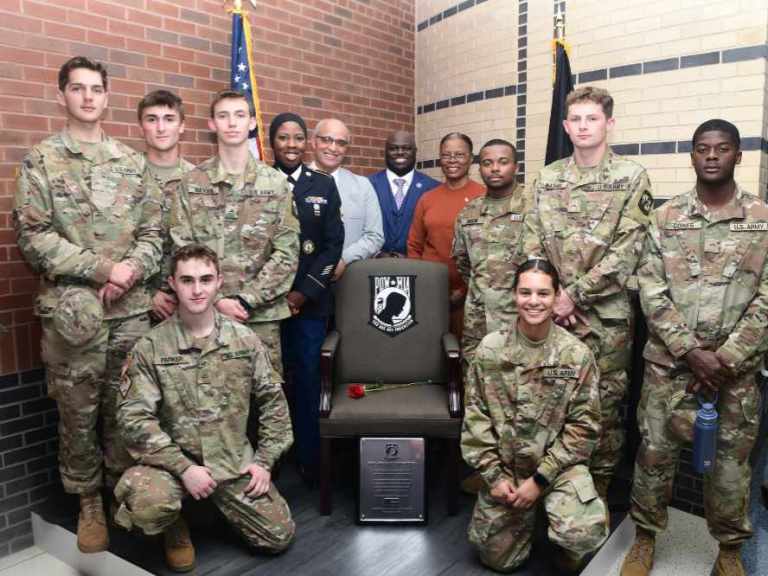
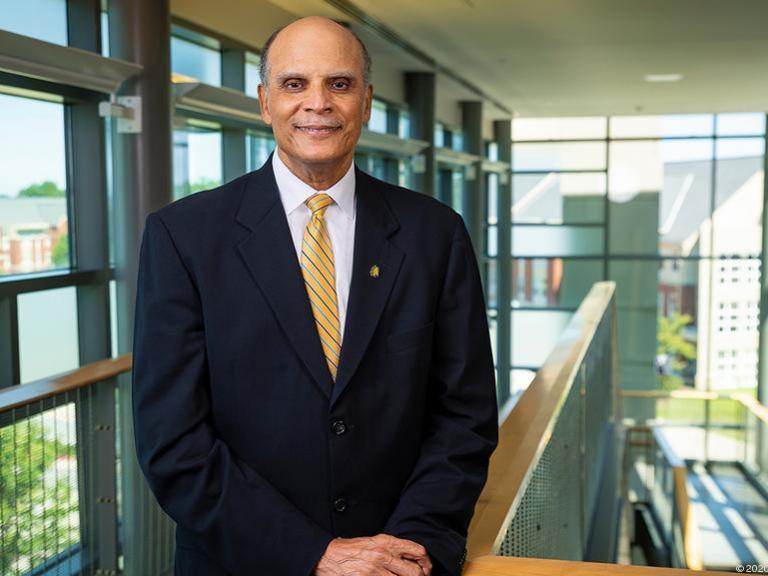
Hampton University proudly celebrates Lt. Gen. Xavier T. Brunson’s historic promotion to four-star General, which marks him as the new commander of U.S. Forces Korea.

Hampton proudly celebrates the remarkable achievement of its alumnus, Lt. General Xavier T. Brunson, who has recently made history with his promotion to the rank of four-star General in the United States Army. This significant milestone designates him as the new commander of U.S. Forces Korea, where he will succeed General Paul LaCamera and take command of approximately 28,500 U.S. troops deployed in South Korea. General Brunson will oversee critical commands, including the United Nations Command and the Combined Forces Command in his pivotal role. He will focus on deterring North Korean aggression and ensuring regional stability.

“Hampton University is incredibly proud of General Brunson’s achievement,” said Hampton University President Lt. Gen. Darrell K. Williams (USA, Retired). “His remarkable leadership and commitment to our nation exemplify the values of excellence, service, and integrity we instill in every Hamptonian. His journey from our campus to one of the highest military ranks in the U.S. Army is a testament to the transformative power of a Hampton education.”

This promotion is not just a milestone in Lt. Gen. Brunson’s career, but also a significant step towards diversity and representation in military leadership. It positions him among a select group of African American military leaders who have achieved the highest echelons of command within the U.S. Armed Forces. 

Brunson’s Background

General Brunson, a 1990 graduate of Hampton University with a Bachelor of Arts in Political Science. He began his military career as a commissioned Infantry Officer in the U.S. Army. His trajectory includes notable command roles across both Conventional and Special Operations Forces. He participated in operations such as Operations Iraqi Freedom, Enduring Freedom, and Inherent Resolve. Alongside his undergraduate education, he furthered his education with a Master of Arts in Human Resource Development from Webster University. He followed that up earning a Master of Science in National Security Strategic Studies from the U.S. Army War College.

Over the years, General Brunson’s distinguished service has garnered numerous accolades, including recognition from various U.S. Army Regimental Associations and civic awards, such as the Omega Psi Phi Leadership Award. 

“General Brunson’s promotion is a beacon of inspiration for our students and alumni,” President Williams added. “It reminds us that the path to greatness is paved not only with ambition but also with a commitment to service. His leadership has touched countless lives, and his rise to this esteemed rank is a testament to his unwavering dedication to our nation’s security.”

ASU and Faulkner University Sign Agreement to Fast-Track Law Degrees

ASU and Faulkner University have signed an articulation agreement that allows students to earn a bachelor’s degree and juris doctorate in just six years.

In a groundbreaking initiative aimed at streamlining legal education, Alabama State University and Faulkner University held a joint news conference on September 24. The presidents of both institutions signed an articulation agreement that will allow undergraduate students at ASU to earn both a bachelor’s degree and a Juris degree in just six years. Traditionally, students pursuing both degrees would require a minimum of seven years to complete their studies.

Alabama State University is a public historically black university in Montgomery, Alabama.

The agreement was formalized by ASU President Dr. Quinton T. Ross, Jr., and Faulkner President Dr. Mitchell Henry, who signed the document before a crowd of enthusiastic students and academic representatives from both universities. This collaboration between ASU and Faulkner’s Thomas Goode Jones School of Law marks a significant advancement in educational opportunities for students aspiring to enter the legal profession.

“It is an honor today to stand before you on the cusp of our signing this legal document between our two outstanding institutions of higher education,” stated President Ross. “Today, we advance ASU’s mission of providing excellence, research, and service so as to develop our students to become global change-agents and create within them a positive ‘CommUniversity’ atmosphere, which supports one and all.”

Joining the presidents at the conference were Dr. Carl Pettis, ASU’s provost and vice president of Academic Affairs; Dr. Charles Campbell, dean of Faulkner’s Jones School of Law; and Dr. Tanjula Petty, ASU’s vice president for institutional effectiveness, strategic initiatives, and transformation, who played pivotal roles in orchestrating the agreement.

President Henry expressed pride in collaborating with ASU, noting its historic legacy and impressive alumni. “With this agreement that we have consummated today, we expect that your students who will be a part of this new program to continue making history for your university,” said Henry. 

Alabama A&M University Awarded $8.1M to Achieve 100% Zero Emissions by 2031

Alabama A&M University’s Bulldog Transit System has received an $8 million grant to achieve a fully emissions-free transit system by 2031.

Alabama A&M’s Bulldog Transit System has secured an impressive $8.1 million grant through the Competitive Low-No Emissions Program for Fiscal Year 2023. This significant funding aims to expedite BTS’s ambitious goal of establishing a fully zero-emissions transit system by 2031.

Since initiating its sustainability efforts in 2017, BTS has progressively transitioned from fossil fuel-powered buses to battery-electric alternatives. The newly awarded grant will facilitate essential enhancements to the existing infrastructure, including a significant solar power microgrid system expansion, increasing its capacity to 2.5 megawatts. This solar power initiative is crucial as it supports the electric storage system that fuels charging stations and bus facilities.

“This funding allows us to expand on the infrastructure we’ve already built and to enhance our solar energy capabilities,” said Marshall Chimwedzi, director of AAMU BTS. He emphasized that their project’s second phase will involve adding charging stations, a driver’s lounge, and microgrid monitoring rooms within the bus storage facility. Upgrades will include enclosing the service bay and modernizing information systems with real-time monitors for operational efficiency.

The extensive project will also feature an eight-bay expansion for the bus storage station and workforce development programs aimed at training technicians in solar and electric bus maintenance. Furthermore, BTS plans to acquire a zero-emissions autonomous shuttle, an electric shuttle bus, and an electric service truck. The timeline for this grant stretches from Sept. 16, 2024, to March 30, 2031, with the target of achieving total zero emissions by the end of this period.

Furthering the Zero Emissions Goal

Alabama A&M University has made significant strides in sustainability over the years, becoming the first Historically Black College or University to implement electric buses, complete with a charging station and dedicated bus storage facility, back in 2019. In 2021, the University further reinforced its commitment to renewable energy by receiving an additional $4.2 million grant to expand its fleet of electric buses, construct a service bay, and install a battery-electric storage system.

NCCU Welcomes Surge of Adult Learners Thanks to Project Kitty Hawk

Project Kitty Hawk has significantly boosted adult learner enrollment at North Carolina Central University, growing from 10 to 221 students in under a year.

Project Kitty Hawk, an initiative founded by the state of North Carolina, is making significant strides in increasing adult learner enrollment at North Carolina Central University. Launched by the General Assembly in 2021, the project aims to assist public universities in recruiting and supporting individuals aged 25 and older who have not yet earned a bachelor’s degree.

Since beginning its partnership with NCCU in October 2023, Project Kitty Hawk has experienced remarkable growth. The program started with just ten students and has expanded to 221 adult learners this fall.

North Carolina Central University, a public historically black university in Durham, North Carolina.

“There might be people who want an education but have work, family and elderly parents,” said Kimberly Phifer-McGhee, Ed.D., associate vice chancellor for NCCU Extended Studies and Student Support. 

Andrew Kelly, president and CEO of Project Kitty Hawk, emphasized the critical factor of time in higher education for adult learners. “We hear a lot about higher education affordability, but the biggest thing adult students lack is time,” said Kelly. “Adult learners are not thinking of traditional fall and winter semesters and December break. How can I enroll and complete a degree in the quickest way possible?” 

Project Kitty Hawk: Designed for Adult Learners

Despite low in-state tuition rates at North Carolina public universities, many adult learners are enrolling in out-of-state online programs, often paying two to three times more than in-state tuition. Project Kitty Hawk addresses this challenge by offering fully online courses taught by NCCU faculty, providing the flexibility that adult students require.

Marquita Lyons-Smith, DNP, director of the RN to BSN program, reported a dramatic rise from five students in the initial course to over 50 currently enrolled. “That is the most we’ve ever had in the RN to BSN program,” she noted.

In addition to facilitating online courses, Project Kitty Hawk supports NCCU by condensing academic terms from 16 weeks to eight and assigning “success coaches” for continuous support. The introduction of these measures has led to a notable increase in adult enrollment, particularly within the RN-BSN program in the Department of Nursing.

With NCCU’s existing 37 online programs—including bachelor’s, master’s, and certificate options—the university is determined to enhance its offerings further to avoid being left behind in the evolving educational landscape.

Chancellor Karrie G. Dixon highlighted the transformative potential of Project Kitty Hawk. “Through initiatives like Project Kitty Hawk, North Carolina Central University is creating new pathways to success for learners of all ages, including adult students seeking to advance their careers,” she said.

Miles College Acquiring Birmingham-Southern College Campus in Historic Deal

Miles College has officially signed a purchase agreement for the 192-acre campus of Birmingham Southern College.

In a significant development for higher education in Alabama, Miles College has officially signed a purchase agreement for the 192-acre campus of Birmingham-Southern College. This unanimous decision by both institutions’ Boards of Trustees follows a letter of intent submitted by Miles shortly after BSC discontinued normal operations on May 31, 2024. 

 Photo courtesy of Birmingham-Southern College.

“It is clear that institutions like Miles College continue to serve as powerful engines of economic growth and opportunity,” said Miles College President Bobbie Knight. “For generations, Miles College has been a cornerstone of progress in our community. This opportunity is a significant next step in our vision to lift our college, campus, and community.”

BSC President Daniel B. Coleman echoed these sentiments, highlighting the alignment of missions between the two institutions. “We are very pleased to take this next step with Miles College,” said President Coleman. “Our hope has been to find a buyer whose mission paralleled BSC’s mission of educating young people for lives of service and significance, and whose presence on the Hilltop would also benefit the surrounding communities who have been such good neighbors to BSC for more than 100 years.”

The acquisition presents opportunities for academic expansion, innovation, and research, particularly with Miles recently receiving a $3 million collaborative grant from the National Science Foundation. This funding will support partnerships with notable institutions like Howard University and Tennessee State University, further enhancing educational opportunities.

While the purchase agreement encompasses physical assets, Coleman clarified that BSC will remain operational as a corporate entity during its wind-down phase. Both presidents anticipate a smooth transition, aiming to honor BSC’s legacy while building a promising future at Miles College.

The BSC campus will remain closed to all visitors until further notice.

Wilberforce University Introduces Women’s Gymnastics Program

Wilberforce University has made a groundbreaking announcement by introducing its women’s gymnastics program.

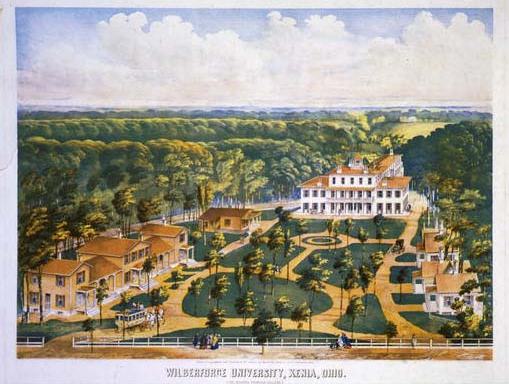
In a significant milestone for both the university and the broader community of Historically Black Colleges and Universities, Wilberforce University has announced the addition of a women’s gymnastics program. 

Wilberforce President Dr. Vann Newkirk further emphasized the significance of the new gymnastics program. “The introduction of the women’s gymnastics team at Wilberforce University represents more than just a new athletic program. It embodies our commitment to fostering an inclusive environment where all students, particularly young Black women, can thrive and pursue their passions,” said Newkirk. “This initiative will benefit our students by providing them with a platform to showcase their talents and by promoting physical and mental well-being.”  

Leading The Way

The gymnastics team’s establishment follows the historic formation of the first HBCU gymnastics program at Fisk University in 2022. Following that success, Talladega College initiated a program in Alabama, which it cut due to funding issues in 2023. 

Leading The Team

Wilberforce appointed Dr. Morgan Byrd, DPT as the gymnastics head coach. Dr. Byrd is a former collegiate gymnast, seasoned physical therapist and Brown Girls Do Gymnastics mentor.

A Collaborative Effort

Derrin Moore, founder of the advocacy group Brown Girls Do Gymnastics, played a pivotal role in establishing the new program. “They get to be at an HBCU, and they get to do the sport that they love and that they’ve been working on their whole life, to be collegiate gymnast,” Moore said. “I know that there are plenty of girls who have wanted to go to HBCUs forever. It’s a part of their family legacy.”

To assist with this, Brown Girls Do Gymnastics is actively creating a booster club and fundraising initiatives to secure financial support for travel, gear, and scholarships.

City of Winston-Salem Celebrates WSSU Day on Sept. 27

The City of Winston-Salem has proclaimed September 27, 2024, as “Winston-Salem State University Day” to honor the institution’s significant impact.

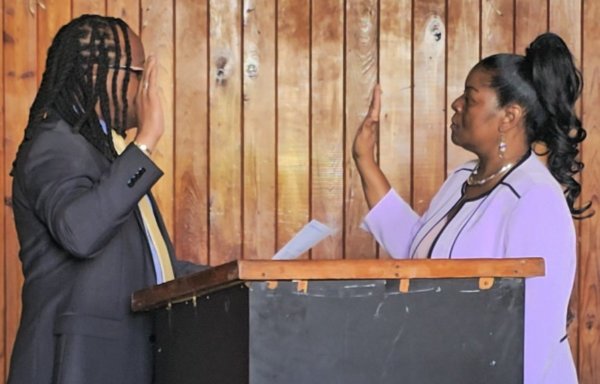
In a tribute to its local university, the City of Winston-Salem has officially proclaimed Friday, Sept. 27, 2024, as “Winston-Salem State University Day.” Mayor Allen Joines presented the proclamation to Chancellor Bonita Brown during a recent city council meeting on Sept. 16, celebrating the institution’s deep-rooted connection to the community.

“We’re so proud that Winston-Salem State University is a part of the fabric of the city. The school makes our city even more special,” Joines said. Chancellor Brown emphasized the significance of WSSU as not just a center of education but as the city’s public university, proudly bearing its name. 

To show support for the university, Brown encouraged all citizens to wear red on Sept. 27. Residents wearing red are invited to share their photos on social media. The community will use the hashtags #WSSUDay, #WeSeeRed, and #RamsTakeCharge to create a vibrant online presence that celebrates the university’s contributions.

The proclamation also underscores several key accomplishments of WSSU, including its impressive $500 million economic impact on the Piedmont Triad region. Additionally, national media outlets have recognized WSSU as the #1 university in North Carolina for economic and social mobility.

More than 30,000 alumni carry forth the university’s motto, “Enter to Learn, Depart to Serve,” illustrating the institution’s commitment to not only education but also service to the community. As a designated Regional Public University, WSSU plays a crucial role in the local economy and cultural landscape, serving a diverse student population that includes a significant number of students of color, first-generation college students, low-income students, and veterans.

Sept. 27 also marks the university’s annual Day of Giving and its Founder’s Day Celebration. Alumni, faculty, staff, students, and members of the public are encouraged to contribute financially to support campus-wide student success initiatives. WSSU’s goal is to raise $325,000 this year.

Benedict College Student Awarded $692K After Landlord’s Throws Out His Belongings

Ansel Postell, a Benedict College student, was awarded $692,000 after a jury found that his former landlord negligently discarded his possessions.

In a striking legal victory, Ansel Postell, an honors student at Benedict College, was awarded $692,000 by a Richland County jury following an experience with his former landlord. The case arose when Postell returned to his Columbia apartment in July 2022 to find it emptied and his belongings given away despite having paid six months’ rent in advance. 

Postell’s mother had paid the rental company Campus Advantage $3,810 to secure their lease at The Rowan, an apartment complex. Upon discovering that his possessions—including clothes, electronics, and a custom-built computer valued at over $6,000—had been discarded, Postell attempted to seek compensation from the company. However, his efforts were met with silence, leading him to file a lawsuit.

Photo: © 2024 Google/The State

After three hours of deliberation, the jury awarded Postell $692,000, which included $230,000 for actual damages and $462,500 as punitive damages. “I’m glad I was given the opportunity for this to be taken up in court, and the jury was able to make a decision on the evidence that we provided,” Postell commented after the trial. He graduated from Benedict magna cum laude with a degree in cybersecurity in May.

The Trial

In court, the timeline of events painted a troubling picture. Despite the company’s initial admission of fault, it refused to compensate Postell or his mother, Shawndolena Postell, for the lost items. As outlined in the lawsuit, dealing with the aftermath of the incident severely disrupted Postell’s academic performance during the critical first days of the new semester, jeopardizing scholarships and benefits he had previously earned.

Todd Lyle, Postell’s attorney, noted that two years ago, he had offered to settle the case for $75,000, but the offer that was rejected by the defendants. 

The trial lasted four days under the scrutiny of Judge Milton Kimpson, who presided over the proceedings. Beyond punitive damages, the jurors found Campus Advantage guilty of unlawfully seizing Postell’s property, breaching rental contracts, and demonstrating negligence in supervision of their employees. 

“Almost half a million dollars in punitive damages is sending a huge message,” Lyle said. “This case could have been settled for far less, but their obstinance and insistence that they did no wrong ultimately drove this verdict as high as it did,” Lyle said.

Delaware State to Launch State-Of-The-Art Athletics Training Facility

Delaware State University is set to make history with the construction of its groundbreaking athletics training facility, the first of its kind at any HBCU.

Delaware State University is making history with its announcement of a pioneering initiative: the construction of a state-of-the-art athletics training facility. This groundbreaking project marks the first of its kind at any Historically Black College or University.

The new athletics training facility promises to provide DSU student-athletes with unparalleled resources, enhance their performance and holistic development. Designed with cutting-edge technology and modern amenities, this facility aims to position the university at the forefront of innovation and progress in collegiate athletics. 

Delaware State University’s vision for the facility extends beyond construction. It seeks to inspire excellence, nurture talent, and foster a strong community spirit among its athletes. The ambitious project is structured in multiple phases. Phase I includes extensive renovations of existing athletic facilities, including total refurbishments of the Alumni Stadium locker rooms, Conwell Hall football team lounge and meeting rooms, and coaches’ offices. The DSU Downtown women’s locker room will be totally renovated, and infrastructure repairs and assessments will be made at Memorial Hall.

Among the most significant developments in Phase I is constructing a new 70,000-square-foot indoor athletic field house. This facility will feature a 50-yard turf field, state-of-the-art football locker rooms, team meeting and lounge spaces, academic study labs. It will also include various dining and refueling stations. 

Looking ahead, Phase II will focus on the Alumni Stadium project. It aims to introduce 6,000 premium grandstand seating options, executive suites, and fan engagement spaces. Plans also include a new occupational and physical therapy facility in partnership with Bayhealth. A multi-purpose indoor arena and conference center will also be added. Finally, Phase II calls for the total renovation of DSU’s current downtown aquatic center. 

Bishop State Community College Secures $95K to Launch Esports Program

Bishop State Community College has received a $95,250 grant to establish an innovative Esports program aimed at enhancing students’ technical skills.

Bishop State Community College has been awarded a significant $95,250 grant from the Alabama Community College System’s STEAM grant initiative for the establishment of a new Esports program. 

The newly funded program aims to enhance students’ technical competencies through competitive Esports opportunities while fostering career development within the realm of Computer Information Science. By collaborating with the Alabama School of Mathematics and Science, the South Alabama Regional Workforce Development Council, and the National Association of Colleges and Employers, Bishop State seeks to provide both full-time and dual-enrolled STEM students with valuable career readiness experiences that bridge collegiate-level Esports with professional growth.

“Computer Information Science remains one of the top undergraduate majors in Alabama for associate degree transfer students and first-time university students,” Bishop State President Olivier Charles said.

The Esports initiative aims to create a supportive community for underserved STEM students while leveraging NACE’s career readiness framework and SAWDC’s Career Ready Alabama model. As part of this effort, students will receive coaching and training for CIS faculty through the National Association of Esports Coaches and Directors will be provided.

Currently, there are 85 ASMS students dual enrolled in courses facilitated by Bishop State.

Dr. John Hoyle, president of ASMS, expressed enthusiasm about the partnership. “This grant will help improve competition facilities and resources at both institutions,” said Dr. Hoyle. “The Alabama School of Mathematics and Science is proud to strengthen its relationship with Bishop State Community College. Bishop State staff and faculty members have been gracious and helpful to us at every step.”

The Esports program will also allow students to compete in the National Junior College Athletic Association of Esports Open Series competitions. 

PVAMU Initiates Cemetery Study with $20,000 Grant

Prairie View A&M University has embarked on a historical and archaeological study of the Wyatt Chapel Community Cemetery.

The history department at Prairie View A&M University has launched an extensive historical and archaeological study of the Wyatt Chapel Community Cemetery located behind campus, thanks to a $20,000 award from The Summerlee Foundation. The project aims to delineate the cemetery’s boundaries and identify individuals interred in its largely unmarked graves.

The initiative seeks to illuminate the stories of formerly enslaved individuals buried at the site, once part of the Alta Vista Plantation where PVAMU now stands. “This study will explore the African American-lived experience through participatory and archival research, digital humanities, oral history, geospatial data collection and analysis, and the creation of interactive and immersive maps,” said Dr. DeWayne Moore, a U.S. and public history professor at PVAMU. The project is set against the backdrop of PVAMU’s upcoming 150th anniversary in 2026.

Dr. Moore credits former PVAMU President Ruth Simmons with inspiring the project. Simmons advocated for such studies to affirm the university’s commitment to its students and their heritage. The project is a community effort among faculty, staff, students, administrators, experts, and residents.

Graduate student Evelyn Todd ’21, who has strong ties to the university, is actively involved in the research. “As a student, you always hear the stories about the cemetery in the back of campus. So, it was sad to find out this was it and watch it go downhill over the years,” said Todd, who is working towards her MBA. “I wanted to do my part to not just preserve the cemetery but honor it.”

History of the Alta Vista Plantation

Historically, the Alta Vista Plantation was owned by Colonel Jared E. Kirby, who transferred the property to the State of Texas in 1876. Moore noted that while Kirby was often depicted as a “benevolent” slaveholder, interviews with formerly enslaved individuals painted a different picture. Insights from a 1936 interview reveal harrowing accounts of mistreatment and substandard living conditions.

According to Moore, the Wyatt Chapel Community Cemetery may encompass more than 2,000 graves, with current efforts focusing on identifying those buried within. “This cemetery contains not only the remains of enslaved men and women who once lived on the enslaved labor farm of Jared E. Kirby but also the graves of military veterans, the formerly enslaved, and their descendants,” he said. 

Recent surveys conducted by archaeologists have begun identifying potential grave markers, with preliminary findings suggesting approximately 200 candidates. The team utilized ground-penetrating radar and other technologies to map the area more effectively. 

AAMU, Tennessee State University Win HBCU National Tennis Championship

Alabama A&M women’s tennis and Tennessee State’s men’s teams are the 23rd annual HBCU National Tennis Champions.

Alabama A&M’s women’s tennis team and Tennessee State University’s men’s team scored the coveted titles at the 23rd annual HBCU National Tennis Championships held from Sept. 14 to 16, 2024, at the South Fulton Tennis Center in Georgia. This year’s tournament attracted over 30 Historically Black Colleges and Universities, with more than 250 student-athletes competing in single and double matches.

Alabama A&M Historic Win 

The Alabama A&M women’s tennis squad made history by securing its first-ever national championship title with a total of 84 points. 

“We are excited about bringing home this HBCU National Championship,” Alabama A&M head coach Willis Mbandi said. “I am proud of this team and these young women for competing throughout the tournament. This is just the first step in continuing to build this program.” 

Close on their heels, Hampton University’s women’s team captured second place with 73 points, while North Carolina Central University rounded out the top three with 57 points. 

Another Win For Tennessee State University

On the men’s side, Tennessee State University successfully defended their championship title, tying with Hampton University at 87 points. However, Tennessee State emerged victorious based on tie-breaking rules.  

Women’s Team Standings

  • Alabama A&M University – 84
  • Hampton University – 73
  • North Carolina Central University – 57
  • Morgan State University – 55
  • Tennessee State University – 55
  • Alabama State University – 54
  • Jackson State University – 46
  • Florida A&M University – 44
  • Shaw University – 32
  • Delaware State University – 30
  • Xavier University of Louisiana – 29
  • Tuskegee University – 21
  • Albany State University – 15
  • Alcorn State University – 11
  • Clark-Atlanta University – 10
  • Spring Hill College – 8
  • Benedict College – 8
  • Southern University – 7
  • Bethune-Cookman University – 2
  • LeMoyne-Owen College – 0

Men’s Team Standings

  • Tennessee State University – 87 (H2H vs. ASU: 3-2)
  • Alabama State University – 87
  • North Carolina Central University – 82
  • Jackson State University – 57
  • Hampton University – 39
  • Morgan State University – 39
  • Alabama A&M University  – 83
  • Spring Hill – 23
  • Tuskegee University – 21
  • Shaw University – 17
  • Alcorn State University – 15
  • Benedict College – 12
  • Xavier University of Louisiana – 10
  • Southern University – 6
  • LeMoyne-Owen College – 0

The HBCU National Tennis Championship is open to all HBCUs and welcomes over 15 collegiate institutions each year. 

Alabama A&M Professors Awarded $1.25M Each for Special Education Initiatives 

Two Alabama A&M Univeristy professors have each been awarded $1.25 million in grants for special education programs.

Two professors from Alabama A&M University have secured significant federal grants to enhance the quality of education for students with disabilities in the state. Dr. Tamar F. Riley and Dr. Adrain Christopher have both received $1.25 million grants from the Office of Special Education Programs to launch innovative initiatives focused on training diverse and qualified special education teachers.

Dr. Tamar F. Riley’s Project PARITY

Dr. Tamar F. Riley, associate professor of special education, will spearhead Project PARITY (Preparing Advanced Responsive Interventionists for Teaching Youth). This initiative, set to unfold over the next five years, is designed to provide scholarships for 30 multilingual teachers of color seeking Class AA certification through the Education Specialist Degree program. The grant aims to produce expert interventionists capable of designing, implementing, and evaluating tier 3 evidence-based interventions that incorporate culturally responsive practices for students with disabilities.

Dr. Tamar F. Riley, Associate Professor of Special Education

“This grant presents a significant opportunity to improve academic and behavioral outcomes for K-12 students with disabilities through specialized, collaborative training provided by AAMU faculty and field experts,” said Riley. “The funding will not only enhance enrollment in our graduate programs but will also empower school districts across the state with highly effective interventionists who specialize in coaching and mentoring teachers to ensure high-quality instruction for all students.”

Throughout the five-year period, the progress of participating scholars will be tracked to demonstrate the project’s positive impact within the EdS in Special Education program.

Dr. Adrain Christopher’s Project TEACH Like A Bulldog

Meanwhile, Dr. Adrain Christopher, assistant professor of special education, is launching Project TEACH (Training Educators for All Children with Handicaps) Like a Bulldog. This initiative tackles the pressing shortage of special education teachers in Alabama by providing financial assistance for 60 scholars pursuing initial Class B certification in Special Education through either the Bachelor of Science in Education degree or the Temporary Special Education Certificate program. 

“Project TEACH Like a Bulldog will fully fund 60 scholars – comprising eight traditional undergraduates and 52 TSEC candidates recommended by the district – covering required coursework along with expenses for books, supplies, mentorship, and professional travel,” explained Christopher. The focus is on recruiting candidates from underrepresented backgrounds, including multilingual individuals and those with disabilities.

Cohort 1 for Project TEACH commenced in Fall 2024, while selection for Cohort 2 is expected to begin in Spring 2025.