Kentucky State University Signs MOU with Nigerian University

Kentucky State University has signed a memorandum of understanding with Chukwuemeka Odumeg Ojukwu University of Nigeria.

Kentucky State University has taken an exciting step toward expanding global educational opportunities by signing a memorandum of understanding with Chukwuemeka Odumegwu Ojukwu University Nigeria. They officially inaugurated the partnership on Sept. 23, 2024.

The MOU was signed by KSU President Dr. Koffi C. Akakpo and COOU Vice Chancellor Kate Azuka Omenugha. The agreement is designed to foster collaborative initiatives encompassing a range of academic fields, including agriculture, education, nursing, and engineering.

Kentucky State University is a public historically black land-grant university in Frankfort, Kentucky.

“We are very excited about our partnership with Chukwuemeka Odumegwu Ojukwu University,” stated Dr. Akakpo. “We are optimistic that this will transform students’ lives in both countries by providing educational enrichment and broadening students’ perspectives and cultural awareness all while enhancing both universities’ academic offerings.”

Vice Chancellor Omenugha echoed these sentiments, expressing her enthusiasm for the partnership. “This is an avenue for us to explore through research and teaching our common and diverse cultures and develop global appreciation of and interest in our heritage. Indeed there are so many possibilities and my presence at the Inauguration of Dr. Koffi Akakpo as the 19th president of KSU is a testimony of greater things to come.”

The MOU sets the stage for joint activities such as study abroad programs, online degree offerings, seminars, and collaborative research projects. To ensure the MOU’s success, KSU plans to support students applying for Fulbright Foreign Programs, host visiting faculty from COOU, and offer graduate assistantship opportunities for COOU students specializing in agriculture.

“This is just the beginning of our partnership and endless possibilities for both our universities and students,” said Dr. Akakpo. “I look forward to a bright future ahead.”

Currently, KSU boasts 28 active international partnerships spanning 16 countries, with plans to expand further.

DSU Unveil CURE Building to Foster Small Business Growth in Dover

Delaware State University has inaugurated the CURE Building in downtown Dover, a hub designed to support small businesses and entrepreneurs.

Delaware State University proudly inaugurates its latest venture aimed at revitalizing downtown Dover and supporting small businesses with the opening of the Center for Urban Revitalization and Entrepreneurship Building. In collaboration with NeighborGood Partner, an organization dedicated to affordable housing and community development, a ribbon-cutting ceremony was held on the corner of W. Division and New Streets.

The CURE Building stands as a beacon for aspiring entrepreneurs and existing small business owners, particularly those from minority and underserved backgrounds. Designed as a business incubator, the facility aims to provide essential resources, education, and support systems that contribute to entrepreneurial success. As highlighted during the dedication, the CURE initiative encompasses various factors critical to entrepreneurship, including financial literacy, mental health, social networks, and family structure.

Dr. Michael Casson, dean of DSU‘s College of Business, emphasized the transformative potential of the CURE Building. “The CURE will integrate business incubation, co-working space, and community development into a cohesive support system for entrepreneurs, fostering a vibrant ecosystem that nurtures growth and innovation in our community,” Dr. Casson said.

Turning CURE Into Reality

The birth of the CURE Building was rooted in a blight removal effort led by NGP. The initiative sought to eliminate a house linked to criminal activity, alongside a rental property and a neighboring commercial site. While NGP and Central Delaware Habitat for Humanity worked on acquiring these properties, Dr. Casson proposed the idea of establishing a community-based shared workspace for local entrepreneurs. 

“This building is a true collaboration and a great holistic approach to community development, providing homes, economic development, and energizing residents,” said Karen Speakman, the executive director of NGP. 

The funding for CURE Building was a collective effort between Central Delaware Habitat, the Welfare Foundation, the Delaware State Housing Authority, and numerous banks. U.S. Rep. Lisa Blunt Rochester also backed up the progress with congressional funding.

The second floor of the CURE Building will be dedicated to DSU’s training programs, focusing on community entrepreneur development. The first floor will serve as the operational hub for NGP’s affordable housing and community development initiatives.

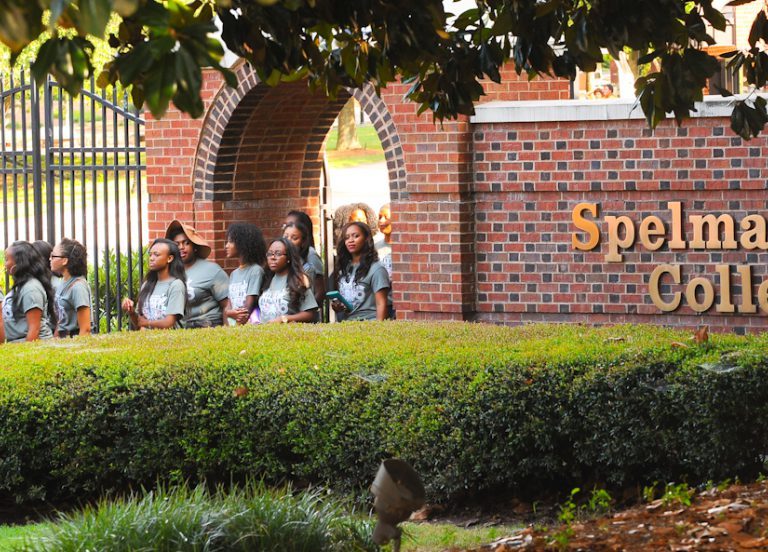
Spelman College Maintains No. 1 Ranking as Top HBCU in U.S. News & World Report

Spelman College has been named the top Historically Black College or University by U.S. News & World Report for the 18th consecutive year.

Spelman College, renowned for its commitment to the education and empowerment of women of African descent, has solidified its reputation as a leading institution by being named the top Historically Black College or University for the 18th consecutive year in the 2025 U.S. News & World Report Best Colleges rankings.

The college also achieved the distinction of being ranked number one among all colleges for social mobility. Social mobility measures the return on investment for families and society. HBCUs like Spelman have long been instrumental in offering educational opportunities and fostering environments that promote success for low-income and underrepresented students. A recent report from the United Negro College Fund estimates that HBCUs contribute approximately $16.5 billion to the national economy, reinforcing their importance in driving economic growth and societal advancement.

In addition to its exceptional rankings, Spelman also received high marks in several other categories within the U.S. News Best Colleges rankings for 2025, including:

-No. 8 in Learning Communities

-No. 16 Most Innovative Schools – National Liberal Arts Colleges

– No. 30 in Undergraduate Teaching – National Liberal Arts Colleges

– No. 94 in Best Undergraduate Psychology program

– No. 143 in Best Undergraduate Economics program

The U.S. News rankings, now in their 40th year, assess nearly 1,500 institutions based on up to 17 measures of academic quality, with an increased focus on social mobility and student outcomes. This approach aims to guide prospective students and their families in evaluating the merits of American college and university programs.

Spelman College has also earned recognition from Forbes, which placed it at No. 358 on its Top 500 List of America’s Top Colleges. Additionally, The Princeton Review listed Spelman among the Best Colleges in the South and identified it for its active student government and community service engagement.

Top Ten HBCUs According to U.S. News & World Report:

1. Spelman College

2. Howard University

3. Florida A&M University (tie)

3. Tuskegee University (tie)

5. Morehouse College

6. Xavier University of Louisiana

7. Hampton University (tie)

7. North Carolina A&T State University (tie)

9. Delaware State University (tie)

10. Morgan State University 

VSU Alumni John Henry Appointed to UNCF Leadership Role

Virginia State University alum John Henry has been appointed as the executive vice president and chief financial of the United Negro Fund.

Virginia State University proudly announces the appointment of alum John Henry (’93) as the executive vice president and chief financial officer of the United Negro College Fund. This landmark underscores both Henry’s impressive career trajectory and VSU’s commitment to nurturing leaders who effect positive change in diverse fields.

UNCF stands as the nation’s largest and most influential organization dedicated to minority education. The organization promotes access to higher education through scholarships, advocacy, and support for its member institutions, providing over $100 million annually to students of color. 

In his new role, Henry will lead a range of critical functions, including finance and accounting, internal audit, investments, and treasury operations. His strategic insight will be vital in shaping financial management practices and enhancing shared services for UNCF’s member institutions.

“We are incredibly proud of VSU alumni like John Henry, who continue to achieve extraordinary success after leaving our University,” said Franklin Johnson-Norwood, VSU’s executive director of alumni engagement and advancement services. “At VSU, our mission has always been to cultivate global leaders across diverse fields. I am confident Mr. Henry will excel in his new role at UNCF, and we wish him continued success.”

Henry brings more than two decades of progressive experience in finance and accounting to his new position. 

“John is a results-driven, innovative finance and accounting executive with over 20 years of progressive experience delivering financial strategic approaches in cost-savings and operational and investment management of financial assets, including in-depth understanding of accounting processes,” said Early Reese, chief operating officer, UNCF.

VSU says Henry’s appointment exemplifies the caliber of talent and leadership developed at the university and it looks forward to seeing Henry’s impact in advancing UNCF’s mission to provide quality education for minority students nationwide.

The Growing Trend of Athletes Getting Paid in Bitcoin: A Look at the Future of Sports Contracts

The increasing trend of athletes opting for payment in Bitcoin reflects a significant shift in the landscape of sports contracts.

In recent years, the world of professional sports has seen a fascinating trend: more and more athlete are now paid in Bitcoin and even opting to have their endorsement money in cryptocurrency. Such a change is observed in other areas associated with using cryptocurrency assets in various industries, as athletes strive to find new forms for financial management and business development in the conditions of the digital world economy. However, the following arises, what is fueling this trend and what are its implications for future contracts of sports? So, let’s look into the world of athletes and Bitcoin to better comprehend how the collaboration has an impact on sports.

First Things First: Understanding Bitcoin

So, let’s first get into the details of defining what exactly Bitcoin is and why has it become such a burning topic in the sporting sphere? Bitcoin is the first and the most popular Cryptocurrency that has been established in the year 2009 by an unknown person with the nickname of Satoshi Nakamoto. It runs on a peer to peer system which makes it to be independent of any government or financial system. Bitcoin transactions are therefore confirmed by network nodes through the use of cryptographic methods and are also recorded in a database known as the blockchain. This function significantly sets this decentralised asset apart from physical currencies as a viable store of value, with security, transparency and appreciating value to boot, making it an interesting option for diversification of portfolios.

Why Athletes Are Turning to Bitcoin

The reasons why athletes choose to get their remuneration in Bitcoin include the following. To begin with, it is evident that the price of Bitcoin has risen over the years and this makes it a good investment. Although the price has fluctuated greatly, Bitcoin has increased in value serving as a great opportunity for athletes who seek to make a lot of money. For example, let’s say that an athlete is paid partly in Bitcoin, and given that Bitcoin’s price is variable, the athlete will stand to benefit from an appreciable rise in the worth of his/her Bitcoin compensation; such is an extra value that an athlete would be getting aside from the nominal promise in the initial contracts.

Furthermore, one can state that Bitcoin supplies athletes with some level of financial freedom. In the traditional fashion of managing the finances, the third party like banks or financial consultants may demand their charges or sway on how the entire thing is to be taken. As for the benefits of Bitcoin for athletes, it is considered that through it, they can have full control over the money they receive, which would help them save some of the money that they inevitably lose when using traditional money transfer services while at the same time, preserving their privacy regarding the money they earn.

There is yet another dimension that has contributed to this trend of increase and that is the issue of globalization of sports. On issue of exchange, there are times when athletes go to countries different from their own and thus the challenge of managing the currency is somewhat tougher. Since Bitcoin is an international currency, there is no necessity to deal with exchange rates and the expenses that come with them, thus helping make the management of athletes’ money significantly easier regardless of where the latter is located.

The Superstar Athletes Leading the Crusade

Some of them have already adopted Bitcoin and as a result setting a precedence for others in the market to do the same. Some examples include NFL player Russell Okung who concluded the first such deal by opting to receive half of his $13 million earnings through Bitcoins. The primary reason why Okung chose to invest in cryptocurrencies was in the future possibility what the Bitcoin was likely to be in the future.

Likewise, soccer star Lionel Messi rigged part of his signing bonus and was paid with cryptocurrency by Paris Saint-Germain and NBA player Spencer Dinwiddie likewise tokenized a part of the contract to allow fans to invest some in his career. Such payments are also done in BTC as are such bonuses paid these athletes who in turn are likely to convince other athletes in the sporting fraternity to embrace cryptocurrency in their financial planning.

The Future of Sports Contracts

And it is not just athletes who prefer to be paid in Bitcoin, but sports contracts may well change over time themselves. More often, in traditional contracts, payment is indicated in a certain fiat currency like the U.S. dollar or the Euro. Nevertheless, as cryptocurrency advances to the conventional market, contracts may integrate terms permitting payment in the form of cryptocurrencies such as Bitcoin. This change could mean athletes may have more options in terms of how they receive and or spend their money.

Furthermore, one can state that Bitcoin supplies athletes with some level of financial freedom. In the traditional fashion of managing finances, a third party like banks or financial consultants may demand their charges or sway how the entire process is handled. As for the benefits of Bitcoin for athletes, it is considered that through it, they can have full control over the money they receive, which would help them save some of the money that they inevitably lose when using traditional money transfer services. Additionally, by keeping track of the Bitcoin price, athletes can better manage their holdings, potentially maximizing their earnings while preserving their privacy regarding the money they earn.

Equally, there might be benefits for teams and organizations. If athletes are paid in Bitcoin, they can obtain talent from across the world as the use of cryptocurrencies is borderless. Further, teams could discover that making Bitcoin a payment option enhances the general attractiveness of their players as part of future-oriented, technology-savvy youths to be involved in sports.

Conclusion: A New Era for Athletes’ Reward

Is it just a fleeting phenomenon of athletes receiving their salary in Bitcoin which will soon fade out or it is the new generational change in the world of athletes and their contracts and the way they deal with their earnings? Due to the increased adoption of cryptocurrency, it cannot be ruled out that many athletes may decide to be paid partly or fully in Bitcoin, which may change the financial framework of sport.

Admittedly, BTC has a value similar to athletes since its buy is with an appreciation in its price, the money is independent and is universal. However, with such advantages it is associated with several drawbacks such as instability, legal issues and the necessity of improving people’s financial literacy. So as this trend unfolds both athletes and sports organizations will have to embrace the concept of cryptocurrency, recognising the benefits it provides as well as the inherent challenges it brings.

In this new age, Bitcoin could gradually turn into an industry norm for payments and compensation in sports contracts giving athletes and teams a more innovative way of facing pertinent issues as the professional sporting market continues to evolve.

UAPB’s M4 Marching Band to Perform at WWE Bad Blood Event in Atlanta

The University of Arkansas at Pine Bluff’s M4 Marching Band is set to electrify WWE’s Bad Blood event in Atlanta on Oct. 5, 2024.

The University of Arkansas at Pine Bluff’s Marching Musical Machine of the Mid-South is set to take its talents to the world of professional wrestling, performing at WWE’s highly anticipated Bad Blood event on Oct. 5, 2024, in Atlanta, Georgia. The announcement, made via social media on Saturday, has generated excitement among fans and supporters of the marching band.

The M4 band went viral earlier this season after delivering an electrifying rendition of Undisputed WWE Champion Cody Rhodes’ theme song during a game against the Arkansas Razorbacks at War Memorial Stadium. 

The M4 marching band is no stranger to the national spotlight. They have previously performed at NFL games, presidential events, and at notable occasions like the Southern Heritage Classic in Memphis. 

John R. Graham, UAPB director of bands, has been leading the band for nearly three decades. He emphasized the band’s energetic performances. “We move it, we groove it, and we style it. We can play a ballad with the best of them or get in your face and play some funk; we even get out of our element,” he said. “It’s like a night at the Apollo every time we come out and we perform. 

Graham promises a show the audience will remember. “You’re going to know we’re [there], that you came and were entertained because we’re known as the marching musical machine, we go for high energy.”

The event will be streamed live on Peacock, allowing fans to join in the excitement starting at 5:00 p.m. Central Time. To learn more about the M4 band, visit them online at UAPB.edu.

HBCUs Experience Significant Enrollment Spikes for Fall 2024

Multiple Historically Black Colleges and Universities are experiencing significant enrollment spikes for fall 2024 semester.

As the new academic year unfolds, multiple Historically Black Colleges and Universities are experiencing remarkable enrollment increases. Here’s a look at the schools with enrollment growth for Fall 2024.

Shaw University

Leading the way is Shaw University, which has reported an impressive 36% rise in new student enrollment. This marks the university’s largest freshman class since the onset of the pandemic. Alongside this surge in new students, enrollment in adult degree programs is also rising at Shaw.

Hampton University

Hampton University is close behind, reporting a 34% increase in new student enrollment over the past two years. A total of 1,292 students were set to join the freshman class, representing a record commitment rate from incoming students. 

Benedict College

Benedict College is also enjoying significant growth, with an 18.4% increase in new student enrollment for Fall 2024. The college welcomed 554 new students, including 419 first-time freshmen—a robust 31.4% increase from 338 last year. 

Elizabeth City State University

Elizabeth City State University has reported a remarkable 23% increase in the number of first-time freshmen. The freshman class has surged to 427 students, up from 347 in Fall 2023, making it the largest since 2012. ECSU’s efforts to engage and attract new students appear to be paying off.

University of Arkansas at Pine Bluff

The University of Arkansas at Pine Bluff announced a 7% increase in overall new student enrollment. Notably, there was a 39% surge in transfer students for the fall 2024 semester.  

North Carolina Central University

North Carolina Central University has seen a 7.71% increase in total enrollment, welcoming 8,579 students this year. The freshman class alone is historic, including 1,753 first-time students—the largest in the university’s 114-year history. Additionally, NCCU saw a 24% increase in online education enrollment.

Langston University

Langston University’s full-time enrollment increased by about 2.8% compared to the previous academic year. The growth was particularly notable among freshman and graduate students.

Grambling State University

GSU continues its positive trend, with total enrollment reaching 5,150 students for Fall 2024. This represents a gradual increase from previous years and includes a notable rise in first-time, full-time freshmen, who now stand at 1,013.

Edward Waters University

EWU has seen a notable increase, reporting 1,177 enrolled students this semester. This reflects the university’s second-highest enrollment in two decades and its fourth consecutive year of record-breaking growth. 

Johnson C. Smith University

Notably, JCSU experienced its largest incoming class since before the COVID-19 pandemic.

Explore Your Future: QS Graduate School Fair Returns to San Francisco and LA 

QS’s California graduate school fairs will provide students with a chance to connect with universities and gain valuable insights from industry experts.

Are you ready to take the next step in your educational journey? California’s graduate school fair is back, providing an unparalleled opportunity for aspiring students to connect with top-tier universities. Scheduled for Saturday, September 28th, in San Francisco and Tuesday, October 1st, in Los Angeles, these events are designed to help participants level up their academic and professional careers.

Meet Top Universities

Attendees will have the chance to meet representatives from prestigious institutions such as Northwestern University, UC Davis, UC San Diego, Columbia University, and the University of California, Irvine, among many others. Whether you’re exploring options for a master’s program or looking to make connections for future doctoral studies, the events offer a platform to learn directly from admissions directors and alums.

Exclusive Benefits for Attendees

Participants will enjoy several benefits at the fair, enhancing their experience and career prospects:

  • Free Professional Headshots: Elevate your personal branding with a professional photo.
  • Free resume reviews courtesy of ARINGO MBA Admissions Consulting and a 10% discount on all package services.
  • QS ImpACT Scholarships: Apply for scholarships worth a total of $45,000, providing financial assistance for your educational pursuits.
  • Discounted Test Prep Services: Take advantage of exclusive test preparation resources at reduced rates.
  • Participating partners will provide giveaways and other promotional items.

Panels and Presentations

Both fairs will feature insightful panels and presentations to guide attendees through the graduate school application process. In San Francisco, a panel titled “Admissions Applications Tips” will be hosted by Singapore Management University and Northeastern University’s Khoury College of Computer Science. Jin Hao Gong, postgraduate marketing and recruitment manager at Singapore Management University, and Pamela Allen, representing Northeastern University, will lead this session. 

In Los Angeles, the Columbia University School of Professional Studies will host a similar panel, focusing on strategic tips for crafting standout applications. Additionally, Valerie Gomez will present “Navigating the Path to Grad School: Insights from a First-Gen PhD Candidate.

Event Details

The Master’s Fair in San Francisco will be held on September 28, 2024, from 2 p.m. to 5:30 p.m. at the Hyatt Regency San Francisco. The Los Angeles conference will be held on October 1, 2024, from 5 p.m. to 8:30 p.m. at The Westin Bonaventure Hotel, located at 404 South Figueroa Street.

Preparing for Your Visit

Participants should dress in business attire to leave a lasting impression on potential future graduate programs and come prepared with copies of their resumes to distribute to admissions representatives.

Attendees are encouraged to research the list of universities that will be present. Familiarizing themselves with these institutions can lead to more meaningful conversations when networking at the event. By reserving a spot, attendees also receive vital information ahead of the event, enabling them to tailor their approach and make the most of the resources available.

Registration for the events is free, but spaces are limited, so it’s recommended to secure a spot early. Click here to register for the San Francisco event and here for the Los Angeles conference.

EPA Launches Inaugural HBCU-MSI Federal Advisory Council

The EPA has launched its inaugural Historically Black Colleges and Universities and Minority Serving Institutions Federal Advisory Council.

The U.S. Environmental Protection Agency has announced  its inaugural Historically Black Colleges and Universities and Minority Serving Institutions Federal Advisory Council, marking a pivotal moment in the agency’s commitment to advancing diversity, equity, and inclusion in environmental policymaking and workforce development.

The HBCU-MSI Federal Advisory Council is tasked with providing independent counsel and recommendations to EPA Administrator Michael S. Regan. The council will focus on developing strategies to diversify the agency’s workforce, support the professional development of emerging environmental leaders, and secure necessary resources for HBCUs and MSIs to thrive. Their guidance will be instrumental in tackling critical environmental justice issues and fostering community engagement.

“We are honored to have such a distinguished group of leaders join the first-ever HBCU-MSI Advisory Council,” said Administrator Regan. He emphasized the importance of the council members’ diverse experiences and knowledge in shaping the EPA’s initiatives to ensure equitable representation and advocacy for all communities in environmental matters.

Congresswoman Alma Adams (NC-12) commended the council’s creation. “Including the voices of HBCUs in the EPA’s new Federal Advisory Council reflect EPA’s commitment to achieving real results that empower students and support the communities that HBCUs serve.” She pointed out the urgent need for affected communities to have a seat at the table as critical environmental issues like air quality and clean water are addressed.

The council comprises an array of leaders from various institutions and backgrounds. Chair Hilda Pinnix-Ragland, a prominent figure and former chair of the Board of Trustees at North Carolina Agricultural and Technical State University, expressed her pride in being part of this historic initiative. She highlighted the unique insights that HBCUs and MSIs can offer, given their deep understanding of the environmental challenges faced by communities of color.

The establishment of the HBCU-MSI Federal Advisory Council aligns with President Biden’s Executive Order 14035, which aims to advance diversity, equity, inclusion, and accessibility within the federal workforce.

The appointed members of the HBCU-MSI Federal Advisory Council, who will serve two-year terms, comprise leaders from various educational and advocacy organizations. 

Meet The Advisory Council

The following individuals have been appointed to the HBCU-MSI Federal Advisory Council:

  1. Chair: Hilda Pinnix-Ragland, Managing Partner, AHK Global Resources
  2. Vice Chair: Dr. Beverly Wright, Founder and Executive Director, Deep South Center for Environmental Justice
  3. Vice Chair: Dr. Saúl Jiménez-Sandoval, President, California State University – Fresno
  4. Vice Chair: Heather Himmelberger, Director, University of New Mexico Southwest Environmental Finance Center
  5. Abre’ Conner, esq., Director, Center for Environmental and Climate Justice, National Association for the Advancement of Colored People 
  6. Dr. Andrew Kozich, Environmental Science Department Chair, Keweenaw Bay Ojibwa Community College
  7. Angelina Adams, Counselor – Career Services, Haskell Indian Nations University 
  8. Dr. Darryl Ann Lai Fang, Assistant Vice President of Transformation Support, Institute for Capacity Building, United Negro College Fund 
  9. Dr. Eric O’Rear, Senior Research Analyst, Rhodium Group 
  10. C. Gail Bassette, Director of Economic Development/Strategic Engagement, Bowie State University 
  11. Phil Weilerstein, President and CEO, VentureWell
  12. Dr. Jerryl Briggs, President, Mississippi Valley State University 
  13. Lena T. Rodriguez, Ph.D., Senior Vice President for Policy and Government Relations, Hispanic Association of Colleges and Universities 
  14. Dr. Mark Brown, President and CEO, Tuskegee University 
  15. Dr. Melva Wallace, President and CEO, Huston-Tillotson University 
  16. Michael Johnson, Chief of Staff, PROPEL Center 
  17. Dr. Mike Hoa Nguyen, Member, Board of Directors, Asian Pacific Americans in Higher Education & Assistant Professor of Education, New York University 
  18. Ray Shackelford, Vice President for Equitable Justice and Strategic Initiatives, National Urban League
  19. Dr. Sharon Jones, Vice Chancellor of Academic Affairs, University of Washington – Bothell 
  20. Dr. Vann Newkirk, President, Wilberforce University 

UMES Launches Patent and Trademark Resource Center

UMES has been designated as a Patent and Trademark Resource Center, becoming the only PTRC on the Eastern Shore.

Aspiring entrepreneurs at the University of Maryland Eastern Shore and throughout the local community now have a valuable new resource to help them turn their innovative ideas into reality. This July, the U.S. Patent and Trademark Office designated UMES a Patent and Trademark Resource Center. UMES became the fifth historically black college or university to receive this recognition and the only PTRC on Eastern Shore.

The establishment of the PTRC is a natural progression for UMES’s Center for Entrepreneurship and Innovation. Dr. Pamela Allison, endowed chair of the CEI, expressed her enthusiasm for the new center. “In the past, we’ve hosted trademark boot camps for entrepreneurs where they can come in with an idea and, by the end of the day, be ready to file their trademark application,” said Dr. Allison. “As we were preparing for a patent boot camp, we were approached with the idea about being a PTRC, and it went from there.”

PTRCs are crucial in the USPTO’s mission to support the public’s intellectual property needs. They aim to provide accessible resources that help individuals navigate the often complex and daunting landscape of patents and trademarks. 

The Fifth HBCU To Receive U.S. Patent Office Designation

Joining the ranks of other HBCUs, including Southern University and A&M College, Prairie View A&M, and South Carolina State University, UMES’s designation highlights a growing trend to empower minority institutions and their communities in innovation. Howard University, the first HBCU to earn this designation, has participated in the program since 1986.

The UMES PTRC will be housed within the Frederick Douglass Library. Library staff will assist patrons seeking to research potential patents and trademarks. Sharon Brooks, acting director of library services at UMES, emphasized the value of the PTRC to the university and the wider community. “We knew it would be a plus because of the opportunities offered to the UMES students, faculty, staff, and the community,” Brooks said. 

Allison further noted that the PTRC aims to reduce the barriers to entering the patent and trademark process. “The patent and trademark process can be costly and you don’t want to make a mistake where you find someone out there has something similar to your idea. We want to be a resource center that can help alleviate those concerns of making an expensive mistake,” she explained.

The PTRC at UMES will officially open its doors on Oct. 2 at the Frederick Douglass Library.

Saving Marcellus Williams: Howard Law Student’s Fight for Justice

Brandon Watts, a Howard Law student, is spearheading a national effort to stop the execution of Marcellus Williams scheduled for Tuesday.

With just hours remaining before the scheduled execution of Marcellus Williams, Howard University School of Law student Brandon Robert Watts is urgently fighting to save the death row inmate’s life. Williams is scheduled for execution on Tuesday. 

Brandon Robert Watts

According to a study, if all death-sentenced defendants remained under sentence of death indefinitely, at least 4.1% would be exonerated. Watts is tirelessly fighting to keep Williams out of that grim percentage. His mission is twofold: to save a man he believes is innocent and to shine a glaring light on the systemic injustices that disproportionately impact marginalized communities.

He has launched a nationwide campaign to garner support from students and faculty at Historically Black Colleges and Universities behind Williams and put pressure on policymakers to prevent his execution. 

 “Time is running out, and we need people to write letters, sign petitions, and spread the word on social media. Beyond Marcellus’ case, I want people to understand that this is part of a much bigger issue,” said Watts. “The racial biases that lead to cases like his are embedded in the system, and we need to demand real reform to make sure this doesn’t keep happening.”

The Marcellus Williams Case

Marcellus Williams. (Image: Courtesy of Marcellus Williams’ legal team)

Williams was convicted of murdering Felicia Gayle,  a former news reporter who was found stabbed to death in her home in 1998.  St. Louis City County sentenced him to death.  Watts believes Williams was wrongly convicted at the hands of racial bias impacting multiple parts of the case, including jury selection and the handling of evidence.

Significant evidence points towards Williams’ innocence including 2016 DNA testing that excluded him as the source of male DNA found on the murder weapon. Additionally, the prosecution relied on the testimonies of two incentivized witnesses whose claims were inconsistent and unverifiable. 

“The fact that DNA evidence hasn’t been enough to stop his execution shows just how broken the system is,” said Watts. “His case is a reminder that justice isn’t applied equally, and race often determines who gets a fair chance and who doesn’t.” 

Williams has been fighting against execution while maintaining his innocence for years. Following the 2016 DNA discovery that raised doubts about his guilt, he received a stay of execution from then-Governor Eric Greitens. A Board of Inquiry was established to review the case, but in June 2023, Governor Mike Parson dissolved the Board without a report.

Following that, the attorney general sought a new execution date. Williams sued Parson for violating Missouri law, but the Missouri Supreme Court dismissed the lawsuit on June 4, 2024, and scheduled his execution. 

“With his execution date set for September 24, it’s a race against time to save his life. This case is about more than just Marcellus—it’s a glaring example of how the justice system can fail Black men in particular,” said Watts.  

Inspired By Childhood Experiences

Watts says his passion for criminal justice reform stems from his childhood experiences. “My father was incarcerated when I was a kid, and I saw firsthand the impact that has on families. Later, I walked with him through his recovery from drug addiction, which taught me the importance of understanding people’s stories,” he explained. 

While juggling the workload of his final year of law school, Watts has dedicated his time to reaching out to student organizations and professors at HBCUs to spread awareness about William’s case. He has held numerous meetings, sent countless emails, and made personal appeals to ensure the collective effort from HBCUs nationwide will gain policymakers’ attention. 

“It’s hard to break through when the system seems designed to ignore cases like Marcellus’. But we’re keeping at it, because we believe this fight is too important to give up on,” said Watts. 

Powerful is how Watts describes his initiative’s support from students and faculty at Howard University and other HBCUs who have accepted his call to action. “It’s been inspiring to see how everyone has come together to push for justice in Marcellus Williams’ case,” said Watts. “The sense of solidarity and collective action has been a reminder of what we can achieve when we work as a community.” 

Continuing His Fight For Justice

As the Missouri Supreme Court prepares to hear arguments in Williams’ case on Monday, Watts remains committed to securing justice for one man while also addressing the systemic inequities of the legal landscape.

“It’s shown me that being a lawyer is more than just practicing law—it’s about standing up for those who can’t stand up for themselves,” said Watts. “It’s my belief that every person deserves a fair shot at justice, and Marcellus’ case represents the broader failures of the system that I want to help fix.”

After graduating, he plans to open a law firm that provides quality legal services to Black communities at little to no cost. He aims to “help those who have been historically left behind by the justice system and give them a fair chance at defense.”

Alcorn State University to Inaugurate Dr. Tracy M. Cook as President

Alcorn State University is set to celebrate the inauguration of Dr. Tracy M. Cook as its 21st president with a series of events.

Alcorn State University announces the upcoming inauguration of Dr. Tracy M. Cook as its 21st president. This milestone celebration will feature a series of events culminating in an investiture ceremony on Oct. 4, 2024, at 9 a.m. in the Davey L. Whitney HPER Complex. The ceremony is free and open to the public.

Dr. Cook expressed his gratitude and enthusiasm for this new role. “I am deeply honored to serve as the 21st president of my alma mater, Alcorn State University,” said Cook. “As we celebrate this new chapter in Alcorn’s rich history, I look forward to working with our dedicated faculty, staff, students, and alumni to build upon our legacy of excellence and drive our institution toward an even brighter future.”

The Mississippi Institutions of Higher Learning Board of Trustees appointed Dr. Cook, who officially took office on April 1, 2024, after serving as interim president since July 2023. With over 25 years of experience in education administration, Dr. Cook has a proven track record of enhancing institutional effectiveness. Since assuming his role, he has prioritized building capacity, improving efficiency, and enhancing customer service at ASU.

Before his presidency, Dr. Cook was vice president for student affairs and enrollment management at ASU. His career also includes roles as superintendent, assistant superintendent, principal, and teacher.

An alumnus of ASU, Dr. Cook holds a bachelor’s degree in agricultural economics (1994) and a master’s degree in agronomy (1996) and educational administration and supervision (1998). He further pursued his education with specialist and doctoral degrees from William Carey University.

The university has planned various celebratory events leading up to the investiture ceremony. Highlights of the week include a worship service on Sunday, Sept. 29, and several activities on Oct. 4, including a concert on the Campus Green at noon and a game night with the president for alumni and friends later that evening. 

Miles College to Lead $3 Million NSF Collaborative HBCU Project

The National Science Foundation has awarded a $3 million grant to Miles College and four other HBCUs to enhance research capacity.

The National Science Foundation has awarded five Historically Black Colleges and Universities a transformative $3 million grant to bolster research capacity. The funding supports the HBCU Ujima Collective, an initiative spearheaded by Miles College. The collaborative project will include Howard University, Morgan State University, Tennessee State University, and Winston-Salem State University.

The HBCU Ujima Collective’s primary goal is to develop robust research infrastructures that enhance the competencies of student researchers, faculty, and emerging grant professionals. Funding from the NSF grant will be allocated to student stipends, scholarships, faculty development programs, and consortium activities designed to promote collaboration and innovation.

“This project is a collaborative success story,” said Miles College President Bobbie Knight. “By working with these accomplished Co-PIs, we’re elevating Miles College and the entire HBCU community. Miles College, an emerging research institution, is proud to partner with prestigious institutions, including HBCUs, approaching the coveted R1 status.”

Leading The Project

Dr. Jarralynne Agee, senior vice president of strategic initiatives at Miles College, is the project’s principal investigator. “It is an honor to work with each of the co-principal investigators on this project, who all bring significant expertise and previous NSF recognition, which strengthens our ability to make a lasting impact on research and innovation,” Agee stated. 

Joining Dr. Agee are a team of co-principal investigators: Dr. Kimberley Freeman, professor of educational psychology at Howard University; Dr. Damon Bryant, assistant professor of psychology at Morgan State University; Dr. Catherine Armwood-Gordon, associate dean of research and graduate studies at Tennessee State University; and Dr. Rashunda Stitt, associate professor of psychology at Winston-Salem State University.

Enhancing Research At HBCUs

The grant falls under the NSF’s Advancing Research Capacity at HBCUs through Exploration and Innovation initiative, which seeks to enhance HBCUs’ research capabilities. This includes providing access to advanced facilities, resources, and essential training. 

NSF Director Sethuraman Panchanathan highlighted the significance of this initiative. “The NSF ARC-HBCU Ideas Lab is an excellent opportunity to foster collaboration among HBCUs,” said Panchanathan. “By connecting talent from different institutions, we can build a more integrated and impactful research network that addresses the most pressing needs of these colleges.”

This grant, funded through the Historically Black Colleges and Universities—Excellence in Research program, is designed to address specific research capacity challenges faced by HBCUs. The program responds to recommendations outlined in the Senate Commerce and Justice, Science, and Related Agencies Appropriations Subcommittee Report.

The grant’s performance period commenced in mid-September as part of its implementation. One of its key initiatives will be launching a series of masterclasses, beginning with a grant-writing workshop scheduled for November. The workshop will equip HBCU faculty, students, and staff with essential skills to secure funding and expand their research capabilities.

Open registration for Term 2 of the Fall 2024 semester is currently available, and prospective students can learn more here

ECSU Students Benefit from E2D Laptop Giveaway

E2D’s recent laptop giveaway at Elizabeth City State University provided over 200 fully refurbished laptops to incoming freshmen.

A simple conversation nearly 12 years ago between a father and his daughter has sparked a transformative movement, culminating in a generous laptop giveaway at Elizabeth City State University. On September 11, the nonprofit organization Eliminate the Digital Divide visited the Ridley Student Center to distribute over 200 fully refurbished laptops to incoming freshmen, ensuring that students are equipped with essential tools for their academic journeys.

Each laptop featured a minimum of 8GB RAM, a 128GB hard drive, the latest Windows 11 operating system, and a three-month technical warranty. This initiative reflects E2D’s mission, which dates back to 2013, when founder Pat Millen’s daughter, Franny, brought home an observation from her seventh-grade classroom.

“Dad, every assignment we get here in seventh grade assumes you have a computer at home to do the work and I know some kids at school who don’t. That’s not fair,” Franny told her father. Franny posed a crucial question: “What are we going to do about it?” This conversation marked the inception of E2D, which would eventually provide computers to students and families in need.

Pat Millen, then pursuing a different career path, felt compelled to act on his daughter’s concerns. Through outreach to his network of executive colleagues, Millen garnered support and funding, allowing E2D to distribute its first batch of laptops to 150 families in need back in 2013.

At ECSU, the recent laptop giveaway not only fulfilled E2D’s vision but also addressed an urgent need among the student body. For many freshmen, the timing couldn’t be better. As educational institutions increasingly rely on technology, having access to reliable and up-to-date equipment is essential for success.

For more information about E2D and its mission to eliminate the digital divide, click here.

SC State University Celebrates Alumna on Her 103rd Birthday

South Carolina State University celebrated the 103 birthday of alumna Johnnie Mae Lee, its oldest living graduate.

On Tuesday, September 10, South Carolina State University honored one of its alums, Johnnie Mae Lee, as she celebrated her remarkable 103rd birthday. Lee is SC State’s oldest living graduate. Her birthday was marked with celebrations surrounded by family, including her sister Sarah Garrison, Class of 1955, and her niece Shari Garrison Brown, Class of 1980.

The SC State University National Alumni Association made the occasion extra special by presenting Ms. Lee with a “forever birthday card” and a doormat from their 2024 National Convention in North Charleston, South Carolina. 

Born in Anderson, South Carolina, Ms. Lee is the first of 11 children. She grew up attending Bethel A.M.E. Church, where she became actively involved in numerous church and community activities from an early age. Her educational journey began at South Fant Street School, followed by Reed Street High School. She graduated with honors as the salutatorian of her class.

In 1943, South Carolina A&M (now SC State University) awarded Ms. Lee a scholarship to attend, where she earned a bachelor’s degree in education. Upon completing her studies, she returned to her hometown to teach at Reed Street School. She taught there for a year before relocating to New York City.

Ms. Lee pursued further education in New York at Teacher’s College at Columbia University and Brooklyn College. Her professional journey led her to the city’s Department of Health. A promotion allowed her to transfer to the Department of Finance, where she served as a principal administrative associate. After 37 years with the New York City government, Ms. Lee retired. She left behind a legacy of commitment to public service and education.

For over 40 years, Ms. Lee has resided in Cambria Heights, New York.

Morgan State University Joins Eastern Intercollegiate Wrestling Association as First HBCU Member

Morgan State University has made history by becoming the first HBCU to join the Eastern Intercollegiate Wrestling Association.

In a historic move for collegiate athletics, the Eastern Intercollegiate Wrestling Association has welcomed Morgan State University as its newest member institution. With this addition, Morgan State becomes the 12th member of the nation’s oldest wrestling conference and the first Historically Black College and University to join since the EIWA was founded in 1904.

The Bears are set to make their EIWA dual meet debut at Lehigh University on Nov. 15, marking a significant milestone for both the university and the conference. “This is an exciting time for Morgan State. The EIWA is a great fit for our wrestling program competitively, academically, and regionally,” said Dena Freeman-Patton, vice president and director of athletics at Morgan. “Our student-athletes are looking forward to competing for championships.”

In welcoming Morgan State into the fold, EIWA executive director Gene Nighman expressed enthusiasm for the new collaboration. “I’m pleased to welcome Morgan State University as the newest member in the long and storied history of the EIWA.  Starting back in 1904, the EIWA member institutions have been committed to advancing the sport of wrestling and providing all participants with an elite Championship experience,” he stated. As the 121st season approaches, Nighman looks forward to the upcoming EIWA Championship Tournament, where all twelve schools will gather at Lehigh University on March 7, 2025.

Reviving Morgan’s Wrestling Program

Morgan State’s wrestling program was reestablished after a 24-year hiatus, ending in October 2021, through a groundbreaking $2.7 million donation. The donation was the largest single gift in the Athletic Department’s history. Spearheaded by Mike Novogratz and the HBCU Wrestling Initiative, this support aims to revive wrestling programs at HBCUs nationwide. HBCU wrestling programs have declined due to funding issues and Title IX compliance.

Historically, Morgan State has a rich wrestling legacy. The program began in the early 1950s and enjoyed considerable success throughout the 1960s, winning multiple conference titles. Under the leadership of head coach James Phillips from 1975 to 1995, the Bears amassed an impressive record of 13 Mid-Eastern Athletic Conference titles. They produced four national champions along with 75 All-Americans. Unfortunately, the program was discontinued after the 1996-97 season due to resource limitations.

Reviving the program, Morgan State hired Kenny Monday as head coach in the summer of 2022. Monday is a  three-time NCAA All-American and Olympic gold medalist.

Morgan State’s wrestling team will showcase its talents next in the Blue vs. Orange intrasquad dual on Oct. 18. The official season opener will follow at the Southeast Open on Nov. 2.