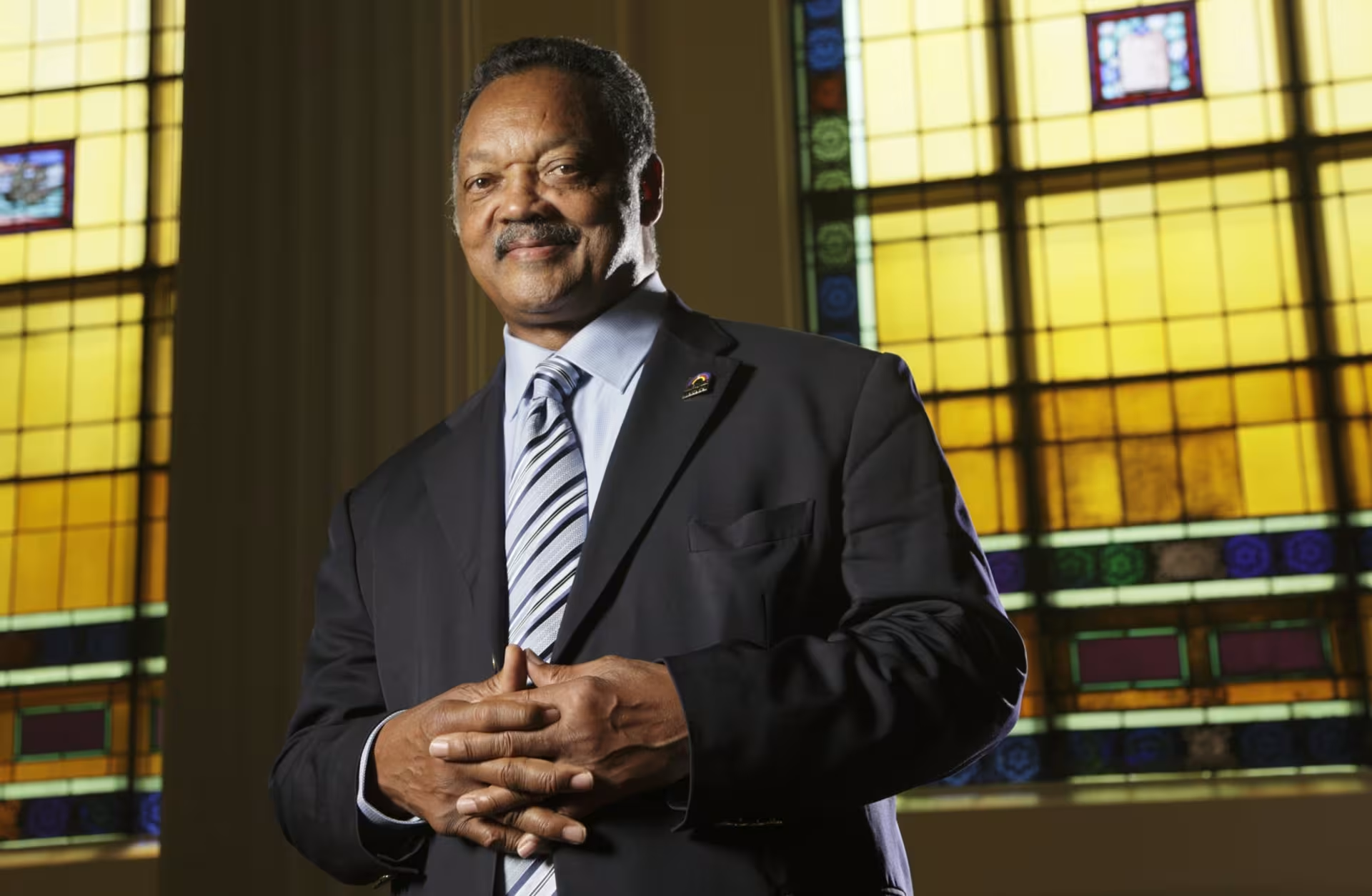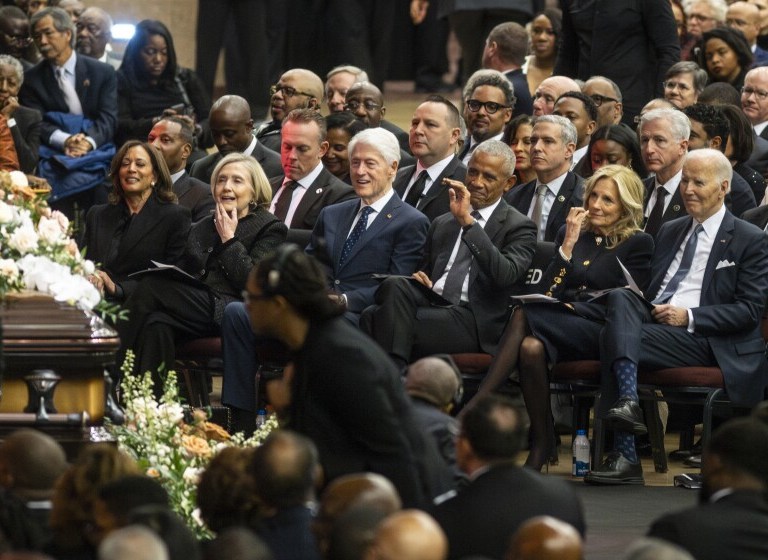
The funeral of civil rights icon Jesse Jackson became more than a memorial service. It became a powerful gathering of generations of Black leadership—many with deep connections to Historically Black Colleges and Universities.
Held at the House of Hope in Chicago, the service drew thousands of mourners, including political leaders, activists, clergy, and community organizers from across the country. Among them were prominent figures whose journeys intersect with HBCU culture and influence, reflecting how Jackson’s legacy helped shape the political and social ecosystem many Black college graduates operate within today.
Throughout his life, Jackson built bridges between civil rights activism and educational empowerment, frequently appearing on Black college campuses to encourage students to engage in civic life. His funeral served as a reminder that many of the leaders now shaping national conversations were influenced by the political pathways and organizing strategies he championed.
HBCU Alumni Stand Among Nation’s Leadership
One of the most visible HBCU alumni in attendance was Vice President Kamala Harris, a graduate of Howard University. Harris has often spoken about the formative role Howard played in shaping her political identity and civic commitment—values that align closely with the grassroots organizing Jackson spent decades promoting.
Jackson’s work in expanding political participation helped inspire a generation of leaders, many of whom were educated at HBCUs or deeply engaged with their communities. The presence of leaders connected to Black college traditions reinforced the idea that Jackson’s impact stretched far beyond marches and speeches—it helped build a pipeline of civic leadership.
During his presidential campaigns in the 1980s, Jackson energized young voters across the country, and HBCU campuses became key organizing hubs for volunteers and political dialogue. Students from schools like Howard, Florida A&M, and Southern University were often on the front lines of campaign activity, helping expand voter engagement in Black communities nationwide.
A Civil Rights Legacy That Reached Black College Campuses
Jackson’s relationship with Black college campuses was not symbolic—it was strategic. He understood that HBCUs were centers of Black intellectual thought, leadership development, and community organizing.
His visits to campuses often turned into electrifying moments where students were encouraged to see themselves as agents of change. From chapel addresses to political rallies, Jackson consistently emphasized the role young Black leaders could play in shaping America’s future.
For many students, these appearances provided their first close encounter with a national civil rights leader actively encouraging them to participate in political life. That influence helped inspire careers in public service, law, advocacy, and education.
The gathering of HBCU-connected leaders at Jackson’s funeral reflected the long arc of that influence.
A Moment of Reflection for the HBCU Community
As tributes poured in during the memorial service, many speakers reflected on Jackson’s enduring message of hope and political engagement. His signature rallying cry—“Keep Hope Alive”—became more than a slogan; it became a philosophy embraced by generations of activists and students.
For the HBCU community, Jackson’s legacy is particularly significant. Black colleges have long served as incubators for social change, and Jackson recognized their importance early in his career. His willingness to engage directly with students helped cultivate the next generation of leaders who continue to influence politics, culture, and community development today.
The funeral was therefore not only a moment of mourning but also a reminder of the powerful relationship between civil rights movements and Black higher education.
As the nation reflects on Jackson’s life, many in the HBCU community are also reflecting on how his legacy continues to shape their campuses and their futures.