
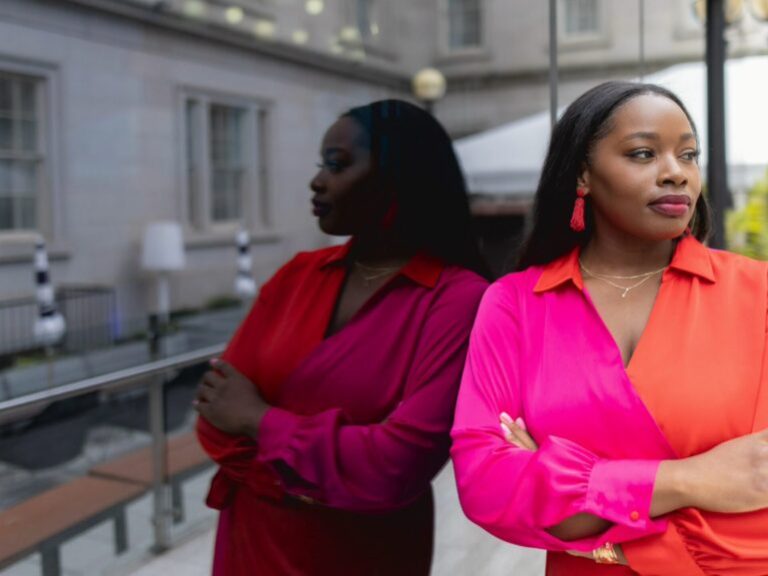
Jakeya Johnson runs for Congress with more than a campaign launch behind her. The Bowie State alumna is now part of Maryland’s June 23 Democratic primary for the 4th Congressional District, where she is challenging incumbent Rep. Glenn Ivey and pitching herself as a younger, movement-built alternative in a deep-blue seat. Her campaign says that if she ultimately wins the seat, Johnson would become the youngest Black woman ever elected to Congress at 31, a mark now associated with Lauren Underwood, who was 32 when she was sworn in.
Jakeya Johnson runs for Congress in a crowded primary
The race is not a two-person contest. According to the Maryland State Board of Elections, the Democratic primary field for Maryland’s 4th District includes Joseph Gomes, Shavonne Hedgepeth, Glenn Ivey, Jakeya Johnson, and Jonathan White. Election Day is June 23. That gives Johnson a short runway to break through in a district already represented by Ivey, who has served in Congress since January 2023 after winning the seat in 2022.
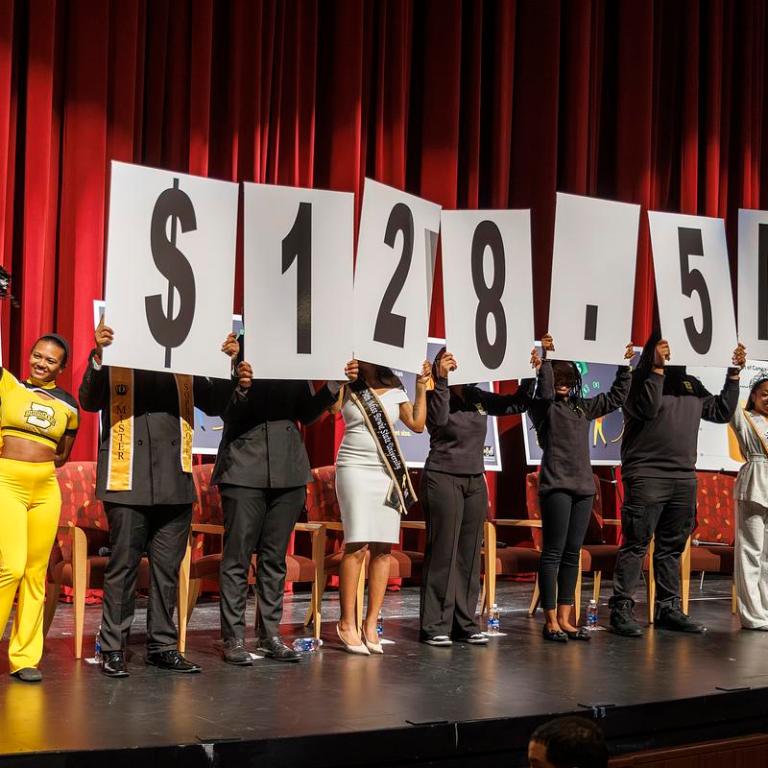
Johnson enters the race with an HBCU story that gives the campaign a different kind of center. She earned her Master of Public Administration and Policy from Bowie State University, and Bowie State had already highlighted her as part of its philanthropy fellowship pipeline before this run for office. In 2022, the university named her as one of the first students in its philanthropy fellowship program, and later identified her as an MPA student serving through a fellowship with the Tides Foundation. That matters because her campaign is not presenting Bowie State as a résumé line. It is presenting the school as one of the places where her policy work took shape.
Bowie State helped shape the policy lane she now runs on
A big part of Johnson’s pitch comes from a story that started in graduate school. On her campaign’s About page, Johnson says a class assignment on reproductive healthcare access grew into a real legislative effort after she gathered research, drafted a proposal, and pushed for policy change beyond campus. Bowie State later highlighted that same story in university coverage, noting that Johnson’s class project evolved into new Maryland law tied to reproductive healthcare access. Her campaign says the policy work eventually expanded access on public college campuses statewide and later reached Maryland community colleges as well.
That background gives Johnson a clearer issue identity than many first-time congressional candidates. She is not introducing herself as someone who simply wants to enter politics. She is introducing herself as someone who already sees policy as a tool and believes government should move faster for people who are usually asked to wait. Her campaign biography says she worked her way up from retail jobs, attended college while working full time as a parent, and built her career through organizing rather than institutional advantage. That life story is central to the contrast she is trying to draw in this race.
Her campaign is built around organizing, labor, and reproductive justice
Johnson’s current public profile is also tied closely to reproductive justice work in Maryland. Her campaign and background materials identify her as executive director of Reproductive Justice Maryland, a union steward, and a former chief of staff in the Maryland General Assembly. They also say she led a coalition of more than 50 organizations that backed Maryland Question 1. Official results from the Maryland State Board of Elections show that Question 1, the constitutional amendment on reproductive freedom, passed with 76.06% of the vote statewide. Johnson’s materials also point to her work with The Little Pink Pantry, a menstrual equity initiative that has distributed more than 3,000 products across Maryland. (Jakeya Johnson for Congress)
Her campaign is also leaning hard into a people-powered message. Johnson’s site says she does not take corporate PAC money, and the press backgrounder repeats that point while framing her run as a challenge to institutional politics in the district. That is one reason her campaign language sounds more movement-based than traditional. It is trying to speak to working families, union spaces, and younger voters who want a sharper edge from Democratic representation. In a district where her own backgrounder says more than 22% of working adults are employed by the federal government, that message is aimed at voters who are likely watching public-sector instability, layoffs, and cost-of-living pressure very closely. (Jakeya Johnson for Congress)
The history angle is real, but the numbers show the challenge ahead
The biggest obstacle for Johnson is not the story. It is the math. Federal Election Commission records show that through March 31, 2026, Johnson had raised $20,631.49 and ended the period with $3,610.83 cash on hand. Ivey, by comparison, had raised $562,697.55 and reported $452,980.65 cash on hand over the same reporting window. That does not make the race unwinnable, but it shows how steep the climb is for any challenger trying to unseat an incumbent member of Congress in a safe Democratic district.
Still, Johnson’s campaign is built to argue that biography, issue record, and urgency can matter even when fundraising does not line up. That is where the historic angle comes back into view. If she were to win the seat, her campaign says she would become the youngest Black woman ever elected to Congress. That would place a Bowie State University alumna into a national conversation about Black political leadership, generational change, and the pipeline from HBCUs into federal office. It would also add another HBCU name to the larger story around Black representation in Congress and the kind of leadership often associated with spaces like the Congressional Black Caucus.
For now, the next test is simple. Johnson has to turn a compelling story into enough votes to survive a competitive June 23 primary. The official ballot is set. The district already has an incumbent. The fundraising gap is real. But Johnson has something campaigns spend a long time trying to build from scratch: a clear narrative, a recognizable issue lane, and an HBCU connection that feels tied to the work, not added on after the fact. If her run gains more traction over the next stretch, this could become one of the more watched HBCU-adjacent political stories of the summer.