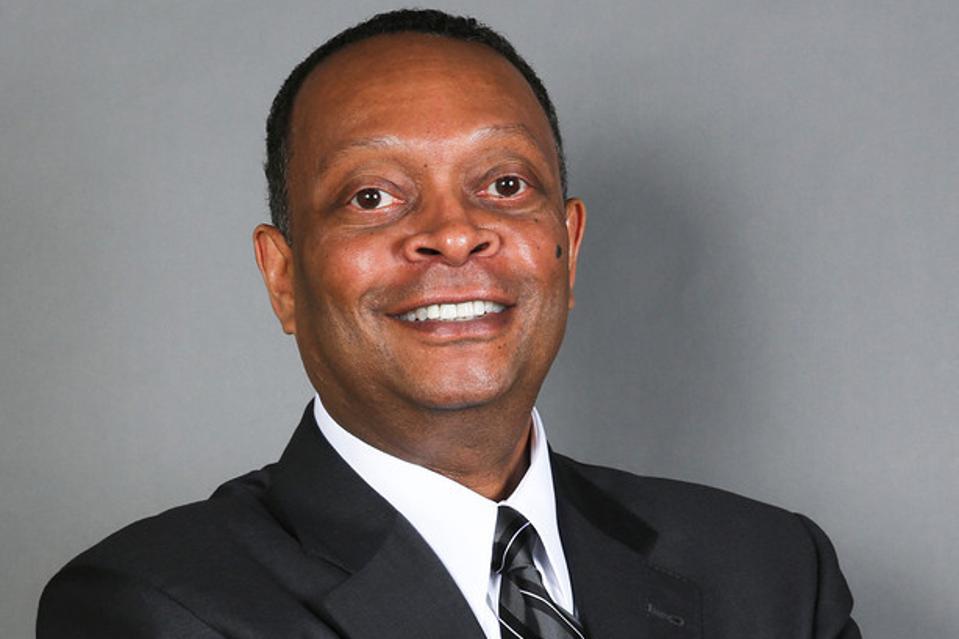
Delta Sigma Theta Honors Educators, Professionals

LUMBERTON — The Lumberton Alumnae Chapter of Delta Sigma Theta Sorority Inc. recognized and honored six individuals who it says have, are or will continue to make a significant impact in the community, county and state.

Historical black colleges and universities professionals honored during a program held at the African American Cultural Center in downtown Lumberton were Robeson County Commissioner Pauline Campbell, Fayetteville State University; Tuskegee airman mechanic James (Jimmy) Jones, North Carolina A&T State University; educator and community advocate Priscilla Leazer, Livingstone College; Judge Herbert L. Richardson, North Carolina Central University; and educator, Robeson Community College board member and community advocate John Staton, North Carolina A&T State University.

A special presentation was made to the guest honoree, 16B District Court Judge Vanessa E. Burton, University of North Carolina at Chapel Hill and Wake Forest University.

The chapter’s May Week program placed emphasis on the contributions made to education in the Robeson County community and aimed to raise the understanding by young people of the importance of higher education. The Lumberton Alumnae Chapter, through its scholarship programs, hopes to inspire and motivate high school students to attend college and maintain high scholastic grade point averages.

Groove Phi Groove Hosts College Tour For Philly Teens

PHILADELPHIA—The Philadelphia Graduate Chapter of Groove Phi Groove Social Fellowship sponsored a bus trip for junior and senior high school students to participate in the HBCU experience while visiting Lincoln University in Oxford, Pennsylvania and Morgan State University in Baltimore, Maryland.

Trip organizer Khary Atif, president of the Philadelphia Graduate Chapter, told The Final Call the tour has been happening for six years and its goal is to expose inner-city youth to specifically Black colleges and universities. “We think Black colleges and universities represent the essence of our striving as a people under trying and difficult circumstances. It lets us know we can have some measure of self-reliance in doing for self.”

The Grove Phi Grove fellowship represents an alternative to mainstream Black Greek Letter fraternities. Founded at Morgan State in 1963 it has as its goal to serve Black communities and pledges to support endeavors that project positive images of Black American men and help to move them forward. 

(l) Students from Philadelphia visited Lincoln University, an HBCU in Oxford, Pa. (r) Dennis Thomas, international president of Groove Phi Grove Social Fellowship.

According to the organization’s international president, Dennis K. Thomas who met the group of students at Morgan State, “The men of Groove Phi Groove has accepted the challenge and recognize that our future success depends on our ability to serve as positive role models who will instill positive moral values in our children.”

Young high school students have to understand the importance of higher education, he explained. “You cannot do anything unless you understand that you must expand your mind. We are just doing our part to inspire and expose them to something that can positively impact their lives,” said Mr. Thomas.

Fainese Morris, a senior at the Philadelphia Performing Arts Charter School, said this to The Final Call about the college tour: “I felt like I was on a road trip with my family. I will be attending Morgan State University come September.”

Attacking The 2 Percent Problem: Black Male Teacher Recruitment

Now that school is out, teacher recruitment is kicking in. We all know that you can’t teach all students the same right? Well, guess what? Not only can we not teach all students the same, but we also need to have the right teachers in front of our students in the classroom. We have powerful sisters in the classroom, but a scarcity of black male teachers.

So, what does this mean? What role models do we have for our students? Our African American student populations need powerful black male role models to lead by example and guide them to successful lives to shut down the pipeline to prison.

The current buzzword phrase is “diversity and inclusion.” But, how are schools or districts adhering to this goal without representation in the classroom? Fifty-one percent of the kids sitting in the seats in classrooms are minority students. Eighty-two percent of the teachers teaching them are Caucasian teachers.

Without black teachers in the classroom to teach black students, many negative factors come into play. Black students are less apt to see college graduation. They are less prone to enroll in Pre-AP, AP, or gifted courses. They are expected to do less from those that don’t look like them.

Only 2% of educators in the classroom are black males and 2% are Hispanic males. There is a racial gap that needs to be addressed here. Districts need to hire the population being served. Teachers need more culturally-relevant training and awareness. More males need to be hired as the industry is comprised of 23% males in a female-dominated field.

One black teacher in 3rd through 5th grades reduces a black student’s probability of dropping out of high school by 30%.

Recently, I worked with a student at a charter school in Dallas on Algebra. When the STARR results came out recently here in Texas, I advised this student that she passed. The entire time I was working with her, she thought she wouldn’t pass (and at times had an attitude when I was trying to help.) Upon the great news, she said, “Wow, I passed? I’m going to cry. You are kidding right?”

As a matter of fact, all the black students in Algebra 1 that I and the teacher worked with, passed the test. This particular young woman was the only black girl in her sixth grade and she struggled.

According to a report in The Chicago Tribune, the University of Illinois at Chicago will invest about $1 million in an initiative to recruit and train male elementary education majors of color, similar to how universities recruit and train star athletes.

There are about 575 black male public elementary school teachers in Illinois—roughly 1% of the total—and the number who are Hispanic and male is even smaller, at approximately 465. Black students with black teachers were suspended less often than black students with white or Hispanic teachers. Black students were three times more likely to be assigned to gifted programs when taught by a black teacher than a non-black teacher. In addition, having one black teacher in early elementary grades led to greater expression of interest in college by African American boys and raised the proportion of black students taking a college entrance exam by 10%.

SOLUTIONS FOR RECRUITING MORE BLACK MALE TEACHERS

  • Hire male educators of color for elementary school education
  • The Call Me MISTER program in Chicago, Clemson, and other schools (Mentors Instructing Students Toward Effective Role Models). Each person admitted to the program receives a full scholarship covering tuition and room and board for becoming an elementary education major
  • Hire millennial black male educators who can relate to students.
  • Increase teacher retention by ensuring teachers are heard by school administrators when addressing issues. Teachers are normally unhappy with school administration, teaching assignments and accountability/testing. Better relationships with administration, getting teachers in front of schools that make sense for them, and reducing the accountability/testing strain will increase retention immensely.

The journey may be long, but getting the right people on the right bus going the same direction is key to the success of our minority teachers and black and brown students.

This post was written by Jay Veal, a writer at Black Enterprise, where it was originally published. It is published here with permission.

Morris Brown Seeking Donations After Fire Causes $100K In Damages

Morris Brown, Georgia’s first historically Black college, has been hit with another setback after the college’s multi-purpose center caught on fire.

WSB-TV reports the fire happened over the weekend and caused a tremendous amount of damage to the multi-purpose center, which happens to be the school’s only functioning facility. Interim president Dr. Kevin James was informed about the fire on Saturday, but the fire started Friday and the sprinklers were activated later that evening.

“About 6 a.m. Saturday morning I got a call from my security team and they said there was a fire here at the campus,” Dr. James said. While the fire was contained, the water caused a flood. Restoration crews worked on the building and faculty were told not to come to work on Monday.

In total, Dr. James believes the fire caused nearly $100,000 in damages. The school hopes alumni can step up and help assist with costs of repairs as well as the public. A GoFundMe was set up by the school to help reach their $100,000 goal.

“We’re going to be reaching out to the alums to give what they can, and the community and other supporters to help us to raise the dollars needed to restore the building,” he said. They also reached out to the insurance company to see what can be covered.

Morris Brown hasn’t had the best luck in restoring its good name. After losing its accreditation in 2002 due to their debt, the Atlanta-Journal Constitution reports several administrators committed fraud by registering for financial aid and in their students’ names as well as people who never applied to the school.

Former president Dolores Cross and financial aid director Parvesh Singh were charged in December 2004 on a 34-count indictment with Cross sentenced in 2007 to five years’ probation. Since then, the school’s attendance has plummeted with only 42 students currently enrolled; a stark difference from its peak attendance of 2,700 students. Because the school isn’t accredited, students cannot register for federal loans.

In March, Dr. James became the interim president and stated a plan for accreditation with the Virginia-based Transnational Association of Christian Colleges and Schools. “We will be accredited within 12 to 18 months,” James said.

Founded in 1881 by the African Methodist Episcopal Church, Morris Brown’s history in Atlanta is rich as it was included in HBCU-based films like Stomp The Yard and Drumline.

“It’s just another roadblock but guess what? We’re going to overcome this and we’re going to keep moving forward,” Dr. James said. “Restore Morris Brown, the hard reset.”

This article originally appeared in VIBE.

Two Howard University Students Named 2019 Boren Scholar And Fellow

WASHINGTON –Two Howard University students, Diane Ijoma and Darryl L. Jones II, have been selected to receive the prestigious 2019 David L. Boren Award. The Institute of International Education (IIE), on behalf of the National Security Education Program (NSEP), awards David L. Boren Scholarships to undergraduate students and David L. Boren Fellowships to graduate students with the goal of adding important international and language components to their education through study abroad experiences in regions critical to U.S. interests.

NSEP’s Boren Awards program provides U.S. undergraduate and graduate students with resources and encouragement to acquire language skills and experience in countries critical to the future security and stability of our nation.

“On behalf of Howard University, I extend congratulations to our two extraordinary Boren award winners,” says President Wayne A. I. Frederick. “As future leaders, the international experience and perspective they are committed to developing will serve them well in their careers of global service.”

Ijoma, a junior political science and economics major at Howard University from Howard County, Maryland, has been named a 2019 Boren scholar. An alumna of the Freshman Leadership Academy, Ijoma is also involved in the International Affairs Society and the Petey Greene Program. She is managing editor of The Liberato, Howard University’s first publication dedicated to political discourse. As an intern for the U.S. Department of State, Ijoma worked closely with American Diplomats serving in Juba, South Sudan. She spent last summer in Arusha, Tanzania, studying Swahili as a Critical Language Scholar. She is also a recipient of the HBCU ETS Presidential Scholarship, a one-year, full-tuition merit award sponsored by the Educational Testing Service.

As a Boren scholar, Ijoma will receive more than $20,000 toward her French and Wolof studies. She will also participate in both a domestic summer program at the University of Florida and a fall semester abroad in Dakar, Senegal.

“I am tremendously honored to receive the Boren Scholarship,” says Ijoma. “Dakar is one of West Africa’s most vibrant cities, and I am excited to improve my French proficiency and be exposed to Senegalese culture for a semester. I look forward to representing the students of Historically Black Colleges and Universities in study abroad, especially on the African Continent.”

Jones, a doctoral student in the Department of African Studies, has been named a 2019 Boren fellow. Jones’ research focuses on the impact of desertification and drought on nomadic and pastoral societies, and traditional forms of slavery in the West African Sahel. He holds a master’s degree in African studies from the University of Ghana, and a bachelor’s degree in business administration from the International University of Monaco.

As a Boren fellow, Jones will receive $23,500 to study Arabic and Tamazight (“Berber”) in Morocco for the entire 2019-20 academic year. By learning these languages, Jones hopes to enhance his ability to access centuries-old archival records for further investigation.

“It is an extraordinary honor to have been awarded a Boren Fellowship to study in Morocco,” says Jones. “I am thrilled to have the opportunity to explore Morocco and its rich customs and culture, and to be able to study the storied Arabic and Tamazight languages. I look forward to representing the very best of black America and Howard University in all my encounters abroad once again.”  

This year, 851 undergraduate students applied for the Boren Scholarship and 273 graduate students applied for the Boren Fellowship. The IIE awarded 244 Boren Scholarships and 106 Boren Fellowships in 2019.

Since 1994, more than 6,000 students have received Boren Awards. Boren scholars and fellows represent a vital pool of highly motivated individuals who wish to work in the federal national security arena, and program alumni are contributing to the critical missions of agencies throughout the federal government.

# # #

About Howard University

Founded in 1867, Howard University is a private, research university that is comprised of 13 schools and colleges. Students pursue studies in more than 120 areas leading to undergraduate, graduate and professional degrees. The University operates with a commitment to Excellence in Truth and Service and has produced four Rhodes Scholars, 11 Truman Scholars, two Marshall Scholars, one Schwarzman Scholar, over 70 Fulbright Scholars and 22 Pickering Fellows. Howard also produces more on-campus African-American Ph.D. recipients than any other university in the United States. For more information on Howard University, visit www.howard.edu.

U.S. Air Force’s 1st Black Woman Thunderbird Officer: Remoshay Nelson, Howard Grad

One day before the anniversary of World War II, the United States Air Force shares the announcement, the 29-year-old Remoshay Nelson will make history in her position as public affairs officer.

“Capt. Remoshay Nelson, 8th Fighter Wing, Kunsan Air Base, Republic of Korea, has been selected as Thunderbird No. 12, the team’s public affairs officer. She will assume the team’s extensive media relations, community relations and public relations programs,” shares the official announcement.

Remoshay Nelson graduated from Howard University in 2011, where she trained in the Howard University ROTC program.

The United States Air Force Thunderbirds are a national team of just 12 officers supported by 120 enlisted personnel. Established in 1953, the Air Combat Command team serves as the official air demonstration squadron of the United States Air Force assigned to the 57th Wing.

“Since the team’s inception, 325 officers have worn the distinguished emblem of ‘America’s Ambassadors in Blue.” shares the Thunderbird’s website… with Nelson now representing as the very first female, Brown face to be leading and managing the PR and branding for the squadron.

Congratulations are in order! We look forward to seeing Remoshay traveling to the numerous prestigious events serving the country along with her colleagues, representing for African Americans, Black women and HBCU graduates.

Cheyney President Optimistic Budget Will Be Balanced By Month’s End

With less than a month remaining before Cheyney University must balance its budget, President Aaron Walton expressed optimism that the beleaguered school will make its deadline.

“We are making significant progress with our Resurgence Fundraising Campaign, and the effort is in line with our expectations. I remain confident that the university will successfully balance its budget by June 30,” Walton said on Monday. “But in order to do so, we continue to count on the support of generous donors. The University will be making a public statement about the Resurgence Campaign in the coming weeks. In the meantime, we are preparing and very excited to welcome our incoming freshman class.”

If Cheyney does not balance its budget by June 30, the nation’s oldest historically Black college could lose its accreditation. If Cheyney balances its budget, the school, which is part of the Pennsylvania State System of Higher Education, must then present a report to the Middle States Commission on Higher Education, the regional accrediting body, detailing its progress. Then, in November, the Middle States Commission will again evaluate its accreditation.

And if Cheyney balances its budget for the next three years, the state will forgive $30 million of the $43 million it owes to the Pennsylvania State System of Higher Education.

Walton, who took the helm of the struggling university in 2017, said in March that Cheyney was facing an approximately $4 million deficit.

Cheyney has already received a two-year extension from the commission to correct its finances and the university has been on probation since 2015.

Earlier this year, Pennsylvania State System of Higher Education Chancellor Dan Greenstein said the university faced a $10 million deficit and would most likely lose its accreditation this year because it was not in a position to balance its budget.

During a meeting with The Philadelphia Tribune’s editorial board, Walton said Aug. 15 was the next deadline, when the university must detail what became of the $29.5 million in financial aid it administered between 2011 and 2013.

Representatives of the Pennsylvania State System of Higher Education and state Department of Education did not return calls seeking comment.

Robert Bogle, the president of The Philadelphia Tribune, is the chairman of the university’s council of trustees.

State leaders rallied around Cheyney this year and the university planned to conduct an extensive outreach to alumni and other partners.

But some see a lack of urgency on the university’s part.

“There’s definitely a disconnect” between the school and alumni, said Jermaine Colon, a 2007 Cheyney graduate.

Colon, a 39-year-old West Philadelphia resident, said alumni are aware that Cheyney is facing some problems, but know little of the details. Cheyney lacks a robust and transparent campaign, particularly on social media, to explain what the university is facing, Colon said.

“There’s an old saying that goes, faith without works goes dead,” said Colon, a member of a regional alumni chapter. “So they want this school to have this miraculous financial turnaround, but they have to still put in the work and get their hands dirty.”

Colon said the regional alumni chapter is expected to launch a fundraising campaign for the school in coming months.

The Cheyney Foundation, a nonprofit that supports the university, is running a campaign called The Resurgence.

The only mention of Cheyney’s fundraising efforts on its website are a handful of links at the bottom of its homepage calling for donations.

Cheyney’s issues, however, are not indicative of the state of HBCUs across the country, said Ivory Toldson, professor of counseling psychology at Howard University and former executive director of the White House Initiative on Historically Black Colleges and Universities under then-President Barack Obama.

HBCUs nationally have maintained a steady enrollment, with many thriving, Toldson said. Those schools attract students through robust educational, graduate and professional programs and maintain endowments.

Toldson suggested that issues at the state, which oversees Cheyney among other institutions, were the source of some of Cheyney’s issues.

“If I was investigating, that’s where I would investigate first,” Toldson said, referring to the state.

Years of financial struggles and declining enrollment have impacted nearly every area of the campus, which straddles Chester and Delaware counties.

Enrollment this school year sank 38% compared to the previous year, dropping from 755 students to 469 enrollees — the steepest fall in enrollment among the 14 state-run colleges. In May, 168 students received diplomas from the university.

In recent years, the university has cut the number of majors from 19 to 15. Administrators were considering cutting more.

Last year was the first since 1914 that Cheyney did not have a football team. The school dropped out of the NCAA Division II for the 2018-19 school year and lost its membership in the Pennsylvania State Athletic Conference, which the school had held since 1951.

But enrollment is rising, said Jeff Jones, executive director of enrollment management at the school.

In fall 2018, Cheyney had 103 new freshman and 40 transfer students. As of Friday, 235 students have paid deposits to enroll in the school’s fall semester and 55 students received Keystone Scholarships, which are fully paid four-year scholarships given to high-achieving students.

The university has bumped up admission standards, focused on high-performing students and recruited at more high schools, which Jones credited with a renewed interested in the school heading into the fall semester.

“Before, folks didn’t believe you could attract those types of students to the school, but you can,” he said. “Cheyney University didn’t focus as a whole on trying to attract high-ability students.”

As one of two HBCUs in Pennsylvania with a long history, Cheyney occupies a unique space in the history of Black community, Toldson said. Its loss, he added, would be a huge disappointment.

“Cheyney is part of that rich Black legacy of Pennsylvania,” he said, “that meant so much to the entire nation.”

FAMU Researchers Use 3D Printer To Create Human Corneas For First Time In U.S.

TALLAHASSEE (CBSMiami) — For the first time in the United States, a 3D cornea was printed using human cells.

A small team of three scientists at Florida A&M University in Tallahassee created the cornea using a 3D bio-printer and human cells.

The technology was first developed in the UK.

The team expanded the existing tech by making a mold that can print multiple corneas.

Combined with a full model of a blinking eyeball the researchers spent more than a year developing, the corneas can be used to test new products.

20-year-old research assistant Paul Dinh hopes the corneas will also help create an eye that could be transplanted to people suffering from vision loss.

“I can go and travel and see all these beautiful things, but then there’s people out there that can’t really see at all. And it really made me appreciate the work that I was doing, that it had meaning to it and then that maybe my research would help someone in the future down the line,” said Dinh.

The researchers hope their model eyeball and cornea can help eliminate animal testing.

That would make new products cheaper to develop and improve animal welfare.

Morgan State University Upgrades Hughes Memorial Stadium

Morgan State University’s W.A.C. Hughes Memorial Stadium is currently undergoing a major overhaul of its football field and running track. The $2.5 million renovation project, which began on May 28, includes the replacement of the stadium’s existing field with a new premium playing surface and the upgrade to a new high-performance, all-weather track. Beynon Sports was selected to oversee the project and installation which is slated to be completed in time for the start of the fall football camp in early August. Updates to the project can be viewed online.

Hughes Stadium

“The latest phase of upgrades to Morgan’s athletic facilities is part of our systematic approach to improving and elevating key assets that we have on campus,” said Director of Athletics Edward Scott, Ph.D. “The investment in our facilities represents the University’s continued commitment to providing Morgan’s coaches and student-athletes with a high caliber athletic experience and the best resources available.”

The current renovation project is part of an ongoing, comprehensive enhancement initiative directed by Dr. Scott and supported by Morgan President David Wilson to improve the conditions, look and feel of the University’s athletic accommodations. This latest round of improvements comes on the heels of University’s installation of a new scoreboard at the stadium and facility branding enhancements; a redesign of the Talmadge Hill Field House court including new LED video displays; lighting and windscreens for the tennis courts, and upgrades to the Lois T. Murray Softball Field. Student-Athletes were also provided with a new academic center housed within Hill Field House. In all, during the past three years the University has made an investment of approximately $5 million into improving its athletic facilities.

The field, which is named for legendary Morgan coach Earl C. Banks and serves as the site for Bear’s Football home games, will feature a FieldTurf Versalush Landscape Turf. Known industrywide as one of the foremost brands in artificial turf technology, FieldTurf is expected to improve player safety, enhance play of the game, and withstand the rigors of Division 1 football competition. FieldTurf surfaces are currently being used in the National Football League (NFL) as well as in a number of Big 10 university stadiums, including at the University of Maryland, College Park.

The upgrade to the playing field comes at an opportune time, as new head football coach Tyrone Wheatley launches a new chapter in the program’s history and seeks to field a winning team. Officials in Morgan’s Athletic Department anticipate that the upgraded field will also assist in attracting top talent to the program. The Bears play their first home game this season on the new field against North Carolina Central University on Saturday, September 28, 2019.

“The Hughes Stadium project aligns with President [David] Wilson’s vision to make Morgan one of the most beautiful college campuses in the country,” said Joseph McIver, senior associate athletics director. “These renovations will provide a tremendous boost to that effort and will aid in bringing top-notch student-athletes to the Morgan athletic program.”

In addition to the enhanced football field, the new running track will be one of the top surfaces in the country upon completion. The new eight-lane Beynon BSS 2000 performance track will feature an encapsulated surfacing at a thickness of 13mm and will be colored blue and orange with orange exchange zones. The Olympic-caliber track will attract top runners and invitational meets as it is billed to improve performances and endure weather conditions. Beynon’s tracks are designed for speed, competition and daily training.

The new track will not only be a plus for Morgan’s highly-competitive Track and Field teams, it will also serve the University in retaining and attracting the top state and regional track events. Hughes Memorial Stadium hosts the annual Legacy Track Meet held in the spring and most recently the venue served as the site for the Maryland Public Secondary School Athletic Association (MPSSAA) State Championship Meets.

Morgan’s Track and Field teams are scheduled to open up their season on the new track in March of 2020 and Morgan State will again host the Legacy Track Meet in April of next year.

Hughes Memorial Stadium last underwent a major restoration project in 2001 when the “Home of the Bears” received a much-needed facelift.

“The National Treasure continues to look toward the future,” added McIver.

About Morgan

Morgan State University, founded in 1867, is a Carnegie-classified doctoral research institution offering more than 100 academic programs leading to degrees from the baccalaureate to the doctorate. As Maryland’s Preeminent Public Urban Research University, Morgan serves a multiethnic and multiracial student body and seeks to ensure that the doors of higher education are opened as wide as possible to as many as possible. For more information about Morgan State University, visit www.morgan.edu.

Pass Oracle 1Z0-061 Exam And Enjoy The Advantages Of Oracle Databases

Oracle database is widely used for advanced system management to store and retrieve the information. IT professionals need to have the ultimate skills in administering database management systems for enterprises that use Oracle database. As a result, Oracle University has designed the Examsnap.com exam to introduce the IT professionals to Database 12c: SQL fundamentals. This exam tests the candidates’ skills in the SQL programming basics such as designing database using in-built methods and classes. However, the Oracle 1Z0-061 exam also acts as a requirement for the following globally renowned Oracle certifications as:

  • Oracle Database 11g Administrator Certified Associate
  • Oracle Database 12c Administrator Certified Associate
  • Oracle PL/SQL Developer Certified Associate

For that reason, it is one of the most popular exams among candidates. If you the one who is going to pass it, here are the key characteristics:

The SQL fundamental consists of several topics that are tested in the Oracle 1Z0-061 certification exam. Some of the topics might be widely tested while others are rarely tested. Therefore, it is very crucial that you do research to know the key topics that form the basis of the Oracle Examsnap exam. The topics are as follows:

  • Theoretical and Physical Aspects of Oracle Database
  • Data Restriction and Sorting
  • Conditional Expressions and Conversion Functions
  • Data Display using Joins
  • Tables management using DML statements
  • Data Retrieval
  • Single-Row Functions
  • Reporting of Aggregated Data
  • Solving Queries by using Subqueries
  • Introduction to DDL

The list of the Examsnap exam topics is so long. It simply means that you need to possess all the required skills in order to manage Oracle databases. What are some of the advantages of Oracle databases? What makes them unique and reliable?

  1. Customer Satisfaction
  2. This is one of the advantages that make Oracle databases be widely used. All Oracle databases are backward compatible, therefore, allowing businesses to upgrade their systems without losing their database system. Besides, the new versions of Oracle databases offer the necessary new features which meet the customers’ requirements. This ensures that the database is based on customer satisfaction.
  3. Functionality

Oracle databases are practically functional for all level applications. That’s why many banking enterprises prefer to use Oracle databases in the management of data. Besides, Oracle databases provide a combination of both high-level technology and integrated business solution. Therefore, a huge amount of data can be easily stored and accessed.

  1. Reliability

The most important aspect with Oracle databases is their reliability. It delivers excellent performance when challenged by tasks related to data storage and access. Oracle databases passed the ACID test which is used to determine the integrity of data stored. This test is important because the main objective of any database is to provide reliable data storage. Therefore, Examsnap databases have shown the ability to deliver high integrity of data storage.

  1. Flashback Technology

A flashback technology is a technique of keeping the data stored in a database in case the database management system ceases to work. Oracle database allows an extremely efficient way of retrieving stored data in case of such instances. Let’s consider a bank for example. If you lose the data of the transactions that have taken place in 1 minute, then you are going to encounter great losses. Therefore, flashback technology helps in such cases.

  1. Run on different platforms

Oracle databases are not restricted to a particular operating system. They can be implemented and used in all the operating systems. If your business uses Linux, then you do not need to worry because Oracle databases can run perfectly in all Unix operating system.

The top preparation tools for Oracle 1Z0-061 exam

Our most recommended way to prepare for the Oracle 1Z0-061exam is to use a resource that contain all the prep materials under one roof. And such website is Examsnap.What does it offer?

Examsnap will ensure you get the best and most valid prep materials for the Oracle 1Z0-061exam. These prep materials include exam dumps, training courses and articles that contain vital tips to pass the exam. At Examsnap you’ll find multiple revision packages such as ETE files and the ETE Exam Simulator to open these dumps. With the help of this modern educational tool you can create, edit, and take practice exams. With the ETE Exam Simulator, you can be sure that you have been placed within a real exam context and be sure to get the highest exam pass.

Career prospects

  • Database Designer
  • Database Developer
  • Database Architect

Final word!

Oracle databases are widely applied because every organization uses data and data needs to be stored. The Oracle 1Z0-061 exam equips you with the ultimate skills to design and manage Oracle databases that meet the customer requirements. The advantages of the Oracle databases clearly show that it is very necessary for IT professionals to take the Oracle 1Z0-061 exam as an introduction to SQL fundamentals. Make up your mind today and be the next big Oracle certified professional in the market. For that, enhance your preparation with study materials from Examsnap website.

Examsnap – Pass Oracle 1Z0-061 Exam and Enjoy the Advantages of Oracle Databases

Oracle database is widely used for advanced system management to store and retrieve the information. IT professionals need to have the ultimate skills in administering database management systems for enterprises that use Oracle database. As a result, Oracle University has designed the Examsnap exam to introduce the IT professionals to Database 12c: SQL fundamentals. This exam tests the candidates’ skills in the SQL programming basics such as designing database using in-built methods and classes. However, the Oracle 1Z0-061 exam also acts as a requirement for the following globally renowned Oracle certifications as:

  • Oracle Database 11g Administrator Certified Associate
  • Oracle Database 12c Administrator Certified Associate
  • Oracle PL/SQL Developer Certified Associate

For that reason, it is one of the most popular exams among candidates. If you the one who is going to pass it, here are the key characteristics:

The SQL fundamental consists of several topics that are tested in the Oracle 1Z0-061 certification exam. Some of the topics might be widely tested while others are rarely tested. Therefore, it is very crucial that you do research to know the key topics that form the basis of the Oracle Examsnap exam. The topics are as follows:

  • Theoretical and Physical Aspects of Oracle Database
  • Data Restriction and Sorting
  • Conditional Expressions and Conversion Functions
  • Data Display using Joins
  • Tables management using DML statements
  • Data Retrieval
  • Single-Row Functions
  • Reporting of Aggregated Data
  • Solving Queries by using Subqueries
  • Introduction to DDL

The list of the Examsnap exam topics is so long. It simply means that you need to possess all the required skills in order to manage Oracle databases. What are some of the advantages of Oracle databases? What makes them unique and reliable?

  1. Customer Satisfaction
  2. This is one of the advantages that make Oracle databases be widely used. All Oracle databases are backward compatible, therefore, allowing businesses to upgrade their systems without losing their database system. Besides, the new versions of Oracle databases offer the necessary new features which meet the customers’ requirements. This ensures that the database is based on customer satisfaction.
  3. Functionality

Oracle databases are practically functional for all level applications. That’s why many banking enterprises prefer to use Oracle databases in the management of data. Besides, Oracle databases provide a combination of both high-level technology and integrated business solution. Therefore, a huge amount of data can be easily stored and accessed.

  1. Reliability

The most important aspect with Oracle databases is their reliability. It delivers excellent performance when challenged by tasks related to data storage and access. Oracle databases passed the ACID test which is used to determine the integrity of data stored. This test is important because the main objective of any database is to provide reliable data storage. Therefore, Examsnap databases have shown the ability to deliver high integrity of data storage.

  1. Flashback Technology

A flashback technology is a technique of keeping the data stored in a database in case the database management system ceases to work. Oracle database allows an extremely efficient way of retrieving stored data in case of such instances. Let’s consider a bank for example. If you lose the data of the transactions that have taken place in 1 minute, then you are going to encounter great losses. Therefore, flashback technology helps in such cases.

  1. Run on different platforms

Oracle databases are not restricted to a particular operating system. They can be implemented and used in all the operating systems. If your business uses Linux, then you do not need to worry because Oracle databases can run perfectly in all Unix operating system.

The top preparation tools for Oracle 1Z0-061 exam

Our most recommended way to prepare for the Oracle 1Z0-061exam is to use a resource that contain all the prep materials under one roof. And such website is Examsnap.What does it offer?

Examsnap will ensure you get the best and most valid prep materials for the Oracle 1Z0-061exam. These prep materials include exam dumps, training courses and articles that contain vital tips to pass the exam. At Examsnap you’ll find multiple revision packages such as ETE files and the ETE Exam Simulator to open these dumps. With the help of this modern educational tool you can create, edit, and take practice exams. With the ETE Exam Simulator, you can be sure that you have been placed within a real exam context and be sure to get the highest exam pass.

Career prospects

  • Database Designer
  • Database Developer
  • Database Architect

Final word!

Oracle databases are widely applied because every organization uses data and data needs to be stored. The Oracle 1Z0-061 exam equips you with the ultimate skills to design and manage Oracle databases that meet the customer requirements. The advantages of the Oracle databases clearly show that it is very necessary for IT professionals to take the Oracle 1Z0-061 exam as an introduction to SQL fundamentals. Make up your mind today and be the next big Oracle certified professional in the market. For that, enhance your preparation with study materials from Examsnap website.

HBCU Grad Charles Montorio-Archer Is The First Black CEO Of Chicago’s One Hope United

Attorney Charles Montorio-Archer, 46, is the first African American CEO in the 124-year history of Chicago’s One Hope United, a social services organization with a $52 million budget. OHU provides education, foster care, adoption, counseling and other support to over 9,000 children and families annually in four states. Montorio-Archer, who took the helm in January, is married and lives in River North.

How does it feel to be One Hope United’s first black CEO?

Failure is not an option for what my leadership represents to our clients and staff.

What was your childhood like?

In certain ways, my family was like our clients here. We had one foot in poverty and one foot in the middle class. I grew up in Brooklyn, the oldest of eight. Both my parents worked, and we had all the necessities, but it was still a struggle. At one point, we lived in the projects.

How did that affect you?

I had a fear that my life would be like that forever.

Your turning point?

I had to repeat fourth grade, and that changed everything. I realized that if I didn’t achieve educational advancement, I could be trapped in that situation.

What major hurdles have you overcome?

Accepting myself for who I am. As an African American growing up in a Christian home, sexuality was heterosexual, and that was that. I didn’t fully live my life as a gay man until four years ago, when I met my husband (Paolo Montorio-Archer). That transformation is particularly important at One Hope.

Why?

I expect our clients to be open about their lives, so I must be, too.

A time you struggled hardest?

When I was getting my bachelor’s at Lincoln University in Pennsylvania, I ran out of money. I went back to New York and got a job at a nonprofit working from 4 to midnight. I slept a few hours and at 5 a.m. drove back to school.

What has been most difficult about moving from New York to Chicago?

Being away from Paolo. He is a vice president at (fashion house) Lanvin in New York, so we see each other on weekends.

On what do you splurge?

Art. We like emerging artists who do abstract, message-driven work and really powerful pieces, such as Jonathan Rosen and Guy Stanley Philoche.

Who are your heroes?

People who don’t have as much as I have and still make life work, especially single mothers. Drag queens are some of the most courageous people in the world, too. To walk out publicly knowing that you may not be accepted takes strength.

Grambling State Hires First Female Band Director

GRAMBLING, La. — Grambling State University has hired its first female band director. 

Dr. Nikole Roebuck will lead as the university’s new chair of the Department of Music and the first female director of bands in its 93-year history.

Roebuck’s work will include overseeing operations for the world-famed Tiger Marching Band, which was recognized globally in April 2019 after performing for Beyoncé and Adidas, according to Grambling State University’s website. The band was started in 1926.

“We are excited to have one of our home-grown innovators lead during this historic time,” said President Rick Gallot. “Dr. Roebuck is one of our most dedicated and humble leaders and a proven gift to our students, community, and all who support the world-famed sound of Grambling.” 

Roebuck will serve as the third woman band director in the history of historically black colleges and universities, joining Tomisha Brock of Clark Atlanta University and Dr. Kerry Anne Simon of Mississippi Valley State University who were appointed in May 2017 and 2019, respectively. 

Her appointment will also make her the second woman band director in the history of the Southwestern Athletic Conference.

Charlamagne Tha God Compares Elizabeth Warren To HBCU Grad Rachel Dolezal

FILE – In this July 24, 2009, file photo, Rachel Dolezal, a leader of the Human Rights Education Institute, stands in front of a mural she painted at the institute’s offices in Coeur d’Alene, Idaho. Dolezal, the former NAACP chapter president who made headlines in 2015 when her race came into question, has been tapped to speak at a Martin Luther King Day celebration set for January in Cary, N.C. (AP Photo/Nicholas K. Geranios, File)

U.S. Sen. Elizabeth Warren is taking renewed heat for her past Native American heritage claims — this time from a radio host who compared her to Rachel Dolezal, a former NAACP leader who was found to be a white woman posing as black.

Warren was forced to confront her ancestry claims on New York-based radio show “The Breakfast Club” Friday morning, including the DNA test she took last fall that showed she had a Native American ancestor six to 10 generations back.

“I’m not a person of color. I’m not a citizen of a tribe, and I shouldn’t have done it,” Warren said.

Co-host Charlamagne tha God asked, “If you had a chance to do it over, would you?”

Warren said, “I can’t go back,” before pivoting into key issues of her presidential bid, including canceling student loan debt and investing in historically black colleges and universities.

But Charlamagne tha God didn’t let the subject drop, questioning how long Warren knew the truth about her ancestry.

Warren responded by saying, “Tribal citizenship is an important distinction and not something I am.”

Warren was pressed on whether she’d reaped any benefits from her claims — Warren stated on her Texas state bar card registration that she was “American Indian” and long listed herself as a minority in a national law professor directory. Warren responded Friday that a Boston Globe investigation found she didn’t receive any advantages and that “nothing affected any job I ever got.” The Globe report cited denials by people involved in her hiring at Harvard Law School that her minority claim played a role. Harvard University, however, touted Warren as a minority hire in 1996.

Charlamagne tha God told Warren, “You’re kind of like the original Rachel Dolezal, a little bit.”

Warren, appearing slightly flustered, said, “This is what I learned from my family” before another host cut her a break and changed the subject.

Warren has been enjoying somewhat of a resurgence in the polls recently. She’s essentially tied for third with U.S. Sen. Kamala Harris, Philadelphia-based Democratic strategist Neil Oxman said, though she remains far behind former Vice President Joe Biden and U.S. Sen. Bernie Sanders. Her slew of policies had largely replaced discussion of her ancestry, pundits said.

“She’s in a period where people are kind of taking a second look at her, and that’s why she’s rebounded somewhat in the polls,” Oxman said.

But Oxman said Warren has to learn to handle her ancestry better.

“This has got to be the last time she mishandles this stuff,” Oxman said. “This thing defined her, to some degree, for some period of time, and she seems luckily to have gotten away from that. You don’t want this thing to redefine yourself, and so she better figure it out.”

Instead of an apology tour, Oxman said Warren should just say “Hey, I’m proud to have whatever percentage of Indian blood I have. I’m proud to have it, and that’s it. You don’t say anything else, ever. You move away from it.”

But Massachusetts-based Democratic strategist Scott Ferson said the radio show conversation likely wouldn’t hurt Warren in the long-term.

“I would say she’s sort of 93% past it at this point,” Ferson said, adding, “I think the issue is pretty well baked for most people and the people who are going to have a problem with it are people who aren’t supportive of her for other reasons as well.”

Dean Of The Divinity School At Howard University: ‘Christianity Was Pro Slavery’

When the Rev. Jaymes Robert Moody takes his pulpit to preach, sometimes he pictures the graveyard.

That is where his congregation was born.

It was called Georgia Cemetery — named, he has been told, for the place the enslaved were stolen from before being sent to work the fields in Huntsville, Ala. 

The graveyard was where they buried their loved ones. It was there they could gather in private. It was there where they could worship a God who offered not only salvation, but the thing they sought most — the promise of freedom.

That graveyard, and those who founded what is now St. Bartley Primitive Baptist Church in 1820, weighs heavy on the young minister who now leads the congregation. It is not lost on him that the Gospel he preaches, the Gospel so many black people embraced to sustain them through the horrors of beatings and rapes, separations and lynchings, separate and unequal, is the same Gospel used to enslave them.

“That’s the history of the black church,” said Moody, who at 29 leads a congregation of 2,000 members that will celebrate 200 years in existence next year.

He makes sure every new member goes through a church orientation to learn that history — all of it. He preaches about the ways slaveholders claimed the Bible was on their side, citing passages that commanded servants to obey. He also talks about the ways black Christians have reclaimed the Bible and its message of liberation.

400th Anniversary 

As America commemorates the 400th anniversary of the creation of representative government in what would become the United States, and the first documented recording of captive Africans being brought to its shores, it is also grappling with the ways the country justified slavery. Nowhere is that discussion more fraught than in its churches.

“Christianity was pro slavery,” said the Rev. Yolanda Pierce, dean of the divinity school at Howard University. “So much of early American Christian identity is predicated on a pro slavery theology. From the naming of the slave ships, to who sponsored some of these journeys including some churches, to the fact that so much of early American religious rhetoric is deeply intertwined … with slaveholding: It is pro slavery.”

Some Christian institutions, notably Georgetown University in the District of Columbia, are engaged in a reckoning about what it means that their past was rooted in slaveholding. But others have not confronted the topic.

“In a certain sense, we’ve never completely come to terms with that in this nation,” Pierce said.

The Africans who were brought to America from 1619 onward carried with them diverse religious traditions. About 20% to 30% were Muslim, Pierce said. Some had learned of Christianity before coming to America, but many practiced African spiritual traditions.

Early on, many slaveholders were not concerned with the spiritual well-being of Africans. But few had qualms about using Christianity to justify slavery.

Some theologians said it was providence that had brought Africans to America as slaves, since their enslavement would allow them to encounter the Christian message and thus their eternal souls would be saved, said Mark Noll, a historian of American Christianity.

Some preachers encouraged slave owners to allow their slaves to attend worship services — though only in separate gatherings led by white pro slavery preachers. They had to be seated in the back or the balcony of a segregated church. Those men of God argued that the sermons on the injunction in Ephesians and Colossians, “slaves, obey your earthly master,” would promote docility among enslaved workers.

Slave Bible

The Museum of the Bible in Washington displays a “slave Bible,” published in 1807, which removed portions of Scripture including the Exodus story that could inspire rebellious thinking.

Some ministers promoted the idea that Africans were the descendants of Ham, cursed in the book of Genesis, and thus their enslavement was fitting.

“That biblical interpretation is made up of whole cloth in the 15th century,” Noll said. “There’s just no historical record of any seriousness to back it up. It’s made up, at a time when Europeans are beginning to colonize Africa.”

Slaveholders frequently noted that the Israelites of the Old Testament owned slaves.

Abolitionists tried to make arguments against using the Bible to justify slavery, but they were in the minority.

“They were considered to be radical,” Noll said. “Often they were considered to be infidels, because how could they say God was opposed to slavery if it was so obvious in the Bible that he was not?”

The foremost objectors, of course, were black people themselves. Large numbers adopted the faith, and they quickly began remaking it into their own.

“As soon as enslaved people learned to read English, they immediately began to read the Bible, and they immediately began to protest this idea of a biblical justification for slavery,” 

Pierce said.

“Literally as soon as black people took pen to paper, we are arguing for our own liberation.”

Those books and broadsides challenging prevailing biblical interpretations were savvy.

“They very quickly learned that the only way we can be heard is to speak the language of our slaveholders, to speak to them about the text that they love, that they believe in,” 

Pierce said.

SPURRING NEW INTEREST

In the generations since — including during the civil rights movement of the 1960s, as well as a present-day movement spurring new interest in African religions — some black people have rejected Christianity as the religion of the oppressor. Many have embraced Islam or have explored African traditions; young adults today include complaints about the church not doing enough to address racial injustice on their long list of reasons for leaving church.

But for vast numbers, both centuries ago and now, Christianity motivated and uplifted with the promise of heavenly rewards and the possibility that their reward might come on earth, too. Christianity brought enslaved Africans “this powerful and profound sense of hope,” Pierce said. “That Jesus would return. That there is a life and world after this life. That what is going on with the human body, the mortal realm, is just temporary. That there is eternity. That you will be rewarded, you will experience joy and peace and comfort. … That this God is a God of transformation.

“No wonder it was embraced.”

That conversion did not come without questioning the faith that brought both oppression and liberation.

“More than anything, this challenged them the most: The challenge of believing in a God that at the time was used to intend to pacify, but still believing in the God that could provide freedom,” 

Moody said.

The religion of black Christians and white Christians is constructed on the same tenets — the belief in an almighty God, Jesus Christ as savior and the Holy Spirit as comforter. But the division that began with such wildly divergent interpretations of the Bible’s message about slavery would only expand. As of 2014, 80% of American churchgoers attended churches where at least 80% of the congregation is of only one race, according to Pew Research Center.

“The church gave spiritual sanction [to racism], both overtly by the things that it taught and covertly by the critique that it did not raise,” said Bishop Claude Alexander, who leads The Park Church in Charlotte, N.C.

Different Priorities

Political priorities vary widely. White evangelicals tend to be more focused on issues such as abortion and sexuality, while many black Christians rate issues of economic and racial inequality and criminal justice higher, Alexander said.

“How does one account for that difference in priority when these groups basically believe the same thing?” he asked. “If I’ve never experienced oppression or marginalization outside of the womb, then it’s easy for me to make what happens inside the womb a priority.”

“There’s no quote-unquote ‘theology’ that’s not shaped by context,” Alexander said, adding that racialized violence is the context that has always shaped America and the American church, Alexander said. “It was the amniotic fluid out of which our nation was born.”

But Alexander is looking to change the context. He is working on putting together groups of leaders — such as the presidents of predominantly white evangelical colleges and the presidents of historically black colleges; the ministers of influential white churches and influential black churches — who will travel together on what Alexander terms “pilgrimages.”

They will travel together to the sites of America’s unhealed racial wounds. To the lynching memorial in Montgomery, Ala. To Charleston, N.C.’s, harbor, where so many enslaved people were transported that, to this day, 60% of black people can trace their history back to that bloody port. To Virginia, where the first enslaved Africans set foot on this soil in 1619.

Perhaps, he hopes, they will leave their pilgrimage ready to face the fifth century since then with a bit more grace.

Lafayette Teen Accepted Into 139 Colleges Chooses HBCU

Chantelle Gary said her daughter, Normandie Alise Cormier, has always been an “ambitious kid.” At 18, Cormier has already tutored 146 adults, helping them pass exams to obtain their high school equivalency diploma or gain entry into graduate school.

Cormier, however, set another ambitious standard this month. After graduating with double honors from both Early College Academy and South Louisiana Community College in Lafayette, Cormier has been accepted into more than 139 colleges and five medical schools, including international institutions in Spain, Italy, Switzerland and South Africa, according to a news release Tuesday (May 28).

Cormier also received a collective total of $8.7 million in scholarship offers, including 17 full rides, according to the release. In a statement, Cormier said she’s planning to attend Xavier University due to its reputation as the top producer of black doctors nationwide.

“It’s been a long journey with lots of obstacles but with a positive mindset, everything I put my mind to was within reach,” Cormier stated.

Cormier told The Acadiana Advocate she applied to dozens of schools through the Common Application and the Common Black College Application. She plans to enroll at Xavier in the fall to complete her bachelor’s degree on a pre-med track, with the goal of becoming a surgeon. Cormier credits her success to her single mother, who homeschooled Cormier along with her brother, according to the release.

Cormier not only overcame poverty and bullying, but she was also bedridden in a hospital a few months before graduation. The Advocate reported Cormier developed an immune system disorder at age 2 that led to frequent hospital stays while she was growing up.

Cormier has also immersed herself in entrepreneurship since the age of 12, according to the release. In high school, she started three initiatives focused on tutoring and youth mentoring, and she was only 15 when she presented her first business seminar in Las Vegas alongside her mother, according to the release.

Cormier received recognitions of academic excellence from U.S. Presidents Barack Obama in 2015 and Donald Trump in 2018, according to the release. This summer she will be honored at a ceremony in California with a GE-Reagan Foundation scholarship and award of $40,000 in memory of former President Ronald Reagan. Cormier will also receive a Community Champion award this July.

“It’s such a surreal feeling knowing there’s light before the end of the tunnel and it starts with being humble and counting every blessing,” Cormier stated.

DIY Garden Projects to Amaze Your Loved One

Are there zones in your garden that have lost their former attractiveness, and you would like to renovate them to make your beloved a surprise? We have prepared a whole bunch of easy and quick ideas for you to get inspired, so that next season, you can take up the “tuning” of your garden possessions with new forces! Choose the project for yourself and amaze your loved one.

1. More potted plants!

As usual, beautiful flowering pottery pieces will help to camouflage the unattractive corner for transplanting.

2. Meadow with wildflowers

This idea is so cool because you will be able to walk in the meadow among fragrant plants, even if very small, without leaving the gate of your garden. What a romantic gift to your partner – planting some wildflowers!

3. Creative decor

You can use the shells of snails to make small decorations for the flower bed. Simple wooden or bamboo sticks will serve as a support and put the shells on top of them. These pieces are also suitable for decorating flower boxes and pots.

4. Silent alley

One place to rest is good, but a few are even better. Especially if the path to a nook will run along the alley planted with wisteria and ‘Annabelle’ hydrangeas.

5. Woodpile in a new role

Another great idea to surprise your partner. If you ever date Russian women, take this into consideration because they love gardening! A neatly folded firewood can be easily turned into a protective screen – behind it, you can place a trash container or equip a place to make compost. In order for the construction to be stable, tie or glue it together making a stable back panel.

6. Unexpected accent

The boulder, which was placed on a gravel bed, can be used to divide the motley flower garden into zones, making the picture more dynamic. It is surrounded by fescue, sage ‘Purpurascens’ and red barberry. In the background,  (Sisyrinchium striatum can be planted.

7. Fancy retro decor


If there is no place for a pond in the garden at all, you can always make your own interpretation of it. Like the one that is made of zinc buckets planted with algae and cranes in antique style. Place the buckets as if plants are pouring out of them.

8. Paradise

In a small area covered with gravel dumping, a fountain can be placed. Surrounded by rudbeckia with pink flowers, Echinacea, Pennisetum foxtail, and Monard, this place begs you to sit down and enjoy the beautiful view.

9. Edging for the flower bed

Border it with a low brick wall, and a vegetable garden or flower bed will look neat and tidy. In addition, stones accumulate heat, which has a beneficial effect on the development of plants. Potted daisies can gently emphasize the rural charm of this corner

10. Want a bright contrast?

Then you are welcome! Blue flowers of cornflower or orange marigolds enhance the brightness of each other’s colors. Both plants are annuals. Plant them and enjoy vivid colors. Calendula should be sown from April to June, blue cornflower – preferably in April, but you can do it until June. Why not create such a bright ensemble?

11. Let there be light!

Moisture-resistant colored paper lanterns suspended in the trees will light up the open-air party and add mood, and in the daytime, they will not go unnoticed. Important advice: they do not need electricity, the flashlights are powered by ordinary batteries.

12. An interesting approach

Who said that the trickle should flow only among lush greenery and that grassy perennials could not grow on the terrace among the plates? Our idea is to create the design of the walkway among the mini-flower garden on the summer terrace which will resemble the flow of water. Agree, a very original decision.

13. The higher, the better

To make a spectacular accent in the flower garden, you can use the original garden obelisk. And the more graceful, more beautiful, and higher it will be, the better! Use bright details – this is a simple and fast way to make the garden a lot more beautiful!

14. Music of the Light

After a hard day’s work, nothing is more relaxing than a gathering with loved ones on a cozy bench in the garden. And to create a pleasant and relaxing atmosphere, place candlesticks with flickering candles next to a place to relax.

15. White walls as a background for vegetation

Design a small patio, as if it were a part of an interior. White ink is often used to enhance the brightness of a small space. With white brickwork and white garden furniture, you get an attractive summer terrace, which has a serious, airy and bright style.

16. Greens on the fence

Use the fence to add color and greenery to the garden corner. Growing plants on the fence or vertical grating plants are the perfect solution for a small area. Vertically overgrown fence distracts attention from a small courtyard.