Black Star & HBCUs Empowering the Next Generation of Soccer Fans and Players

Black Star Banner

Black Star is elevating soccer within Black American communities, seamlessly blending sport, lifestyle, and culture. Through strategic partnerships with Historically Black Colleges and Universities, they are creating pathways for Black players, celebrating their cultural heritage, and fostering opportunities for personal and athletic growth—both on and off the field.

This mission resonates deeply with the spirit of HBCUs, which champion representation, opportunity, and empowerment. Black Star’s Talent ID Camps connect high school athletes with college soccer opportunities while sharing the inspiring stories of HBCU student-athletes. Together, Black Star and HBCUs are shaping skilled athletes and nurturing future leaders.

However, Black Star is more than just soccer. It celebrates Black culture through storytelling, fashion, and community engagement, aiming to inspire the next generation to excel academically and personally.

HBCU Soccer Players Share Their Experiences

A recent initiative exemplifying Black Star’s commitment is the “Our Space to Play” series, which provides a platform for HBCU athletes to share their stories. This series recently featured a member of Alabama State University’s women’s soccer team and several players from Paul Quinn College.

Our Space to Play: Kensley Simmons, Alabama State, and Soccer

In reflecting on the intertwining of soccer and HBCU pride, Kensley Simmons, a junior at Alabama State University, shared her experience as a student-athlete. For Kensley, representing her HBCU carries profound significance. “Being able to represent an HBCU, especially one my grandparents graduated from, is something that’s very important and special to me,” says Simmons.

Since the age of three, soccer has been Kensley’s sanctuary. “It just makes me feel free and very happy like I have no worries when I’m playing soccer,” she added. Her appreciation for the sport radiates as she reflects on its transformative influence on her life and identity.

Kensley’s journey underscores the power of HBCU culture and the global connections forged through soccer. It serves as a celebration of heritage, diversity, and the nurturing environment HBCUs provide for athletes to flourish.

Our Space to Play: Paul Quinn College Builds Family and Opportunity Through Soccer

At Paul Quinn College, soccer transcends being merely a game—it embodies a familial bond. The players unite from various backgrounds around their shared love for the sport and the close-knit community of their HBCU. “Playing soccer here at Paul Quinn is like a big old family,” one student expressed. “They welcomed me as a family, not just a regular student.”

The soccer program at Paul Quinn began with a single student’s vision for a soccer team, illustrating how HBCUs empower students to transform their ideas into reality. 

This journey highlights these institutions’ unique role in fostering dreams, leadership, and legacies that extend far beyond the field.

Learn More About Black Star

Are you curious about how Black Star is further cultivating Black soccer culture and creating new pathways? Visit their website to discover more about their mission and explore the events they host nationwide.

You might also be interested in subscribing to End to End—their biweekly newsletter that shares both on-field news and off-field stories celebrating the intersection of soccer and Black culture through fashion, music, art, and more. Join the movement as they spotlight emerging players, celebrate unforgettable moments, and highlight the celebrities impacting soccer’s growth. Black Star is at the forefront of championing Black soccer communities and culture—from end to end. 

Bosnia-Herzegovina Takes a Step Forward in Veterinary Practices with HBCU

AAMU Hosts Veterinarians from Bosnia-Herzegovina

Alabama A&M University has secured a $63,000 Cochran Fellowship Grant from the United States Department of Agriculture, a remarkable step toward international agricultural collaboration. This funding will facilitate specialized training for veterinarians and agricultural professionals from Bosnia-Herzegovina to address critical challenges in their livestock sector.

Six veterinarians from Bosnia-Herzegovina recently participated in a comprehensive two-week training program led by Felix U. Samuel, AAMU’s extension animal science specialist. The Cochran Fellowship Program aims to enhance global agricultural practices by providing short-term training opportunities to professionals from middle-income countries. 

Bosnia-Herzegovina’s livestock industry faces significant hurdles, including limited access to veterinary training, outdated diagnostic tools, and gaps in implementing effective animal health practices. These issues have resulted in outbreaks of zoonotic and endemic diseases, hampering productivity and leading to trade restrictions. The training program organized by AAMU directly targets these challenges, focusing on equipping local veterinarians with the necessary skills to improve animal health management and disease control.

Key achievements from the program include:

– Enhanced knowledge and skills among participating veterinarians.

– Improved practices in animal health management.

– Strengthened veterinary services within Bosnia and Herzegovina.

– Boosted economic and public health outcomes.

– Increased potential for international.

This initiative underscores the significance of international cooperation in tackling urgent animal health issues. By empowering veterinarians with advanced expertise, AAMU contributes to the immediate betterment of animal health practices and supports long-term growth in Bosnia-Herzegovina’s veterinary and agricultural sectors. Alabama A&M University takes pride in its commitment to fostering global agricultural practices and exemplifies its dedication to mutual advancement, benefiting the U.S. and its international partners. 

Howard University’s LaNiece Tyree Becomes First Woman of Color to Lead NACAS

Tyree LaNiece

LaNiece Tyree, MPA, CASP, has made history by being elected as the first woman of color and the first representative from a Historically Black College and University to serve as president of the National Association of College Auxiliary Services. Tyree is the assistant vice president for auxiliary enterprises at Howard University. Her groundbreaking election occurred on Oct. 29 during the prestigious C3X Annual Conference and Expo held in Kissimmee, Florida.

In her new role, Tyree will oversee NACAS’s 12-member board, guiding critical initiatives that shape the future of auxiliary services within higher education. She aims to enhance support for professionals engaged in auxiliary services across North America. 

During her acceptance speech, Tyree emphasized the significance of her achievement. “As the first woman of color and the first leader from an HBCU in this position, I’m honored to be part of this historic moment,” she said. “Right now, with Rich Steele as NACAS CEO, we are continuing the work of Dr. Wright L. Lassiter, Jr. and pushing NACAS into a future where equity, inclusion, and collaboration drive our mission.”

Tyree’s contributions to the organization were recognized at the C3X conference, where she received both the Dr. Wright L. Lassiter Jr. Legacy Award and the East Regional Mentor Award. The legacy award honors individuals who embody the vision and commitment to service exemplified by Dr. Lassiter. In contrast, the mentor award is presented to NACAS members who have demonstrated exceptional dedication to fostering engagement among new members.

With her impressive credentials and commitment to advancing equity in higher education, Tyree’s leadership is expected to inspire a new generation of professionals in the field and make significant strides toward inclusivity and collaboration. 

HBCU Educator to Benefactor: $200K Gift for Engineering Scholarships

Bhambri and UDC faculty

In a heartwarming act of generosity, Dr. Inder Bhambri and his wife, Prabha K. Bhambri, have significantly contributed to the University of the District of Columbia, which promises to shape the future of aspiring civil engineers. After dedicating nearly five decades to education at UDC’s predecessor, the Washington Technical Institute, Dr. Bhambri is reaffirming his commitment to student success with a $200,000 donation to the UDC Foundation.

This remarkable gift, comprising two contributions of $100,000 each, will establish the Dr. Inder J. Bhambri Civil Engineering Scholarship within the university’s School of Engineering and Applied Sciences. “Dr. Bhambri’s commitment to and belief in UDC cannot be overstated,” expressed UDC President Maurice D. Edington. After investing in our students’ success for decades, he’s back at it again. This time generously providing support so that future Firebirds can pursue their professional dreams.”

A UDC Engineering Leader

Dr. Bhambri, who obtained his doctorate in civil engineering from The Catholic University of America in 1971, has been a cornerstone of UDC’s engineering program. Throughout his 46-year career, he earned accolades as an exceptional educator and community leader, leaving an indelible mark on generations of students. Rather than stepping back after retirement, he and Prabha honored his legacy by creating opportunities for future engineers through this scholarship.

During the presentation ceremony, Prabha shared a lighthearted moment, joking that he might need to return to teaching to restore harmony at home, which highlighted their mutual respect and affection for the education field.

Dean Devdas Shetty of SEAS recognized Dr. Bhambri’s pivotal role in establishing UDC’s civil engineering laboratories during the early 1970s, underscoring his long-standing dedication to student learning and development. “Dr. Bhambri was a dedicated servant leader,” Shetty noted.

While Dr. Bhambri may no longer lead a classroom, his legacy inspires and empowers the next generation of civil engineers at UDC. 

Hampton University Achieves Collaborative Resolution with NCAA on Academic Certification Errors

The NCAA Division I Committee on Infractions has approved a Negotiated Resolution Agreement with Hampton University, marking a significant step forward in addressing academic certification errors that affected some student-athletes. This resolution comes after a thorough investigation into unintentional mistakes made during the height of the COVID-19 pandemic.

In a move towards transparency and integrity, Hampton University chose to work collaboratively with the NCAA enforcement staff rather than enter into an adversarial process. “From the moment these violations were discovered, Hampton took this investigation seriously,” stated Hampton University President Darrell K. Williams. “I am proud of how we cooperated with the NCAA and reached a collaborative agreement. Hampton University will continue to operate with the highest ethical standards and absolute integrity.”

The investigation revealed that certain student-athletes competed while academically ineligible due to errors in the certification process. This issue was exacerbated by significant staffing changes in key leadership roles during the pandemic. As soon as new leadership was appointed and operations stabilized, Hampton identified the infractions and took immediate action to rectify them.

To fortify its academic certification procedures, Hampton University has strategically invested in additional staff and implemented comprehensive best practices to ensure compliance going forward. 

“Hampton University has instituted a robust certification model to ensure compliance moving forward,” noted director of intercollegiate athletics Anthony D. Henderson, Sr. “I am also pleased that our student-athletes and programs will continue to compete at the highest level, as no postseason bans, scholarship losses, or recruiting restrictions were imposed.”

The proactive measures taken by the university reflect a strong dedication to compliance and the well-being of its athletic programs, ensuring that student-athletes can thrive both academically and athletically. 

Unearthing the Past: HBCU Hosts Its First-Ever Campus Archaeology Day

Bennett College recently celebrated its inaugural Campus Archaeology Day, an event that blended education with exploration. Students and faculty had the unique opportunity to uncover historical artifacts hidden beneath their feet. Led by Dr. Claire Heckel, an assistant professor of the Honors Program and Interdisciplinary Studies, participants embarked on a journey into the college’s rich past.

Bennett College Archaeology Day Dig

Researching Excavation Sites

The preparation for the “Our Roots Run Deep” tree-planting initiative, which involved digging 195 holes across campus, inspired the project. “The holes that were dug in preparation for the tree-planting presented an exciting opportunity for archaeological survey,” she explained.

Dr. Heckel studied archival documents and campus maps to identify promising excavation sites. The Bennett College Campus Heritage Plan created by former president David Dallas Jones guided the way. Her research pointed to several historically significant areas, particularly where previous buildings once stood.

Digging Up History

The exploration began at the southwest corner of the campus, near the Global Learning Center and Black Hall. Students uncovered fragments of salt-glazed stoneware, glass shards, and a square-cut nail that potentially dates back to the early 1900s. 

Further investigations happened near Steele Hall—formerly the college dining hall and now home to the campus art gallery—yielded pottery shards and additional glass fragments. Dr. Heckel noted, “We found fragments of pottery that would be consistent with dining ware.”

One of the more intriguing finds was in an area previously occupied by Carolina Hall. The three-story building tragically burned down in 1919. Tests revealed soil with a high ash content, posing questions about the fire’s aftermath. “It’s possible that a large hole was dug following the fire to clear the remnants of Carolina Hall for new construction,” she stated.

The discoveries made during this first Campus Archaeology Day suggest the potential for future excavations, which could unearth even more about Bennett College’s 150-year legacy.

HBCU Gets $1M HUD Grant to Tackle Nashville’s Housing Crisis

tSU HUD Copy 1536x1017 1

In a groundbreaking move that could reshape affordable housing solutions in Metro Nashville, the U.S. Department of Housing and Urban Development has awarded Tennessee State University a $1 million grant. This funding will establish the Center of Excellence – Urban and Community Research Center to address critical housing issues exacerbated by gentrification in the area.

The grant was officially announced during a housing roundtable hosted by TSU, which brought together representatives from Nashville’s HBCUs. The check presentation occurred in the presence of Interim Provost Dr. Robbie Melton, highlighting TSU’s role as a leader in urban studies and community research.

Dr. Rafael Harun, the principal investigator for the grant, explained the center’s mission. “Our research will examine the impacts of gentrification-induced displacement on families and communities in the Greater Nashville Region, focusing on trends and patterns of residential mobility, housing challenges, and the effectiveness of HUD’s Housing Choice Voucher program in the meeting the housing needs of vulnerable populations in the region,” Dr. Harun said.

Utilizing a mixed-methods approach, the UCRC aims to generate actionable insights to enhance access to affordable housing and mitigate the adverse effects of displacement, promoting equitable development in urban settings.

Leading the Way to Solutions

“The HUD grant is the largest received by the Urban Studies Faculty and is the largest grant ever received by the College of Public Service,” stated Dr. Rodney E. Stanley, interim dean of the college. “This is the first Center of Excellence in the College of Public Service. In turn, it will serve as an outstanding opportunity for students to work alongside faculty members in research on important public policy issues facing our urban communities.”

Co-principal investigators include Dr. Kimberly Triplett, Dr. Cara Robinson, and Dr. Shui Bin. Dr. Harun will serve as the center’s director.

Dr. Robinson also chairs the Department of Social Work and Urban Studies. She emphasized the program’s objective to influence local policy through rigorous research and analysis. “The project will take a quantitative and qualitative analysis of those trends and patterns and provide policy solutions for addressing the needs of those individuals and families,” she noted.

TSU is one of only two HBCUs selected to receive this prestigious funding. It aims to produce research that addresses strategic housing challenges for HUD. 

“Universities are anchors in their respective communities; they serve as economic drivers and thought leaders,” said Acting Secretary Adrianne Todman. “To build the knowledge and insights we need to drive housing policy, there’s no better place to look to than our nation’s Historically Black Colleges and Universities.”

With this new initiative, Tennessee State University is poised to play a pivotal role in shaping housing policy and fostering sustainable community development in Nashville and beyond.

Inaugural HBCU AI Conference Set for 2025 at Huston-Tillotson

Registration is officially live for the inaugural HBCU AI Conference and Training Summit, which will take place from April 1 to 3, 2025, on the campus of Huston-Tillotson University. This landmark event aims to gather a diverse coalition of AI researchers, educators, students, and industry leaders to discuss and explore inclusive pathways in artificial intelligence.

Designed specifically to empower students and faculty from Historically Black Colleges and Universities, community colleges, and leading tech organizations, the summit will host interactive workshops, networking opportunities, and AI discussions. The conference seeks to bridge the gap for underrepresented communities in the tech landscape while amplifying diverse voices crucial to shaping artificial intelligence’s future.

“This summit is about bridging the gap between technology and representation,” said Meme Styles, president of Measure and co-chair of the summit. “We’re bringing together visionaries, educators, and students to ensure everyone has a seat at the table as AI transforms the world.”

Under the “Lead Future of AI” theme, participants can expect three days filled with hands-on workshops, insightful sessions, and student showcases. Esteemed speakers include Dr. Denise Malloy, HT’s Center for Academic Innovation and Transformation director, and Dr. Robbie Melton, provost and vice president of academic affairs at Tennessee State University.

The conference encourages researchers, educators, and students to submit papers on pivotal topics such as AI applications, ethics, diversity in technology, and inclusive innovation. Submissions are due by Jan. 31, 2025. Interested individuals can submit their work through Submit Your Paper.

Key figures organizing the summit include Dr. Phillip Eaglin, founder of Changing Expectations and co-chair; Valerie Capers Workman, chief legal officer at Handshake; and Brig. Gen. (Ret.) Trent H. Edwards, CEO of Edwards Consulting LLC, among others. Registration is open here for those interested in participating in this groundbreaking event. 

HBCU Set to Expand Agricultural Horizons with New Buildings

Tennessee State University is gearing up to construct two state-of-the-art buildings dedicated to its College of Agriculture. The announcement comes following the approval of their design phase by the Tennessee State Building Commission.

With a significant investment of $63 million, these new facilities—a Food and Animal Science building and an Environmental Science building—will encompass a combined area of 110,000 square feet. Funding for this ambitious project will come from a mix of federal and state resources, reflecting a strong commitment to advancing agricultural education and research.

The approval coincided with Dwayne Tucker‘s first day as the university’s interim president. Tucker expressed his gratitude to the SBC and emphasized the importance of collaboration with state officials in driving future growth initiatives. “I am excited, on my first day, to see two new buildings approved for the University by the State Building Commission,” he said. “It also marks the beginning of our journey to enhance educational offerings and research capabilities with these state-of-the-art buildings.”

Enhancing Agricultural Education

The forthcoming buildings aim to bolster educational offerings with modern amenities, including 35 faculty offices, 23 research laboratories, 17 teaching labs, a multipurpose room, and four classrooms. These innovative facilities are designed to bridge research and instruction, aligning with TSU’s dedication to advancing the field of agriculture.

Dr. Chandra Reddy, dean of the College of Agriculture, praised the decision as a landmark moment for the university and its students. “From a teaching perspective, we will have the most modern teaching labs there. Agriculture is a very skill-based profession, not just a theoretical one, so the teaching labs will help us to provide experiential learning for students. Research wise these buildings will accommodate One Health Center, Precision Agriculture Center, Soil Health Center, and a Water Management Center,” Dr. Reddy stated.

The new structures, set for completion in August 2026, will be the largest on campus. They will feature three levels with cutting-edge laboratories, lecture halls, classrooms, and collaborative workspaces. In addition to the new buildings, the SBC also approved the establishment of TSU’s Organic Agriculture Building.

As TSU embarks on this ambitious project, it enhances its physical presence and solidifies its role as a leader in agricultural education and research. 

HBCU Launches $15M Fundraising Campaign in Celebration of 150th Anniversary 

Torchbearerphoto

As Alabama A&M University gears up for its monumental 150th Anniversary in 2025, the institution has officially kicked off its Torch Bearer Campaign. The campaign aims to raise an impressive $15 million through individual contributions over the next year. This initiative is part of a broader effort to generate a total of $150 million, which will significantly enhance campus resources and support student scholarships.

The campaign’s launch was marked by a successful inaugural reception hosted by Dr. Dorothy W. Huston, the retired vice president for research and development. Generous attendees contributed $50,000 to the fundraising effort during the reception. Key figures at the event included Robert Holmes, chairman of the 150th Anniversary Campaign, and State Representatives Laura Hall and Anthony Daniels.

Relying on Alums

President Daniel K. Wims expressed strong enthusiasm for alumni engagement, stating, “We want $15 million to come from alumni. The University will engage more than 10,000 alumni to reach that goal. We want to show that our alumni support at the same level any leading institution.” The campaign highlights alums’s critical role in fostering community ties and advancing AAMU’s mission of excellence.

The Torch Bearer Campaign encourages alums and friends to host or participate in fundraising events, each aiming to raise at least $25,000. Upcoming events are planned in major cities, including Los Angeles, Atlanta, Phoenix, and New York. 

Funds raised will be used toward essential improvements in campus infrastructure, especially within STEM programs, and will bolster scholarship opportunities. “This campaign will not only honor our rich history but also position Alabama A&M as a leading institution for innovation, community engagement, and student success,” said Chairman Robert Holmes.

The 150th Anniversary Celebration

The year-long campaign will culminate in a grand celebration during Homecoming 2025. The ceremonial lighting of the William Hooper Councill Eternal Flame will symbolize a commitment to AAMU’s legacy for the next 150 years.

To learn more about becoming a Torch Bearer or contributing to the 150th Anniversary Campaign, click here

Tennessee State University Welcomes Dwayne Tucker as Interim President 

Dwayne Tucker

The Tennessee State University Board of Trustees has appointed alumnus Dwayne Tucker as interim president. The appointment during a special meeting on Dec. 13. Tucker, who previously served on the board, has stepped down to take on this pivotal role without compensation, reflecting his dedication to his alma mater.

“I am both honored and humbled by this appointment,” said Tucker. “As a proud TSU alum, I care deeply about securing the strongest possible future for my alma mater and for the students who entrust us with their education. This is why I have served all along. We have serious and important work to do, and I look forward to joining the board in doing that work transparently and with integrity. It’s the TSU way.”

Trusted By Students and Staff

While students and faculty are currently on winter break, Student Government Association President Chrishonda O’Quinn quickly voiced her enthusiasm for working alongside Tucker. “I am confident that Interim President Tucker’s deep understanding of the university’s culture and history will enable him to make a meaningful impact during his six-month tenure,” O’Quinn stated. 

Tucker’s appointment comes at a time of significant transition for the university. O’Quinn added, “The leadership and administrative transitions that our students have navigated this semester alone have been incredibly challenging for them. With Interim President Tucker officially being seated in the role, I am hopeful that we can strengthen student morale and overall experience, advocate more effectively for state support and accountability, and enhance the university’s reputation and brand.”

Dr. Venkataswarup Tiriveedhi, chair of the TSU faculty senate, also expressed confidence in Tucker’s leadership. “As faculty, we are glad to see a proud TSU alum take over the role as interim president. Mr. Tucker has a distinguished career in academia and the corporate sector. He is a man of honor and accepted this role gratis. I am sure with his outstanding experience and leadership TSU can overcome the current challenges.”

A Look Into Tucker’s Experience

Before stepping into this leadership position, Tucker was CEO of LEAD Public Schools, which operates six public charter schools in the Metro Nashville area. His extensive background spans various industries, including financial services and transportation, where he held high-level positions such as CEO, chief human resource officer, and chief administrative officer with notable companies like First Data and Northwest Airlines.

The board remains committed to finding a permanent president during Tucker’s interim tenure. This is part of the board’s ongoing efforts to stabilize the university and address pressing financial challenges that have drawn attention from state lawmakers and the TSU community. 

Michael Vick Takes the Helm: Norfolk State Hires Football Icon as New Head Coach

Former Atlanta Falcons quarterback Michael Vick
(Jason Getz/Atlanta Journal-Constitution via AP, File)/Atlanta Journal-Constitution via AP)

In a groundbreaking move that has electrified the HBCU sports community, former NFL superstar Michael Vick has been named the new head coach of the Norfolk State University football team. The announcement comes nearly 25 years after Vick led Virginia Tech to an undefeated season and a national championship game appearance.

Vick’s appointment was confirmed to the Virginia Pilot on Tuesday, and Norfolk State is planning an introductory press conference within the week. This strategic hire follows the dismissal of Dawson Odums, who guided the Spartans for four seasons before leaving after a 15-30 record.

“It’s an honor to announce that I’ll be the new head coach of Norfolk State University. Looking forward to coming back home,” Vick shared in a Facebook post announcing his new position.

New Territory for Vick

Vick, a Newport News native and four-time Pro Bowl quarterback, is stepping into the coaching realm for the first time. While he lacks prior coaching experience, sources close to the situation indicate that he is actively assembling a talented support staff. Among his initial hires, former Virginia Tech offensive lineman Dwight Vick—Michael’s cousin—has reportedly secured a role. Additionally, Elton Brown, associate head coach and offensive coordinator at Apprentice School, is set to be Vick’s top assistant.

Hopes for a Turnaround

As Vick embarks on this new journey, fans and alumni hope for a turnaround in Spartan football. Norfolk State has faced challenges in recent years, with its last five coaches struggling to achieve winning records. Vick’s arrival could be a pivotal moment for the Spartans. The move coincides with the MEAC’s contraction and the increasing difficulty of scheduling competitive non-conference games. In Vick’s first two seasons, the Spartans will also visit familiar venues where he once triumphed. Stops include matchups against Rutgers and Virginia.

With a deep understanding of the game and a dedication to player development, Vick is poised to elevate Norfolk’s football program and inspire a new generation of athletes. Under his guidance, the Spartans look to reclaim their place in the competitive landscape of college football. 

.

Why Michael Vick Belongs at Norfolk State, Not Sacramento State!

Michael Vick
Photo Credit: Bill Streicher-Imagn Images

In Forty Million Dollar Slaves: The Rise, Fall, and Redemption of the Black Athlete, William C. Rhoden painted a picture that still echoes in Black America today: our greatest talents and treasures—athletes, artists, and leaders—often enrich institutions that historically overlooked, excluded, or marginalized us. The Black community invests our talent in systems that yield little return for our own people. But what happens when we turn our gifts inward, towards our own institutions? When we build our own tables?

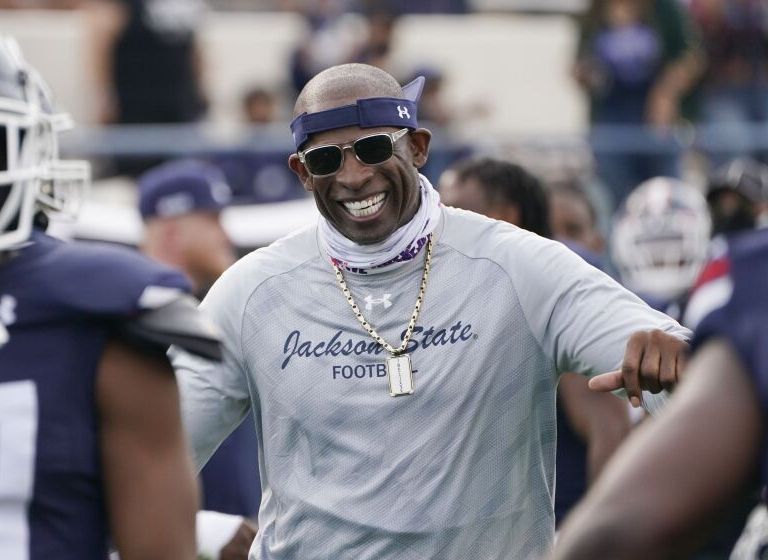
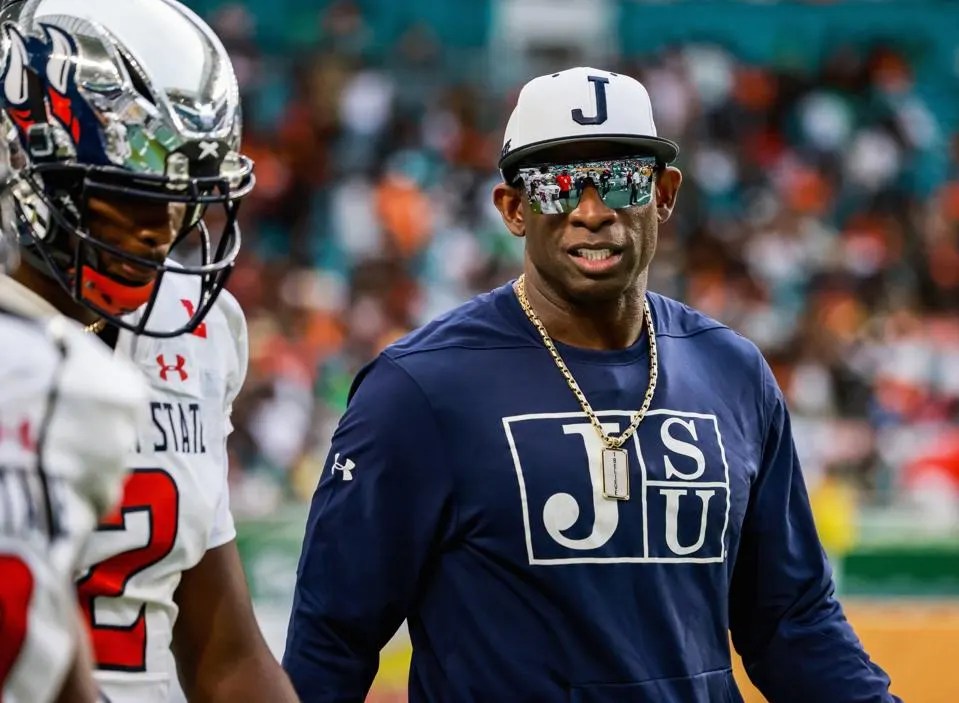
We’ve seen what’s possible through the model set by Coach Deion Sanders—“Prime Time” himself. When Coach Prime accepted the call to lead Jackson State University, he didn’t just coach a football team. He reimagined what was possible for historically Black colleges and universities (HBCUs). He brought attention, investment, and belief to Jackson State, showing that HBCUs can be powerhouses for athletic and social transformation.

Coach Prime’s move has sparked a new wave. Former NFL stars like Eddie George at Tennessee State and Hue Jackson at Grambling State are following his lead, transforming college football by lending their credibility, leadership, and expertise to programs that deserve the spotlight. This isn’t just about football—it’s about reshaping the future of higher education. When athletes of their stature choose HBCUs, they force national attention on institutions that have been underfunded but never underwhelming.

Now, Michael Vick—arguably one of Virginia’s most celebrated sons—stands at a similar crossroads. There’s talk of him coaching at Sacramento State, but there’s a more compelling, urgent story waiting to be written at Norfolk State University. Norfolk State isn’t just a football program; it’s a cornerstone of Black professional development in Virginia and across the nation. It deserves leadership that understands its legacy and its limitless potential.

Vick’s roots run deep in Virginia. He’s from Newport News. He cut his teeth at Virginia Tech. He represents an undeniable legacy of talent and perseverance in the Commonwealth. If Vick returns home to coach at Norfolk State, he wouldn’t just be coaching a team—he’d be uplifting a community that needs him now more than ever.

HBCUs like Norfolk State produce 50% of Black teachers, 80% of Black judges, and a significant portion of our doctors, engineers, and leaders. Norfolk State alumni are woven into every facet of our society, but for far too long, the institution itself has been under-resourced and overlooked. Imagine the impact if we poured into these spaces the way we do for predominantly white institutions. Imagine Michael Vick leading Norfolk State to new heights—financially, athletically, and culturally.

What happens when we invest in Virginia, our communities, and our young men? The ripple effects are transformative. Young athletes who might otherwise feel overlooked would see themselves in Vick—a Black man who’s overcome challenges and emerged as a leader. Young professionals would see that greatness is not confined to the Alabama’s and Ohio States of the world—it lives, in our HBCUs, in the heart of Virginia.

Vick’s story is one of redemption, resilience, and opportunity. Isn’t that what HBCUs represent? Vick symbolizes redemption and resurrection in the face of adversity; surely a path his athletes will certainly endure in their lifetime. The ability to thrive in spaces that were built to center our voices, our brilliance, and our stories. This isn’t about choosing Norfolk over Sacramento. It’s about choosing legacy over convenience. It’s about answering the call to inspire the next generation of Black leaders in a place that has always belonged to us.

Former NFL stars are already changing the college football landscape. They are sending a clear message to players, coaches, and donors: HBCUs are worthy of investment, and they are vital to the future of higher education. When leaders like Michael Vick step into roles at HBCUs, they bring more than football knowledge—they bring vision, resources, and credibility that can reshape entire institutions. Norfolk State doesn’t just need a coach. It needs a leader, a visionary, and someone who believes that greatness lives here.

Virginia has given so much to Michael Vick. It’s time for him to give back—not to a system that doesn’t need him, but to a community that does. Norfolk State is calling. It’s time to answer.

Reverend Robert K. Hoggard, a proud member of Phi Beta Sigma Fraternity, Incorporated, is the inaugural Associate Director of Leadership Giving, Diversity, and Belonging Initiatives at Yale University, where he plays a leading role in executing plans to diversify Yale’s overall donor base. Robert is also a graduate of American Baptist College, an HBCU. A doctoral candidate at University of Rochester’s Warner School of Education researching the experiences of African American male students at Predominantly White Institutions, Robert’s dream is to serve as a college president of an HBCU. He returns to HBCU Buzz as a columnist, committed to amplifying voices and issues that impact Black higher education and culture.

Disclaimer: This piece was written prior to the announcement of Michael Vick’s appointment as the head coach at Norfolk State University.

HBCU Launches Groundbreaking Bachelor’s Degree in Data Science

Southern University at New Orleans has announced the launch of Louisiana’s inaugural bachelor’s degree in data science. This groundbreaking initiative is designed to equip students with essential skills for the booming field of data analysis. The innovative program aims to bridge the skills gap in various sectors, preparing graduates for high-demand careers that increasingly rely on data-driven decision-making.

Chancellor James Ammons, Jr. expressed his enthusiasm about this historic milestone, stating, “This program will empower students with cutting-edge skills to excel and lead in any industry. It will serve as a transformative milestone for Louisiana, laying the foundation for the future of technology education. As the first program of its kind in the state, it will empower students to become trailblazers in data science, equipping them with the skills and confidence to shape industries and redefine possibilities. By fostering innovation and championing diversity, it will open doors to unparalleled opportunities and set a new standard for educational excellence.”

A Flexible Program

The curriculum prioritizes hands-on, project-based learning, allowing students to gain practical experience in roles such as management analysts, market researchers, and operations researchers. Catering especially to adult learners, underrepresented minorities, and transfer students, SUNO’s program offers flexible online and hybrid learning options, making education more accessible while reducing costs linked to commuting and housing. In a bid to alleviate the financial burden on students, the program will utilize open educational resources to replace costly textbooks. Key features of the new program include: 

-Strategic collaborations with various organizations that will facilitate valuable internships, paving the way for employment.

– A curriculum aligned with Louisiana’s workforce strategies, addressing the pressing needs in vital industries such as healthcare, energy, finance, government, and IT.

– Development of the program in partnership with alumni, community leaders, and industry representatives to ensure equity, accessibility, and practical expertise in data science.

With the introduction of this pioneering program, SUNO underscores its dedication to fostering innovation and creating expansive opportunities for students in an ever-evolving tech landscape.

HBCU Alumnus Makes History as First Military Officer in Family

In a celebration at the University of Arkansas at Pine Bluff,  Christopher Scroggins was honored as the first member of his family to achieve the rank of military officer. The Little Rock native was commissioned as a second lieutenant medical services officer during UAPB’s 170th commencement ceremony on December 14, 2024.

Scroggibs3 Img 8014 1 747789

Scroggins received a Bachelor of Science in Psychology and took pride in being part of a family legacy that includes three generations of graduates from UAPB. “My great-grandmother, my grandmother, and now me are all graduates of the University of Arkansas at Pine Bluff ,” he noted proudly.

Scroggins’s next steps include supporting UAPB’s ROTC Program in recruitment efforts after graduation. He sees this role as an opportunity to give back to his alma mater before transitioning to Fort Carson Army Base in Colorado Springs, Colorado.

Reflecting on his time at UAPB, Scroggins expressed gratitude towards the faculty and staff who shaped his journey. “You can’t beat the people you meet who help mold you into what you become when you graduate from UAPB,” he said.

His family’s military heritage runs deep; several relatives, including his grandfather and five great-uncles, served post-draft, inspiring Scroggins as he charted his own course in the armed forces. His wife, Shakirah, also shares his passion for military service. Together, they are excitedly awaiting the arrival of their first child.

Scroggin’s Journey To Becoming An Officer

Scroggins’s academic and military journey began with his enrollment in UAPB’s LIONS Program, aimed at easing the transition from high school to college. Initially unsure of his direction, he credits his grandmother, Mary Parker, a UAPB English professor, for motivating him toward success. “My grandma actually made sure that I did what I was supposed to do. It actually turned out to be a good thing,” he recalled. His grandmother fondly participated in pinning him during the commissioning ceremony.

Initially starting as a mass communications major, Scroggins shifted his focus to psychology after realizing his desire to help others during his time in the military. His journey included a year-long break, where he considered joining the Air Force. However, a connection with the U.S. Army changed his course decisively.

Through rigorous training and personal challenges, Scroggins blossomed into a leader, excelling in basic training and early promotions.

With support from friends and family Scroggins has achieved personal milestones and aims to inspire others to reach their potential.

As he embarks on the next chapter of his life, Christopher Scroggins stands as a beacon of hope and resilience for aspiring leaders, proving that with determination and support, anything is possible. 

HBCU Earns Prestigious CEO Cancer Gold Standard Designation

NCCU CEO Cancer Gold Standard

North Carolina Central University has achieved the distinguished CEO Cancer Gold Standard designation, a testament to its unwavering commitment to fostering employee health and enhancing cancer prevention and care initiatives. This notable certification recognizes the university as a leader in promoting workplace wellness.

Facilitated by Danielle Blackwell, associate vice chancellor for the Division of Institutional Advancement, NCCU completed the rigorous application for the CEO Roundtable on Cancer, a national forum established by former President George H.W. Bush. The Gold Standard is awarded to employers dedicated to prioritizing workforce health and well-being. This achievement places NCCU among an elite group of institutions proactive in cancer-related health strategies.

In a letter congratulating NCCU on this achievement, Dr. David M. Reese, chairman of the CEO Roundtable on Cancer, commended Chancellor Karrie Dixon and her team for their ongoing efforts to cultivate a healthy work environment. 

“At North Carolina Central University, we strive to support our employees in every way possible,” Chancellor Dixon stated. “This Gold Standard certification reflects our ongoing efforts to prioritize their health and well-being, and we look forward to building on these initiatives for the future.”

Dr. Mohammad Ahmed, dean of the College of Health and Sciences, highlighted the university’s focus on public health and equity in cancer research. “Our researchers are working to reduce cancer’s impact through public health education, early diagnosis, and treatment. This Gold Standard accreditation strengthens our ability to raise awareness and make a difference in cancer prevention,” he remarked.

With this designation, the CEO Roundtable on Cancer will provide NCCU with vital resources to enhance its health-oriented programs.