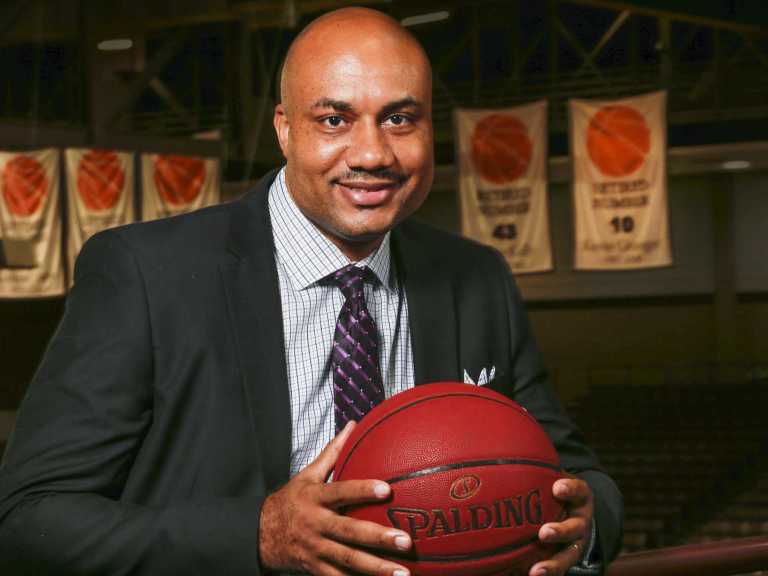
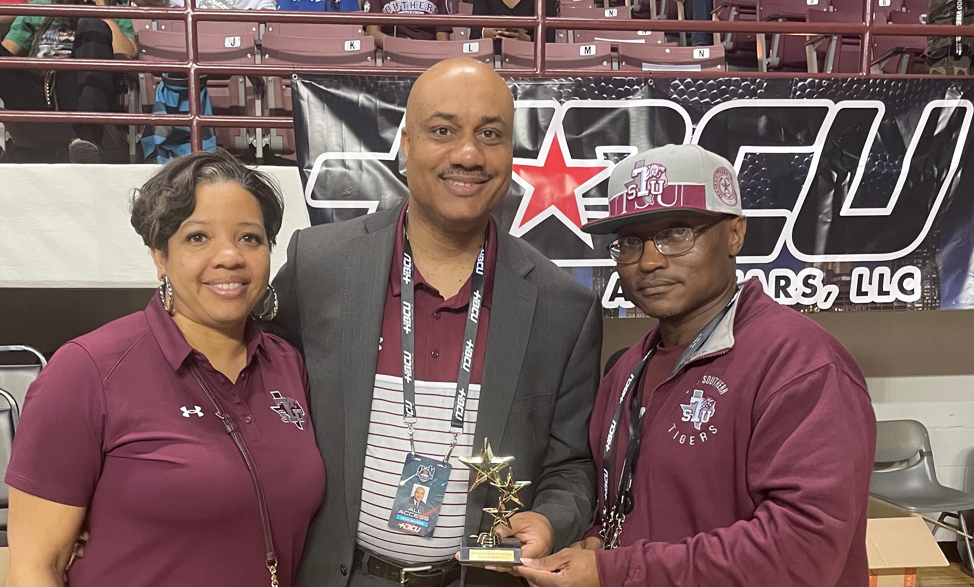
Rodney P. Mason Jr., an alumnus of Alabama A&M University, has been honored with the title of King Zulu for the 2025 Krewe of Zulu Mardi Gras Parade.
More than 700 Zulu Social Aid & Pleasure Club members, a historic organization founded in 1909, voted Mason for King Zulu. “The club was founded after its members attended a Vaudeville play called ‘There Never Was and Never Will Be a King Like Me,'” Mason shared. “Back then, Mardi Gras wasn’t inclusive of our community due to segregation, so our club created its own celebration, one that has thrived for over a century.”
A Historical Celebration
Known as the largest Black Mardi Gras parade, the Krewe of Zulu highlights a rich legacy, with iconic figures like Louis Armstrong serving as King Zulu in 1949. Mason, who has been involved with the Zulu organization for 18 years, expressed profound pride in continuing this tradition. His father was also a member, underscoring a familial bond to the celebration.
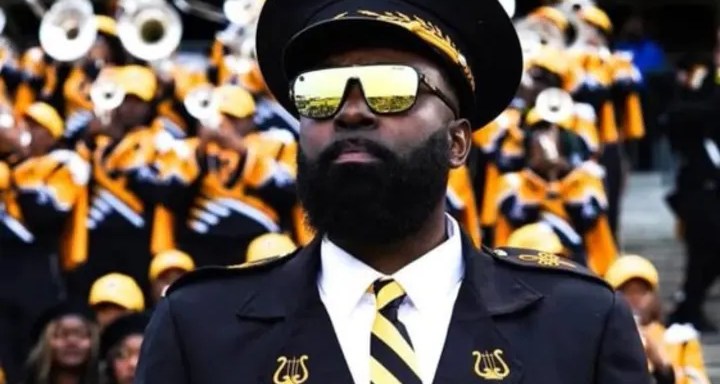
Mason first attended Alabama A&M on a band scholarship. He played trumpet for the Marching Maroon & White while pursuing degrees in telecommunications and political science. After graduating in 2008, he returned to New Orleans and has since dedicated his time to various committees within the Zulu organization. He has served as the recording secretary for the past nine years. In addition to his role in Zulu, Mason works in program support for capital projects administration with the City of New Orleans.
Committed to Service
While known for vibrant Mardi Gras festivities, Mason highlighted the club’s commitment to community service. “We’re not just a social club,” he stated. “We give back, visiting schools and providing meals, organizing holiday gift baskets for Thanksgiving, and hosting Toys for Tots events for Christmas, among many other initiatives.”
Mason attributes his leadership skills and commitment to service to his time at Alabama A&M. “Service is a core value at Alabama A&M University,” he noted. “The motto, ‘Service is Sovereignty,’ has stayed with me. My five years on The Hill made me who I am today.”
As King Zulu, Mason will lead the Krewe of Zulu Mardi Gras Parade, culminating in a Mardi Gras Day celebration. “We’re a social organization; we celebrate, we party,” he said. “But more importantly, we party with a purpose.”
The announcement of a second anonymous gift of $10 million has Livingstone College in the news again, marking another significant milestone. The gift, one of several recent large donations, will support the university’s efforts to improve campus amenities and student living conditions.
“We are humbled that Livingstone received a philanthropic investment of this nature, which will enable us to provide environmentally sensitive residential spaces for our students,” said Livingstone President Dr. Anthony J. Davis. This latest contribution comes on the heels of a series of substantial donations.
Adding to Millions More
The college has recently made headlines for its remarkable fundraising accomplishments, including a $3 million donation announced earlier this year and an astounding $23 million from the same unnamed donor during the previous fiscal year. A $10 million gift made in July 2024 is part of this, demonstrating a continued dedication to helping the organization.
During a January gathering with faculty and staff, Dr. Davis emphasized the collective effort behind these philanthropic successes. He noted, “We don’t receive philanthropy at this level because of a president who gets up and makes an eloquent speech,” he stated. “This happens because all of you have been committed to this miracle approach. It’s because of the work that you’re doing, and it’s making us the fastest growing HBCU in North Carolina.”
Livingston has been using the gifts for critical on-campus capital renovation projects, including upgrades to the cafeteria and residence halls, especially considering Livingstone’s recent 13% enrollment increase.
The university’s focus on growth is reflected in enrollment numbers, strategic planning, and investments. In September 2024, the institution announced receiving $1.2 million in grants and donations to support infrastructure and student services, including a $448,000 grant from the National Science Foundation to improve STEM teaching.
The combination of generous financial support and intentional development efforts sets a promising course for future success at Livingstone.
On Jan. 13, 2025, the Richmond community mourned the loss of Henry Marsh, an esteemed alumnus of Virginia Union University. As Richmond’s first African American mayor, Marsh was a pioneering force who shattered racial barriers and created pathways for future generations.
The Richmond, Virginia, native who grew up in a racially divided world was dedicated to public service. He found his voice as a student at VUU, and from there on, he was committed to uplifting marginalized communities and fighting against systemic inequality.
In 1977, Marsh became Richmond’s first African American mayor. His win moved the Commonwealth of Virginia, which was still dealing with the harshness of racial injustice. One of Marsh’s top priorities as mayor was prioritizing projects to better the lives of Richmond’s Black citizens. His mayoral efforts included affordable housing, access to high-quality healthcare, and educational opportunities.
A Lifelong Committment
Marsh actively participated in the civil rights struggle even before his tenure at city hall. After his mayoral term, he continued to fight for justice as a civil rights lawyer and community activist. He also actively participated in Richmond’s revitalization initiatives and worked with local groups to see them through to completion.
Throughout his life, Marsh maintained strong ties to Virginia Union University. He often returned to the school to discuss his experience and encourage the next generation of leaders.
“Henry Marsh was not only a trailblazer in Richmond but also an embodiment of the values Virginia Union University instills in its students: service, excellence, and a commitment to justice,” said Dr. Hakim J. Lucas, president and CEO of VUU. “His work and legacy will forever inspire those who follow as we continue to honor the path he paved for future generations of leaders.”
As we honor Henry Marsh’s legacy, we reflect on his transformative impact on Richmond and beyond. Future leaders will continue to be guided by his unwavering campaign for racial equality.
A committed team from Tennessee State University’s College of Agriculture is leading the massive Tiger Bay Wetlands restoration project, which officially commenced this winter. This project aims to revitalize the vital urban ecology with the help of public and private partners, such as Resource Environmental Solutions and the Nashville Metro Government.
TSU Ag research professor Dr. Tom Byl works in the wetlands with graduate student and mentee Devin Moore. (Photo Credit: Tennessee State University)
“We are planning a full-scale wetland restoration to remove invasive species and to re-plant with native species,” said Dr. Bill Sutton, who is leading the wetlands restoration.
A $5 million USDA Forestry Service grant funded the “Restoration of an Urban, Forested Wetland at Tennessee State University to Improve Educational Opportunities and Ecosystem Services” project. The grant provides resources to rehabilitate the wetland, address threats posed by invasive plant species, and improve the ecosystem’s overall health.
Dr. De’Etra Young, associate dean for academics and land-grant programs, is the lead investigator for the project. “Tiger Bay is a unique asset we’re lucky to have right here on campus,” she said. “Restoring it is important, and our partnership with the USDA Forestry Service, the Nashville city government, and non-profit and for-profit environmental firms is critical to our being able to execute this grant in full.”
Gaining Hands-On Experience
This restoration will create a healthier environment and a vibrant research platform where TSU students can gain real-world skills essential for their careers.
A group of TSUAg faculty members, including Drs. Sutton, Tom Byl, Sarah Neumann, Yujuan Chen, Jason de Koff, and Reginald Archer, are involved in the complex rehabilitation project. The group’s collective wetland ecosystem management focuses on aspects such as hydrology, water quality, wildlife, and vegetation.
Dr. Byl will tackle issues like high nutrient levels, which have fueled toxic algal blooms and dangerous cyanobacteria. “Our goal is to revitalize the wetland, make it more accessible to the TSU community and the public, and preserve it as critical greenspace and habitat for wildlife,” he explained.
The Tiger Bay Wetlands restoration project is evidence of TSU’s dedication to promoting sustainability and education.
Hampton University has appointed Dr. Marc Newman, a Grambling State University alumnus, as its first Chief Advancement Officer. This new position follows a nationwide search to improve the university’s institutional advancement and fundraising tactics.
Dr. Marc Newman
A renowned leader in the development of higher education, Dr. Newman brings to Hampton a wealth of expertise and a stellar record of planning effective fundraising campaigns, obtaining significant federal and private money, and developing strategic alliances. As an important President’s Administrative Council member, he will work closely with other executives to strengthen Hampton’s financial base and advance its mission of academic innovation and excellence.
“We’re thrilled to welcome Dr. Marc Newman to Hampton University,” expressed President Darrell K. Williams. “His extensive experience, visionary leadership, and deep commitment to higher education advancement align perfectly with our strategic priorities. I am confident that his expertise will propel our fundraising efforts to new heights and reinforce our commitment to institutional growth and transformative opportunities for students and faculty alike.”
Before joining Hampton, Dr. Newman was the Vice President for Advancement at Albion College, where he oversaw notable projects, including the Giving Tuesday campaign that won a CASE Circle of Excellence Award. In his former position as vice president of research and economic development at Grambling State University, he transformed the school’s fundraising environment, raised alumni contributions from 2% to 18%, created multiple scholarships, and obtained crucial state and federal support.
Taking Hampton to the Next Level
Dr. Newman’s extensive skill set encompasses grant writing, governmental relations, board development, special events planning, and fiscal management. In his new role at Hampton, he will spearhead fundraising initiatives, enhance alumni engagement, and cultivate corporate and foundation partnerships, all essential in securing resources that support scholarships, faculty development, and campus-wide projects.
“The CAO position marks a strategic shift within our community, redefining the former leadership roles of Advancement to enable Hampton to take a bigger step forward in our pursuit of institutional growth, innovation, and stewardship. With the selection of Marc Newman, I’m even more confident those goals are within reach,” Williams added.
Dr. Newman holds a Doctorate in higher education administration from Grambling State University and has completed advanced leadership programs at Harvard University and Vanderbilt University. He is active in organizations such as the Association of Fundraising Professionals, the Chief Advancement Officer Network, and Omega Psi Phi Fraternity, Inc.
“I’m honored to join Hampton University at such a pivotal time in its history,” Dr. Newman said. “Hampton’s legacy of excellence is unmatched, and I look forward to working alongside President Williams, the administration, alumni, and community partners to build on this remarkable foundation and secure the resources necessary to empower future generations.”
Hampton University is ready to embark on a new phase of expansion and innovation, with Dr. Newman leading its advancement initiatives.
Morgan State University has decided to participate in the House v. NCAA settlement, which aims to rectify previous disparities in student-athlete compensation.
Morgan State University’s Board of Regents has approved the institution’s participation in the House v. NCAA settlement. This groundbreaking agreement, valued at over $2.7 billion, addresses restrictive policies that previously limited college athletes’ ability to profit from their name, image, and likeness before the NCAA updated its regulations in 2021.
“Morgan’s decision to opt into the House v. NCAA settlement reflects our unwavering commitment to student-athlete success and our proactive approach to navigating the evolving landscape of collegiate athletics,” stated David K. Wilson, president of MSU. “With the full support of our Board of Regents, we believe this decision is in the best interest of our institution, ensuring compliance, stability, and new opportunities for our student-athletes moving forward.”
What it Means for Morgan
Morgan State’s participation in this settlement offers two benefits: a revenue-sharing plan and immunity from future lawsuits about NIL limits. The school can directly fund student-athletes through this arrangement, preserving competitive athletic programs and promoting equity.
Morgan State will contribute an estimated $231,227 to the settlement fund as part of its commitment. The football team will have 105 players instead of 130 and new rosters and scholarship caps will be implemented. Changes to roster restrictions are also anticipated for the men’s and women’s basketball and tennis teams. The institution will be free to increase Olympic sports possibilities by Title IX compliance standards.
“Opting in ensures that we remain competitive while continuing to prioritize the well-being and success of our student-athletes,” said Dena Freeman-Patton, vice president and director for intercollegiate athletics at Morgan. “This decision allows us to leverage institutional resources strategically, invest in our programs, and create pathways for financial support beyond traditional NIL opportunities. Ultimately, this strengthens our ability to recruit, retain, and support the next generation of Morgan Bear athletes.”
Morgan State’s decision comes after automatic inclusions for Power Five conference institutions. Other Division I schools, including those in the Mid-Eastern Athletic Conference, had until March 1 to decide. Morgan’s decision to join the settlement on its own shows its commitment to compliance, program improvement, and the overall experience of its student-athletes.
This article sources information from Morgan State University.
A $500,000 Title III HBCU Part F grant awarded in 2020 is helping Morgan State University’s Beulah M. Davis Special Collections Department transform access to the school’s rich history through new digital projects.
As part of its commitment to creating an open-access digital repository, the Davis Room has successfully digitized historical materials, allowing scholars, students, and the general public to learn more about Morgan’s past than ever before.
Now Available Online
Among the newly digitized materials are publications such as “The Spokesman,” Morgan’s student-produced newspaper which ran from 1944 to 2012, and more than 50 full-color editions of the university’s yearbook, “The Promethean,” from documenting campus life from 1937 to 2019.
Also available online are the “Morgan Mirror,” a faculty-produced newspaper from the 1980s and 1990s featuring over 40 issues, and the “Morgan State University Women Collection,” which compiles newsletters, programs, and archival materials celebrating the contributions of women at Morgan from 1939 to 2019.
“This effort represents a transformative step toward modernization and accessibility,” said Dr. Ida E. Jones, associate director of Special Collections and University Archivist. “By digitizing these invaluable collections, we ensure that Morgan’s rich history is preserved and made readily available to anyone, anywhere, at any time. This initiative empowers students, researchers, and the broader public with unrestricted access to critical historical narratives.”
Students and faculty now have the opportunity to apply theoretical knowledge in real-world archival settings and prepare for careers in digitization, data mining, and information retrieval.
Coming Soon
These digitized collections are available under the Digital Collections section on the Davis Room website. The next phase of the digitization project will convert Morgan State’s course catalogs from as far back as the late 1800s into digital formats.
Additionally, the Davis Room plans to introduce academic internships for students interested in analog and digital archival processes, creating pathways for hands-on experience managing historical documents.
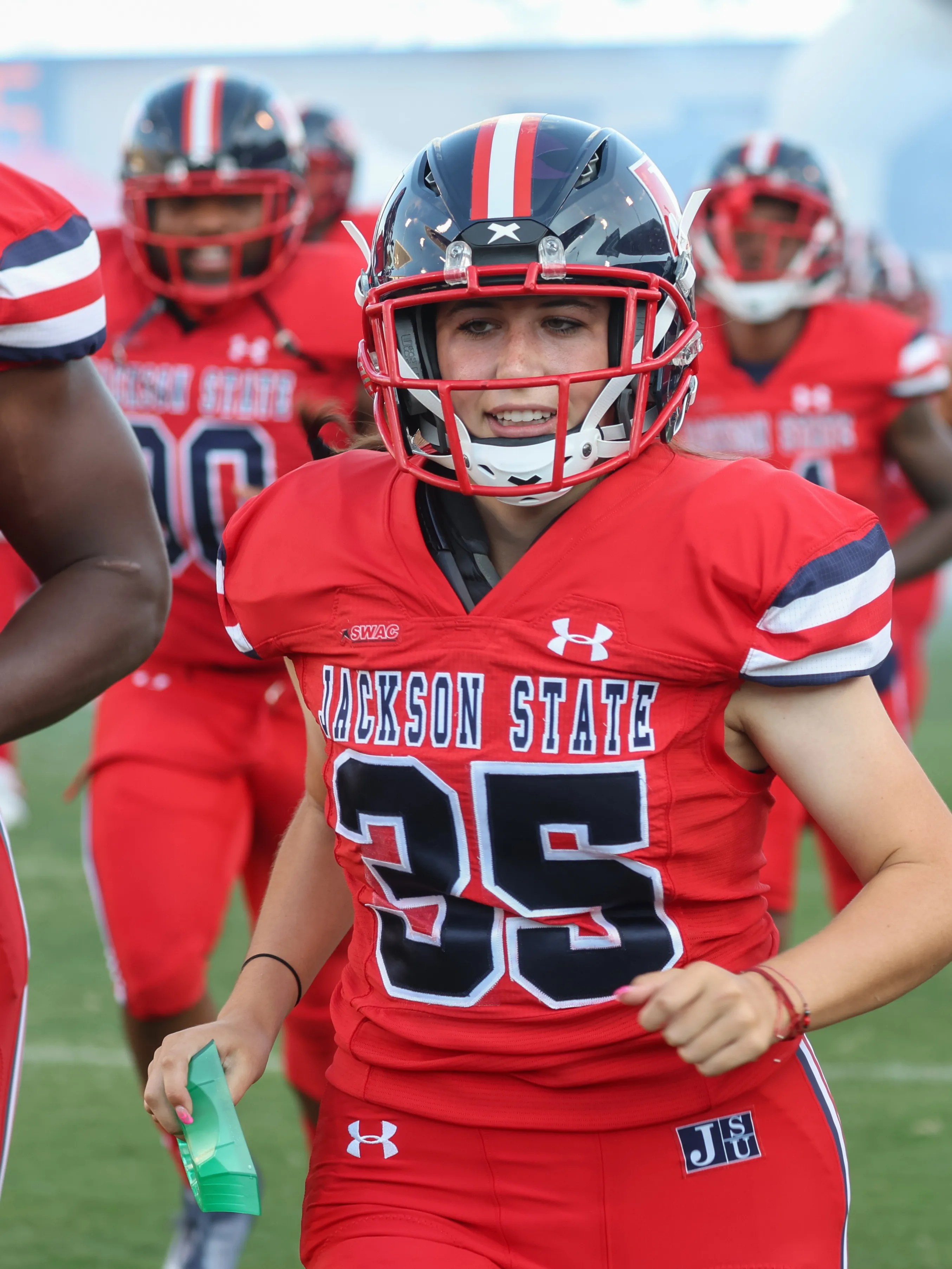
Dr. Byron D’Andra Orey, a political science professor at Jackson State University, has been elected president of the Southern Political Science Association. In his new role, Orey now leads one of the nation’s oldest and largest political science organizations.
Dr. Byron D’Andra Orey
“Being elected president of the is a profound honor that reflects the trust and confidence my peers have placed in me to lead this prestigious organization,” Orey expressed following the announcement. His journey with the SPSA began 30 years ago when he first joined the association as a graduate student. Orey has served two terms on the SPSA executive committee and held various leadership positions during its annual conferences.
The SPSA was founded in 1929 to advance research and set professional standards in the field. Each year, the SPSA hosts an annual conference highlighting political science and related research and publishes the “Journal of Politics,” which includes contributions from renowned industry professionals worldwide.
Orey will be instrumental in organizing and arranging the SPSA’s 2026 annual conference, which will be held in New Orleans, in his new role as president. Additionally, he will lead its next virtual meeting this summer. His duties will also include ensuring the organization’s financial stability, supporting programs to improve the subject of political science, and working with other significant groups to promote the profession.
Putting a Spotlight on JSU
“I hope to enhance our understanding of political phenomena by bringing together scholars with diverse perspectives and methodologies,” Orey stated. He highlighted that while the association has deep roots in southern politics, it is a global platform that transcend regional boundaries. “This leadership role will bring significant exposure to Jackson State University, and enrich our students’ understanding of political science,” he added.
The SPSA promotes various political science fields and subfields, including American politics, comparative politics, international relations, public administration, and political theory.
In addition to his presidential duties, Orey is preparing to release “Mississippi, Conflict and Change: A New Edition,” an updated version of James W. Loewen’s influential 1974 book. The original textbook offers a comprehensive history of Mississippi, from prehistoric times, focusing on the civil rights movement. Orey’s revised edition promises to provide valuable insights into Mississippi’s contemporary politics, culture, and economy, bringing the state’s history into the present. It is set to be released in August of this year.
This article sources information from Jackson State University.
As the host of the Public Relations Student Society of America’s 2025 Southeast District Conference, Clark Atlanta University is poised to make history. This will mark the first PRSSA District Conference held at a Historically Black College or University.
The conference, which is themed “Culture & Communications: Empowering Voices in PR & Media,” will be held at the Comcast Cable Corporation in Atlanta on April 11, 2025. The conference aims to investigate the crucial relationship between communication and culture. CAU’s PRSSA has organized a variety of seminars aimed at elevating marginalized perspectives in the industry for attendees.
“Our mission with this conference is to bridge the gaps between underrepresented voices in communications and explore the intersection of multicultural influences in the PR and communications industry,” said Courteney Sykes, president of the CAU PRSSA and Conference Coordinator. “We aim for students to leave the conference inspired, well-connected, and equipped with the skills and insights needed to succeed in their future careers.”
What to Expect
The conference will include panels with professionals from the field centered around industry issues like creating inclusive campaigns and breaking barriers in media coverage. Interactive workshops and hands-on sessions will cover essential topics like digital innovation, successful branding, and networking tactics. Attendees will also have a chance to network with top PR firms and experts during a Lunch & Learn Career Fair.
Tickets for PRSSA 2025’s Southeast District Conference are currently available. Being the first to host this important conference, Clark Atlanta University is solidifying its role as a trailblazer in shaping the future of public relations.
With his official appointment to the Texas Lyceum Board of Directors, Brandon L. Simmons, the chairman of the Texas Southern University’s Board of Regents, has joined a prestigious group committed to influencing the direction of leadership in the Lone Star State.
Simmons took the oath of office on Jan. 31, 2025, as a member of the Texas Lyceum. This nonpartisan, nonprofit organization has been regarded as Texas’ top leadership institution since its founding in 1980. With 96 members serving two consecutive three-year terms, the Lyceum offers a diversified board representing a range of industries, government, and education in the state.
President George W. Bush, U.S. Senators Ted Cruz and Kay Bailey Hutchison, and Texas Governors Greg Abbott and Rick Perry are among the notable Lyceum alums. Over the years, Lyceum Board alums have significantly impacted civic engagement and public service throughout Texas.
“With a current TSU Chairman and a former TSU Chairman serving together on the 2025 Board of Directors, Texas Southern University is already ringing out in this august body,” Simmons said. “I have no doubt that we will bring the voices of our students with us into conversations about the future of this great state. This is an extraordinary time to be a Texan, and I am grateful for the opportunity to play a role in our state’s future.”
TSU’s participation in the Lyceum Fellows Program demonstrates its dedication to developing student leaders. In recent years, the university has fostered student participation through its Lyceum Fellows Program. Additionally, David Gamble, the former TSU Regent who served as the chair of the Lyceum Board from 1986 to 1987, has contributed to the history of the Lyceum at TSU.
In a momentous occasion that marks progress and tradition, Morehouse College kicked off its 158th anniversary weekend with a groundbreaking ceremony for a new residence hall. This is the institution’s first major construction project in over two decades.
“This is a historic moment for the college and, quite frankly, for Historically Black Colleges and Universities here in Atlanta and around the country because it will be a model of what is possible,” said Morehouse President David A. Thomas during the ceremony.
The residence hall is part of the Campus of the Future Capital Campaign, a key Making Men of Consequence Campaign initiative to modernize and expand the campus to enhance the student experience. The college is raising $500 million to support this ambitious campaign to fund student scholarships, athletics, innovative academic programs, faculty recruitment, and crucial research initiatives.
“Development like this is essential in providing our students with a top-tier learning and living environment,” said Hodan Hassan, vice president of the Office of Institutional Advancement. The residence hall will feature five stories and provide 324 beds within an expansive 88,000 square feet, complete with green spaces, lounge areas, technology rooms, and labs.
President Thomas shared that progress has already been significant, with over $320 million raised thus far. Of that, $170 million is earmarked specifically for the residence hall. He knows that reaching the $500 million goal will be challenging.
“We overcame it in the same way at Morehouse’s inception. There was doubt whether a college for formerly enslaved men was innovative or, was possible, or could be funded. We’re basically showing that Morehouse still swims in the same stream of boldness and opportunity to educate young Black men,” he asserted.
Another Exciting Project
In addition to the new residence hall, Morehouse recently secured a $20 million grant from the Woodruff Foundation to support its next major project, a 58,000-square-foot Campus Center. This facility is set to include a dining hall, rooftop plaza, and collaborative spaces designed for engagement among students, faculty, and alumni.
“We still need $28 million to begin breaking ground,” Thomas said about the Campus Center. “We hope that our community of support will continue to invest in building the campus of the future so that we can provide more state-of-the-art spaces for our scholars to live, learn, and grow into the men of distinction and consequence that they are destined to be.”
Morehouse is calling on alumni, parents, partners, and friends to rally behind the mission and pave the way for a bright future at Morehouse College.
This article sources information from Morehouse College.
In response to criticism, the U.S. Department of Agriculture resumed its 1890 National Scholars Program just days after being suspended. The decision reversal means this significant educational opportunity for students from Historically Black Colleges and Universities continues.
Just one week after the 1890 Scholars Program unexpectedly halted, the USDA website showed on Monday that it had returned. This program covers full tuition, fees, books, and housing assistance for students pursuing agricultural, food, and natural resource sciences degrees at 19 land-grant universities.
In Fiscal Year 2024, USDA awarded 94 scholarships, demonstrating the program’s impact on student success in the agri-food sectors. Lawmakers and activists criticized last week’s suspension decision, calling it an assault on educational equity that disproportionately impacted marginalized populations.
Suspension Backlash
The USDA’s earlier decision rocked the HBCU community, raising concerns that students would lose the scholarship opportunity. Congresswoman Alma S. Adams, PhD, called the original program suspension “a clear attack” on access to education and highlighted its role in correcting historical inequities within the land-grant system.
In a statement, Shannan Frank Reeves Sr., Alabama A&M University’s vice president of government affairs, voiced worries that the halt may hurt Alabama’s agriculture industry, which makes up 60% of the state’s GDP, before the program’s reopening. She added that global issues like avian flu and wildfires only increase the risks of halting the program.
The USDA has extended the scholarship’s initial application deadline of March 1 to March 15. The recent back and forth highlights the continuous debates about diversity, equity, and inclusion in higher education funding. Many are optimistic that increased program support will secure its future for more generations of students.
Students interested in applying must be U.S. citizens, maintain a cumulative GPA of 3.0, score a minimum of 21 on the ACT or 1080 on the SAT, and be accepted into or currently attend one of the 19 designated 1890 land-grant universities.
When Kyle Stampley walked onto Central State University campus as a freshman, he tried to stay under the radar. It wasn’t long before the reserved business marketing major evolved into KB Thee MC, the lively campus figure he is today.
“I may have been thrown in with the sharks, but luckily, I learned how to swim,” Stampley said, reflecting on his transformative journey through college. His entrance into the hosting world came shortly after stepping foot on campus. His now mentors, DJ BriTheBull and Kay Money, inspired him, alongside other supporters like JaanMo. “Bri and Kay convinced me to start hosting, even though I was quiet and reserved at the time. A few days later, they called me to bring my guys to my first-ever party, and from then on, I’ve had a mic in my hand and a smile on my face,” he recalled.
Even though Stampley enjoys his job, there have been difficulties along the way. During his sophomore year, he lost his grandmother, which put his resilience to the test. He says he managed that difficult phase with the help of his university community. He gives special thanks to the priceless advice of his counselor, Mrs. Harvey.
“Dropping out was never an option because I knew that’s not what she would’ve wanted,” he said about his grandmother. This motivation drives him to succeed and uplift others while doing so. “What I’m most proud of is my humility, which I strive to maintain despite the attention, hype, and distractions that come with being in the entertainment industry.”
Stampley has received recognition, including being named one of HBCU Buzz’s Top 5 HBCU Hosts. Yet, accolades are not what fuel his fire; it’s his genuine desire to impact others’ lives positively. “I’m passionate about making others feel valued, whether it’s through small gestures like giving flowers or leaving kind notes around campus,” he said. “My ultimate goal is to brighten people’s days and bring a smile to everyone I encounter.”
Offstage, Stampley plans to pursue a master’s degree, establish a mentor/mentee program for men within the university and surrounding community, and create a documentary about his HBCU experience to inspire potential students.
Tennessee State University’s successful end-of-year giving campaign raised over $600,000 to support graduating seniors. This accomplishment was largely made possible by the matching contribution pledge made by renowned alumni Amos Otis and Brenda Otis. They promised on Giving Tuesday that they would match every donation.
Under the #FutureReadyTSU campaign, #CloseTheGap aims to alleviate the financial challenges faced by students nearing graduation. The campaign will significantly impact this initiative thanks to the Otises and the overwhelming response from alums and supporters.
“As an alumnus myself, I am extremely proud of the fact that alumni giving has increased from previous years,” shared interim President Dwayne Tucker. “Tennessee State University is a great institution, and with continued alumni and community support, this university will continue to be a key part of the community and this city’s growth.”
The Otis family has long supported TSU. Amos established SoBran, Inc. in 1987 and is the company’s president and CEO. The company specializes in global bioscience, logistics, and SafeMail® services for government and commercial clients. Amos is also the vice chairman of the TSU Foundation Board. His wife, Brenda, is a retired broadcast television production and management professional with experience at major networks like ABC, CBS, and NBC. She also played a key role in creating BET News.
“Each dollar raised was a testament to the power of the TSU community,” said Dr. LoLita Toney, vice president of Institutional Advancement. “Every gift, no matter the size, reflects a shared belief in our students and their ability to change the world.”
The campaign’s success proves the long-lasting impact of alum involvement in creating brighter futures for students.
Baltimore is ready to prove why it is the perfect host for sporting events. From Feb. 25 to March 1, the CFG Bank Arena will host the Central Intercollegiate Athletic Association Men’s and Women’s Basketball Tournament, bringing together the best HBCU matchups in an electric atmosphere.
The move from Charlotte to Baltimore isn’t just a geographical shift but a chance to recenter the focus on the game and community interaction itself. The city’s goal is to keep the light on the sports, people, and their performances. Baltimore wants the excitement of the competition to fuel supporters to cheer on their teams and give their full attention to the action on the court.
“CIAA and Baltimore go together like Old Bay and crabs—it just makes sense,” said Baltimore Mayor Brandon M. Scott. “For the fourth year in a row, we’re proud to host this historic tournament, bringing unmatched Black excellence, culture, and legacy right here to Charm City.”
Baltimore’s bustling charm includes a passionate fan base, a great sports legacy, and CFG Bank Arena’s state-of-the-art amenities, which guarantee fans can be engaged in the action rather than merely watching.
Beyond the Court
Photo Credit: James McQueen, Chief Photographer, City of Baltimore
Maryland has emerged as an epicenter of Black leadership and culture, boasting the Country’s only Black Governor, a Black Mayor, and is home to one of the Country’s two Black women Senators. The city is a collage of creativity, history, and cultural diversity, saturated with live music and colorful street art and museums like the Baltimore Museum of Art, the Reginald F. Lewis Museum, the largest African American museum in Maryland, and the Baltimore Times’ newly launched “Creatively Black Baltimore” pop-up exhibition. Tournament attendees can dive into these cultural hubs in between matchups to enhance the overall experience.
Baltimore‘s diverse attractions also range from historic neighborhoods like Fells Point to the memorable Inner Harbor, providing opportunities for exploration that both basketball fans and general tourists would enjoy getting lost in.
Come Hungry
So, what sets Baltimore apart from other cities? For starters, the city offers an incredibly diverse food scene, which is a direct reflection of its rich global roots. Visitors can sample this diverse food scene by enjoying some of Maryland’s famous crab cakes or indulging in Berger cookies.
Baltimore’s Black-owned Restaurant Tour, which features 20 restaurants from cozy cafés to upscale dining, adds another layer to the city’s vibrant dining scene and rich culture. This year-long initiative invites locals and tourists to sample diverse flavors while supporting the city’s black-owned businesses.
Same Place Next Year
Founded in 1912, the CIAA holds the honor of being the oldest historic Black athletic conference in the United States. With the agreement to stay in Baltimore until 2026, players and supporters can look forward to a distinct fusion of sport and Baltimore’s unique local culture as part of their tournament experience.
As Black History Month unfolds, the spotlight shines brightly on numerous historical figures who have shaped the narrative of the African American experience, from activists like Dr. Martin Luther King Jr. and Rosa Parks to cultural icons such as Maya Angelou and James Baldwin. However, reflecting on the past, it is equally important to recognize the current wave of leaders emerging from Historically Black Colleges and Universities. These alumni are breaking barriers and redefining what leading in today’s society means.
From entertainment to politics to technology to social justice, HBCU graduates exemplify the spirit of resilience and innovation that has long been associated with these institutions. They are taking on previously thought unattainable roles and proving that excellence for the Black community is an aspiration and a legacy. Today’s HBCU alums include CEOs, award-winning artists, political leaders, and entrepreneurs who continue to uplift their communities while paving pathways for future generations.
Among this trailblazing group are notable figures like Kamala Harris, the former United States Vice President and a proud graduate of Howard University. Harris’s historic ascension reflects the kind of transformative leadership that HBCUs cultivate. Meanwhile, other illustrious alums, such as Grammy-winning rapper Megan Thee Stallion from Texas Southern University and NBA player Chris Paul from Winston-Salem State University, showcase the vibrant culture and talent that these institutions nurture.
As the legacy of Black excellence continues, we want to highlight 36 remarkable alums currently making significant impacts in their respective fields.
36 Notable HBCU Alumni Making an Impact Today
Leadership
Kamala Harris (Howard University) – Vice President of the United States (Alpha Kappa Alpha Sorority, Inc.)
Tamara Bates (Philander-Smith University) – Director of Community Engagement for Tennessee Democratic Party (Delta Sigma Theta Sorority, Inc.)
Kamau Marshall (Texas Southern University) – Former Senior Advisor for Kamala Harris (Alpha Phi Alpha Fraternity, Inc.)
Andres Martin (Howard University) – Founder/Executive Director of HBCU Night
Entertainment
2 Chainz (Alabama State University & Virginia State University) – Rapper