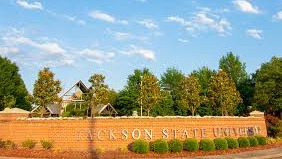

SC State University Athletics Faces NCAA Sanctions for Non-Compliance

South Carolina State University has been placed on a one-year probation by the NCAA due to compliance violations involving inaccurate squad lists.

The NCAA has placed South Carolina State University on one-year probation. This follows a series of compliance violations related to the maintenance of squad lists and ineligible participation in its programs. These infractions mainly involve the women’s soccer, women’s basketball, and football teams. The probationary status will not impede the university’s ability to compete in postseason events.

The situation arose when SC State athletics administrators self-reported numerous infractions during the fall of 2022. This proactive move prompted an extensive investigation by the NCAA enforcement staff, with which the administration, coaches, and athletics officials fully cooperated. The investigation ultimately led to a final Negotiated Resolution Agreement between SC State and the NCAA.

Compliance Issues

According to the negotiated resolution, several key violations were identified:

1. Squad List Maintenance: The university failed to maintain and submit accurate squad lists for 14 sports during the 2021-22 academic year.

2. Ineligible Participants: There were multiple instances of ineligible athletes participating in competitions:

  • An ineligible player was identified on the women’s basketball team during the 2021-22 season.
  • The Bulldog football team also fielded two ineligible athletes; one undergraduate player was enrolled in only nine credit hours instead of the required 12, and a graduate student participated while enrolled in just six credit hours, falling short of the required nine.
  • Additionally, an ineligible player competed on the women’s soccer team in 2022.

3. Non-Cooperation: A former athletics staff member did not cooperate with the NCAA enforcement staff during a separate inquiry into the men’s basketball program. This violation occurred after the staff member had left the university and was not part of the negotiated agreement.

Notably, SC State and the NCAA acknowledged that the eligibility violations stemmed from complications arising from a ransomware attack that significantly disrupted the university’s information technology systems and automated processes. Both are essential for verifying student-athlete eligibility.

Resolution

As part of the agreed-upon sanctions, SC State University will face the following penalties:

  • A one-year probation period.
  • A financial penalty of $10,000.
  • A reduction of 2.5% in scholarship and grant-in-aid allocations for women’s basketball, football, and women’s soccer during the 2024-25 academic year.
  • A public reprimand and censure will be made official by releasing the negotiated resolution agreement.
  • The vacation (or revocation) of team and individual records associated with the affected sports during the time in which ineligible athletes participated.

Howard’s Joshua Middleton Named NEA Foundation Inaugural Graduate Fellow

Joshua Middleton, an Ed.D. candidate at Howard University, has been named the inaugural Community Schools Graduate Fellow by the NEA Foundation.

The NEA Foundation has announced the selection of Joshua Middleton, an Ed.D. candidate at Howard University, as its inaugural Community Schools Graduate Fellow. This fellowship aims to bolster the NEA Foundation’s commitment to exploring the vital roles of educators’ voices and leadership in fostering student success through community schools.

Middleton, an accomplished educator and doctoral student, brings a wealth of experience to the role. He holds a Master of Science in Curriculum and Instruction and a Bachelor of Arts in Early Childhood Education from Florida State University. His professional journey includes significant contributions to teacher pipeline programs designed to reintegrate Black educators into classrooms, working with the Center for Black Educator Development. Additionally, as a graduate research assistant, he has undertaken independent research that investigates education policy, specifically focusing on racial disparities in school discipline.

Community Schools Fellow

“I am deeply honored to become the Community Schools Graduate Fellow with the NEA Foundation,” said the Howard student. “This opportunity allows me to contribute to a deeper understanding of the role of educators in community schools, which can improve the educational experiences of countless students and educators.” 

Community schools operate as collaborative hubs, created through partnerships among educators, families, policymakers, and community organizations. They are designed to address their local communities’ challenges and cultural contexts. These schools serve students year-round and provide support not only for children but also for adults, thereby helping to bridge educational opportunity gaps and dismantle systemic barriers that hinder inclusive and supportive learning environments.

The NEA Foundation’s Community Schools Initiative, which was launched in 2020, focuses primarily on the Deep South—a region noted for its challenges and under-resourced educational institutions. Insights gained from Middleton’s fellowship will yield essential knowledge to enhance community school practices, benefitting not only the Foundation but also other educational stakeholders across the nation. The ultimate goal is to ensure that students in the Deep South, and beyond, gain access to high-quality community schools that can transform their educational experiences.

“We are thrilled to have Joshua join us as our Community Schools graduate fellow,” stated Sara A. Sneed, president and CEO of the NEA Foundation. “His breadth of experience and dedication to educational equity are perfectly aligned with our mission. We are confident that his contributions will significantly enhance the community schools field’s understanding of the critical roles that educators can and do play in the design and implementation of exemplary community schools throughout the country.” 

Currently, the NEA Foundation’s Community Schools Initiative operates in Arkansas, Louisiana, and Mississippi, where it works to support public schools in under-resourced communities. 

Supporting HBCUs: Biden-Harris Historic Augustus F. Hawkins Grants Investment

The Biden-Harris administration has allocated $16 billion to support HBCUs, including the first-ever Augustus F. Hawkins grants.

After highlighting the $16 billion allocated for Historically Black Colleges and Universities last week, the Biden-Harris administration has announced it is the first to award grants through the Augustus at Hawkins Centers of Excellence Program. This funding is part of the largest investment in HBCUs in U.S. history.

Dr. Dietra Trent, executive director of the White House Initiative on Advancing Educational Excellence and Opportunity through HBCUs, emphasized the impact of the administration’s comprehensive financial support. “This money has been used for a number of things, including keeping students enrolled during COVID-19, infrastructure updates, and research and development funding,” said Trent. “The announcement we’re making today is a clear example of this administration’s raising the bar even higher on our commitment to these institutions and their students.”

Dr. Trent highlighted the Augustus F. Hawkins grants’ pivotal role in fostering a diverse and inclusive educational environment.  “The Hawkins grant will increase and retain well-prepared teachers from diverse backgrounds serving in our nation’s most underserved elementary and secondary schools, said Trent.

The competitive grant program seeks to enhance teacher preparation programs by providing financial support to HBCUs, paving the way for future educators who can impact their communities. 

Trent says the Minority Science and Engineering Improvement Program grant, another portion of the $16 billion dollars in funding, will support long-range improvement to science and engineering education to increase the participation of underrepresented minorities, particularly minority women and minorities, in STEM careers.

“The announcement of these grants is a clear stance that we as an administration understand that representation across industries matters. It is proof that our actions are not performative but deeply intentional,” said Trent. “This work makes an impact on our communities, not just for these four years, but for many years to come.” 

The Power of HBCUs

Tony Allen is the chair of the President’s Board of Advisors on Historically Black Colleges and Universities and president of Delaware State University. He highlighted the significance of HBCUs, citing their historical role in building the Black middle class. He emphasized that despite representing only 3% of all colleges in the United States, HBCUs produce nearly 20% of all Black graduates.

“What the President has known since 1972 when he started his first Senate campaign on the hallowed grounds of Delaware State University, is that we do more with less. The administration has clearly stated that less is no longer acceptable,” Allen said. “We do this because our students are trying to change their lives, for their families, their communities that they will ultimately serve. But we are an economic engine, wherever you find an HBCU, and collectively provide about $16 billion of economic impact onto the American economy.”

The administration has strategies to support smaller HBCUs, including the HBCU capital financing program and efforts to build capacity.

Kentucky State University to Inaugurate Dr. Koffi C. Akakpo as 19th President

Kentucky State University is set to celebrate milestone in its history with the official inauguration of Dr. Koffi C. Akakpo as the 19th president.

Kentucky State University will celebrate the official inauguration of Dr. Koffi C. Akakpo as the 19th president of the institution on Friday, September 20, 2024. Dr. Akakpo assumed the presidency on July 1, 2023, and his leadership in the past year has focused on critical issues, including budget stabilization, enrollment growth, and the implementation of robust internal financial controls.

The inauguration ceremony promises to be a celebration of KSU’s students, programs, and future. With participation from local and state officials, this event signifies the importance of Dr. Akakpo’s vision and leadership for the university.

The day’s festivities will kick off at 11:00 AM with a luncheon hosted by CHI St. Joseph Health in the Carl M. Hill Student Center Ballroom. Following the luncheon, the official Oath of Office ceremony will occur at 2:00 PM in Bradford Hall. This highlight of the day is open to the public, inviting everyone in the community to partake in this occasion. Prior to the Oath of Office, attendees can explore KSU’s academic programs and research in the Student Center Courtyard from noon to 2:00 PM.

Dr. Akakpo’s Impact

Dr. Akakpo’s tenure has already seen significant achievements for KSU. The university experienced one of its largest graduation ceremonies in recent history. Furthermore, KSU proudly received its largest standalone grant to date—a remarkable $7 million award from the National Science Foundation.

In addition to these accomplishments, under his leadership, KSU has expanded its partnerships by providing dual credit opportunities to increase access for students across the Commonwealth. The university has also entered into articulation agreements with community colleges and technical schools, including the Kentucky Community and Technical College System, further broadening educational pathways for its students.

Previously, at Bluegrass Community and Technical College, he improved enrollment and advising processes and fostered partnerships with local high schools for dual enrollment and scholarships. As vice president of business, administrative, and student services at North Central State College, he successfully turned a budget deficit into positive financial status. Dr. Akakpo has also held leadership roles at the Ohio Department of Natural Resources and Central State University. He holds a Ph.D. in Higher Education Administration from the University of Toledo and an MBA from Ashland University. 

Bowie State Club Inspires Male Students to Become Educators

Sophomore Zaire Bond has launched the Black Male Educators and Leaders at Bowie State University to inspire Black men to be educators.

In a bid to inspire and empower Black men in the field of education, sophomore Zaire Bond has officially launched the Black Male Educators and Leaders Alliance at Bowie State University. The club aims to foster leadership qualities while encouraging a commitment to teaching.

This new organization is open to all undergraduate and graduate students, regardless of their academic majors. 

“The focus of the club is on leadership and education,” said Bond. “We want to provide the necessary tools for young Black men to become leaders which means providing positive input and reinforcement such as peer mentoring. Fifteen students have expressed interest in joining the club and I’ll meet with them tomorrow at 5:00 p.m. on the second floor in the library. They’re excited and I’m excited.”  

Bond’s journey into education was sparked as a high school sophomore when he learned about BSU’s Black Male Teachers College. His mother informed him about the program, leading him to meet Dr. Julius Davis, a mentoring figure at BSU.

A Legacy of Teaching

“My father teaches social studies and U.S. history and my grandmother was an elementary and high school teacher so it’s a part of my DNA,” said Bond. “But meeting Dr. Davis and other Black male teachers solidified my desire to become a teacher and study at Bowie State. And with the financial support I’m receiving from the Augustus F. Hawkins grant, I know I can attain my goal to become a Black male educator.” 

The Augustus F. Hawkins grant was awarded to Bowie State by the Department of Education in 2023. The grant provides $1.5 million over four years to support the Black Male Teachers program. This financial assistance has already made an impact. Significantly, 17 current Black male BSU students have their tuition, books, and, in some cases, room and board covered.

“The Augustus F. Hawkins grant has been a game changer,” said Dr. Davis. “We can offer Black male students support, mentors, experiential learning and financial backing which goes a long way in attracting students to the education field. All of those factors played a role in Zaire deciding to come to Bowie State.”

Bond emphasizes that the mission of the Black Male Educators and Leadership Alliance extends beyond merely preparing future teachers. “You don’t have to be a teacher to be an educator,” said Bond. “I want the Black Male Educators and Leadership Alliance to be known as an organization that provides all students the necessary tools to become leaders and positive reinforcement for Black men. My father taught me that focusing on relationship building and getting to know students is critical in the learning process.” 

As the club gears up for its inaugural meeting, Bond is actively recruiting members to join this important initiative. Once he completes his bachelor’s degree, he plans to pursue a master’s degree in educational leadership. 

$125,000 Grant: A Game-Changer for ECSU’s Adult Learning Initiatives

Elizabeth City State University has been awarded a $125,000 grant to enhance educational opportunities for adult learners.

Adult learners at Elizabeth City State University are set to benefit significantly from a recent $125,000 grant. The Lumina Foundation awarded the grant as part of its ongoing Adult Learner Initiative. This funding aims to enhance post-secondary education opportunities for adult learners.

The Lumina Foundation is renowned for its collaborations with educational institutions, business leaders, civil rights organizations, and policymakers, all working towards the ambitious goal of ensuring that 60% of adults possess a college degree, industry certification, or other credentials of value by 2025. ECSU’s campaign, “ECSU is For You,” aligns seamlessly with this mission, focusing on increasing accessibility and completion rates in higher education among Black adult learners.

“We are thrilled to receive this additional support from the Lumina Foundation, which will significantly enhance our efforts to support adult learners. This investment underscores ECSU‘s commitment to providing lifelong learning opportunities and addressing the diverse needs of our community,” said ECSU provost and vice chancellor of academic affairs, Farrah Ward.

Removing Hurdles

Recognizing the unique obstacles faced by adult learners, ECSU has adopted a holistic approach aimed at removing barriers to academic success. The university’s initiatives under the first phase of the HBCU ALI initiative, supported by a previous $175,000 grant, have already laid a strong foundation for these efforts. Key accomplishments include the formation of a chancellor-appointed task force, the implementation of a policy for Credit for Prior Learning, and a cultural shift within the institution to prioritize adult learner issues.

The introduction of CPL is expected to be transformative for ECSU, allowing adult students to receive academic credit for their prior experiences, thereby streamlining their path to degree completion. This approach aims to close the equity gap for adults who aspire to obtain higher education but face significant challenges.

Additionally, the initiative has sparked what ECSU calls “courageous conversations” among faculty and staff. As a result, the university has established a central hub dedicated to adult learners and identified key academic programs where these learners tend to excel.

Bowie State University Deltas Spread Joy with Back-to-School Drive

Members of Bowie State University’s Zeta Delta chapter of Delta Sigma Theta Sorority, Inc collected essential school supplies for elementary students.

As the new school year kicks off, students often face challenges accessing essential supplies that can impact their academic success. Fortunately, members of Bowie State University’s Zeta Delta chapter of Delta Sigma Theta Sorority, Inc. are dedicated to ensuring that local children have what they need to thrive in the classroom.

On September 4-5, the Zeta Delta chapter set up a donation table next to their plot near the Harriet Tubman Residence Hall to collect crucial school supplies for Rockledge Elementary School students. This annual event has become a cherished tradition for the chapter, which actively partners with local schools to conduct back-to-school drives that empower young learners.

“It’s so awesome when we see people bring stuff,” said Kamiah Miller, a senior biology major and vice president for the Zeta Delta chapter. “We do service, so it’s nice to see that community members want to help us help the kids. It brings a smile to our face.” 

Throughout this year’s drive, Miller estimated that the chapter collected approximately 30 book bags, 100 notebooks, and essential hygiene products such as tissues and hand sanitizer. 

In addition to the back-to-school drive, the Deltas have a longstanding partnership with Rockledge Elementary School that extends beyond just gathering supplies. They frequently engage with students by sharing their college experiences and performing step routines during HBCU-themed days at the school. These interactions foster a sense of community and mentorship.

“We’re working with them to give the students a few supplies to help them get started for the school year,” said Miller. “This year’s drive was a big success. We had way more items than last year, which is very exciting.” 

E. D’Wayne Robinson Appointed as Alcorn State’s New Director of Athletics

E. D’Wayne Robinson has been appointed as the new director of intercollegiate athletics at Alcorn State University, bringing over 25 years of experience.

Alcorn State University President Tracy M. Cook has announced the appointment of E. D’Wayne Robinson as the new director of intercollegiate athletics, effective September 15 Robinson. Robinson is a celebrated alumnus of Alcorn with 25 years of leadership experience in collegiate athletics administration. 

“Robinson has a deep history with the university as an alumnus, and his parents attended the university. I know he will hit the ground running with new ideas, innovation, and growth for our athletics programs,” said Cook. 

Robinson’s Background

Robinson, who has a proven track record of success, has stepped up from his current position as deputy associate athletic director at Alcorn. His previous roles include a tenure at Florida A&M University, where he served as interim director of athletics in 2015. During his time at FAMU, he played a pivotal role in reorganizing the compliance structure, securing a $675,000 NCAA grant for academic support, and launching the inaugural HBCU Legacy Weekend in partnership with the City of Boston and the Boston Red Sox. Before FAMU, Robinson was the senior associate athletic director for compliance at Alabama A&M University from 2019 to 2023.

Before FAMU, Robinson was the senior associate athletic director for compliance at Alabama A&M University from 2019 to 2023. His journey in athletics began at Alcorn in 1999 as a golf coach and assistant director of athletics for internal operations.

“I am honored and excited to lead this historic and dynamic athletic program,” said Robinson. “I’d like to thank President Cook and the selection committee for this great opportunity. Alcorn State has a rich tradition of excellence, both on and off the field, and I am committed to building on that legacy by focusing on the success of our student-athletes, enhancing the fan experience, and fostering deeper connections with our alumni and community. Together, we will elevate Braves athletics to new heights and continue to foster a culture of excellence that builds “Champions and Scholars.”

Robinson’s vision for Alcorn State Athletics prioritizes student-athlete success, world-class fan engagement, and strengthened community ties. 

Robinson’s qualifications are extensive. He holds a Master of Science in education from ASU and a Bachelor of Science in chemistry from Tougaloo College. He is also a graduate of the NCAA Leadership Institute and is recognized as an expert in NCAA compliance.

Bulldog Parent University Returns for 2024-25 Academic Year at Alabama A&M University

The Alabama A&M University Office of Multicultural Affairs will continue its Bulldog Parent University program for the 2024-25 academic year.

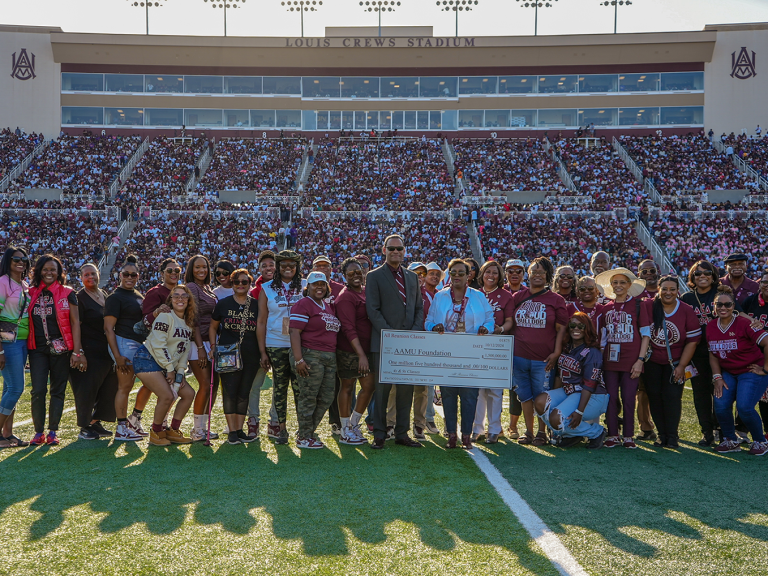
The Alabama A&M University Office of Multicultural Affairs is set to continue its Bulldog Parent University program for the 2024-25 academic year, providing a valuable resource for families of first-year students. This initiative features a series of informative webinars aimed at empowering parents to better support their students as they transition into university life.

Developed with input from various campus departments, Bulldog Parent University offers essential insights to help first-year families and students adjust to the unique challenges of living away from home. The program equips parents with tools and resources, fostering an environment where both students and families can thrive at AAMU.

“Last year’s program was a great success,” said OMA executive director Dr. Pamela Little. “We received wonderful feedback from parents who felt more connected to their students’ experiences and appreciated the resources to help them adapt to life on campus.”

The next webinar in the series, titled “Student Engagement and Involvement,” is scheduled for Monday, September 16, from 6:00 p.m. to 7:30 p.m. CST via Zoom. This session aims to cover various topics, including leadership and involvement opportunities, mentorship, academic and professional development, and strategies for empowering students during their college journey.

Research supports the significance of ongoing parental involvement during the transition to college. A recent study highlighting Bulldog Parent University indicates that first-year students who maintain regular communication with their parents exhibit healthier emotional responses to university challenges, including stress and anxiety management. This reinforces the idea that a strong support system can play a crucial role in student success.

Parents interested in participating in Bulldog Parent University are encouraged to register by Friday, September 13, at 5 p.m. 

UMES Employees Benefit from Major Technological Upgrades 

The University of Maryland Eastern Shore enhanced workplace technology this fall with significant upgrades.

Employees at the University of Maryland Eastern Shore are experiencing significant enhancements in their workplace technology this fall. The Department of Information Technology is leading a series of campus-wide upgrades to improve efficiency and security. These improvements include a move to the Windows 11 operating system and a transition from Google Workspace to Microsoft Office 365. A new phone and printing system will also be implemented.

The upgrades were initiated as part of a comprehensive checklist to modernize the campus’s technological infrastructure. The printer and phone migrations were completed over the summer. The final phase—the switch to Office 365—is scheduled to be completed by September 13. According to Mark Van Pelt, UMES’s chief information officer, these changes are crucial for keeping pace with current technological trends and ensuring data security. “The main benefit is modernization,” Van Pelt stated. “We want to be mobile-ready as a campus and allow people to have a more fluid way to work.”

The transition to Windows 11 was prompted by the impending end of support for the previous operating system, Windows 10. The shift from Google Workspace to Office 365 and OneDrive is mainly geared towards enhancing security for sensitive institutional data. “This simplifies transferring of information and makes things easier,” Van Pelt said. “It makes us one big technological family.”

Communication Upgrades

In addition to improving software and operating systems, UMES has upgraded its communication tools. The older NEC office phones have been replaced with a new Cisco WebEx system.

“You can use WebEx on pretty much any device – a mobile phone, iPhone, iPad, or your web browser,” said IT director Rob Lopez. “You can even take your office phone home and connect it to your Wi-Fi if you want.” 

This flexibility allows employees to maintain privacy when working remotely. They can now use their office number even while using personal devices. “With WebEx being within an app, it’s like you’re calling from your desk with a campus extension,” explained LaChanda Snead, the director of administrative computing.

A new e-fax configuration enables recipients to receive and read faxes through the WebEx system. The IT department will also install new color copiers and printers, allowing users to print more efficiently across various campus locations.

Furthermore, as part of the University of Maryland College Park’s Elevate program, UMES is transitioning to the cloud-based Workday system. This platform will replace outdated payroll, human resources, financial, and budgeting systems with an integrated solution prioritizing data security, efficiency, and compliance.

Spelman College Secures Multiple Grants to Enhance Educational Opportunities

Spelman College proudly announced multiple substantial grants aimed at enhancing educational opportunities, including a $1.22 million award.

Spelman College announced a series of significant grant awards that underscore its commitment to academic excellence and the support of diverse student populations. The college has recently secured funding from various organizations to enrich educational programs, preserve history, and foster future generations of scholars.

Coca-Cola Foundation

One of the most notable grants comes from the Coca-Cola Foundation, which has awarded Spelman $1,220,000 for the Coca-Cola First Generation Scholarship Program. This initiative, running from Fall 2024 to Spring 2028, will provide ten first-year students, who are the first in their families to attend a four-year institution, with $25,000 scholarships each year. Additionally, the program includes cohort activities facilitated by Dean of Students Dr. Sylvia Griffin. Activities are designed to navigate the unique challenges faced by first-generation college attendees. 

Council on Library and Information Resources

In another exciting development, the Council on Library and Information Resources has awarded Spelman over $49,000 for the project “Lasting Legacies: Preserving and Providing Access to the Rich Audiovisual History of Spelman College.” Spearheaded by archivist Holly Smith, this initiative will focus on digitizing valuable audiovisual materials dating from the 1950s to the 2000s.

Thurgood Marshall College Fund

The Thurgood Marshall College Fund and Boeing have also partnered to provide Spelman with a second grant of $50,000 designated for the summer Math RaMP program. Under the leadership of Dr. Naiomi Cameron, this initiative aims to prepare talented students of color for careers and graduate studies in mathematical sciences. 

Georgia Power Foundation

Moreover, the Georgia Power Foundation has continued supporting the Virtual Data Science Summer Internship Program, originally developed during the COVID-19 pandemic. Led by Dr. Tiffany Oliver, this experiential learning opportunity equips students from diverse disciplines with essential data-science principles while providing them with stipends, enabling deeper engagement and practical experience.

Trott Family Philanthropies

Additionally, the Trott Family Philanthropies has granted Spelman $400,000 to enhance outreach and recruitment efforts in rural communities as part of its involvement in the STARS College Network. Directed by Chelsea Holley, this initiative aims to ensure that students from rural and small-town America gain access to higher education.

NASA

In further advancements, Dr. Marta Dark McNeese has secured a $50,000 award from NASA for the Minority University Research & Education Project. Her research focuses on developing an interferometric optical sensor for biomedical applications.

National Security Agency

Lastly, the National Security Agency has granted $210,901 for the STARTALK Student Program, which provides free Chinese language and cultural education to middle and high school students. Led by Dr. Zhengbin Lu, the program kicked off its inaugural summer session, during which participants engaged in a variety of cultural activities and showcased their learning through traditional performances.

Savannah State University Expands College of Education to Address Teacher Shortage 

Savannah State University has received official approval to expand its College of Education with a new elementary education program.

In a significant move for education in Georgia, the University System of Georgia Board of Regents has officially approved the expansion of Savannah State University’s College of Education to include a new program in elementary education. This decision is expected to play a vital role in addressing the ongoing teacher shortage that has been impacting schools across the state.

“We are overjoyed that the Board of Regents approved our proposal to expand the College of Education,” said SSU Interim President Cynthia Alexander. “It was the right decision for the education students at Savannah State, it was the right decision for the state’s elementary schools, and it was the right decision to make sure our youngest, most eager minds receive the education they deserve.”

The newly added certified degree offerings will align with initiatives spearheaded by Governor Brian Kemp and Georgia State Senator Billy Hickman, who aim to improve early education systems statewide. As the chairman of the Senate Committee on Higher Education, Hickman has been instrumental in backing several recent legislative efforts, including the Georgia Early Literacy Act (HB 538).

“Teacher shortages persist in many of our school districts — both here in Savannah and across the state,”  remarked Dr. Cora Thompson, Interim Dean of the College of Education. “There simply aren’t enough teachers to meet our school’s growing needs.” According to recent U.S. Department of Labor statistics, Georgia requires a significant influx of elementary educators, with expectations that the demand will rise by 15.8% by 2028, vastly outpacing the national average increase of 7%.

Putting Education First

SSU plans to launch the new elementary education program in Fall 2025. Dr. Kisha Cunningham Aites, the interim department chair, confirmed that preparations are already underway to ensure the program is effectively integrated into the existing educational framework. Currently, SSU offers various education degrees, including a Bachelor of Science in Education specializing in middle grades, secondary education, and technology education.

Notably, the institution has experienced a high volume of inquiries regarding elementary education, but has often had to refer interested students to other universities due to the absence of such a program. “We anticipate that our new program will make a significant dent in the shortage – especially in our region – over the next five years,” Aites said.

SSU has a rich legacy of training teachers, particularly those from underrepresented backgrounds. Dr. Thompson emphasized the importance of diversity in education: “A growing body of research suggests that students benefit from teachers who share their diverse cultural backgrounds,” Thompson said. “We’re committed to recruiting students from diverse backgrounds and instructing them to be culturally competent to meet the needs of all students.”

FAMU Receives $500K to Enhance Biology Education with AI and Machine Learning

Florida A&M University has secured a $500,000 NSF grant to revolutionize biology education by integrating artificial intelligence and machine learning.

Florida A&M University has announced a significant advancement in educational innovation with a $500,000 grant from the National Science Foundation. This funding will support a collaborative project to integrate artificial intelligence and machine learning into the biology curriculum at FAMU and three partner Historically Black Colleges and Universities: Jackson State University, Alcorn State University, and Grambling State University.

The initiative, which is expected to reshape traditional biology education, will empower students with essential skills necessary for success in an increasingly technology-driven job market. “Through this grant, FAMU remains at the forefront of educational innovation in a technology-driven world,” said Provost Allyson L. Watson, Ph.D. “By integrating AI and Machine Learning into our biology curriculum, we are preparing our students with essential skills that are increasingly in demand across industries.”

Dr. Clement G. Yedjou, an associate professor of biology and data science at FAMU, will spearhead the three-year project. The project’s dual focus includes faculty training and enhancing student performance and engagement. Faculty members across partner institutions will receive specialized training in AI and ML technologies. They will be equipped to integrate these advanced tools effectively into their general biology courses.

Changing The Study of Biology

The ambitious project aims to reach over 700 students, enabling them to benefit from a modernized curriculum that promises to enhance learning outcomes. “This initiative will provide our students with cutting-edge skills in AI and Machine Learning, preparing them for careers in data-intensive fields,” said Yedjou.

Significantly, the project involves assessing student performance and engagement through course comparisons between AI/ML-enhanced curricula and traditional biology classes. These evaluations will inform future curriculum innovations.

Dr. Yedjou will collaborate with four co-principal investigators from the partner institutions: Dr. Jinwei Liu (FAMU), Dr. Felicite Noubissi-Kamdem (JSU), Dr. Jameka Grigsby (ASU), and Dr. Waneene Dorsey (GSU). Together, they aim to create a replicable model of AI/ML-integrated pedagogy, providing a scalable framework for other institutions striving to enhance biology education.

WSSU to Officially Become StormReady Campus in Ceremony on 17

Winston-Salem State University will proudly become the second historically Black university in the North Carolina system to earn the StormReady designation.

Winston-Salem State University is set to achieve a significant milestone by officially becoming a StormReady campus during a recognition ceremony scheduled for Tuesday, September 17, at 2 p.m. The event will take place in the Donald J. Reaves Center, Room 100A, and feature Nicholas “Nick” Petro, the warning coordination meteorologist from the National Weather in Raleigh.

Winston-Salem State University, a historically black public university in Winston-Salem, North Carolina.

WSSU is the second historically black university in the University of North Carolina system to earn the StormReady recognition and the second higher education institution in Forsyth County to earn the designation. The StormReady program, sponsored by the NWS, is a voluntary initiative that promotes community preparedness for severe weather. It recognizes entities that are committed to enhancing their readiness for hazardous conditions.

Earning the StormReady Designation

To attain StormReady status, WSSU completed a thorough application process, which included a site visit and an extensive meeting with local NWS officials. The university met several stringent criteria, including establishing a 24-hour warning point and emergency operations center, implementing multiple methods for receiving weather forecasts and warnings and creating a system to monitor local weather conditions. Furthermore, the university has actively promoted the importance of preparedness through community seminars and developed a formal hazardous weather plan that involves training severe weather spotters and conducting emergency exercises.

According to the NWS, the United States experiences around 10,000 thunderstorms, 2,500 floods, 1,000 tornadoes, and six deadly hurricanes yearly. Approximately 90 percent of all federally declared disaster areas are weather-related. 

“This designation highlights our ongoing commitment to keeping the campus community informed of severe weather threats and implementing best practices for weather preparation and public awareness,” said Jason Stogner, director of WSSU’s Office of Emergency Management.

The recognition ceremony will feature remarks from WSSU Chancellor Bonita Brown, Stogner, and Petro, who will formally present the StormReady certificate.

Coahoma Community College Choir Documentary to Air on Mississippi Public Broadcasting

Mississippi Public Broadcasting is set to premiere the documentary “I Want to at the Meeting: and Secular in Mississippi Delta.”

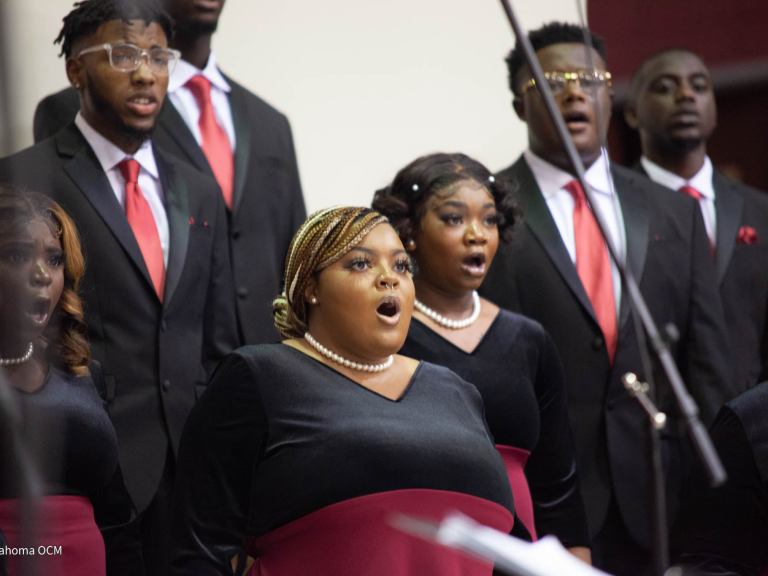
Mississippi Public Broadcasting is set to premiere a documentary titled “I Want to Be at the Meeting: Sacred and Secular in the Mississippi Delta” this September. The film showcases the talents of Grammy-nominated artist Jontavious Willis, recent Coahoma Community College alum Tae’Angelo Carter, and members of the 2021-2022 Coahoma Community College Choir. It offers viewers an intimate look at a night filled with gospel performances deeply rooted in the rich musical traditions of the Mississippi Delta.

The documentary will be broadcast across public television stations in the region, with statewide airings scheduled for Friday, September 13, at 7:30 p.m., and Sunday, September 15, 2024, at 5:00 p.m. Viewers can catch the premiere on WMAO TV, Channel 23 in the local area.

Dr. Kelvin Towers is the fine arts chair and director of choral activities at CCC. He expressed the significance of this project.“Gospel music is at the heart of our community, and this film beautifully captures the spirit of the Mississippi Delta,” said Dr. Towers. “It has been a privilege to work with such talented students and artists, and I am honored that our choir is being recognized on this platform. This is a celebration of our rich musical heritage, and I hope it resonates with viewers across the state.”Dr. Towers also noted that the songs performed by the choir were uniquely arranged for the project.

From Idea to Documentary

Don Allan Mitchell, an English professor and director of the Honors Program at Delta State University, produced the film. The documentary originated as a live-streamed Black gospel concert during the pandemic. Students from Delta State’s digital media, film, and animation programs contributed to the original stream, creating valuable footage for their coursework. Boston filmmaker Ted Fisher, who co-produced the film, saw potential in the raw footage, envisioning it as a compelling short documentary.

“As a director, Ted recognized that we could capture the passion and intensity of Jontavious Willis and the CCC Choir as they performed selections from the Black gospel tradition,” said Mitchell. Despite being primarily known as a blues musician, Willis embraced the project’s focus on gospel music, sharing stories about his early experiences singing in church. “ His roots were evident during the spontaneous duet between him and the CCC Choir on ‘I Want to Be at the Meeting,’ which still gives me chills,” said Mitchell. 

In addition to its television debut, “I Want to Be at the Meeting” will soon be available on the PBS Passport streaming platform.

Elizabeth City State University Professor Awarded Grant to Enhance Literacy Initiatives

Elizabeth City State University’s Chioma Ezeh has been awarded a $49,936 grant to enhance literacy initiatives.

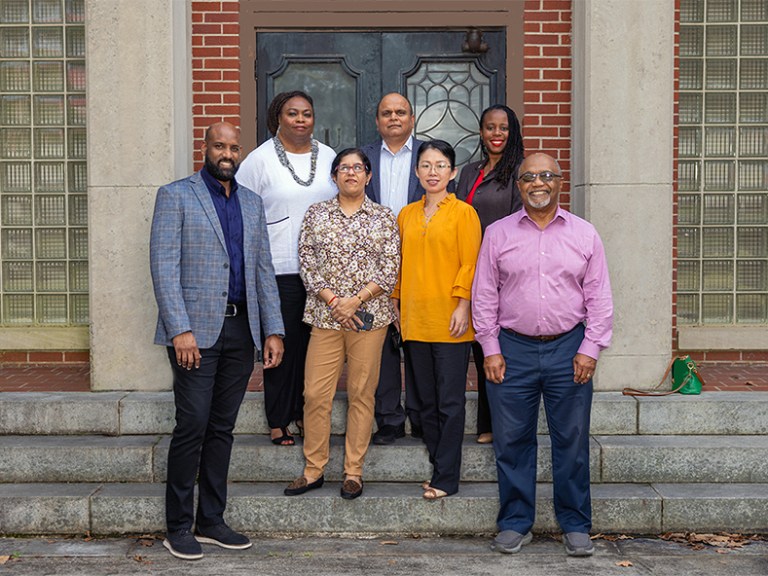
In a significant boost for local education, Chioma Ezeh, an assistant professor of elementary education at Elizabeth City State University, has secured a $49,936 grant from the North Carolina Collaboratory. This funding aims to advance her mission of enhancing literacy among culturally and linguistically diverse students in the region.

Ezeh has dedicated her time at ECSU to outreach and literacy initiatives designed to improve academic outcomes in nearby schools. Recognizing the unique challenges local communities face, she sees their diverse blend of cultures and languages as a strength rather than a barrier to education. 

“I have been inspired by the relationship between our department and the local school districts. The districts consistently welcomed us, whether through our volunteering efforts in their schools or by participating in our events and interacting with our students,” said Ezeh.

A Leader in Literacy

The need for intervention is pressing. According to Ezeh, culturally and linguistically diverse learners encounter more significant obstacles due to digital inequality, language barriers, and limited access to literacy resources. This disparity places additional strain on teachers, particularly in elementary education, as they strive to meet their students’ complex needs.

“We know that diversity across ability, racial, ethnic, linguistic, and socioeconomic student groups has reportedly explained literacy achievement gaps,” Ezeh noted. “The global disruption caused by the pandemic has worsened these existing disparities.”

With a clear goal in mind—to enhance literacy capabilities within diverse communities—Ezeh plans to collaborate closely with local school districts. The grant will support existing programs and introduce new strategies tailored to these communities’ specific needs.

Ezeh highlighted the importance of collaboration, stating that various principals and stakeholders frequently engage with ECSU’s education department. “This kind of collaboration fosters research opportunities, and I am grateful for the chance to build on this relationship,” she remarked.

Determining how all students can learn to read regardless of their backgrounds is the question that is driving her initiative. “Early literacy is crucial for a child’s future academic success,” Ezeh stressed.

Ezeh is committed to engaging the community through the project. Early in her tenure, she prioritized meeting with district superintendents and stakeholders to better understand their needs.