Morgan State University’s Division of Research and Economic Development announced a remarkable achievement. The university has secured a record-high of $88.5 million in new federal funding commitments for research and training. This marks a 6% increase from the previous year and $50 million in research expenditures for Fiscal Year 2024. This milestone represents the fourth consecutive year that Morgan has recorded increases in sponsored research commitments, excluding private gifts.
David K. Wilson, president of MSU, expressed his enthusiasm regarding these achievements. “Since first boldly declaring our commitment to becoming the only doctoral HBCU with a current R1 classification, Morgan has been on an unwavering positive trajectory toward that goal,” Wilson stated. He emphasized the importance of leveraging these emerging research capabilities to address critical challenges affecting the Baltimore community and beyond.
For FY24, Morgan State researchers submitted 331 new proposals requesting over $226 million in funding from various federal agencies. The University received 160 new funding commitments worth $88.5 million from these submissions. At the same time, it achieved targeted research expenditures of $50 million.
Willie E. May, Ph.D., vice president of research and economic development, praised the efforts of faculty and staff in elevating Morgan’s research profile.“Our sponsored research funding has risen from $33 million in FY 2018 to nearly $90 million this past fiscal year, while research expenditures have risen from $13 million in 2018 to an estimated $50 million for the year, which meets the R1 threshold,” May said.
The American Council on Education and the Carnegie Foundation for the Advancement of Teaching recently simplified the criteria for R1 classification. Now, universities must spend at least $50 million on research and award a minimum of 70 doctoral degrees annually. Morgan is developing strategies to return to pre-COVID levels, exceeding 70 doctoral graduates annually.
Alabama A&M University’s Honors Program achieved a monumental milestone, welcoming 147 new members for the 2024-25 academic year. This is the largest class in the program’s 31-year history. During the ceremony, held at the university’s campus, 16 scholars were appointed to the executive board.
Carla Draper-Holloway, assistant director of the Honors Program, expressed her pride in the program’s growth. “When I joined the program in 2006, we had just 13 scholars,” said Draper-Holloway. “Today, our growth has exceeded expectations. I am thrilled to see our numbers rise, and I eagerly accept the challenge that such a large class presents.”
Dr. Tianna Hall Returns to Alabama A&M
Dr. Tianna Hall, an accomplished alumna from the Class of 2014, delivered the keynote address. Hall shared her transformative journey from Alabama A&M to medical school, highlighting the pivotal role the Honors Program played in her success. Despite encountering challenges, such as not passing the MCAT during her senior year, she underscored the unwavering support she received from Draper-Holloway and the Honors community.
“It gave me a strong pillar of support away from home,” said Hall. “It gave me an advisor who was truly invested in my success and my future. It gave me unimaginable exposure to different careers in science, and the membership gave me camaraderie with other high-achieving scholars.”
Dr. Hall’s academic trajectory continued after graduating; she earned her M.S. in public health from the University of Alabama at Birmingham and a Doctor of Osteopathic Medicine from Edward Via College of Osteopathic Medicine in Auburn, Alabama. Today, she is a board-certified family medicine physician at Ascension St. Vincent’s Primary Care in Gardendale, Alabama.
“This program helps scholars collaborate with on and off-campus resources to increase the number of opportunities, and to champion service – so that each scholar can become the absolute best version of themselves and are prepared to lead the world in their respective lanes of expertise,” Dr. Hall explained.
As the ceremony drew to a close, Hall inspired the inductees with a final message.“This program and our beloved University continue to produce numerous community leaders and innovators who leave lasting impressions in the world. Please know that you will be next,” she added.
North Carolina Central University partnered with the Innovation Project to launch a new scholarship program. This initiative aims to support aspiring principals in small, high-need districts across North Carolina.
The Recruitment, Retention, and Promotion of Effective Educators scholarship program will provide over $1.5 million in scholarships to prepare educators for leadership roles through NCCU’s online Master of School Administration program.
The RRP scholarship program covers full tuition for the two-year MSA program, which is funded by the U.S. Department of Education and the North Carolina Department of Public Instruction.
During the first year, participants can continue contributing in their current classrooms. In the second year, they will transition into principal intern roles, which will provide them with valuable hands-on experience in leadership. Salary assistance will also be available for participants during their second year.
Chancellor Karrie G. Dixon emphasized the importance of empowering educators to lead in high-need districts. “Our collaboration with the Innovation Project is a powerful step in empowering educators to lead and transform high-need districts,” said Chancellor Dixon. “At NCCU, we are dedicated to preparing leaders who will not only excel in their roles but also make a lasting impact on the communities they serve.”
Recently,NCCUhosted an orientation for the first cohort of 16 educators selected from eight TIP member districts.
“With strong support, great teachers can become great principals. North Carolina Central University has been the perfect partner to help TIP build this program,” said Sharon Contreras, Ph.D., CEO of TIP. “The interview process was especially dynamic and illuminated those candidates with the potential to do the work our students need and deserve. I’m thrilled with the outcome, and I look forward to seeing these professionals advance in their careers and continue to serve in smaller districts.”
Scholarship Recipients
The selected scholarship recipients, who committed to fulfilling a five-year service obligation in their respective districts, include:
Cecelia Aguilar, Warren County School District
Trevor Beverly, Lexington City Schools
James Brown, Warren County School District
Qua’Shana Brown, Edgecombe County Public Schools
Sylvia Carver, Elizabeth City – Pasquotank Public Schools
Wilonda Gillespie-Cates, Vance County Public Schools
J’Vonn Davis, Elizabeth City – Pasquotank Public Schools
Megan Gentry, Mt. Airy School District
Pamela Jordan, Warren County School District
Ashley Knowles, Sampson County Schools
Brandon Powell, Sampson County Schools
Jennivise Lindsay, Vance County Public Schools
Kenya Raynor, Edgecombe County Public Schools
Elaine Reales, Mt. Airy School District
West Scherer, Asheboro City Schools
Danielle Wissner, Elizabeth City – Pasquotank Public Schools
The National Science Foundation awarded Tuskegee University a $5 million grant to enhance STEM education for students from low-income communities. This funding will be distributed through the RISE Consortium, which includes several institutions across Alabama and Michigan. Tuskegee serves as the lead institution.
The grant allocation provides Tuskegee University with $2.17 million. Of that, nearly $750,000 is explicitly earmarked for scholarships to support both undergraduate and graduate students. The consortium also comprises Auburn University, Auburn University Montgomery, Troy University, Southern Union State Community College, and Oakland University in Michigan.
Tuskegee Appreciative of the Grant
Dr. Mark Brown, president and CEO of Tuskegee, expressed the significance of the grant. “Tuskegee’s storied history means that the research we conduct is focused on solving national problems. At the same time, we are the #1 HBCU for Social and Economic Mobility. This framework aligns perfectly with the NSF grant, which rewards the hard work that has gone into providing our students with state-of-the art STEM research and learning while ensuring those most in need will be able to continue their education at Tuskegee,” stated Dr. Brown. He further congratulated everyone involved for their efforts in securing this vital support.
Over the next five years, approximately 25 students from Tuskegee University will benefit from the RISE program, which provides mentoring and scholarship support. Participants will engage in research opportunities, including developing simulation skills critical for planning future industry solutions. In addition to hands-on experience, students will receive professional career development guidance, network at annual conferences across the consortium, and prepare for advanced studies in graduate school.
Leading the Consortium
Dr. Mohammed A. Qazi is a professor and associate dean for research and outreach in the College of Arts and Sciences. He is the principal investigator overseeing the RISE Consortium. Qazi is supported by fellow Tuskegee investigators Dr. Mandoye Ndoye, Dr. Vijaya Rangari, and Dr. Shaik Zainuddin. Dr. Qazi emphasized the program’s holistic approach. “Through an ecosystem of co-curricular consortium activities, students will be introduced to cutting-edge technologies and be mentored continuously through a network of faculty at consortium institutions and industry specialists, a strategy that is designed to deepen students’ identification as future STEM professionals,” said Dr. Qazi.
Additionally, Dr. Prakash, dean of the College of Arts and Sciences, noted that the grant underscores Tuskegee University’s commitment to excellence in STEM education. “This grant helps ensure our students from underrepresented and low-income communities are equipped with the tools and opportunities to succeed,” said Dr. Prakash. “Through this collaborative effort, we are not only investing in the future of our students but also in the future of innovation.”
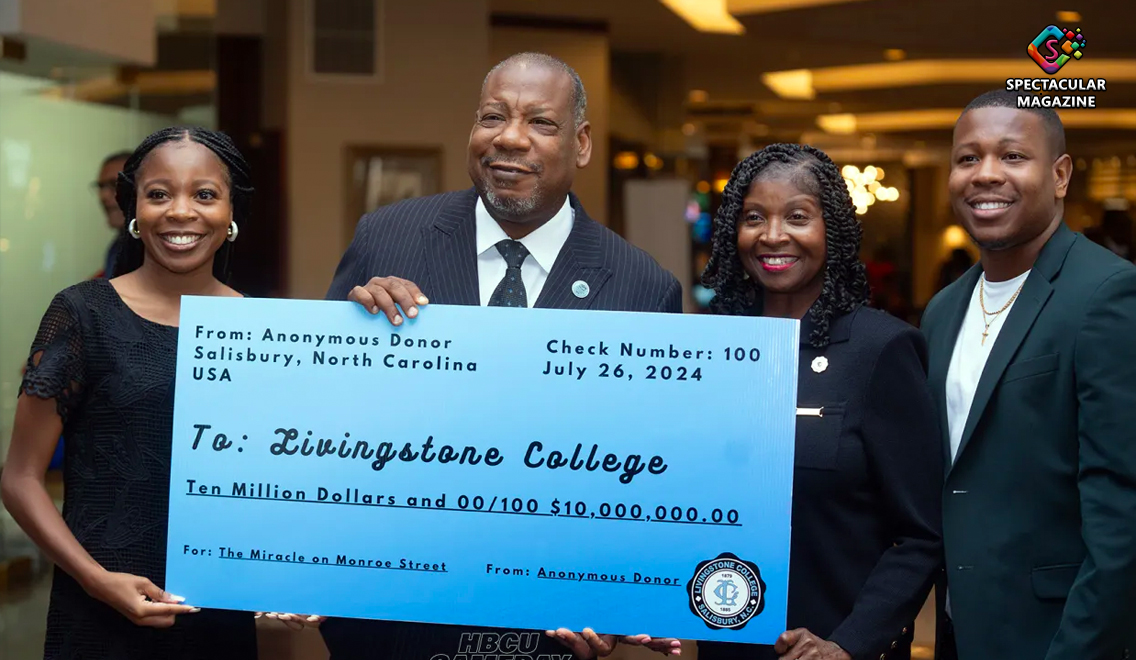
Morehouse College has received a historic $20 million anonymous gift to establish six endowed professorships and enhance academics, marking the largest donation for faculty positions in the college’s history.
In a landmark achievement, Morehouse College has announced the receipt of a transformative $20 million anonymous gift. This unprecedented contribution will establish six endowed professorships. It also marks Morehouse’s largest donation designated for faculty positions in the college’s history.
The endowed professorships aim to bolster innovation and research across various academic divisions, including the Divisions of Business and Economics, Humanities, Social Sciences, Media, and the Arts and Science, Technology, Engineering, and Mathematics.
“Our faculty are the heartbeat of this institution. They lead our academic programs, develop the intellect of our students, and challenge them to go out in the world and be great. They have fueled the success of thousands of Morehouse Men,” said Dr. David A. Thoma, President of Morehouse College. “This transformational $20 million gift will allow us to increase the ranks of our esteemed and talented professors so that we can uphold the legacy of excellence in our classrooms as our as veteran faculty retire.”
Making Men of Consequences
This generous gift is part of the “Making Men of Consequence” Campaign, the largest fundraising initiative in Morehouse’s history, with a total goal of $500 million. The campaign aims to expand scholarship opportunities for deserving students, recruit top-tier faculty, innovate academic programs, and fund campus improvements. The newly announced donation aligns explicitly with the campaign’s “Inquiry with Distinction” pillar. The pillar is designed to enhance academic investment through distinguished faculty positions and innovative programming.
“Investing in Morehouse College’s talented faculty is critical to maintaining the College’s reputation and relevance as a world-class institution of higher learning,” said Provost Kendrick Brown, Ph.D. “At Morehouse, we are developing men with integrity and intellect to become 21st-century leaders and innovators. That takes resources—not only funds for technology and classroom materials but also a significant investment in attracting accomplished professors to Morehouse who will continue to elevate our profile in all academic areas.” Including this anonymous gift, the campaign has raised nearly $290 million. Hodan Hassan, Vice President of Institutional Advancement, thanked the anonymous donor. “This significant gift fuels our ongoing commitment to excellence in higher education and our ability to offer students transformative academic experiences that help them to reach their full potential,” said Hassan.
Alabama State University alumnus Kim Salter donated 35 men’s suits valued at $3,500 to empower students needing professional attire for job interviews and important events.
Kim Salter, an alumnus of Alabama State University, has donated 35 men’s dress suits valued at $3,500 to help students “dress for success.” The donation aims to support students who need formal attire for various occasions, including job interviews and presentations.
Salter is a Montgomery native, an ASU graduate of the Dr. Percy J. Vaughn, Jr. College of Business Administration, and the owner of Evening Out Formal Wear Inc. He presented the suits to the Division of Student Affairs to allow students to present themselves confidently in professional settings. The suits will be free of charge to deserving students within the college.
A Donation Lead By Inspiration
“I was inspired to do this by my friend and a fellow ASU alumnus, Delbert Madison,” Salter said. “By donating my suits to my ASU, I can help lift up our COBA students, so they look good during internships, ASU functions, employment interviews, and all the other times when dressing professionally is important.”
Madison is a senior vice president at ServisFirst Bank and member of the university’s Board of Trustees. He shared with Salter the needs of some students struggling to find suitable clothing for important events.
“When Kim found out that his surplus suits would help our students look as professionally as they are educated here, he quickly and gladly donated them for the use of our young Hornet men,” Madison stated. He and Salter have been friends since childhood and have played intramural basketball at ASU.
Additionally, Dr. Malinda W. Swoope, vice president of Student Affairs and Enrollment Management, expressed gratitude for Salter’s generous contribution. “We greatly appreciate when our alumni step up and give back through donations of all kinds and in the case of Mr. Salter, a rack of beautiful brand-new suits,” Swoope said. “This alumni gift will provide our students with the proper attire to represent themselves and our University in the best way possible, and we thank Mr. Salter for believing in our school.”
PepsiCo and the PepsiCo Foundation have announced the launch of the “Taste of Tomorrow” initiative, aimed at increasing Black representation in science, technology, engineering, and math (STEM) careers. Despite the rapid growth of STEM jobs, Black professionals currently represent only 9% of the workforce. To address this disparity, PepsiCo and the PepsiCo Foundation are investing $350,000 in financial support and additional resources to Historically Black Colleges and Universities (HBCUs), particularly for students pursuing careers in food science and technology.
Kent Montgomery, senior vice president of industry relations and multicultural development at PepsiCo, emphasized the vital role of HBCUs in nurturing Black talent. “HBCUs are a critical pillar of impact, influence, and opportunity, nurturing the next generation of Black leaders,” said Montgomery. “We are eager to continue our long-standing commitment of supporting diverse talent in our business and provide students with the resources needed to thrive in their careers and make a positive impact on the world.”
As part of the initiative, the PepsiCo Foundation will allocate $250,000 in scholarships for HBCU students pursuing STEM degrees across nine HBCUs for the 2025 academic year. The institutions include Benedict College, Bethune-Cookman University, Florida A&M University, Hampton University, Howard University, Jackson State University, Morgan State University, North Carolina Central University, and Prairie View A&M University. The application period will run from Sept. 9, 2024, through Dec. 2, 2024, with details available at PepsiCo’s scholarship portal.
Florida A&M and Prairie View A&M universities will also receive $100,000 in funding to enhance their STEM programs. This investment aims to foster innovation and support an R&D educational workshop series with hands-on learning opportunities. The workshops will cover topics from the latest trends in food sustainability to product development.
“The goal is to inspire students to think critically and creatively about how they can contribute to the future of food, equipping them with both the knowledge and skills they need to succeed in the industry, Montgomery explained.
C.D. Glin, HBCU graduate and president of the PepsiCo Foundation, expressed a personal connection to the initiative. “By investing in HBCU students and supporting STEM education, we hope to inspire a new era of STEM professionals to not only change the future of this industry but provide long-term impact in their communities,” Glin said.
To engage students and fans on campus, PepsiCo’s popular brands—Pepsi® Zero Sugar and Doritos®—will be involved in culinary innovations led by in-house chefs and food-science experts. Campaign spokesperson and HBCU alum 2 Chainz will also participate, bringing his passion for supporting HBCU students to the forefront of the initiative.
“As an HBCU Alum, I’m excited to share my platform and partner with the PepsiCo’s Taste of Tomorrow initiative to support diversity in STEM and encourage students, all while bringing awareness to the talented graduates coming from HBCUs entering the workforce.” said 2 Chainz.
Regarding the partnership with 2 Chainz, Montgomery noted, “He brings a fresh, relatable perspective that bridges the worlds of entertainment, business, and education, making him the ideal partner to inspire and engage students in a meaningful way.”
The “Taste of Tomorrow” initiative also aims to combat systemic barriers that have hindered Black professionals’ growth in STEM fields, such as limited access to advanced STEM courses and lack of representation. By focusing on HBCUs that serve as cultural and educational hubs, PepsiCo seeks to create flavorful futures for students by advancing STEM education and promoting culinary innovation.
Montgomery explained the initiative’s broader goals. “We want students to see that they are the innovators of the future. The ‘Taste of Tomorrow’ campaign is about empowering HBCU students to take their creativity and passion for science, technology, and food to the next level,” he stated. “This initiative is a call to action to step into their full potential and know that companies like PepsiCo are here to invest in their ideas and dreams.”
The funds allocated under this initiative will primarily be used for scholarships, on-campus resources, and workshops, further enabling students to gain hands-on experience in food science and related STEM fields.
For more details about the initiative and how to apply for scholarships, click here.
Don’t miss this! The fourth annual HBCU Technology Conference presented by HP will take place virtually September 10-12, 2024. The event will host tracks for the entire HBCU Campus: CIOs and IT Staff, Faculty & Staff, Executive Leaders, and Students.
This year’s theme is “Explore. Enhance. Empower. Shaping the future of AI at HBCUs.” We will discuss Artificial Intelligence (AI) in higher education and explore AI topics of importance to HBCUs:
· Policy and governance
· Implementation and security
· Teaching and learning solutions and use cases
· Ethics and bias
· How AI is impacting future of work trends
· And more
Opening the conference will be Sal Khan, Founder and CEO of the nonprofit Khan Academy. You will not want to miss his session: Harnessing AI for Education so All Students Benefit. AI is nascent technology, but we already find ourselves at a crossroads. Will we amplify AI’s benefits equally across society or will we allow an AI gap to form that leaves some students out? Sal Khan, founder and CEO of the nonprofit Khan Academy, talks about the potential for AI to transform education. He will discuss his plan for using AI to help empower all students to reach their full potential to and assist teachers, so they can focus on the very human work of instructing a classroom full of kids. Imagine an entire generation activated, engaged, and exploring new ideas, creating change bigger than any of us can imagine.
You will also hear from HBCU faculty, staff, IT professionals, and leaders, HP, Intel, Microsoft, and others in academia and the tech industry. Visit the conference website to view the full agenda.
The student experience, The Future of Work Academy (FOWA), is a program designed to help students imagine and prepare for their future work through three main activities:
Interactive Symposium. Virtual interactive workshops focused on skills needed for early careers. Each session will provide an opportunity for students to put what they learn to practical use.
Career Accelerator. The HP University Recruitment Team will share tools, strategies, and resources to help students strengthen their interviewing acumen and develop their professional persona. Students will be able to create their career profiles with HP and upload their resumes during registration.
Innovation Incubator. Students participated in a summer learning journey and prepared for a prompt-a-thon competition. Competition finals will take place on the last day of the conference.
Xavier University of Louisiana has officially announced its partnership with the Energy Storage Research Alliance, positioning itself as a critical player in advancing cutting-edge energy storage solutions. This collaboration is a U.S. Department of Energy energy innovation hub. ESRA aims to expedite technology commercialization within the realm of energy innovation.
The alliance unites nearly 50 world-class researchers from three national laboratories and twelve universities, leveraging diverse perspectives to transform the global energy storage landscape.
Dr. Lamartine Meda is the Bellsouth-endowed chemistry and material science professor at Xavier. He will serve as the principal investigator for this collaboration. He emphasized the importance of understanding interfacial reactions in solid-state batteries, which are crucial in enhancing cell performance.
“We have developed a solid-state electrolyte and will take advantage of this electrolyte to understand how different materials interact at their boundaries, which is a key factor in optimizing ion conductivity and overall cell performance. Our primary focus is understanding interfacial reactions using a variety of techniques,” he said.
Focusing on Energy and the Workforce
Over the next five years, the DOE plans to fund ESRA with up to $62.5 million, with Argonne National Laboratory leading the initiative. The goals of this partnership include creating high-energy batteries that are safe, durable, and constructed from inexpensive, abundant materials. Additionally, the effort will focus on training a diverse workforce for future energy storage manufacturing needs.
“Cultivating a diverse workforce dedicated to safeguarding America’s energy resilience is key to ESRA’s mission,” said Wei Wang, ESRA deputy director for crosscuts and director of the Energy Storage Materials Initiative at Pacific Northwest National Laboratory. “Through our strategic equity and inclusion initiatives, we plan to create a robust training ground for energy storage science from the undergraduate to postdoctoral levels.”
The collaboration emphasizes innovation in energy technology and aligns with XULA’s ongoing commitment to sustainability and resource efficiency. Initiatives like XULA Green, the university’s Sustainability Office, showcase its dedication to environmental stewardship and advocacy.
“This partnership means a lot for Xavier as our students will have opportunities to perform research at our partner institutions in energy storage and contribute to the goal of net-zero carbon emissions, becoming future leaders of this field,” said Dr. Meda.
The U.S. National Science Foundation awarded Winston-Salem State University a $370,000 grant to advance its efforts in preparing students for careers in STEM. This funding is part of the NSF’s Enabling Partnerships to Increase Innovation Capacity program. EPIIC recently announced an investment totaling nearly $19 million to support 48 institutions nationwide, including historically Black colleges and universities and minority-serving institutions.
Winston-Salem State University, a historically black public university in Winston-Salem, North Carolina.
Leading the Way
Dr. Fenghai Guo, a chemistry professor and principal investigator of the grant, will spearhead the project at WSSU. The initiative will involve collaboration with North Arkansas College, Middle Georgia State University, and St. Vincent College to enhance innovation capacity at each institution. The focus will be on fostering external and internal partnerships, creating a more inclusive research and innovation ecosystem, and broadening participation among diverse students in the research enterprise.
Dr. Shawn E. Holt, associate provost for Research & Innovation and co-principal investigator on the grant. He emphasized the significance of this opportunity for WSSU. “Through the leadership of Dr. Fenghai Guo in the Department of Chemistry, this is a tremendous opportunity for WSSU to showcase its talented faculty,” he said. “Dr. Guo and his team are leading three other institutions in an effort to grow external, research-related partnerships to increase workforce development in STEM, and support from NSF will jumpstart the process.”
The SUPER (Strategic University Practices to Expand Research) Partnerships Collaborative project will help cohort institutions implement best practices in building partnerships and developing STEM workforce initiatives. Through the EPIIC project, these institutions will engage with industry experts and government agencies to identify the skills and knowledge required for STEM jobs. Then the information will be used to modify and enhance undergraduates’ educational experiences, ensuring alignment with industry needs.
Other co-principal investigators working alongside Dr. Guo include Jafar Gharavi-Naeini, a chemistry professor; Chad Markert, an associate professor of exercise science; and Tangela Towns, an assistant professor of behavioral sciences.
In an initiative to bolster educational opportunities for students from challenging backgrounds, West Virginia State University has partnered with the BHER Foundation to establish the BHER Foundation Healthy Grandfamilies Scholarship. This new scholarship will support students who have participated in the Healthy Grandfamilies program. Health Grandfamilies assists grandparents who are raising their grandchildren.
The BHER Foundation has committed a generous $150,000 to fund the scholarship. WVSU President Ericke Cage expressed gratitude for the foundation’s support. “We are extremely grateful to the BHER Foundation for this generous commitment to provide scholarship support for students who have come through our Healthy Grandfamilies program,” said Cage. “These students and their families have already overcome many of life’s challenges, and this scholarship will be a tremendous aid in helping them continue their education at West Virginia State University.”
The WVSU Extension Service initiated the Healthy Grandfamilies program in 2015 and operates in all 55 counties of West Virginia. It provides vital resources and assistance to grandparents who are stepping up to raise their grandchildren. Often, issues like addiction cause their difficult circumstances.
Alicia Knapp, President and CEO of BHE Renewables, which oversees the BHER Foundation, underscored the program’s significance. “Healthy Grandfamilies helps grandparents navigate the challenges associated with raising their grandchildren, oftentimes after families are impacted by the trauma of addiction, and it’s the type of impactful program that the BHER Foundation is designed to support,” said Knapp. “We are proud to partner with WVSU to support these children with scholarships that will help them reach their full academic potential.”
Helping Students in Need
The scholarship will prioritize WVSU students who have been served by the Healthy Grandfamilies program from Jackson County. Each year, information about the scholarship will be provided to counselors at Ravenswood High School and Ripley High School. The scholarship team will encourage them to recommend eligible students. Should there be remaining funds, the team will also consider other West Virginia students involved in the Healthy Grandfamilies program. Then, students who are the first in their families to attend college will be considered.
The BHER Foundation Healthy Grandfamilies Scholarship will grant its first scholarship this fall. The scholarship marks a hopeful step toward providing essential educational support for students facing unique challenges.
Tennessee State University is mourning the sudden passing of Dr. Curtis Johnson, chief of staff and vice president of administration, who was found unresponsive in his home on Tuesday night. His untimely death has left a profound void in the university community. The loss has prompted an outpouring of faculty, staff, and student tributes.
Remembering Dr. Johnson
Interim President Ronald A. Johnson expressed heartfelt sorrow at the loss of Dr. Johnson. “Dr. Johnson was the embodiment of the spirit that is TSU. His presence beamed with ‘Golden Sunshine’ and an unwavering commitment to our students, as well as an infectious love for inspiring, motivating, and engaging people,” said the president. “I encourage everyone in our TSU community to embrace the essence of the wonderful blessing that Dr. Johnson has been. Let’s support each other as a family and offer our prayers of comfort to Dr. Johnson’s loved ones and close friends.”
TSU Interim President Ronald A. Johnson, left, and Dr. Curtis Johnson, right, at the Fall 2024 One Stop Shop event in Kean Hall.
Dr. Johnson, who joined TSU in 2013, was a beloved figure on campus known for his collaborative spirit and commitment to enhancing the student experience. He was pivotal in leading auxiliary services, overseeing key areas such as dining services and the TSU Bookstore. He also managed emergency procedures.
Student Government Association President Chrishonda O’Quinn spoke of Dr. Johnson’s remarkable impact. “I am deeply heartbroken to hear about the passing of Dr. Curtis Johnson,” O’Quinn expressed. “Dr. Johnson never hesitated to uplift and prioritize the student voice. His presence was remarkable, with an infectious laugh and a smile that could light up any room.”
O’Quinn emphasized that he made everyone he encountered feel valued, leaving an indelible mark on the TSU community. “He loved Tennessee State University with all his heart,” she added.
During his tenure, Dr. Johnson worked closely with former president Dr. Glenda Glover, their professional relationship stemming from their time at Jackson State University. Reflecting on Dr. Johnson’s contributions, the interim president noted, “Dr. Johnson has honored us and is a noble legacy of our beloved TSU. His impact on our community will be felt for years to come.”
Counseling Offerings
In response to the grief, TSU is providing grief counseling services to those affected by Dr. Johnson’s death. The Counseling Center in the Floyd Payne Campus Center will be available for students seeking support. At the same time, the university is offering employees individual and group sessions at the campus and the Avon Williams Educational Center. Additionally, the Employee Assistance Program is accessible 24/7 to help those in need.
To honor Dr. Johnson’s memory, TSU plans to hold a campus-wide gathering, with details forthcoming.
Governor Wes Moore appointed Xiomara V. Medina to the Maryland State Board of Education. Medina is the associate director for clinical training in the Department of Counseling and Psychological Studies at Bowie State University,
The Maryland State Board of Education is responsible for approving regulations and setting educational policies to ensure that every student in Maryland receives a rigorous and world-class academic experience. The board establishes standards for pre-kindergarten through high school education and vocational rehabilitation services. Additionally, it reviews and approves budget allocations for the Maryland State Department of Education, local education aid, and state-supported institutions. Once the board is complete with those budget duties, it sends it to the Maryland General Assembly and Governor Moore.
“Being appointed to the State Board of Education provides me the opportunity to be a voice for the voiceless and champion educational policies for the underrepresented,” said Medina. “Too many times, we see policies being implemented without people knowing what’s going on in the classroom. My goal is to ensure that when policies are discussed, what occurs in the classroom is the focal point.”
Medina’s Experience
Medina, a native of San Francisco, brings extensive education experience to her new role. She has taught at a daycare center and a Montessori School, served as a substitute teacher in Anne Arundel County Schools, and was a school counselor in Howard County Schools. Currently, she guides graduate students at BSU during their internship programs.
“I want everyone to have access to a quality education,” said Medina. “I’m very excited to be able to bring the expertise in education that Bowie State is known for to the board to help advance public education in Maryland.”
Medina is one of three new appointees to the Maryland State Board of Education made by Governor Moore. She earned her master’s degree from BSU and is now pursuing a PhD in Counselor Education and Supervision there.
The Xavier University of Louisiana community is mourning the passing of Sybil Haydel Morial, a civil rights activist, and dedicated educator who left a memorable mark on her alma mater and the New Orleans community. She was 92 years old and a member of the class of 1952.
Born and raised in segregated New Orleans, Haydel Morial began her undergraduate journey at Xavier before transferring to Boston University, where she shared the campus with Dr. Martin Luther King Jr. Her experiences being kicked out of Tulane University and her rejection from Loyola University solely because of her race ignited her lifelong commitment to fighting for equality and justice.
Fighting For Equality
Throughout her life, Haydel Morial confronted the harsh realities of racial discrimination in the Deep South with unwavering courage. When disqualified from membership in the League of Women Voters, she and a group of like-minded women took action and formed their own organization, CiCulSo. This racially inclusive group eventually evolved into the Louisiana League of Good Government, advocating tirelessly for voting rights for Black citizens.
As a teacher in New Orleans, she notably filed a lawsuit against the Orleans Parish School Board, challenging laws that prohibited educators from advocating for school integration.
In addition to her activism, Haydel Morial shared her life with her husband and fellow civil rights advocate Ernest “Dutch” Morial. He made history as the first African American to earn a law degree from Louisiana State University and became the first African American mayor of New Orleans.
In 1977, Haydel Morial returned to Xavier University, where she had been an administrator for nearly thirty years. She retired in 2005 as the vice president for external affairs, leaving a legacy of dedication and service.
Haydel Morial was particularly proud of the opportunities Xavier offered, including support for Black singers in opera, serving as a haven for the Freedom Riders, and its ongoing commitment to civic engagement and equity.
Remembering Sybil Haydel Morial
“Our love and prayers go out to the family of Sybil Haydel Morial. We remember her generous life and legacy and the deep, lasting connections that she and her family have maintained with Xavier University of Louisiana over many decades; we are inspired by her activism, leadership, steadfastness, and commitment to serve,” said Dr. Reynold Verret, president of XULA. “She has been neighbor to many, as taught in the parable of the Samaritan. A member of Xavier’s class of 1952 and a long-serving administrator here for 28 years, our university has been greatly blessed by her intellectual and personal gifts that manifest not only on this campus but throughout New Orleans, Louisiana, and worldwide. Her gift to all is enduring, and she will be sorely missed.”
Bluefield State University’s Mining Engineering Technology program has been reinstated after nearly a decade-long hiatus. The program aims to address the growing demand for skilled professionals within the mining industry.
The university’s interim president, Dr. Darrin Martin, expressed excitement about the program’s return. “We are thrilled to reintroduce the Mining Engineering Technology program at Bluefield State,” said Dr. Martin. “This program has long been a cornerstone of our engineering offerings, and its revival is a testament to our dedication to fostering economic growth and providing valuable educational opportunities in our region.”
The initiative to revive the program began two years ago, stemming from a conversation between Shannon Remines, a BSU Board of Governors member, and Mike Blackburn of Pocahontas Royalties, LLC. They discussed the pressing need for trained engineers and recognized the high regard for BSU alumni in the industry, which sparked their effort to bring the program back.
Earlier this year, the West Virginia Higher Education Policy Commission approved the degree program, prompting university officials to visit local high schools and vocational institutions. Supported by scholarships from coal companies, manufacturers, and foundations, the first cohort of aspiring engineers has been assembled.
Keith Olson, vice president of development at Bluefield State, emphasized the timeliness of the program’s launch. “There are 14 accredited mining and mineral engineering degree programs across the country producing approximately 150 graduates, while there is an industry need for over 500 engineers each year. Moreover, The Bureau of Labor Statistics estimates that 27% of the current geoscience workforce will be retiring by 2029 creating the need for 130,000 fully trained workers to fill that gap,” said Olson.
Preparing the Next Generation of Mining Engineers
In addition to financial backing, industry partners provide invaluable resources, including onsite lab spaces, paid summer internships, and adjunct professors with specialized expertise.
The four-year program leads to a Bachelor of Science degree and covers essential topics such as mine ventilation, planning, safety management, mineral processing, and mine leadership. Students will benefit from hands-on training, state-of-the-art facilities, and collaborations with industry leaders.
Dr. Martin highlighted the program’s significance for the local community. “The return of the Mining Engineering Technology program is not only a win for our students but also for the mining industry and the local economy that depends on it. We are committed to producing graduates who are ready to contribute to the success of this important industry,” he added.
Classes for the Mining Engineering Technology program started last week, and enrollment is now open. Prospective students are encouraged to apply early, as interest in the program is expected to be high.
With the start of football season, Clark Atlanta University is proud to announce a special ticket offering to celebrate its new “Red Football Field,” affectionately known as “The Red Carpet of the AUC.”
In honor of its new, all-red football field, the university has introduced the exclusive “Red Carpet Season Pass.” The pass grants fans access to all home games, including the Homecoming match against Miles College on Oct. 19. The premium pass is priced at $130 and promises an unforgettable game-day experience for supporters.
“We are incredibly excited to kick off this football season and to welcome our fans to ‘The Red Carpet of the AUC,’” states Dr. Jerel Drew, Athletic Director at CAU. “The introduction of the Red Carpet Season Pass is our way of honoring this remarkable new field and providing our supporters with an unforgettable game-day experience.”
Clark Atlanta was one of three of this year’s HBCU Invitational Field Refurbished Program grant recipients. The grant, funded by the Arthur M. Blank Family Foundation, aims to enhance field quality, safety, and accessibility for students and local community groups serving youth through football.
Individual Football Ticket Options
In addition to the Red Carpet Season Pass, Clark Atlanta University offers general admission ticket options for its upcoming football games. Matchups include:
September 7: Opening game against Allen University – $25
October 5: Game against Savannah State University – $30
October 19: Homecoming Game & Tailgate
$50 Early Bird Special (available until October 2)
$60 (October 3-19)
November 2: Game against Tuskegee University – $35
Children’s general admission tickets will also be available for $15 and can be purchased on-site on game day.
Homecoming tickets went on sale on Sept. 4, while Homecoming tailgate tents will be available starting Friday, Sept. 13, at noon. CAU encourages fans to secure their tickets early, as it expects limited seats to go fast. All tickets are non-refundable and can be purchased through Ticket Return.