HBCU First LOOK Film Festival Returns to Howard University with Ryan Coogler, Lynn Whitfield, and Marsai Martin

GettyImages 2201209481 E1762267915803jpg

The HBCU First LOOK Film Festival is returning to Howard University from November 6–8, bringing together a star-studded lineup of Black creatives and film industry leaders for a three-day celebration of storytelling, culture, and opportunity. The 2025 theme, “Elevate Future Storytellers,” reflects the festival’s mission to create pathways for HBCU students pursuing careers in film, television, and digital media. Organized by First LOOK Entertainment and hosted on the campus of one of the nation’s most iconic HBCUs, this year’s festival honors filmmaker Ryan Coogler, actress Lynn Whitfield, and actress-producer Marsai Martin, making it one of the most anticipated creative events in the HBCU community.

Celebrating Excellence in Film and Storytelling

Coogler, best known for directing Black Panther and Creed, will receive the festival’s inaugural “I Aspire Global Impact Award,” recognizing his trailblazing work and commitment to uplifting Black narratives through film. Lynn Whitfield, an Emmy-winning actress celebrated for her iconic roles in Greenleaf and Eve’s Bayou, will be honored for her enduring contributions to the art of storytelling. Marsai Martin, who serves as this year’s Creative Ambassador, embodies the next generation of Black excellence in Hollywood—using her production company, Genius Productions, to develop youth-driven, imaginative projects that amplify authentic Black voices. Together, their participation highlights how HBCUs continue to produce and inspire leaders who shape global culture.

Inspiring and Empowering the Next Generation

Throughout the weekend, the HBCU First LOOK Film Festival will feature masterclasses, screenings, and networking opportunities focused on advancing the presence of HBCU graduates in entertainment and technology. Workshops on topics such as acting, directing, producing, artificial intelligence, and digital storytelling will equip students with tools to navigate the modern media landscape. As noted by The Industry Cosign, the event will also include panels led by casting directors, producers, and executives from major studios, offering firsthand insight into how to transition from the classroom to the film set.

For students from Spelman College, Morehouse College, Clark Atlanta University, and other HBCUs in the Atlanta University Center Consortium, the festival serves as both inspiration and access point—connecting academic talent with professional opportunity.

Elevating HBCUs in the Creative Industry

The return of the HBCU First LOOK Film Festival reinforces Howard’s position as a cultural and creative epicenter among HBCUs. This initiative follows the university’s continued success in producing leaders in entertainment, media, and public service—other major investments fueling HBCU growth. For Howard and other institutions, events like this are more than showcases—they’re catalysts for visibility, partnerships, and future funding that strengthen institutional pipelines.

Building Legacy Through Creativity

As the festival opens its doors, organizers are focused on sustainability—creating a platform that will continue to grow, amplify HBCU voices, and expand opportunities for future filmmakers. The HBCU First LOOK Film Festival aligns with broader efforts to position HBCUs as incubators for innovation in media, arts, and digital technology. By celebrating alumni achievements and introducing new pathways for students, the festival represents the perfect intersection of culture, education, and impact.

MacKenzie Scott Donates $38 Million to Clark Atlanta University, Strengthening Philanthropic Momentum for HBCUs

S6NLFS4B7VFEZGV3KFYUYXDF7I

Clark Atlanta University has received a monumental $38 million donation from philanthropist MacKenzie Scott, marking the largest private contribution in the school’s history and solidifying a growing wave of transformational giving across Historically Black Colleges and Universities. The unrestricted Clark Atlanta University donation was announced this week, following Scott’s previous $15 million gift to the institution in 2020—bringing her total commitment to $53 million. According to Atlanta News First, university leaders described the moment as both historic and symbolic of renewed confidence in HBCUs as catalysts for excellence and equity in higher education.

Clark Atlanta’s Largest Gift in History

President George T. French Jr. expressed deep gratitude to Scott, noting that the unrestricted funds will be used strategically to strengthen student success initiatives, expand scholarship opportunities, and enhance research capacity. “This gift significantly enhances our capacity to expand the student success initiatives and support infrastructure already underway, preparing students to thrive on the global stage for generations to come,” French said in a statement shared via PR Newswire.

The unrestricted nature of the Clark Atlanta University donation gives administrators the flexibility to direct resources where they’re needed most—whether improving campus facilities, supporting faculty research, or expanding access for first-generation college students.

A Broader Pattern of Philanthropy at HBCUs

Scott’s latest act of generosity comes on the heels of several major donations to other HBCUs, including her recent $80 million gift to Howard University and a $70 million contribution to UNCF earlier this year. This surge in philanthropic activity underscores the growing recognition of HBCUs as engines of innovation, leadership, and opportunity within the Black community. In Atlanta alone, the movement is accelerating—Scott also recently donated $38 million to Spelman College, emphasizing her continued support for educational institutions that center equity and social impact.

The Clark Atlanta University donation further demonstrates that HBCUs are not just institutions of legacy—they are institutions of the future. These large-scale investments are shifting the financial landscape of higher education by giving HBCUs the capacity to innovate, scale, and compete globally. As HBCU Buzz has previously highlighted in stories such as Entergy’s $20 million commitment to Arkansas HBCUs and the Moody Foundation’s $150 million donation to Huston-Tillotson University, this era of unprecedented giving is redefining what’s possible for historically Black institutions.

Impact Beyond Clark Atlanta

The $38 million gift is more than a financial milestone—it’s a statement of trust and belief in the university’s vision. For students, it means expanded resources, improved academic programs, and increased access to need-based aid. For faculty, it strengthens research infrastructure and supports innovation across disciplines. For the broader HBCU community, the Clark Atlanta University donation is another indicator that national philanthropic leaders are acknowledging the impact of HBCUs on American progress.

As President French said, “We are profoundly grateful for Ms. Scott’s belief in Clark Atlanta University’s mission and her understanding of how investments in HBCUs transform not just lives but entire communities.” The ripple effects of such contributions extend far beyond campus borders—fueling pipelines of Black leadership, entrepreneurship, and social change.

The Future of HBCU Philanthropy

With Scott’s consistent support of historically Black colleges, a new narrative is emerging: one that places HBCUs at the center of the conversation about educational equity and innovation. The Clark Atlanta University donation reaffirms that when these institutions receive the financial backing they deserve, they produce global citizens ready to lead in every field imaginable.

As momentum builds toward a more equitable educational landscape, HBCUs continue to thrive—powered by alumni pride, student excellence, and visionary philanthropy.

MacKenzie Scott Donates $80 Million to Howard University, Marking a Historic Boost for HBCUs

1d6b5d0f72ae7d16746da91924ea8bd9

Howard University has received an unprecedented $80 million donation from philanthropist MacKenzie Scott, marking one of the largest gifts in the school’s 158-year history and a major moment for the future of Historically Black Colleges and Universities (HBCUs). The Howard University donation underscores a continuing trend of transformative philanthropy flowing into HBCUs, providing critical support for institutions that have long been underfunded compared to their predominantly white counterparts.

According to USA Today, the gift includes approximately $63 million in unrestricted funds to support the university’s overall mission and an additional $17 million designated for the Howard University College of Medicine. Unrestricted contributions like these are especially powerful because they allow the university flexibility to invest where the need is greatest — from scholarships and research to infrastructure and innovation initiatives.

This announcement follows a pattern of large-scale gifts to HBCUs that HBCU Buzz has covered extensively, including MacKenzie Scott’s $70 million donation to UNCF and the Moody Foundation’s $150 million gift to Huston-Tillotson University — both historic examples of how private donors are fueling long-term growth across the HBCU ecosystem.


A Record-Setting Moment for Philanthropy and the HBCU Community

This latest act of generosity from Scott isn’t her first show of support for Howard. Back in 2020, she made headlines with a $40 million contribution, part of her broader effort to address racial and economic inequities through large-scale giving. Now, her latest Howard University donation more than doubles that impact, positioning Howard as one of the top recipients of Scott’s philanthropy nationwide.

University President Ben Vincent III praised the gift, noting that it will help the institution further its mission to educate and empower generations of Black scholars and leaders. “This investment affirms the work we’ve been doing to strengthen the university and expand our capacity to serve our students and community,” Vincent said in a statement shared on The Dig, Howard’s official news site.

For more updates on the university’s achievements, visit the Howard University archive on HBCU Buzz.


Impact Beyond Howard: What It Means for HBCUs Nationwide

Scott’s contribution reinforces a growing movement of major donors recognizing the power and potential of HBCUs. Large-scale investments like these are not just about one school — they shift public perception, attract more corporate and philanthropic partners, and inspire a broader conversation about the systemic underfunding of Black institutions.

For example, Virginia State University and Bowie State University have also been recent beneficiaries of Scott’s philanthropy, signaling a strategic emphasis on investing in HBCUs that have a proven record of excellence and community impact.

For Howard, this gift builds on other recent achievements — including new academic partnerships, major research grants, and its ongoing expansion into cutting-edge fields such as STEM, healthcare, and social innovation. The donation could accelerate the university’s plans for campus development, enhanced student resources, and broader outreach to underserved populations.


A Milestone in HBCU Advancement and Equity

The Howard University donation from MacKenzie Scott is more than a generous act — it’s a milestone in the ongoing journey toward educational equity. It reflects a recognition that HBCUs have always been at the forefront of producing Black excellence, despite decades of inequitable funding.

Howard’s leadership, faculty, and students have all echoed one sentiment: gratitude paired with a deep sense of responsibility to maximize the gift’s impact. As the institution continues to rise in national rankings and expand its global reach, the donation stands as a reminder of what’s possible when visionary philanthropy meets historic purpose.

For the broader HBCU community, this moment reinforces the importance of visibility, sustainability, and investment. With each new gift, HBCUs gain momentum toward closing the wealth and resource gaps that have persisted for generations — creating a legacy of opportunity for the next generation of Black scholars, innovators, and changemakers.

Jackson State’s JaCobian Morgan Injury Rocks the Las Vegas HBCU Classic

Jacobian Morgan On The Sidelines Pumping His Team Up

The energy inside Allegiant Stadium shifted instantly when Jackson State quarterback JaCobian Morgan went down with a lower-leg injury during the Las Vegas HBCU Classic. Morgan had started strong against Grambling State, completing three of six passes for 63 yards and adding a short rush before the injury forced him out of the game. According to a detailed report from ClutchPoints, Morgan was later seen on the sideline in a walking boot and crutches, effectively ending his night early.

The Weight of Losing a Star Quarterback

Morgan’s absence cuts deep for Jackson State University, a program already known for producing dominant HBCU quarterbacks. Last season, he led the Tigers to a SWAC Championship and a Celebration Bowl appearance, throwing for over 2,200 yards and 21 touchdowns with just eight interceptions. This season, before his injury, Morgan had tallied 1,120 passing yards and 10 touchdowns while maintaining a 61.7 percent completion rate — proof of his consistency and leadership on the field.

For a team fighting to maintain national attention within HBCU football, losing a player like Morgan in front of a primetime audience is a major setback. The Las Vegas HBCU Classic, broadcast live through HBCU GO, is one of the most visible platforms showcasing Black college football, and the timing of the injury couldn’t have been worse.

Next Man Up: Adjusting the Game Plan

With Morgan sidelined, the Tigers turned to backup quarterback Parker Stofa to take the reins. The coaching staff now faces tough decisions on how to recalibrate their offense. Will Jackson State rely more on its run game, or design shorter, controlled passes to accommodate the shift in leadership? The team’s resilience will be tested in the coming weeks as they aim to stay competitive within the SWAC Conference.

Head coach T.C. Taylor emphasized in previous post-game comments that the Tigers’ depth would be key in long seasons — and now that philosophy will be put to the test. The Tigers’ defense and special teams are expected to shoulder more of the load while the offense regroups.

Impact Beyond the Field

The Jackson State Jacobian Morgan injury extends beyond football strategy. Morgan’s leadership and visibility symbolize the strength and talent emerging from HBCU programs. When star players like him are sidelined, it affects not only team morale but also the national perception of HBCU athletics. His presence has been crucial in drawing scouts, sponsors, and fans to the Tigers’ program — momentum that now faces a pause.

As HBCU Buzz continues to spotlight stories that shape the landscape of Black college sports, this incident is a reminder of how one moment can ripple across an entire movement. Jackson State’s ability to adapt — and how teammates rally in Morgan’s absence — will likely define their season.

The Road Ahead for Jackson State

Morgan will undergo further evaluation to determine the full extent of his injury. Depending on recovery time, Jackson State could be without its leader for multiple weeks — a challenge that will test both preparation and team chemistry. Still, the Tigers have built a culture of perseverance under Taylor, and the next man-up mentality will need to carry them through SWAC play.

Hampton University Beats ODU 82-79 in Exhibition Showdown

DSC 1499

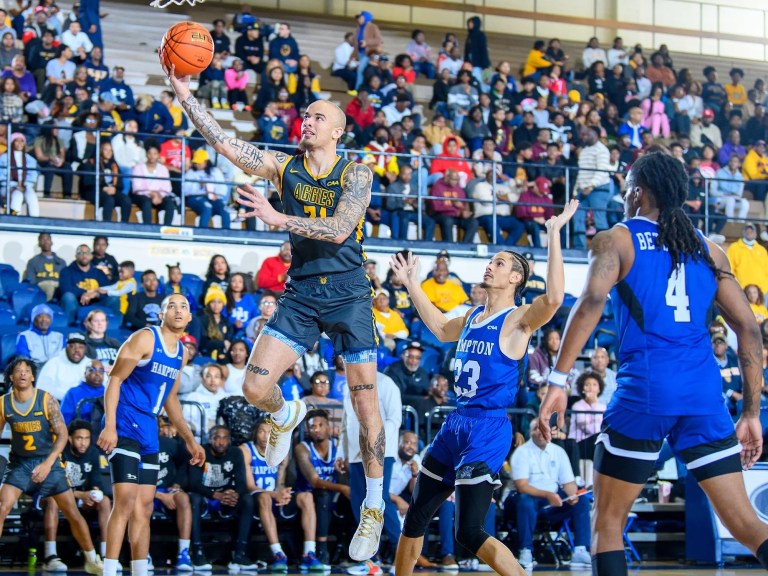
The Hampton University beats ODU headline marks a strong start to the basketball season for the Pirates, who pulled off an 82–79 win in an exhibition game against Old Dominion University. The Sunday matchup at Chartway Arena in Norfolk, Virginia, brought out an electric crowd eager to see how Hampton would perform under new leadership and fresh expectations. The result — a hard-fought victory over their crosstown rival — sets an early tone for what could be a breakthrough year for Hampton basketball.

Hampton University Controls the First Half

According to Hampton Pirates Athletics, the team came out fast and focused, controlling most of the first half behind sharp shooting and efficient ball movement. The Pirates hit nearly 58 percent of their shots from the field and built a double-digit lead in the opening minutes. By halftime, Hampton led 41–32 and appeared to be the more cohesive and disciplined squad. Players like Jalyke Gaines-Wyatt and Xzavier Long led the way, showing off improved chemistry and poise that carried over from preseason training. The Virginian-Pilot reported that Hampton’s bench depth also played a key role, with reserves contributing nearly half of the team’s early points — a promising sign for a roster aiming to compete deep into the Mid-Eastern Athletic Conference season.

ODU’s Comeback Falls Just Short

Old Dominion, competing out of the Sun Belt Conference, entered the second half determined to erase the deficit. ODU Athletics noted that the Monarchs chipped away at Hampton’s lead in the final minutes, cutting it down to just three points. Still, the Pirates’ composure in crunch time made the difference. Hampton closed the game by hitting five of its final six free throws and locking in defensively to prevent ODU from completing the comeback. Despite the loss, Old Dominion’s head coach Mike Jones credited Hampton for its resilience and execution under pressure, acknowledging that the Pirates “made the right plays at the right time.”

Key Players and Leadership on Display

The Hampton University beats ODU exhibition wasn’t just a team effort — it was also a statement by the program’s leaders. Junior guard Jalyke Gaines-Wyatt finished with 18 points to lead all scorers, while senior forward Xzavier Long recorded a 16-point, 10-rebound double-double. Transfer standout Christian Watson added 12 points and showed his value as a two-way contributor. Head Coach Ivan Thomas, in his first full preseason leading the Pirates, emphasized the importance of depth and defense throughout the game. In postgame remarks, he praised his players’ focus and credited the win to “discipline, teamwork, and preparation.”

A Promising Season Ahead for the Pirates

This win over a well-established Division I program highlights Hampton’s growing strength as it prepares for the 2025–26 campaign. Last season, the Pirates finished 17–16 — their first winning season in five years — and the exhibition result suggests the program’s upward trend is continuing. The Virginian-Pilot noted that Hampton’s new balance between veteran leadership and young energy could be the key to staying competitive throughout conference play. For fans of HBCU basketball, this game was more than just a preseason matchup; it was a showcase of how programs like Hampton continue to elevate the standard of play and visibility within collegiate athletics.

Why This Win Matters for HBCU Basketball

Beyond the score, the Hampton University beats ODU victory represents the pride and potential of HBCU sports. Beating a nearby rival like Old Dominion not only strengthens Hampton’s regional reputation but also reinforces the competitiveness of HBCU programs on the national stage. For the Hampton community, this win is about more than basketball — it’s about legacy, progress, and belief. As the Pirates move into regular season play, the HBCU community will be watching closely to see how this early spark translates into lasting momentum.

Hampton’s win is proof that HBCUs continue to stand tall against major programs, backed by heart, hustle, and heritage.

Lincoln University Homecoming Shooting Leaves One Dead, Six Injured

Lincoln University Shooting 102625 03 88ca0335f83a43e7892f80f8c5be030c

The Lincoln University homecoming shooting left the HBCU community in mourning after a night of celebration turned into tragedy. The incident happened Saturday, October 25, when gunfire erupted during the university’s annual homecoming festivities in Chester County, Pennsylvania. Lincoln University, known as the nation’s first degree-granting HBCU, had gathered hundreds of students, alumni, and supporters for its weekend of events when violence shattered the spirit of unity and pride that defines homecoming season across HBCUs.

Celebration Turns to Chaos at Lincoln University

What began as a joyful evening outside the International Cultural Center on Lincoln’s campus quickly descended into panic. Around 9:30 p.m., multiple gunshots were fired near the crowd gathered for the homecoming tailgate and Yardfest celebration. Witnesses described the scene as “chaotic,” with attendees fleeing in every direction as law enforcement rushed to the area. According to reports from CBS News, Chester County District Attorney Christopher de Barrena-Sarobe confirmed that “people fled in every direction” as officers attempted to restore order.

Victims Identified and Community in Shock

Authorities confirmed that 25-year-old Jujuan Jeffers of Wilmington, Delaware, was fatally shot in the head and pronounced dead shortly after midnight. Six others between the ages of 20 and 25 suffered injuries and were taken to local hospitals for treatment. While one current Lincoln student and one alumnus were among those hurt, officials noted that not all victims had ties to the school. The university released a statement extending condolences to the victim’s family and reaffirmed its commitment to campus safety. According to ABC News, one person, 24-year-old Zecqueous Morgan-Thompson, was arrested and charged with carrying a concealed firearm without a license, though police have not confirmed if his weapon was used in the shooting.

Investigation and Ongoing Search for Answers

The Chester County District Attorney’s Office, the Pennsylvania State Police, and the FBI have joined forces to investigate the Lincoln University homecoming shooting. Law enforcement officials believe more than one person may have fired shots and are urging anyone with videos or photos to share them with investigators. While there’s no evidence the shooting was a premeditated attack on the university, the tragedy has raised serious questions about security during large-scale campus events. “We are operating under the belief that the shooter or shooters in this case did not come here with the specific design to cause mass damage on a college campus,” said de Barrena-Sarobe. As 6ABC reported, the FBI is collecting digital evidence and canvassing the area for clues that could identify all individuals involved.

HBCU Community Responds With Solidarity

The Lincoln University homecoming shooting has sent shockwaves across the HBCU world, prompting conversations about how schools can preserve the safety and joy of events deeply rooted in Black culture. Lincoln University, founded in 1854, holds a special place in HBCU history as the first to grant degrees to Black students. The institution declared Monday a “day of healing and reflection,” offering counseling services and urging students, alumni, and staff to gather in the Historic District for unity and remembrance. Similar to recent acts of violence at other campuses, such as incidents near Florida A&M University and Southern University, this tragedy has reignited national discussions about gun safety and mental health within higher education.

Moving Forward After the Tragedy

As Lincoln University mourns the loss of life, the institution and surrounding community are demanding accountability. University President Brenda A. Allen called for prayers and patience as investigators work to bring justice to those responsible. “We will continue to provide support to our students and take every measure necessary to ensure safety on our campus,” she stated. The Lincoln University homecoming shooting has not only scarred one historic institution but also reminded the broader HBCU family of the urgent need for collective healing and systemic change. While homecoming is traditionally a season of joy and reunion, this event underscores the fragility of those moments — and the strength required to rebuild them.

Lincoln University remains committed to its mission of education, empowerment, and community, even in the face of tragedy. The HBCU community nationwide stands in solidarity, vowing to honor the victims by pushing for safer, more protected spaces where Black excellence can continue to thrive.

Southern University Launches Investigation into Hazing Allegations Involving Alpha Phi Alpha

Photo Output 75 1

Southern University has launched a formal investigation following Southern University hazing allegations involving members of the Beta Sigma chapter of Alpha Phi Alpha Fraternity, Inc. The chapter was suspended indefinitely as the university and the fraternity’s national office examine claims of misconduct tied to hazing activities.

According to Watch The Yard, the suspension came after reports surfaced that alleged pledging activities violated both university policy and state anti-hazing laws. Southern University officials confirmed that all fraternity operations have been halted pending the outcome of the investigation.

Fraternity and University Response

In a statement, Alpha Phi Alpha’s national headquarters reiterated its zero-tolerance policy toward hazing. “Hazing has no place in Alpha Phi Alpha and will not be tolerated,” the organization said. The fraternity also dispatched its internal Rapid Response Team to assist with the inquiry, pledging immediate disciplinary action against any member found complicit. Meanwhile, the university’s Division of Student Affairs emphasized its commitment to student safety and maintaining the integrity of campus life.

Southern’s Office of Student Conduct has worked closely with Baton Rouge authorities to ensure the investigation remains transparent and fair. Reports from The Guardian and Associated Press show that Southern has dealt with previous hazing-related controversies, including earlier cases involving other Greek organizations—making this latest probe another reminder of how pervasive hazing culture can be within collegiate life.

The Broader Context of Hazing on HBCU Campuses

The Southern University hazing allegations come amid broader national scrutiny of fraternity culture and the pressures of membership intake processes across HBCUs. In March 2025, multiple individuals were charged in a separate off-campus hazing death tied to another fraternity, as covered by People Magazine.

These incidents underscore how the balance between tradition, secrecy, and brotherhood has grown increasingly difficult to maintain in a more transparent, safety-conscious era. Within the HBCU system, schools like Southern University, Florida A&M, and Prairie View A&M have faced public calls for stricter oversight of Greek organizations, particularly when new-member processes veer into physical or emotional harm.

Cultural Impact and Calls for Reform

For the Southern University community—students, alumni, and Greek life advisors alike—the latest Southern University hazing allegations strike a nerve. Alpha Phi Alpha, one of the oldest and most respected Black fraternities, has produced generations of leaders, activists, and scholars. Yet incidents like this challenge the organization to evolve while maintaining its legacy of excellence.

According to Sports Illustrated’s HBCU Legends, Southern University has already demonstrated a willingness to take decisive action, previously expelling other fraternities found in violation of anti-hazing rules. The current case may serve as a model for how HBCUs navigate accountability while protecting long-standing cultural traditions.

What This Means for HBCU Greek Life Going Forward

The outcome of this investigation could reshape how fraternities operate on HBCU campuses nationwide. Transparency, mental health awareness, and alumni involvement are increasingly being viewed as key components of reform. For Southern University, this is not only about enforcement—it’s about education and prevention.

As highlighted in HBCU Buzz’s Greek Life coverage and features on university accountability, hazing cases have prompted renewed efforts to prioritize student well-being. The conversation is shifting from punishment to prevention, and universities like Southern are leading that difficult but necessary change.

Spelman College Renames English Department to Reflect Modern Media and Literature

Spelman College is ushering in a new academic era by renaming its English Department to the Department of Literature, Media & Writing, a move that reflects the institution’s evolving approach to storytelling, creativity, and cultural representation. The decision, which became effective in October 2025, marks a significant shift toward a more inclusive and interdisciplinary framework. According to The Journal of Blacks in Higher Education, the change comes as part of Spelman’s broader effort to reimagine how traditional disciplines meet the demands of today’s media-driven world. The announcement has sparked enthusiasm among students and faculty who see this as an opportunity to center diverse voices and prepare students for a wider range of creative industries.

Why Spelman College Adopted a New Department Name

The Spelman College new department name reflects more than a cosmetic rebranding—it’s an intentional realignment of curriculum and identity. Department Chair Dr. Patricia Ventura explained that the term “English” historically carried colonial implications that no longer align with Spelman’s mission as a globally minded, Black women’s liberal arts college. Under the new structure, the Department of Literature, Media & Writing will emphasize reading, writing, and media analysis through the lens of culture and identity. Courses in British and American literature will remain, but the major’s framework now centers storytelling across disciplines—from film and journalism to digital and visual media. As outlined on Spelman’s website, the department “foregrounds the study of Black women’s contributions to global cultural histories,” ensuring students graduate with a deeper understanding of media’s power to shape narratives.

Centering Black Women’s Voices in Media and Literature

For decades, Spelman College has championed the intellectual and creative leadership of Black women, and this renaming aligns with that legacy. A feature on Spelman News highlighted that the new department represents “a rewriting of the academic script,” acknowledging that the stories shaping the world today go far beyond the traditional Western canon. Students in the new major can explore a range of pathways including screenwriting, digital storytelling, cultural criticism, and multimedia production. The Spelman College new department name also underscores the importance of equipping graduates with the skills to excel in rapidly changing creative industries while preserving a foundation in critical thought and writing.

How the Change Reflects Broader HBCU Innovation

The academic evolution at Spelman mirrors a larger trend across HBCUs, where institutions are modernizing curricula to meet emerging opportunities in media, communication, and technology. As highlighted in the HBCU Buzz University News section, colleges like Howard and Hampton have also expanded programs that bridge traditional liberal arts with digital literacy. Spelman’s move sets a precedent for other HBCUs to rethink department names and structures that may no longer reflect the diversity of student interests or professional trajectories. The Spelman College new department name stands as an example of how HBCUs continue to evolve academically while staying true to their cultural missions.

A Step Toward the Future of Creative Scholarship

This update signals more than a symbolic shift—it’s a declaration of purpose. By transitioning from “English” to “Literature, Media & Writing,” Spelman College has aligned its academic identity with the future of storytelling, centering Black women’s narratives within the global media landscape. As Spelman continues to produce thought leaders, artists, and scholars, the renamed department represents both a tribute to its literary roots and an embrace of new creative frontiers. It’s a model of how HBCUs can remain at the forefront of educational innovation while honoring their legacy of cultural empowerment and excellence.

Southern Fried Rice Sparks Debate Over HBCU Representation

1752506523373

The Southern Fried Rice controversy has quickly become one of the most talked-about cultural moments of the fall. The new KeyTV series—executive-produced by Keke Palmer and created by Nakia Stephens—has ignited discussion among HBCU students and alumni about how Historically Black Colleges and Universities are portrayed on screen. The show follows Koko Johnson, an Asian American woman raised by a Southern Black family, as she navigates life at a fictional HBCU in Atlanta. While some praised its unique premise, others questioned whether it truly reflects the authentic experience of HBCU students.

The Story Behind Southern Fried Rice

Created by Savannah State University alumna Nakia Stephens, Southern Fried Rice was designed to explore themes of identity, belonging, and cultural crossover through the lens of a young woman raised in a Black household. According to Bossip’s report, the show draws from Stephens’ time at an HBCU and her encounters with peers from diverse backgrounds. The series debuted on KeyTV, Palmer’s digital network focused on uplifting underrepresented voices in media. Stephens said the project “has been over a decade in the making” and is meant to celebrate the vibrancy of Black institutions while challenging viewers to think about how culture shapes identity.

Public Reaction and Online Criticism

Once the trailer dropped, social media erupted with divided opinions, sparking what many have labeled the Southern Fried Rice controversy. Some viewers applauded the show’s originality, while others felt the choice to center a non-Black lead at an HBCU diluted its cultural focus. “Why is an Asian woman the main character at an HBCU?” one user asked on X, while others defended the creators’ right to tell intersectional stories that reflect real-world diversity. The tension reflects a broader debate over who gets to tell HBCU stories and whether inclusion can coexist with authenticity.

Keke Palmer and Nakia Stephens Respond

In response to backlash, Keke Palmer released a video reaffirming her commitment to showcasing Black creators through KeyTV. She emphasized that Southern Fried Rice was written and directed by a Black woman who attended an HBCU and has built her career telling culturally rich stories. “Supporting Black creatives isn’t optional—it’s our purpose,” Palmer said. Stephens echoed this sentiment on Instagram, writing that she “welcomes honest conversation about identity and culture” while maintaining pride in her creative vision. Their responses shifted the Southern Fried Rice controversy from outrage to reflection, inviting audiences to consider how diverse narratives can still honor Black institutions.

Why Representation at HBCUs Matters

For many in the HBCU community, representation goes beyond casting—it’s about storytelling integrity. Shows like A Different World and The Quad resonated because they centered authentic HBCU experiences, from campus activism to Greek Life traditions. The Southern Fried Rice controversy reignites that legacy of scrutiny and pride.

The Larger Conversation About Culture and Storytelling

The debate surrounding Southern Fried Rice isn’t just about one show—it’s about what HBCUs represent in the broader cultural imagination. As HBCUs continue to receive heightened media attention and growing support from Hollywood, questions about authenticity and authorship become even more pressing.

Whether the series finds balance between creative expression and cultural responsibility remains to be seen, but it has already succeeded in starting an important dialogue. For the HBCU Buzz audience, it’s another reminder that our stories must not only be told—but told right.

Dillard University Appoints Two New Vice Presidents to Strengthen Leadership

23Untitled 1

Dillard University has announced the appointment of two new vice presidents, marking a major milestone in its leadership expansion and institutional strategy. Dr. Darvelle Hutchins has been named Vice President for Institutional Advancement, while Dexter I. Odom will serve as Vice President for Business and Finance as well as Chief Financial Officer. The news, first reported by The Journal of Blacks in Higher Education, signals Dillard’s continued commitment to strategic growth across academic, financial, and community engagement priorities. These appointments come at a pivotal time for the HBCU sector, as universities across the country work to secure top talent and expand institutional capacity.

Dr. Darvelle Hutchins to Lead Advancement and Community Strategy

As one of Dillard University’s new vice presidents, Dr. Darvelle Hutchins will oversee the university’s institutional advancement, marketing, alumni relations, and strategic partnerships. Hutchins brings a wealth of experience in cultural strategy, organizational transformation, and leadership development. Before joining Dillard, he served as Vice President of Social Impact & Culture at GMB Management LLC—the parent company of the New Orleans Saints and New Orleans Pelicans—where he led initiatives centered on equity, supplier inclusion, and employee engagement. In his new position, Hutchins will help advance Dillard’s mission to cultivate ethical leaders through philanthropy, brand visibility, and alumni involvement. According to Dillard University’s official announcement, he will also spearhead efforts to build stronger community partnerships that elevate Dillard’s national profile.

Dexter I. Odom to Oversee Finance and Operations

Dexter I. Odom, CPA, MBA, joins Dillard as Vice President for Business and Finance and Chief Financial Officer, bringing more than four decades of experience in higher-education finance and strategic management. Odom previously served as Senior Associate Vice President and CFO at Tuskegee University, where he successfully managed nearly $600 million in assets, led a historic financial turnaround, and doubled the institution’s reserves. As one of Dillard University’s new vice presidents, Odom will focus on fiscal stability, long-term budgeting, and enterprise resource planning. Dillard University News highlighted that Odom’s expertise in operational sustainability and grants administration will play a critical role in advancing Dillard’s future infrastructure and scholarship initiatives.

Strengthening Dillard’s Vision for the Future

Dillard University President Monique Guillory expressed enthusiasm for the appointments, noting that both leaders embody the vision and drive needed to guide the institution into its next era. “Dr. Hutchins and Mr. Odom bring deep experience, creativity, and dedication to the work of building a sustainable and thriving Dillard,” Guillory said. These additions also reflect a broader shift among HBCUs toward balancing innovation with financial stewardship—an approach that continues to define the sector’s growth. Recent leadership moves at other HBCUs, such as Spelman College and Tuskegee University, show a similar emphasis on combining advancement strategy with solid fiscal governance.

What These Appointments Mean for HBCUs

By adding two dynamic executives, Dillard University demonstrates how intentional leadership appointments can strengthen both the institution’s internal operations and its national influence. The combination of a communications strategist and a seasoned CFO ensures that Dillard can tell its story more effectively while managing its resources more strategically. For the broader HBCU community, this model may inspire other universities to adopt a dual-focus approach—prioritizing culture and capital equally. As HBCUs continue to expand academic programs, invest in technology, and pursue record-breaking fundraising goals, leadership alignment like this becomes a critical factor for long-term sustainability.

Everything You Need to Know About Moving Money Electronically

Moving funds is something most of us do frequently—paying bills, sending money to friends, or transferring cash between accounts. But even though it’s common, digital transfers can still feel tricky if you don’t know exactly how they work. The good news is that once you understand a few simple points, handling these transactions gets much easier and less stressful.

This article explains what you really need to know to use digital payments safely and confidently. No jargon or complicated language—just straightforward tips that help you make payments securely and avoid mistakes. If you’re ready to feel more comfortable managing electronic transactions, let’s get started right now!

Electronic Transfers Are Common and Convenient

Sending funds electronically is now one of the most popular ways to pay bills, make purchases, or move money between accounts. It’s fast, easy, and available through most banks and apps, which makes it a practical choice for daily transactions. Once you understand the various types of transfers available, you can select the method that best suits your needs. Whether you’re paying for utilities or moving funds to savings, it’s helpful to know the basics of electronic transactions.

You Can Automate Transfers

Setting up regular transfers between accounts can help you stay organized and manage your finances effectively. Automation ensures bills get paid on time, savings goals are met, and you don’t have to think about every transaction manually. Many people use automatic transfers for tasks such as paying rent or transferring funds to savings each month. ACH transfers are a popular way to automate this process. Learning how to do an ACH transfer can make things simpler and quicker for you. You don’t have to worry about manually making your recurring payments.

Wire Transfers Are Fast but Cost More

Wire transfers are known for being quick—often same-day—but they usually come with higher fees than other options. They’re a common choice when sending large amounts, urgent payments, or international transfers. It’s helpful to know that wire transfers don’t operate around the clock, and cut-off times may affect when the funds arrive. When speed matters most, wire transfers may be worth the cost, but it’s smart to check fees and alternatives before making a decision.

Peer-to-Peer Apps Make Sending Funds Easy

Peer-to-peer payment apps let you send small payments quickly to friends, family, or small businesses. These apps are convenient for splitting bills, sending gifts, or reimbursing someone after a shared meal. But be careful: these apps typically link directly to your bank account or debit card, so it’s important to only send payments to people you know and trust. Always review payment details before hitting send to avoid mistakes.

Processing Times Vary by Method

Not all electronic transfers happen instantly. Some take minutes, while others may take a few days, depending on the method and the financial institutions involved. Knowing typical processing times can help you plan ahead and avoid delays when paying bills or moving funds. For example, an ACH transfer may take one to three business days, while a wire transfer could be completed the same day if sent early enough. Peer-to-peer apps often process payments immediately, but sometimes have limits or fees for instant transfers.

Security Features Help Protect Your Transfers

Security is a top concern when moving funds electronically. Banks and payment platforms utilize encryption, password protection, and two-factor authentication to safeguard transactions. You can help protect yourself by using strong passwords, enabling extra security features, and avoiding public Wi-Fi when managing transactions. It’s also smart to double-check recipient details before sending any payment to avoid mistakes or fraud. A few simple precautions can go a long way in keeping your digital transactions secure.

Fees Can Add Up Quickly

While many digital transfers are low-cost or free, some methods come with fees. Wire transfers, for example, typically have a flat fee, and peer-to-peer apps may charge additional fees for instant payments or credit card funding. It’s worth taking a moment to review any charges before completing a transaction. When you know the fees upfront, you can choose the method that best suits your situation. Being aware of these fees also helps you avoid small costs that can add up over time.

Linking Accounts Makes Transfers Seamless

Linking your checking, savings, or external accounts can simplify future transfers. Once your accounts are linked, you can easily move funds between them online or through an app without needing to enter account details every time. This feature is especially useful for setting up recurring payments or moving extra funds to savings. Most banks make it easy to link accounts securely, allowing you to stay organized and ensure transfers are completed quickly when needed.

Daily Limits Can Affect Large Transfers

Banks and payment apps often set limits on how much you can send in a single day or over a certain period. These limits are designed to protect users, but they may impact your plans if you’re trying to send a larger amount. Before making a large payment, it’s a good idea to check any limits that may be in place. If needed, you can contact your bank or app provider to inquire about temporarily or permanently adjusting these limits to suit your needs.

Electronic Transfers Fit Many Everyday Needs

People use digital transfers for various reasons, including paying rent and transferring funds between accounts. It’s a flexible way to manage everyday financial tasks efficiently and securely. Whether you’re splitting dinner with friends, scheduling a bill payment, or funding a savings goal, electronic options make the process easier. Learning how different methods work gives you the flexibility to choose what’s right for every situation.

Moving funds electronically is part of modern life, and knowing the basics makes it less stressful. From understanding processing times to managing fees and keeping your transactions secure, these tips help you handle payments with confidence. The more you know, the easier it becomes to move money smoothly and securely, so you can spend less time worrying about payments and more time focusing on what matters most.

Virginia Signal a New Era of Digital Entertainment

Virginia’s online casino market has rapidly evolved from a new experiment to a vital component of the state’s digital economy. More players by the day; more communities by night, revenue, and enhanced with technology, making access easier, redefining entertainment. This is what is happening in Virginia, reflecting the broader shift toward digital opportunities.

The rise of online casinos in Virginia

Digital gambling has gained momentum in Virginia as more players grow comfortable with exploring casino games online. This shift reflects the rapid evolution of entertainment habits, particularly as technology enables easy access to platforms from home. For many, the appeal lies in convenience, variety, and the sense of being part of something modern.

The state has taken steps to expand casino licensing and regulate the industry, which plays an important role in building trust among users. By setting rules and providing oversight, Virginia signals that it wants this market to grow responsibly. That reassurance encourages more people to test out these platforms without hesitation.

At the same time, the number of options available to players has multiplied. Local residents no longer need to drive to a physical location to enjoy slot machines or table games. Instead, they can explore multiple sites that offer different styles of play, new bonus structures, and interactive experiences that keep them engaged for longer stretches.

Technology has also made access more seamless, especially when it comes to payments. People expect smooth deposits and withdrawals, and many platforms now prioritize that. Some even offer easier methods like deposits without ID, catering to players who prefer efficiency while still wanting security. This balance has become a key factor in why adoption rates continue to rise.

Economic benefits shaping local communities

The rise of online gambling in Virginia is not just about providing entertainment for the citizens of the Commonwealth; instead, it has to do with the ripple effect and spillover effects felt within the community. These state programs can receive much-needed revenue, which can be channeled into education, public services, and infrastructure, among others. This is how most people come to reason that the industry isn’t just fun but also a rather substantial business play for local progress.

Employment has definitely been growing with the expansion of the digital medium. Online casinos require people in almost every role, from customer support specialists to software engineers. These jobs create stability for so many Virginians and attract talent that sees the digital gaming industry as a long-term career option worth exploring.

Partnerships between digital casinos and local organizations are emerging. As companies grow and begin to explore ways of giving back, sponsorships, scholarships, and community initiatives become more feasible. Such collaborations will normalize the industry and make it a key player in building strong communities, rather than an outsider.

Virginia HBCUs will also benefit as new funding streams are opened up. Students will be able to pursue studies and projects that would otherwise have been far beyond their reach, if not for the scholarships and research grants funded from gaming revenues. It’s this association between higher education and the digital economy that will enhance the position of HBCUs in shaping the next set of leaders.

Cultural impact on entertainment choices

Entertainment has always evolved, and Virginia’s online casinos demonstrate the changing preferences of consumers. No longer do people spend weekends traveling to casino destinations; instead, many have been logging in from home on their phones. Accessibility led to higher participation while maintaining the thrill of the game.

More recently, the youth demographic has been known to embrace electronic betting. Considering that most of their time is already spent online, these services are a logical extension of their entertainment patterns. This change in demographics ensures that the business will continue to flourish as new players discover the seamlessness of incorporating gaming into their routines.

Online entertainment in general, and digital content, is developing at a phenomenal rate, and the online casino is only a part of this development. In the same way that streaming has supplanted ‘traditional’ television for many, so the future of gaming is digital rather than location-based. This doesn’t remove the interest in land-based casinos, but shows how habits can change with the introduction of convenience and innovation.

Besides, it’s no secret that the culture of Virginia casinos has started to affect other forms of entertainment as well. Sports clubs, local artists, and even community events have all been tied to the game as broader cultural experiences that continually maintain the industry’s visibility in relation to the scope of everyday entertainment, rather than something separate.

Final words

Virginia has allowed online casinos as a way through which entertainment, technology, and community investment can interact in good ways. As the market continues to grow, it creates more opportunities, sets trends, and demonstrates that digital gaming can be both enjoyable and beneficial to the state’s future. 

How Cozy Gaming Became So Popular

Cozy games have quietly taken over the gaming world. They offer a refreshing alternative to high-intensity shooters or competitive esports. Instead of fast reflexes and complex gameplay, cozy games deliver slow-paced, comforting experiences that feel like a long hug from a loved one after a stressful day. 

Over the past few years, this genre has transformed from a niche industry to a recognized movement, with game developers actively providing titles that prioritize calmness and emotional connection, often mimicking relaxing real-world scenarios.

What Defines A Cozy Game?

A cozy game is not defined by its strict mechanics, but instead by the feeling it creates when you play. These types of games are low-stress and often let players engage in wholesome, everyday activities like fishing, farming, cooking, or decorating. 

Animal Crossing: New Horizons, for example, allows players to create their own little island paradise, plant flowers, design homes, and chat with villagers. Stardew Valley has players managing a farm, raising animals, and even getting married. And it all happens at the players’ pace.

Other examples include Palia, Townscaper, The Sims, and Unpacking. These games have no time limits, no fail states, and no pressure to win. 

The appeal of cozy games overlaps with other forms of low-stakes entertainment, too. Some players enjoy the relaxing rhythm of a farming sim, while others find the repetitive spin of roulette or the slots perfect for unwinding. 99Bitcoins’ crypto roulette sites offer a soothing routine similar to many cozy games, highlighting that the genre is more about a feeling than a game’s mechanics. 

Cozy games won’t appeal to those looking for an adrenaline rush; they fill a different psychological need centered around comfort and control. 

Why Cozy Games Became So Popular

The sudden boom in cozy games can be traced to 2020, when Animal Crossing: New Horizons launched during a time when most people were stuck at home. Suddenly, millions of people were able to create idealized digital lives. They decorated virtual homes, tended crops, fished, and celebrated events with in-game friends at a time when they couldn’t see others in person. This perfect timing and demand skyrocketed the genre. 

The popularity of cozy games didn’t end when lockdown lifted. Mental health and self-care have become cultural priorities, and cozy games rode this wave and became a form of interactive mindfulness. They allow you to slow down in a world that feels too fast. The aesthetics often include soft pastels, gentle soundtracks, and cute characters, which make them calming.

Another factor driving the success of cozy games is their accessibility. Most of these tiles are available on mobile, PC, and consoles, often at low costs or even for free. They’re perfect for casual gamers who are intimidated by more intense titles. 

Their design encourages community, as players share screenshots of their farms or homes online. This has created lively subcultures around the genre. 

Cozy games are popular because they give players control without pressure and a welcoming space to exist. 

Top HBCU Homecoming 2025

HBCU Homecomings 2025 Top

Vote Now: The 2025 Top HBCU Homecoming Poll

Every fall, something powerful happens across HBCU campuses. Streets fill with color, bands shake the ground, alumni come home, and the culture takes center stage. It’s not just a weekend — it’s a movement. From the chants echoing through the yard to the rhythm of the drumline leading the parade, homecoming is where tradition meets legacy.

This year, HBCU Buzz is once again giving the culture a voice with our 2025 Top HBCU Homecoming Poll. We’re putting the spotlight on the schools that bring the most spirit, pride, and unforgettable moments to their homecoming celebrations — and we’re letting the people decide who truly runs homecoming season.

The Spirit of the Yard

For decades, HBCU homecomings have been cultural milestones. Whether it’s Howard University’s Yardfest, FAMU’s Rattler Strike, or The Sonic Boom of the South marching through Jackson State, every school carries its own legacy.

These celebrations go beyond football games or parades. They’re living proof that the HBCU experience continues to unite generations — from alumni coming home to the students who now carry the torch.

Each year, the energy grows louder, the reunions get bigger, and the creativity behind every tailgate, fashion fit, and halftime show reaches new heights. That’s what this poll is all about — capturing that unmatched spirit and letting the people decide who really ran homecoming season in 2025.

Voting is simple — and the bragging rights are real. You can vote once per day until the poll closes at 11:59 p.m. ET on November 25, 2025

—–

More Than a Poll — It’s a Cultural Statement

When you vote, you’re not just choosing a winner — you’re honoring a legacy. You’re shining a light on the schools that make HBCU life the heartbeat of Black excellence.

From the precision of the bands to the artistry of the Greek plots, from the alumni cookouts to the Sunday send-offs, each celebration tells the story of who we are. And that story deserves to be told loud and proud.

At HBCU Buzz, we’ve covered the movement from every angle — from Howard’s legendary Yardfest to Jackson State’s show-stopping halftime performances. This poll continues that tradition by giving our audience the power to choose which campus brought the biggest impact this year.


The Legacy Lives On

Past winners have proven one thing: homecoming is where culture meets community. Whether it’s a small campus or a powerhouse university, each school contributes to the collective heartbeat of HBCU life.

This year, we’re inviting every voice to be part of the story. So gather your crew, hit share, and make sure your school gets the recognition it deserves.

Follow the movement: @HBCUBuzz on Instagram, X, TikTok, and Facebook for daily updates and leaderboard reveals.

Steve Settle III Signs With the Miami Heat, Continuing the HBCU-to-NBA Pipeline

Convert

Former Howard University standout Steve Settle III is officially taking his next step into the pros after signing with the Miami Heat, marking another major moment for HBCU basketball. The 6-foot-11 forward, who became a star at Howard before transferring to Temple University, is part of a growing wave of Historically Black College and University (HBCU) athletes breaking into the NBA spotlight.

The Heat announced Settle’s signing in mid-October 2025, confirming that he had agreed to an Exhibit 10 contract, a one-year, non-guaranteed deal designed to help promising players earn a roster or G League spot. According to the official Miami Heat press release, the move brings Settle into the organization’s training camp and development pipeline, where he’ll compete for a role with the Heat or their affiliate team, the Sioux Falls Skyforce.

Settle’s journey to this point has been anything but traditional. A native of Glenarden, Maryland, he first made his mark at Howard University, helping lead the Bison to the 2023 MEAC Championship and their first NCAA Tournament appearance in three decades. During his time at Howard, Settle averaged over 11 points and five rebounds per game, establishing himself as a versatile, high-energy forward who could stretch the floor and play both ends effectively. His success drew attention across the college basketball landscape, proving that elite-level athletes continue to thrive at HBCUs.

Following three strong seasons at Howard, Settle transferred to Temple University, where he elevated his production and visibility. At Temple, he averaged 12.6 points, 6.2 rebounds, and 1.7 assists while shooting an impressive 41.6% from beyond the arc. His development into a more dynamic scorer and capable perimeter defender caught the attention of NBA scouts. Temple Athletics described Settle as “a player who blends elite athleticism with maturity and leadership,” and credited his work ethic for creating a clear path to the pros.

Sports Illustrated also highlighted Settle’s signing as another example of Miami’s “eye for talent,” noting that the Heat have a long tradition of identifying under-the-radar players and turning them into key contributors. (Sports Illustrated) Settle joins a Heat program known for its rigorous development system — one that has produced stars like Jimmy Butler, Bam Adebayo, and Duncan Robinson, each of whom embodies the team’s “grind-first” mentality. For Settle, it’s a perfect fit.

MBB Headshots Settle

The signing also represents a major win for Howard University, one of the most storied HBCUs in the nation. As programs like Howard continue investing in athletic development and exposure, their athletes are increasingly finding pathways to professional leagues around the world. The Bison’s recent success in both basketball and football has positioned the school as a leader in the renewed national conversation around HBCU athletics.

ClutchPoints reported that Settle’s Exhibit 10 contract gives him a clear opportunity to join Miami’s G League affiliate if he doesn’t make the main roster — a pathway that has helped multiple undrafted players build long-term NBA careers. (ClutchPoints) The deal could also be converted into a two-way contract, which would allow him to split time between the Heat and their G League team during the season.

Beyond the court, Settle’s story represents something much larger: the growing credibility of HBCU athletes in modern professional sports. Over the past few years, more players from historically Black colleges have been invited to the NBA’s pre-draft combines, participated in the NBA x HBCU Classic, and earned professional contracts overseas. Settle’s success adds momentum to that trend — proving that HBCU players have the skill, discipline, and basketball IQ to compete at the highest levels.

For the HBCU community, this moment is about more than basketball. It’s a reminder that institutions like Howard, Norfolk State, and North Carolina Central are not only developing great athletes but also producing disciplined, well-rounded leaders. As Howard Head Coach Kenneth Blakeney noted after Settle’s graduation, “We don’t just coach players; we prepare men for the next chapter of life — whether that’s business, family, or basketball.”

Settle’s transition from the Hilltop to South Beach symbolizes the evolution of the HBCU-to-NBA pipeline — one built on culture, character, and perseverance. For younger athletes at HBCUs nationwide, it’s proof that with dedication and exposure, their dreams are within reach. As Settle begins this next chapter with the Miami Heat, the HBCU world will be watching closely — and cheering even louder.

Katt Williams Receives Honorary Doctorate From Miles College

CC7DUDVMPFB6FLCLUEYM22QOO4

Comedian and actor Katt Williams has officially joined the list of legendary entertainers honored by Historically Black Colleges and Universities after receiving an honorary doctorate from Miles College. The recognition came during a special ceremony on October 18, 2025, celebrating Williams not only for his impact on entertainment but also for his growing commitment to investing in Alabama’s creative economy through the HBCU community.

Williams accepted the Doctorate in Humane Letters at the Birmingham-area institution, known for its deep HBCU legacy and innovation.

“It was going to take a mighty fine institution to recognize that,” Williams told the crowd.

“I serve a God that insists that my cup runneth over. And those smiles that I sell for a living — those have Miles right in the middle of it.”

His remarks earned a standing ovation from students, faculty, and alumni who have long supported the school’s mission to blend academic excellence with real-world leadership opportunities.

According to Black Enterprise, the honorary degree isn’t just a symbolic gesture. It’s part of a deeper relationship forming between Williams and the college, centered around his new film studio project in Anniston, Alabama, located on over 90 acres of land at the former Fort McClellan base. The studio development is expected to bring new film production opportunities and workforce training to the region, with students from Miles College positioned to gain firsthand experience in film, tech, and business.

Miles College President Bobbie Knight called the collaboration a milestone moment for the institution’s future. By connecting with Williams’ growing business ventures, the college plans to introduce programming that integrates entertainment, technology, and artificial intelligence into its curriculum. “Our students deserve access to real industry experiences,” Knight said in a recent statement. “Partnerships like this show what happens when HBCUs are at the center of innovation and creativity.”

Williams’ connection to Miles College follows a wave of celebrities and cultural figures partnering with HBCUs to expand their educational and entrepreneurial impact. Recent efforts from stars like Taraji P. Henson’s foundation at Howard University and Chris Paul’s collaboration with Winston-Salem State University reflect a growing movement among entertainers to invest in historically Black institutions.

For Miles, this partnership could mean new jobs, scholarships, and media opportunities for students eager to break into the creative industries.

As Williams continues expanding his brand beyond comedy — into business, real estate, and education — his honorary doctorate serves as recognition of both his professional success and his evolving legacy. For HBCU students, especially those at Miles College, it’s a reminder that higher education and entertainment can coexist to shape the future of Black innovation.